Artwork
Shiva
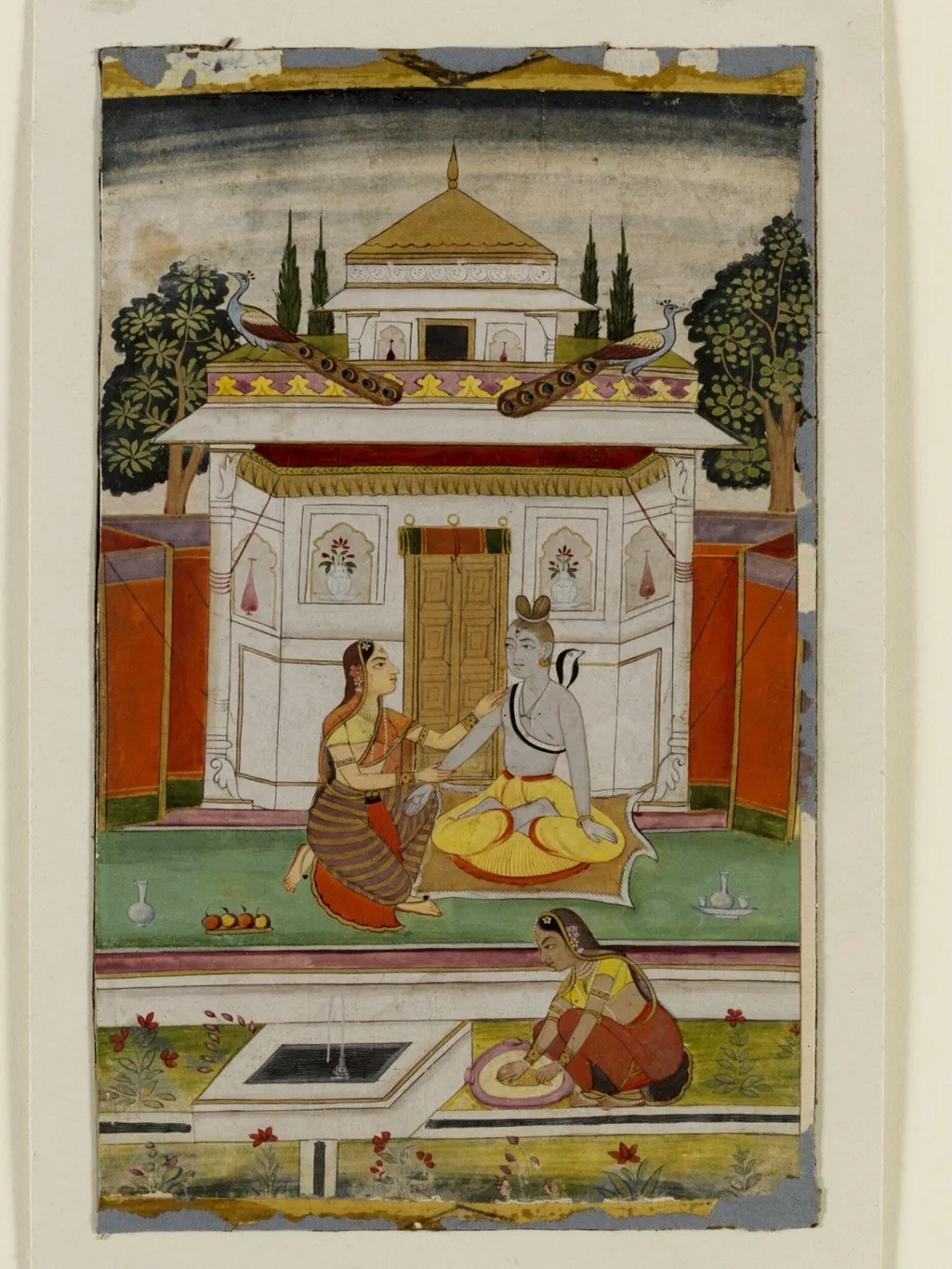
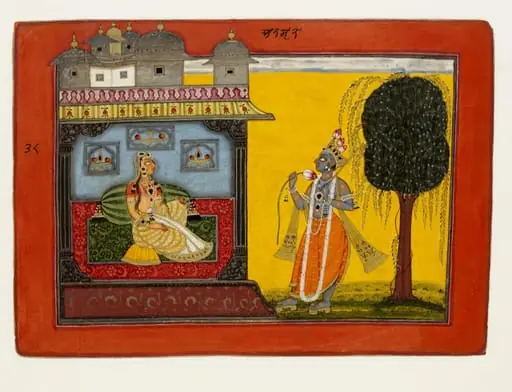
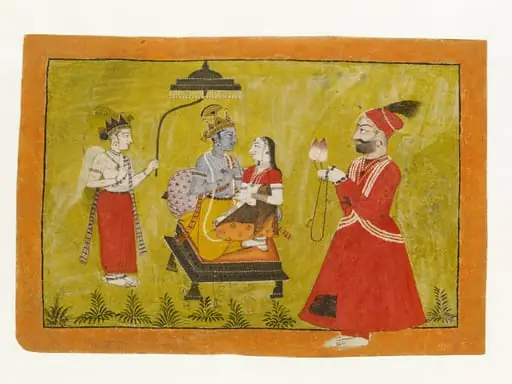
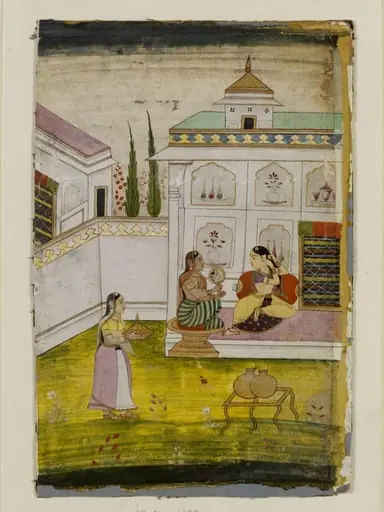
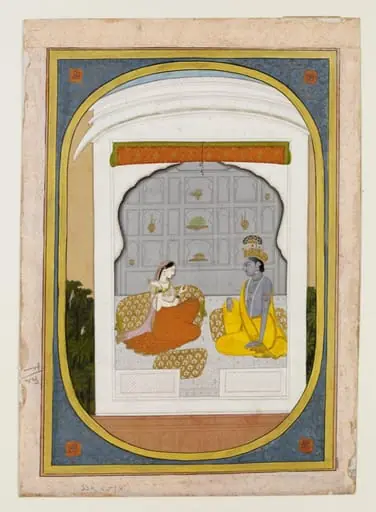
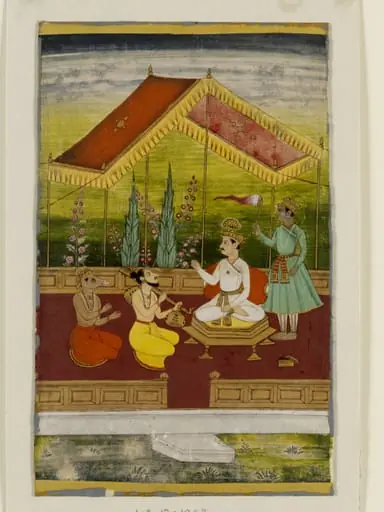
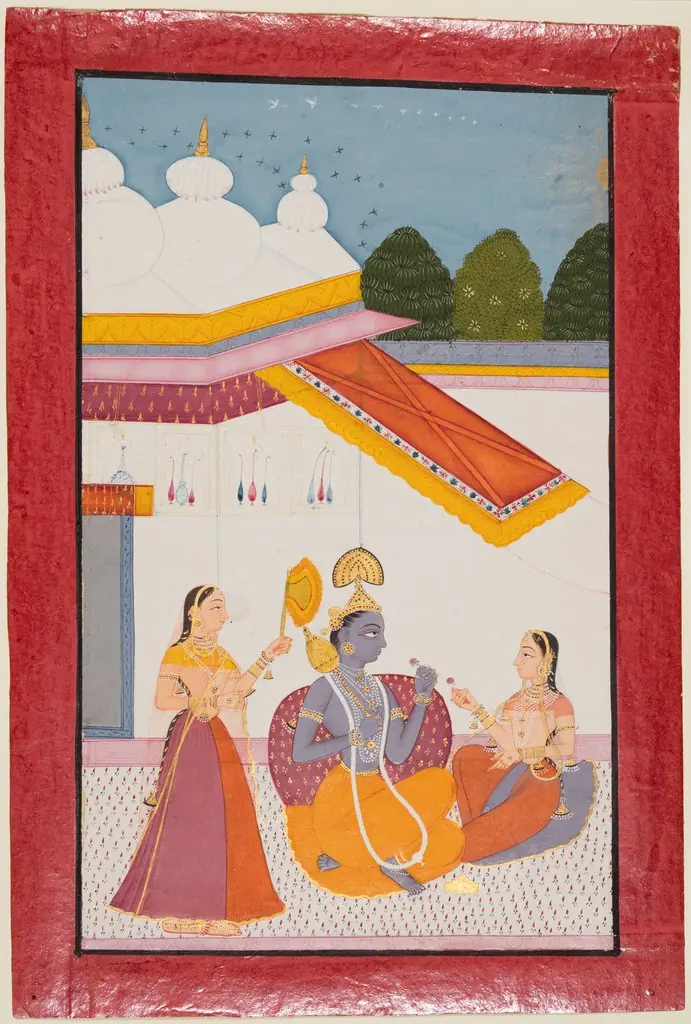
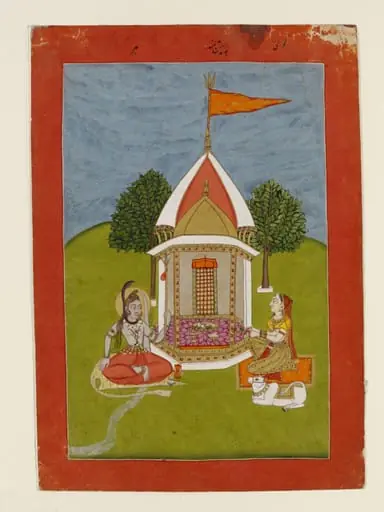
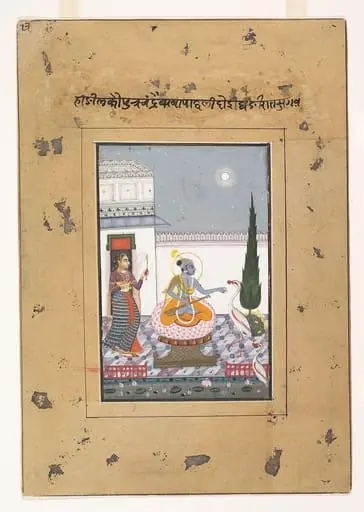
Shiva is a paint painting by the Baroque artist Unknown. It dates from 1700 and is held in the collection of the Victoria and Albert Museum. This 18th-century opaque watercolor on paper belongs to the Ragamala series, a genre linking visual art to Indian musical traditions.
About this work
Overview
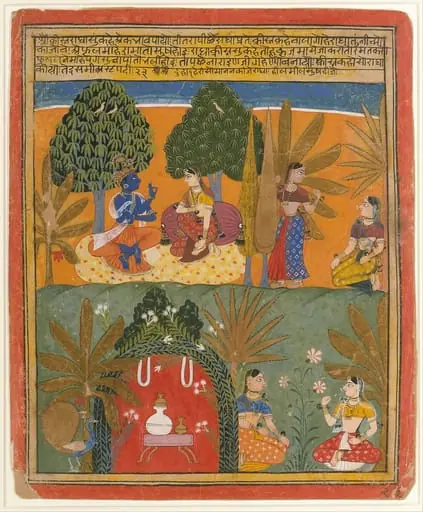
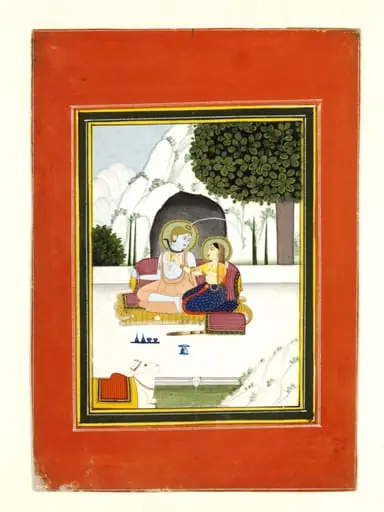
This 18th-century opaque watercolor on paper belongs to the Ragamala series, a genre linking visual art to Indian musical traditions. Executed in vibrant pigments, the work embodies the Bhairava Raga, a morning raga associated with Shiva, through a narrative scene set within an ornamental garden.
Subject & Meaning
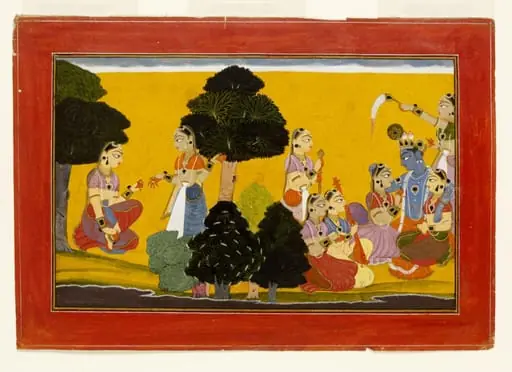
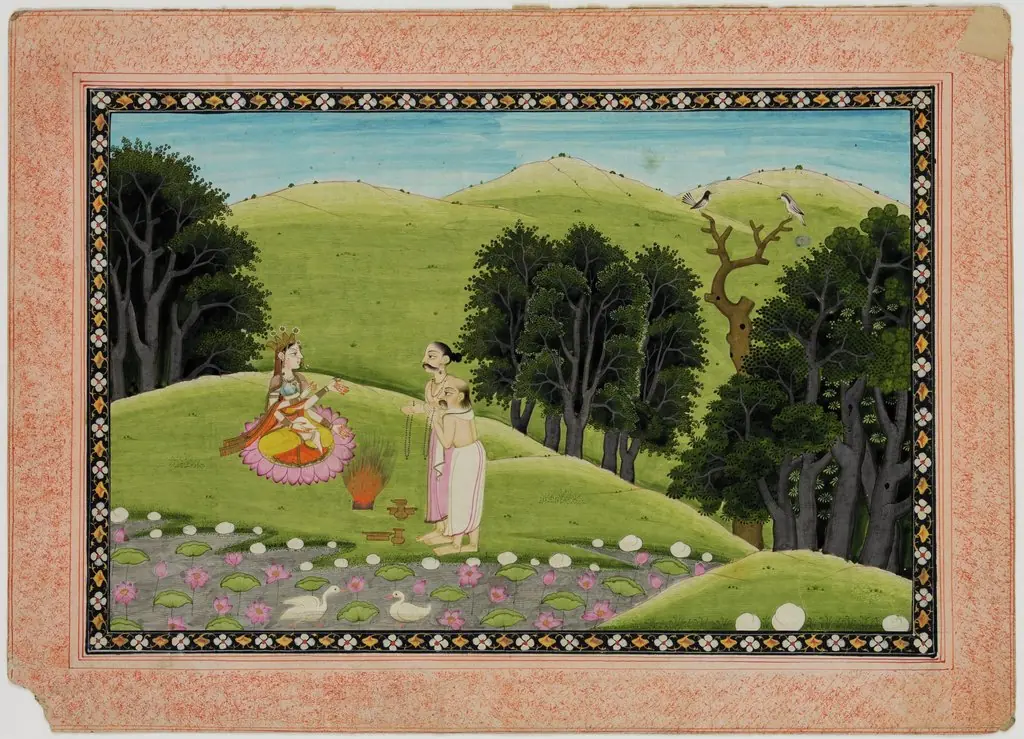
The composition centers on Shiva, seated on a yellow cloth while receiving devotion from two female figures. One woman kneels, offering what appears to be sandalwood paste, a ritual substance in worship. The second woman arranges food, reinforcing themes of reverence and service. The scene symbolizes the raga’s emotional and spiritual essence.
Technique & Style
Characteristic of Rajasthani or Pahari painting, the work employs bold outlines and flat, saturated colors. Figures are rendered with minimal modeling, emphasizing decorative patterns in textiles and architecture. Peacocks perched on a red-pillared pavilion and lush foliage enhance the composition’s rhythmic harmony, aligning visual and musical structure.
History & Provenance
Created circa 1700, the painting originates from a Ragamala series, likely commissioned for a royal or aristocratic patron. Its precise early history remains unrecorded, though it entered Western collections in the 20th century. The work exemplifies the cross-cultural appeal of Indian miniature painting during this period.
Context
Ragamala paintings emerged as a fusion of poetry, music, and visual art, illustrating ragas—melodic frameworks—through evocative scenes. Bhairava Raga, typically performed at dawn, evokes austerity and devotion, mirrored here in Shiva’s tranquil presence. Such works were often displayed in private chambers, serving both aesthetic and contemplative functions.
Legacy
The painting contributes to the broader understanding of Ragamala traditions, demonstrating how musical modes were translated into visual narratives. Its preservation in institutional collections underscores the genre’s historical significance, offering insight into the interplay between sound, symbolism, and artistic expression in pre-modern India.
Artist & collection

 Domestic Scene
 Giacomo and Cardinal Marco, investing Andrea, Abbot of San Zeno, with his Benefice
 The Nymph of Fontainebleau
 Portrait of a Woman
 Madonna and Child with Saints in the Enclosed Garden
 Venus and Minerva
 Family Group of Four on Sofa
 Wall painting from Room H of the Villa of P. Fannius Synistor at Boscoreale