Artwork
Shiva and Parvati
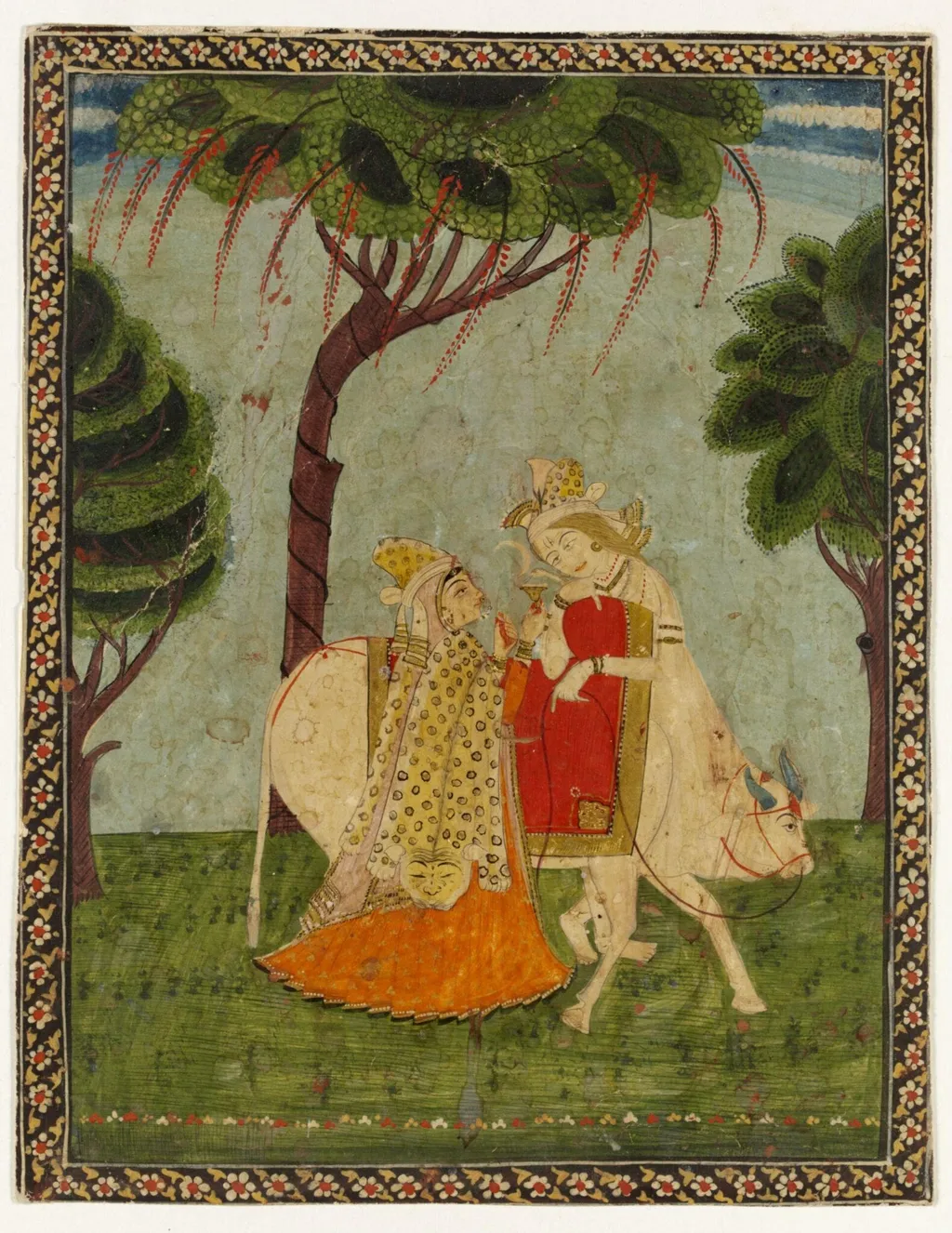
Shiva and Parvati is a paint painting by the Impressionist artist Unknown. It dates from 1860 and is held in the collection of the Victoria and Albert Museum.
About this work
Overview
Rendered in pale tones against a muted greenish-grey backdrop, the composition emphasizes stillness and divine presence.
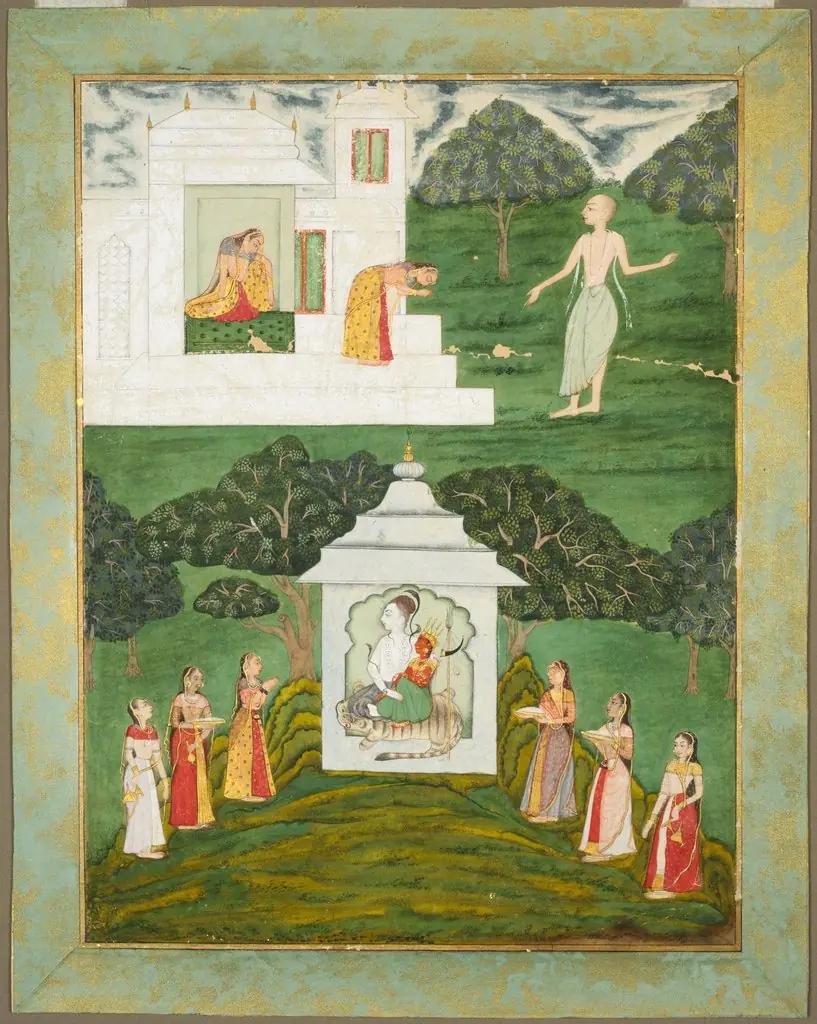
This 1860 opaque watercolour on paper portrays Shiva and Parvati seated together atop Nandi, the sacred bull. Rendered in pale tones against a muted greenish-grey backdrop, the composition emphasizes stillness and divine presence. The figures are arranged symmetrically, facing one another, with Nandi serving as both mount and symbolic anchor. The use of flat, unmodulated color and simplified forms reflects regional stylistic conventions of the period.
Subject & Meaning
The scene depicts the divine couple in a moment of intimate communion, reinforcing their cosmic partnership. Shiva, associated with asceticism and transformation, is shown with a tall headdress and dotted robe, while Parvati, embodying fertility and devotion, wears red with gold accents and holds a fan—symbolizing grace and service. Nandi, their loyal vehicle, signifies devotion and the grounding of spiritual energy in the material world.
Technique & Style
The painting employs opaque watercolour with minimal shading, creating a flat, decorative surface. Outlines are crisp, and colors are applied in solid planes: white for the figures, scarlet for Nandi’s saddle, and orange-red for Parvati’s garment. The background’s subdued green-grey tone enhances the figures’ luminosity. The lack of perspective and stylized foliage contribute to a timeless, otherworldly atmosphere.
History & Provenance
Created in northern India during the mid-19th century, this work likely originated in a courtly or devotional atelier, possibly linked to Punjab or Himalayan hill states. Its preservation in institutional collections suggests early recognition of its cultural value. The Victoria and Albert Museum holds similar works, indicating shared artistic traditions across regional schools of Indian painting during British colonial rule.
Context
This painting emerged during a period when traditional Indian iconography coexisted with colonial collecting practices. While European tastes favored detailed realism, regional artists continued producing devotional imagery using established symbolic languages. The emphasis on divine pairs, sacred animals, and symbolic color reflects enduring Hindu theological themes, adapted to portable formats for private worship or elite patronage.
Legacy
Works like this preserved devotional aesthetics through a time of rapid cultural change. Though not widely exhibited in their era, such paintings now serve as key references for understanding regional Hindu art beyond Mughal or Rajput traditions. Their enduring presence in museum collections underscores their role in transmitting religious iconography across generations, beyond textual or sculptural forms.
Artist & collection

 Domestic Scene
 Giacomo and Cardinal Marco, investing Andrea, Abbot of San Zeno, with his Benefice
 The Nymph of Fontainebleau
 Portrait of a Woman
 Madonna and Child with Saints in the Enclosed Garden
 Venus and Minerva
 Family Group of Four on Sofa
 Wall painting from Room H of the Villa of P. Fannius Synistor at Boscoreale