Artwork
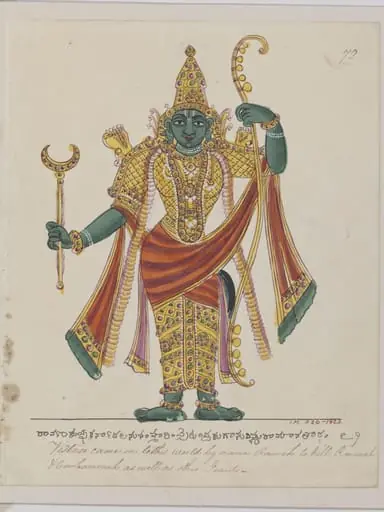
Shiva holding a sword, mace and shield.
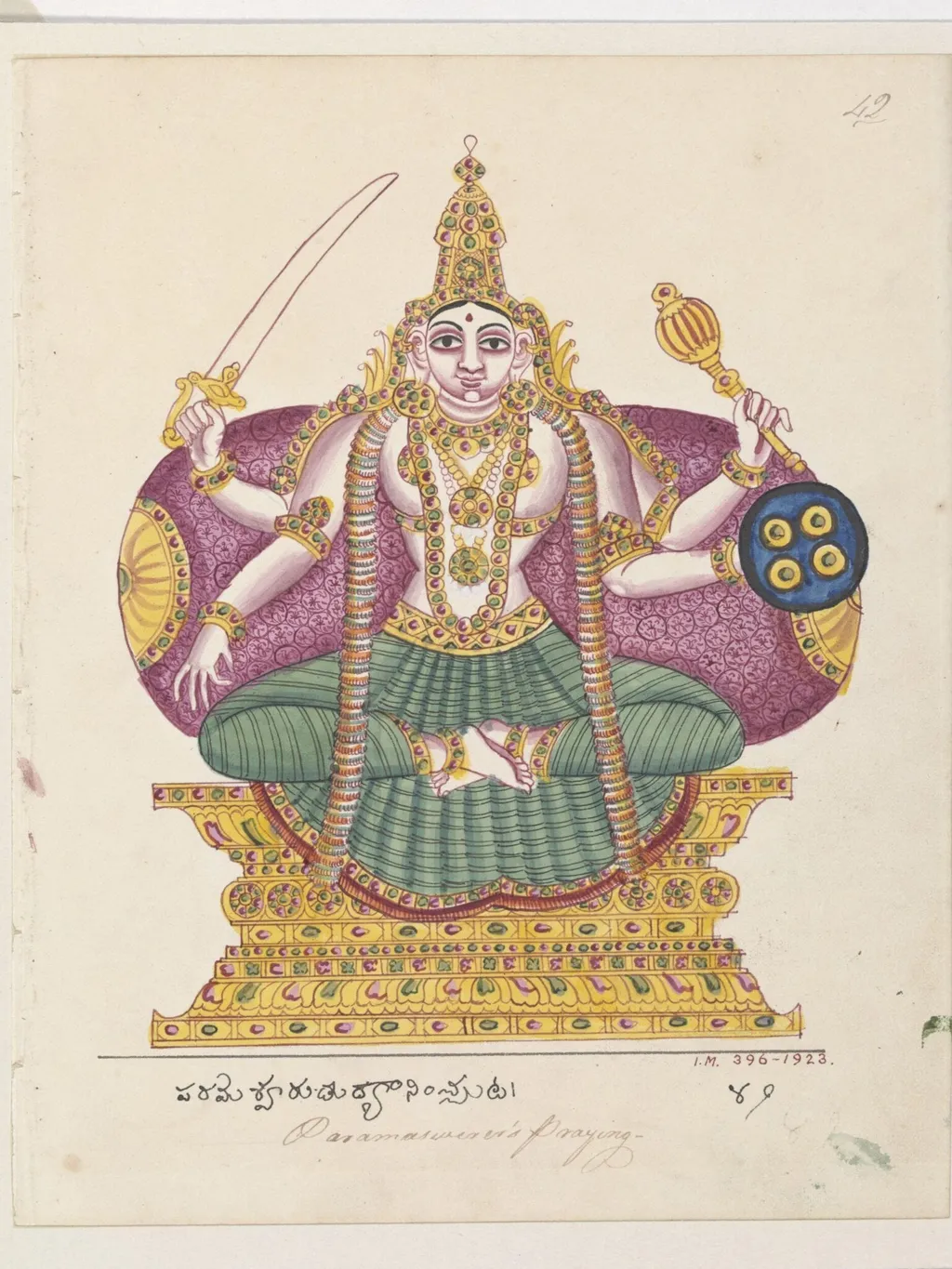
Shiva holding a sword, mace and shield. is a paint painting by the Romanticist artist Unknown. It dates from 1820 and is held in the collection of the Victoria and Albert Museum.
About this work
Overview
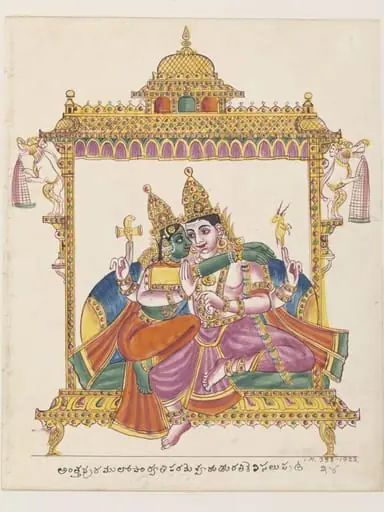
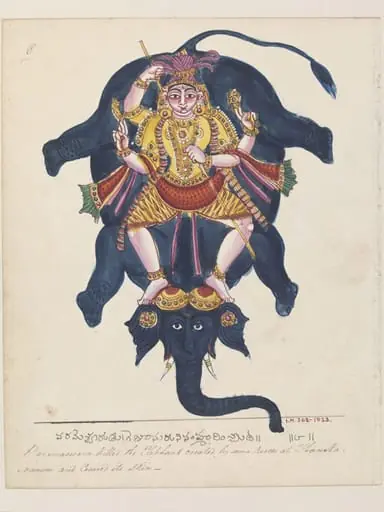
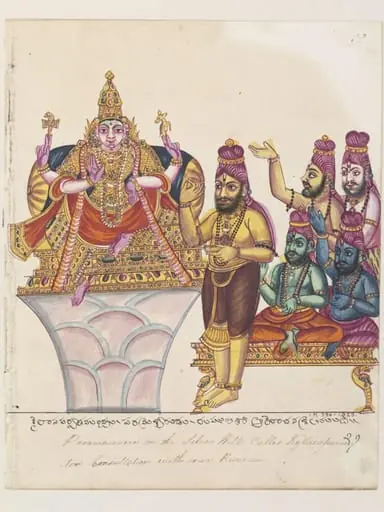
This painting portrays Shiva, a principal deity in Hinduism, depicted with four arms and seated in a meditative posture atop a finely detailed lotus throne. His white skin, green lower garment, and ornate gold jewelry emphasize divine status. The composition centers on his calm expression and balanced posture, with a subdued background that directs focus to his form and attributes.
Subject & Meaning
Shiva is shown wielding a sword, mace, and shield—symbols of protection, destruction of ignorance, and defense of dharma. His fourth hand assumes a mudra, likely offering reassurance or blessing. The serene facial expression contrasts with the weapons, suggesting inner stillness amid cosmic power. This representation aligns with Shiva’s role as both destroyer and protector within Hindu cosmology.
Technique & Style
The painting employs fine brushwork to render intricate patterns on the throne and delicate details in the jewelry and fabric. Colors are restrained, with the muted background enhancing the luminosity of the deity’s skin and gold adornments. The composition follows traditional Indian iconographic conventions, prioritizing symbolic clarity over naturalistic depth or perspective.
History & Provenance
The work originates from a regional Indian painting tradition, likely from the 18th or 19th century, produced in a courtly or temple context. While specific provenance is unrecorded, its stylistic elements suggest influence from Pahari or Rajasthani schools, where devotional imagery was meticulously rendered for ritual or aristocratic patronage.
Context
The emphasis on serenity and symbolic weaponry aligns with theological texts describing Shiva’s dual nature as both peaceful and formidable.
This image reflects the devotional practices of Hindu communities that venerate Shiva as a transcendent yet accessible force. Such paintings were often used in private worship or temple settings, where visual representations aided meditation and ritual focus. The emphasis on serenity and symbolic weaponry aligns with theological texts describing Shiva’s dual nature as both peaceful and formidable.
Legacy
The painting preserves a classical mode of Hindu iconography that continues to inform religious art in South Asia. Though stylistically distinct from later movements like Romanticism, its enduring appeal lies in its adherence to spiritual symbolism and compositional harmony. It remains a reference point for understanding how divine power is visually encoded in Indian artistic traditions.
Artist & collection

 Domestic Scene
 Giacomo and Cardinal Marco, investing Andrea, Abbot of San Zeno, with his Benefice
 The Nymph of Fontainebleau
 Portrait of a Woman
 Madonna and Child with Saints in the Enclosed Garden
 Venus and Minerva
 Family Group of Four on Sofa
 Wall painting from Room H of the Villa of P. Fannius Synistor at Boscoreale