Artwork
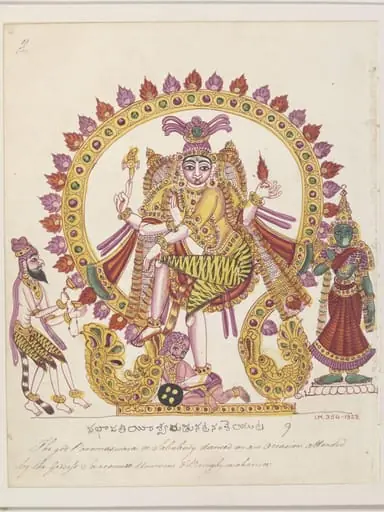
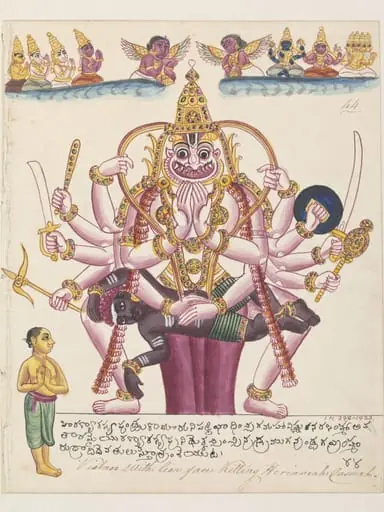
Shiva as the slayer of the elephant demon, Gajasura.
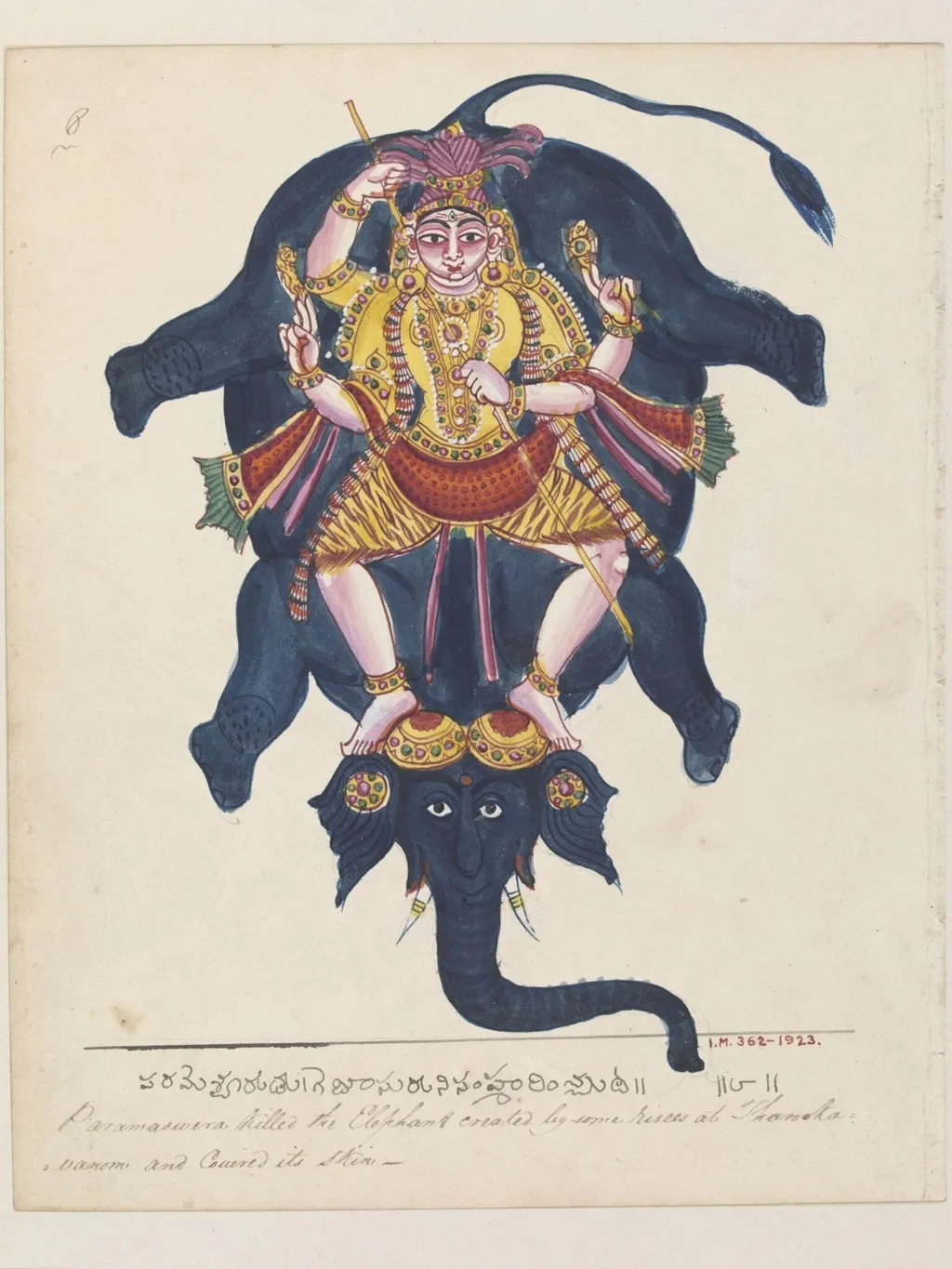
Shiva as the slayer of the elephant demon, Gajasura. is a paint painting by the Romanticist artist Unknown. It dates from 1820 and is held in the collection of the Victoria and Albert Museum. This painting illustrates the Hindu deity Shiva triumphing over the elephant demon Gajasura.
About this work
Overview
The scene is rendered in vivid pigments with intricate detailing, reflecting regional Indian miniature traditions rather than European Romanticism.
This painting illustrates the Hindu deity Shiva triumphing over the elephant demon Gajasura. Shiva is shown mounted atop the demon’s severed head, which serves as a symbolic pedestal. The scene is rendered in vivid pigments with intricate detailing, reflecting regional Indian miniature traditions rather than European Romanticism. The composition centers on divine authority, with Shiva’s poised stance and ornate adornments reinforcing his cosmic supremacy.
Subject & Meaning
The narrative draws from a myth in which Shiva defeats Gajasura, an elephant-demon who had gained invincibility through penance. By slaying him and wearing his skin, Shiva demonstrates the subjugation of ego and ignorance. The elephant’s upturned trunk and upward gaze suggest surrender, while Shiva’s posture conveys calm control. The trident, drum, and deer in his hands symbolize destruction, creation, and the soul’s liberation, encapsulating his role as both destroyer and regenerator.
Technique & Style
The work employs fine brushwork and mineral-based pigments typical of Indian miniature painting. Shiva’s pink skin, gold jewelry, and red sash contrast with the dark blue elephant and pale background, enhancing visual hierarchy. Delicate patterns adorn his attire, and the elephant’s form is rendered with subtle modeling. The flat perspective and decorative emphasis align with pre-colonial Indian aesthetics, not European Romanticism, despite the vibrant palette.
History & Provenance
This painting likely originated in a Rajput or Pahari court workshop during the 18th or early 19th century, a period when devotional themes were frequently commissioned by royal patrons. Such works were often part of illustrated manuscripts or standalone devotional pieces. Its survival suggests it was preserved within a collector’s lineage, possibly linked to a temple or aristocratic household devoted to Shaivism.
Context
In the broader devotional landscape of early modern India, depictions of Shiva’s victories over demons reinforced theological narratives of dharma’s triumph. These images were not merely decorative but served as aids for meditation and ritual. The emphasis on divine power and cosmic order resonated with audiences in regions where Shaivism flourished, particularly in the hill kingdoms of northern India.
Legacy
Though not widely known outside specialized collections, this painting exemplifies the enduring visual language of Hindu iconography. Its stylistic choices influenced later regional schools and continue to inform contemporary devotional art. Scholars value it as a testament to the continuity of mythic storytelling through visual form, preserving theological concepts across generations without textual mediation.
Artist & collection

 Domestic Scene
 Giacomo and Cardinal Marco, investing Andrea, Abbot of San Zeno, with his Benefice
 The Nymph of Fontainebleau
 Portrait of a Woman
 Madonna and Child with Saints in the Enclosed Garden
 Venus and Minerva
 Family Group of Four on Sofa
 Wall painting from Room H of the Villa of P. Fannius Synistor at Boscoreale