Artwork
Sita and Hanuman
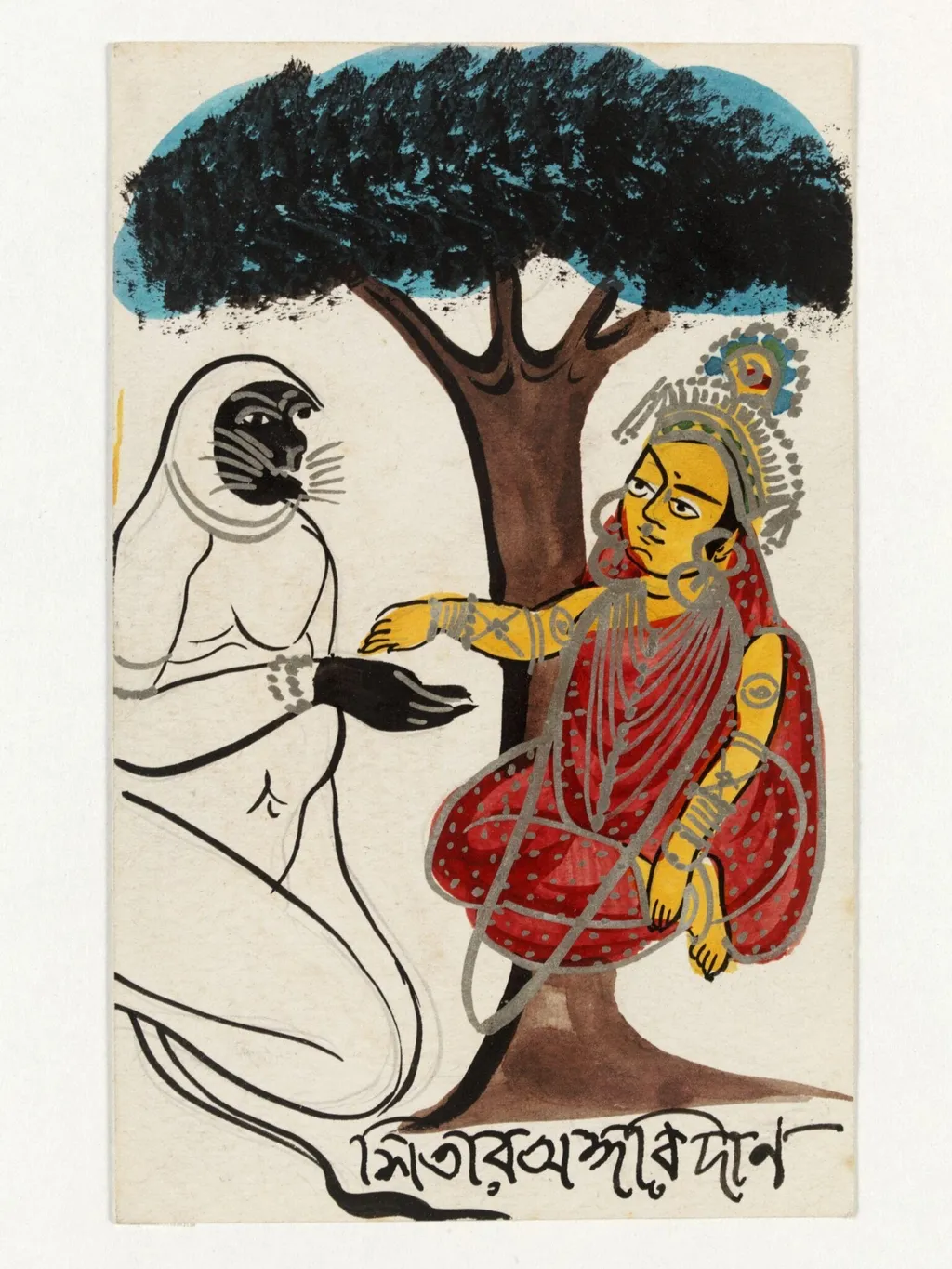
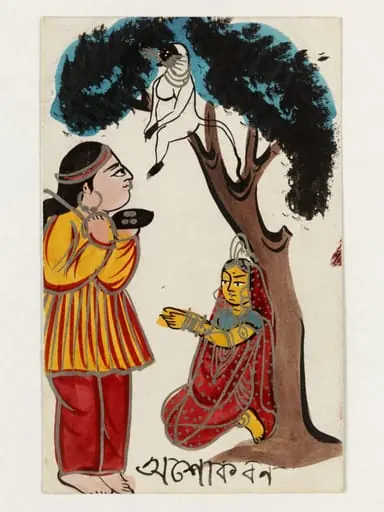
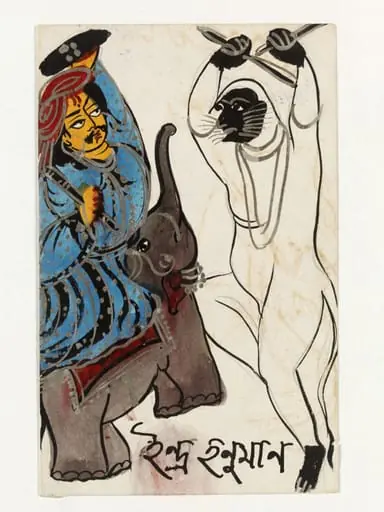
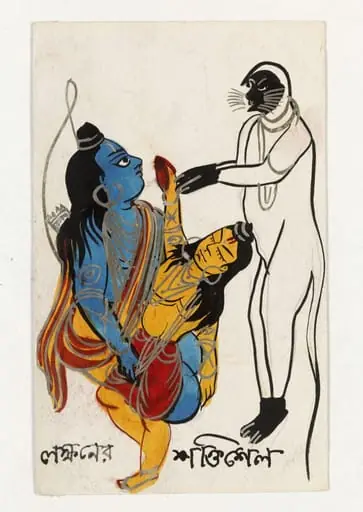
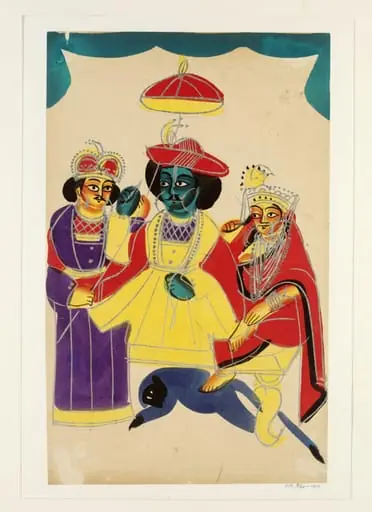
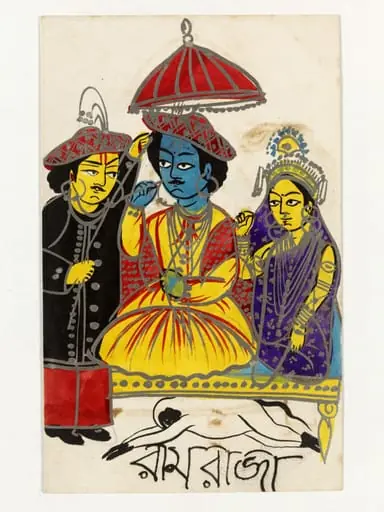
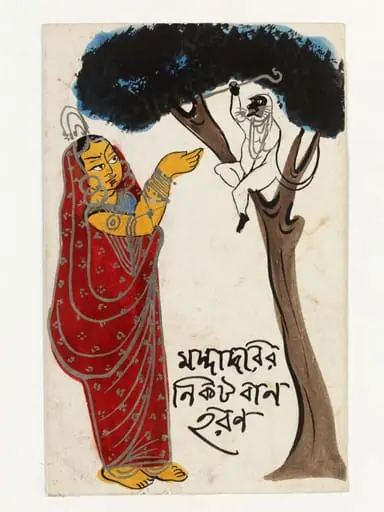
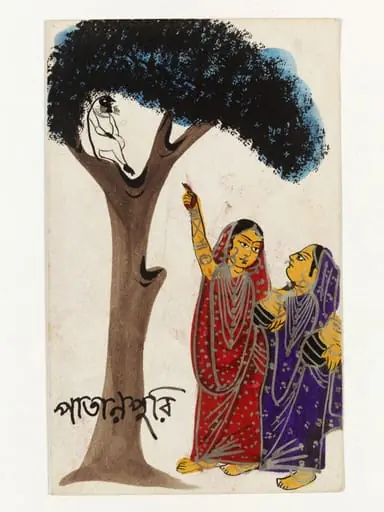
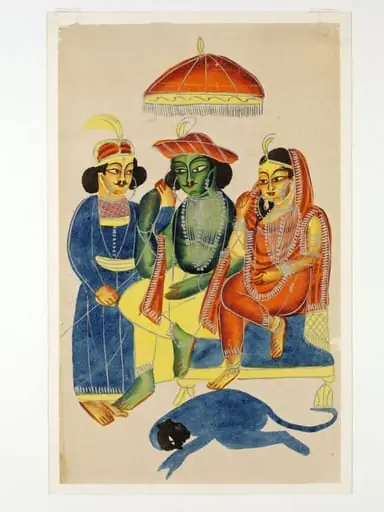
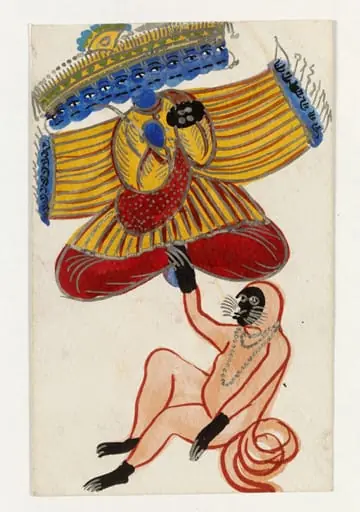
Sita and Hanuman is a paint painting by the Impressionist artist Unknown. It dates from 1890 and is held in the collection of the Victoria and Albert Museum. This watercolour and tin alloy painting on paper, created around 1890 in Calcutta, illustrates a moment from the Ramayana.
About this work
Overview
It belongs to the Kalighat tradition, a style of Bengali folk art that emerged in the 19th century near the Kalighat temple.
This watercolour and tin alloy painting on paper, created around 1890 in Calcutta, illustrates a moment from the Ramayana. It belongs to the Kalighat tradition, a style of Bengali folk art that emerged in the 19th century near the Kalighat temple. The work combines delicate brushwork with bold, flat areas of colour, typical of artists who produced devotional and narrative imagery for pilgrims and urban patrons.
Subject & Meaning
The scene captures Sita offering a jewel to Hanuman, a gesture meant for Rama’s return. Sita, depicted in modest white, turns away subtly, conveying her isolation and devotion. Hanuman, adorned in vivid red and gold, kneels respectfully, his hand gently clasping hers. The moment reflects loyalty and spiritual duty, central themes in the Ramayana, rendered with emotional restraint rather than dramatic intensity.
Technique & Style
The painting employs watercolour and tin alloy on paper, using rapid, fluid brushstrokes to define forms. Figures are simplified, with minimal shading and strong outlines. The tree above is rendered in dark, angular strokes, contrasting with the pale blue sky. The use of metallic pigment adds subtle luminosity, while the script at the base likely identifies the scene or artist, a common feature in Kalighat works meant for quick comprehension and devotional use.
History & Provenance
Produced in late 19th-century Calcutta, this piece emerged from a community of artists who migrated to the city’s outskirts, selling paintings near the Kalighat temple. These works responded to both religious devotion and the shifting social landscape under British rule. While many such paintings were mass-produced, this example retains refined detail, suggesting it may have been made for a discerning patron rather than general sale.
Context
Kalighat art developed as urbanization and colonial influence transformed Bengali society. Artists adapted traditional mythological themes to appeal to a growing middle class and foreign collectors. Unlike classical miniatures, these works embraced immediacy and boldness, reflecting both spiritual continuity and the pressures of modernity. The presence of metallic pigments hints at evolving materials and commercial demands.
Legacy
Kalighat paintings like this one helped bridge folk and fine art traditions in India. Though later overshadowed by Western-style academic art, they remain vital for understanding how regional artists negotiated identity, religion, and commerce during colonialism. Today, they are studied as dynamic visual records of 19th-century Bengal, valued for their expressive economy and cultural resonance.
Artist & collection

 Domestic Scene
 Giacomo and Cardinal Marco, investing Andrea, Abbot of San Zeno, with his Benefice
 The Nymph of Fontainebleau
 Portrait of a Woman
 Madonna and Child with Saints in the Enclosed Garden
 Venus and Minerva
 Family Group of Four on Sofa
 Wall painting from Room H of the Villa of P. Fannius Synistor at Boscoreale