Artwork
Sitala
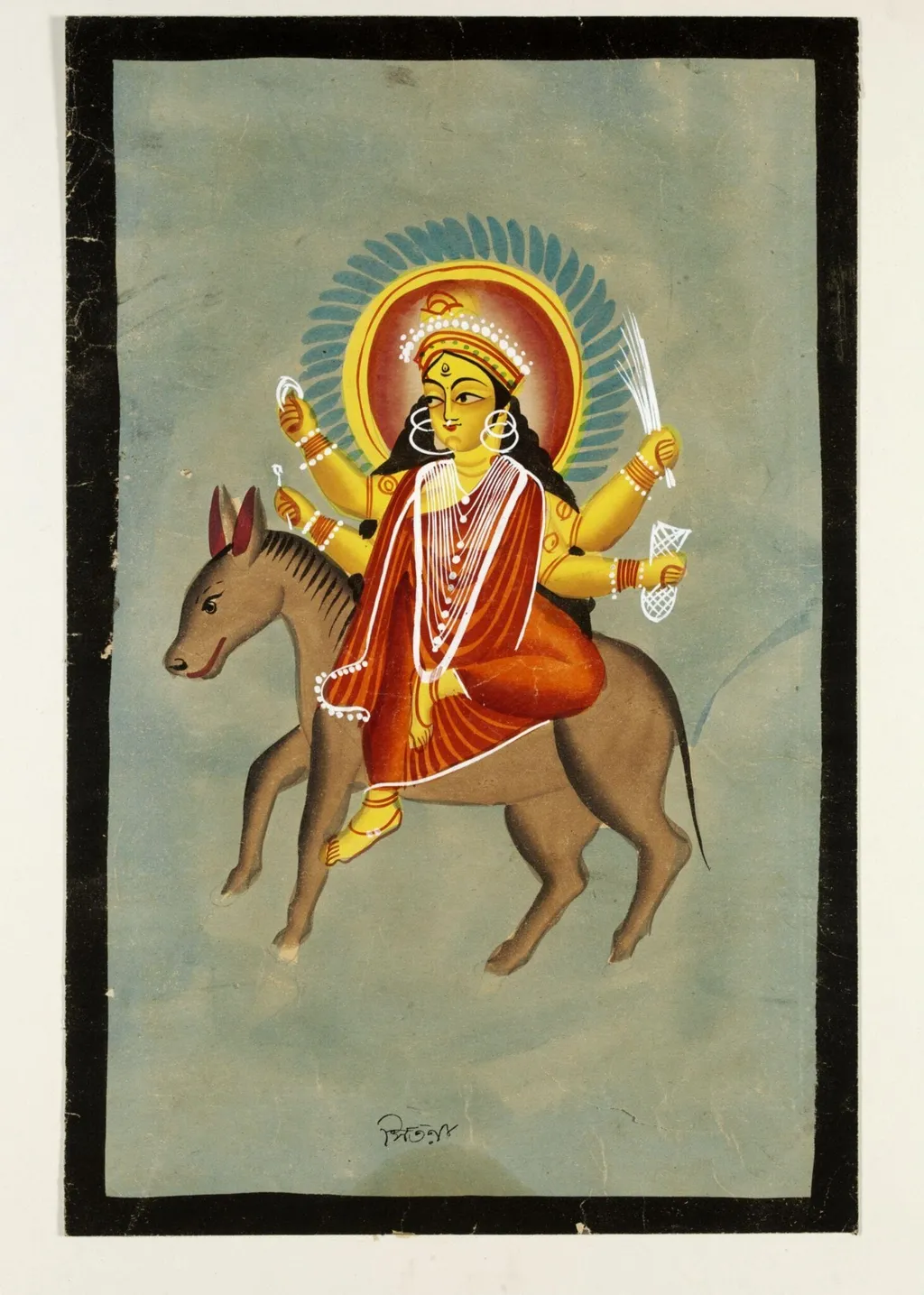
Sitala is a paint painting by the Impressionist artist Unknown. It dates from 1885 and is held in the collection of the Victoria and Albert Museum.
About this work
Overview
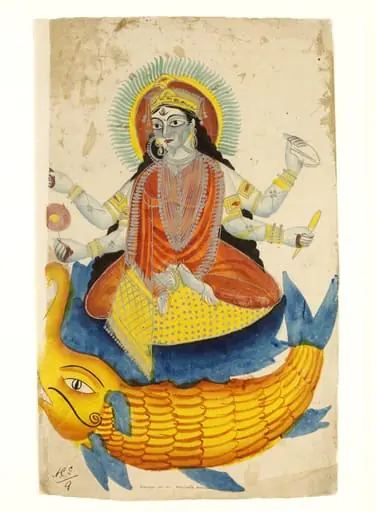
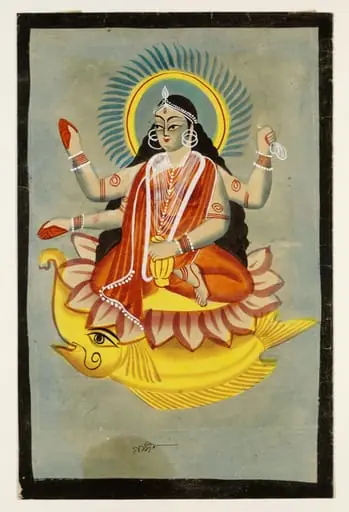
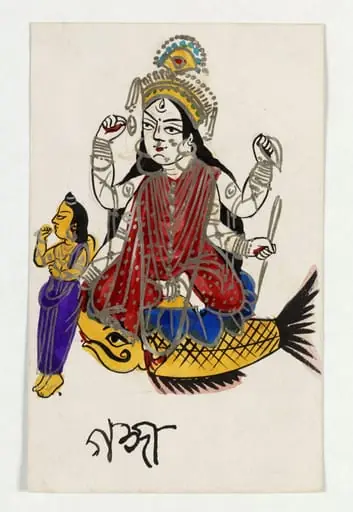
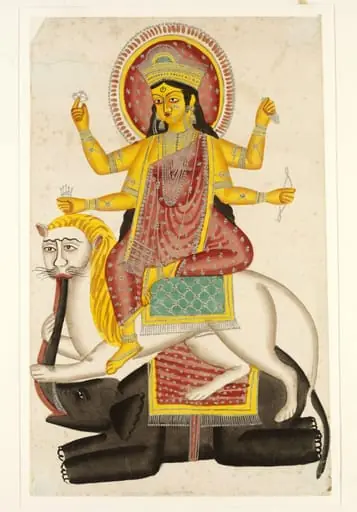
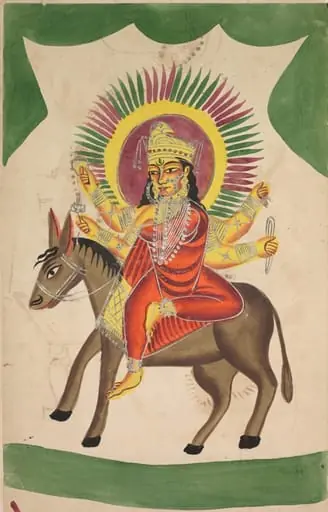
Sitala, the deity linked to smallpox, is portrayed in an opaque watercolor on paper dated 1885. The work, whose creator remains unidentified, entered the collection in 1894 through Miss M Steele, whose family connections to India and scholarship in Sanskrit suggest an early provenance.
Subject & Meaning
The figure is a four‑armed woman astride a brown donkey, dressed in a red‑white costume and a vivid yellow headdress radiating a sun‑like aura. Each hand grasps a distinct object, emphasizing the goddess’s multifaceted powers and her role in overseeing health and disease.
Technique & Style
Executed in opaque watercolor, the painting employs bold outlines and saturated hues that delineate the figure against a plain light‑green background. The flat application of color and the clear, graphic rendering are characteristic of late‑19th‑century Indian devotional art.
History & Provenance
The artwork was likely acquired in India by the grandmother of Miss M Steele, a woman who spent part of her life there. It passed to Steele’s mother, a Sanskrit scholar at Cambridge, before being sold to the present institution in 1894.
Context
Sitala’s iconography reflects traditional Indian representations of disease deities, where multiple arms denote divine capability. The inclusion of a donkey, a common transport animal, grounds the divine figure in everyday life, aligning with devotional practices of the period.
Artist & collection

 Domestic Scene
 Giacomo and Cardinal Marco, investing Andrea, Abbot of San Zeno, with his Benefice
 The Nymph of Fontainebleau
 Portrait of a Woman
 Madonna and Child with Saints in the Enclosed Garden
 Venus and Minerva
 Family Group of Four on Sofa
 Wall painting from Room H of the Villa of P. Fannius Synistor at Boscoreale