Artwork
Ganga
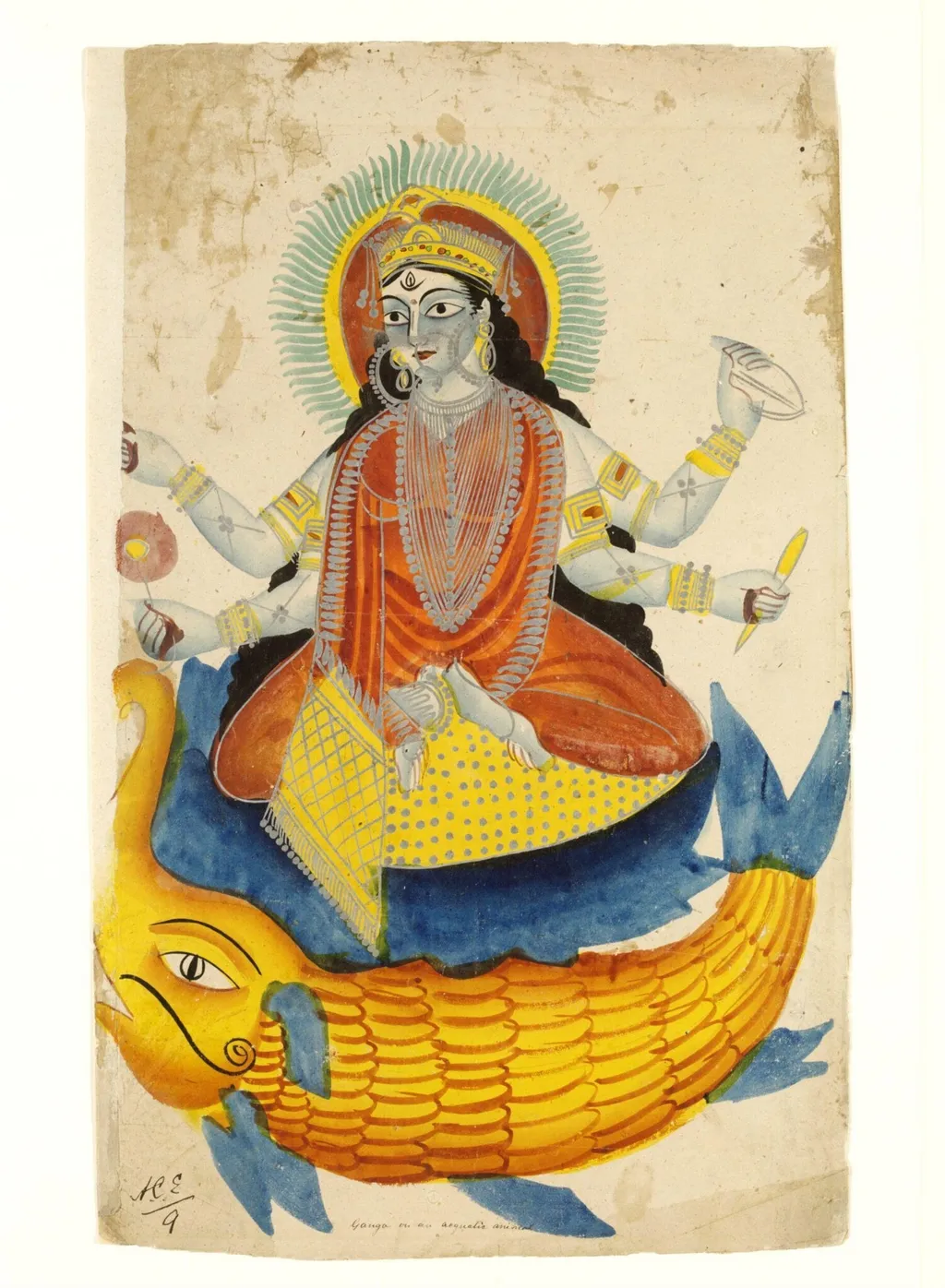
Ganga is a paint painting by the Impressionist artist Unknown. It dates from 1850 and is held in the collection of the Victoria and Albert Museum.
About this work
Overview
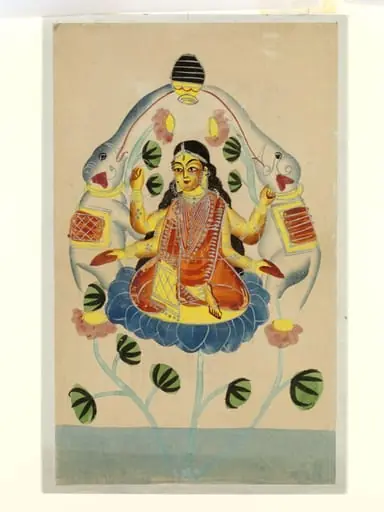
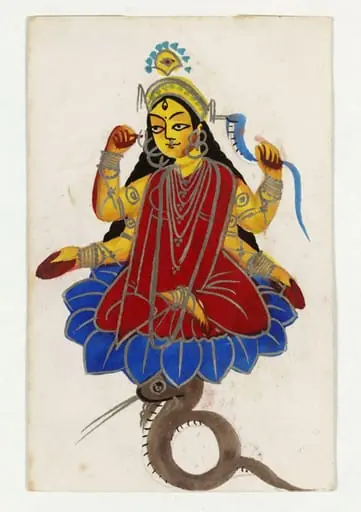
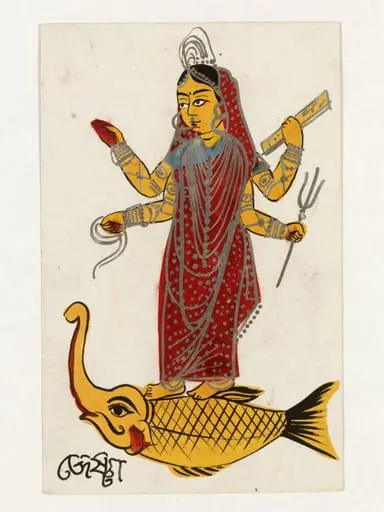
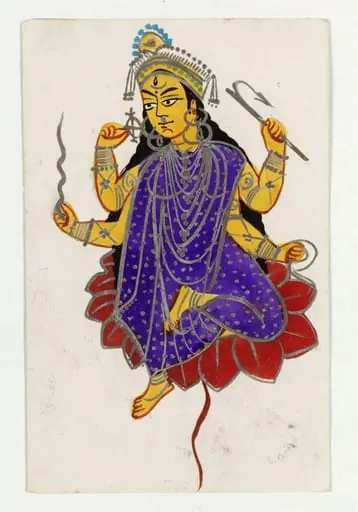
Ganga is a watercolour painting on paper, embellished with tin alloy details, created circa 1850 by an unidentified artist. It portrays the goddess Ganga in a regal pose, seated upon a fish.
Subject & Meaning
The painting depicts Ganga, the revered Hindu goddess of the Ganges River, serenely seated on a yellow fish with blue fins. Her calm, downward-cast eyes and raised right hand convey a sense of serene authority.
Technique & Style
Executed in a style characteristic of Indian art, the painting features intricate details, vibrant colors (notably orange, blue, gray, and beige), and employs chiaroscuro to achieve depth and dimensionality.
History & Provenance
Acquired by the Department of Prints and Drawings in 1889 from G. Wild, the painting's pre-1889 ownership history remains undocumented due to the anonymity of its creator.
Context
Created around 1850, this work reflects the blend of traditional Indian artistic motifs with the influence of European techniques (e.g., chiaroscuro) common during the colonial era.
Legacy
While not attributed to a specific artist, 'Ganga' serves as a preserved example of mid-19th-century Indian watercolour painting, illustrating the era's artistic fusions and devotion to Hindu deities.
Artist & collection

 Domestic Scene
 Giacomo and Cardinal Marco, investing Andrea, Abbot of San Zeno, with his Benefice
 The Nymph of Fontainebleau
 Portrait of a Woman
 Madonna and Child with Saints in the Enclosed Garden
 Venus and Minerva
 Family Group of Four on Sofa
 Wall painting from Room H of the Villa of P. Fannius Synistor at Boscoreale