Artwork
Still life with Wood Pigeon and Powder Horn
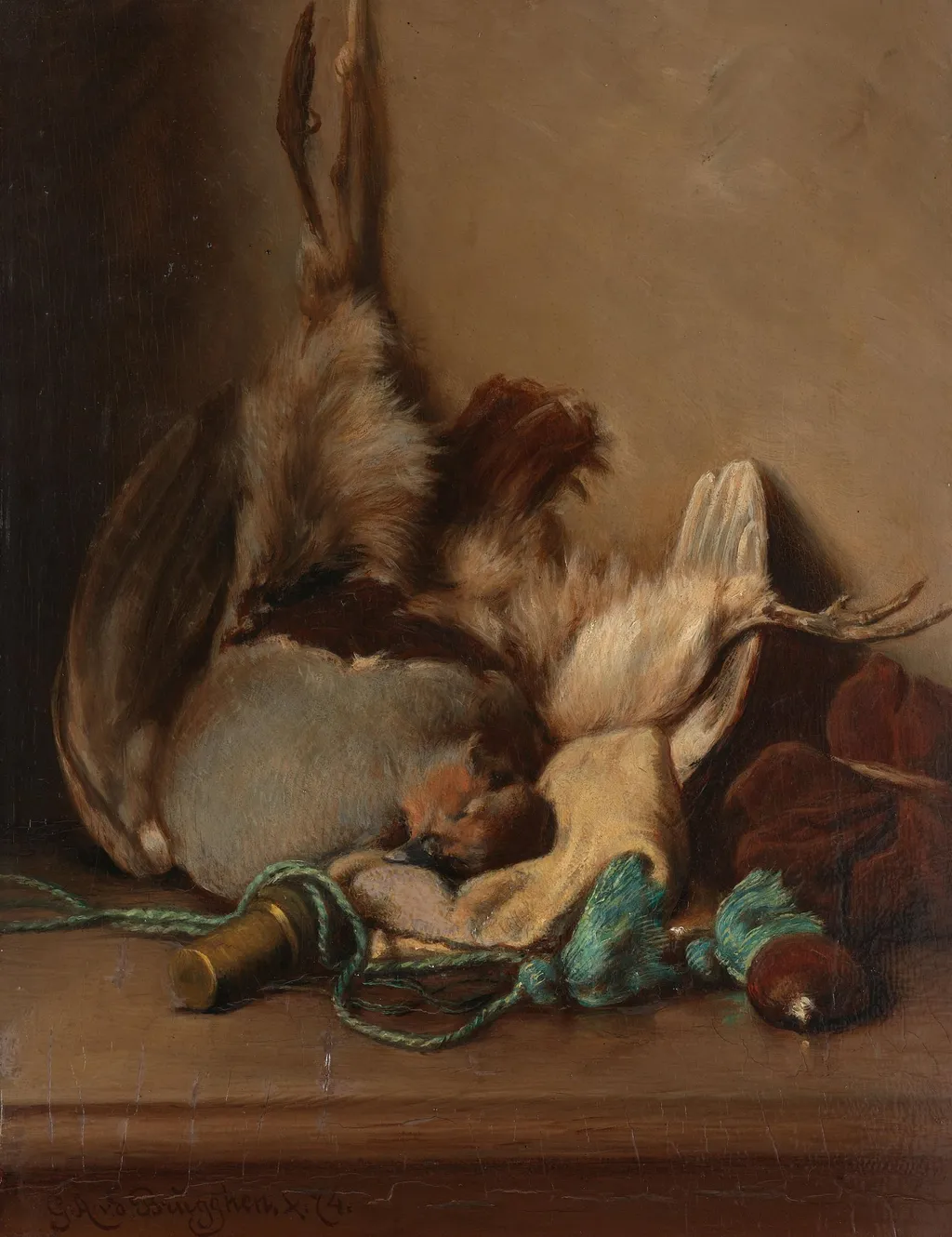
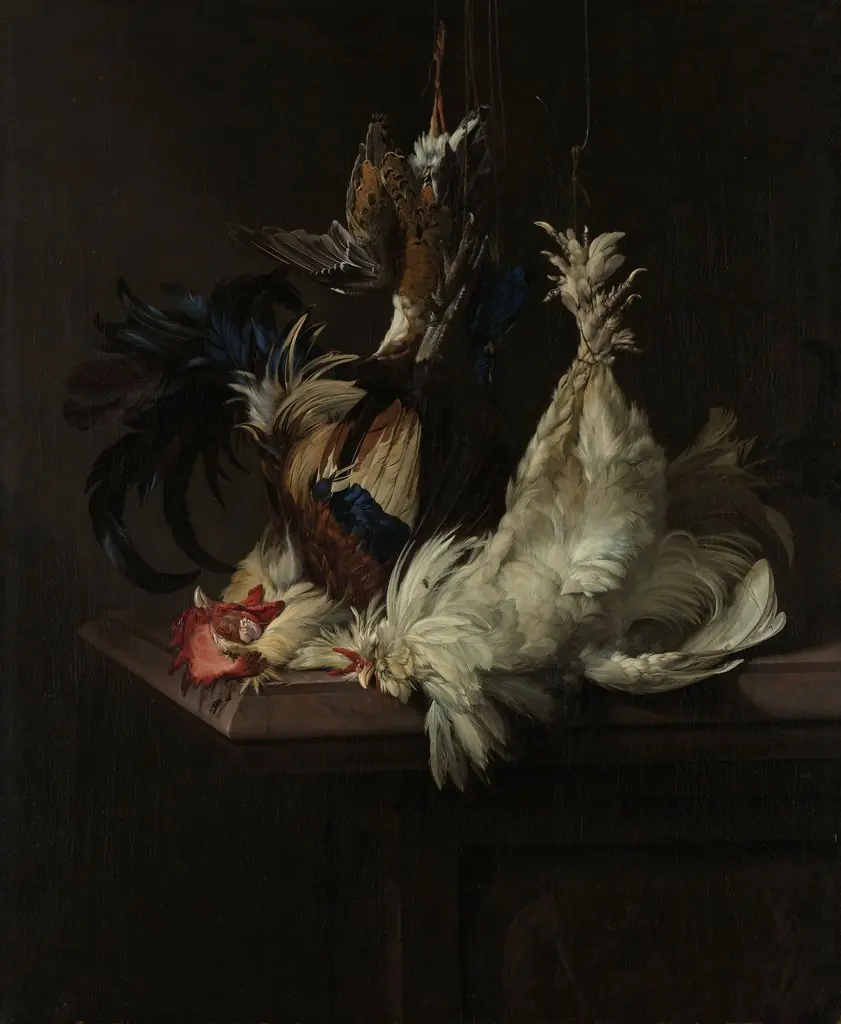
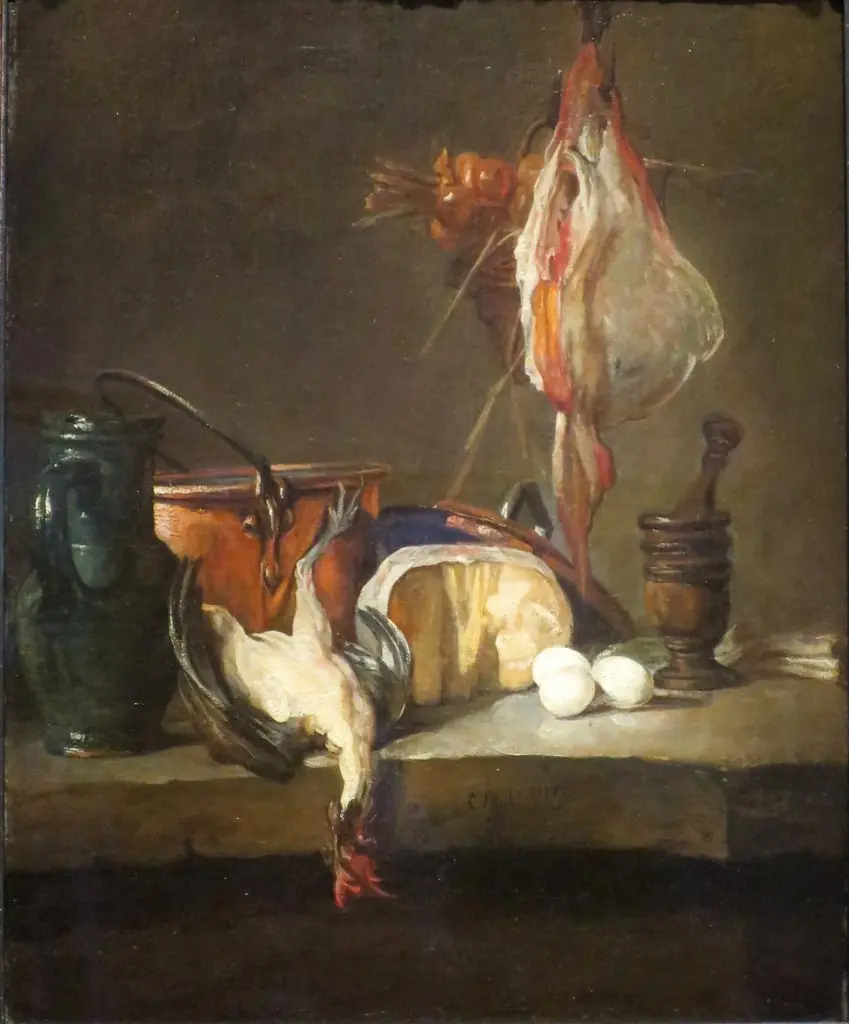
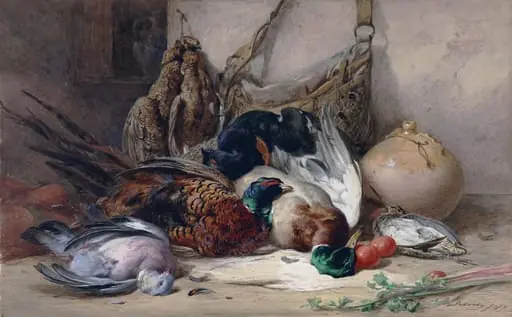
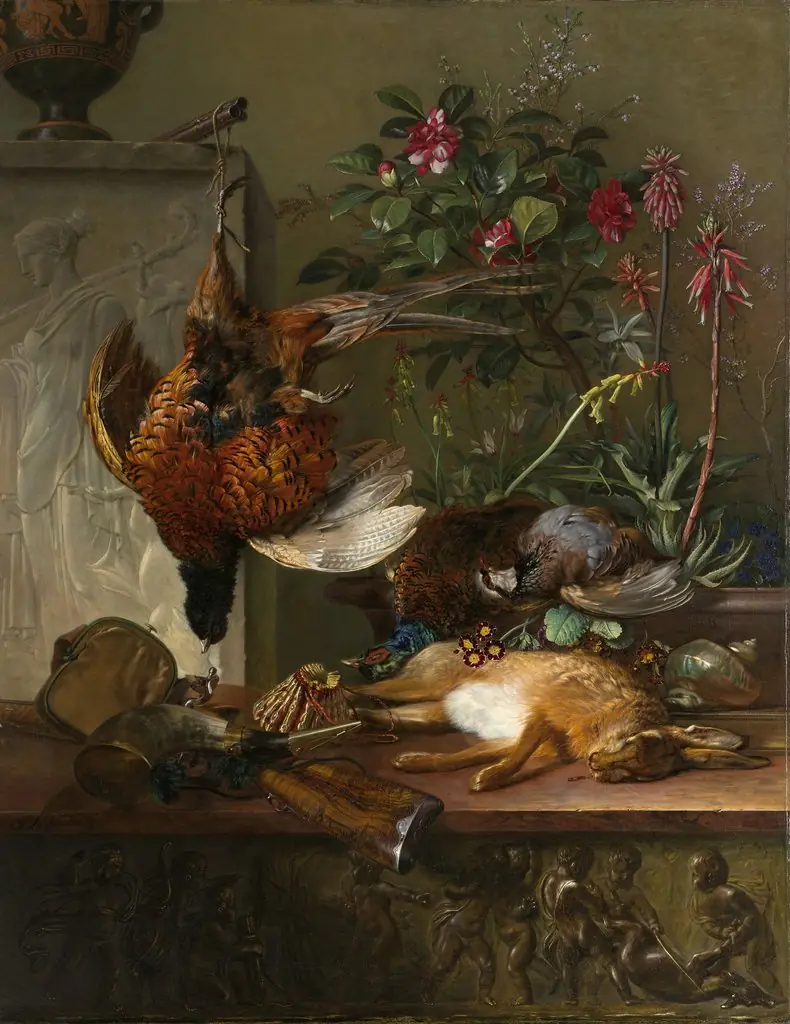
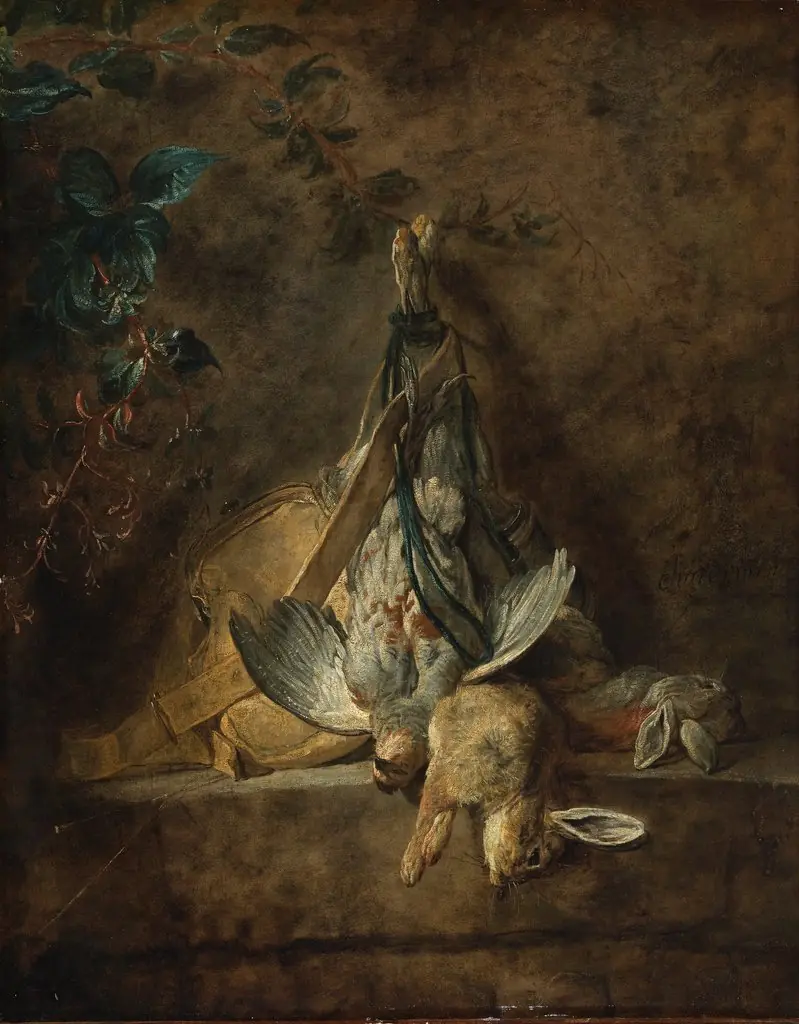
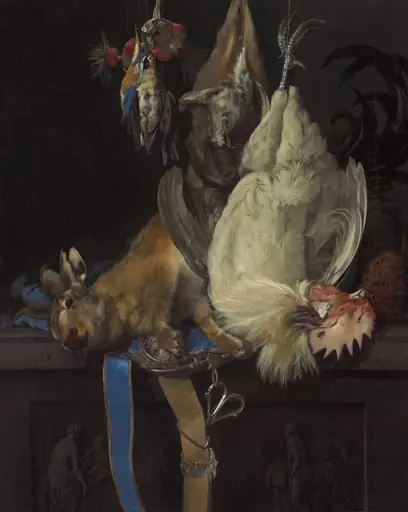
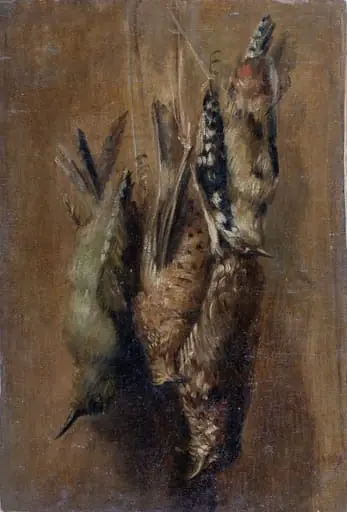
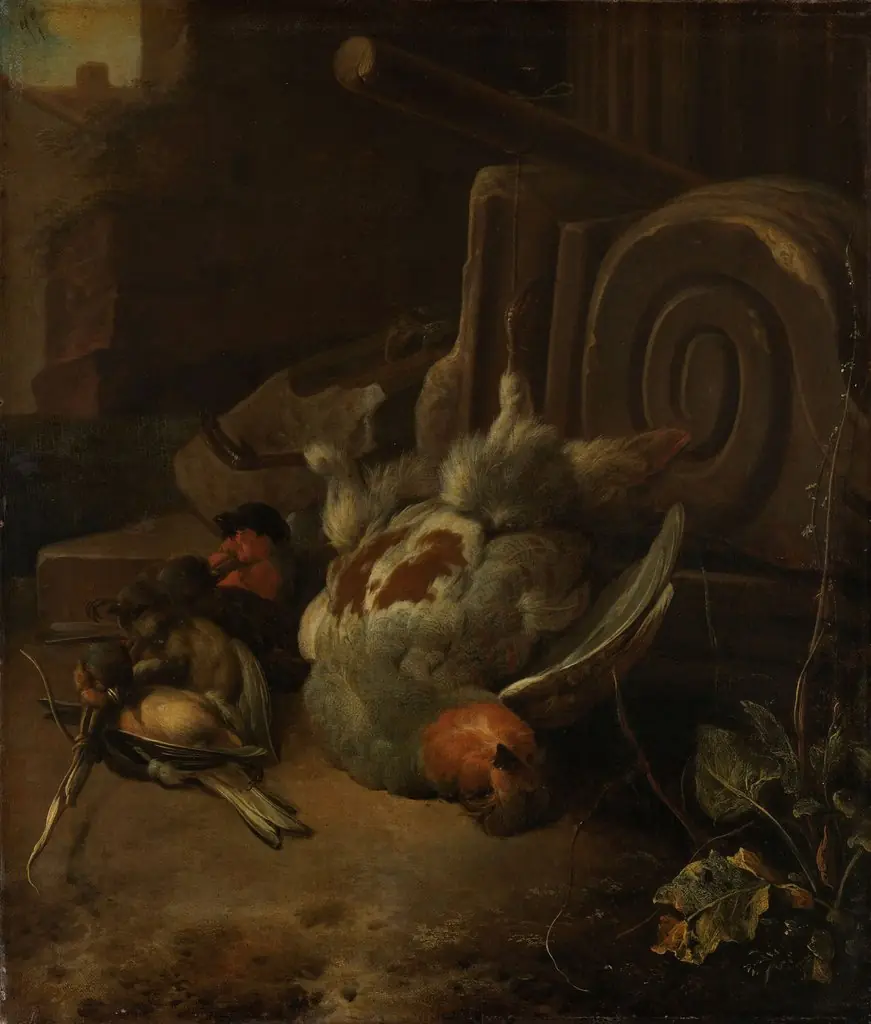
Still life with Wood Pigeon and Powder Horn is an unspecified painting by the Dutch Golden Age artist Unknown. It dates from 1874 and is held in the collection of the Rijksmuseum. This painting presents a simple arrangement of a dead wood pigeon suspended by one leg and a powder horn resting against a plain wall.
About this work
Overview
This painting presents a simple arrangement of a dead wood pigeon suspended by one leg and a powder horn resting against a plain wall. The composition is restrained, devoid of ornament or dramatic lighting, focusing instead on the quiet presence of everyday objects. The scene carries no overt symbolism, yet its stillness invites contemplation of mortality and utility.
Subject & Meaning
The pigeon, likely a hunted bird, and the powder horn—once used to carry gunpowder for firearms—suggest a connection to hunting or military life. Neither object is idealized; their inclusion reflects a practical world where animals are sources of sustenance and tools serve daily needs. The painting honors the ordinary, presenting death not as tragic, but as a natural part of life.
Technique & Style
The artist renders the pigeon’s feathers with meticulous attention, capturing subtle variations in texture and tone. The powder horn’s weathered surface is rendered with soft, muted tones, emphasizing its worn, functional character. Light falls evenly across the scene, avoiding theatrical contrast. The brushwork is precise yet unobtrusive, supporting a sense of quiet realism.
History & Provenance
The work originates from the Dutch Golden Age, likely created in the mid-17th century. It entered the Rijksmuseum’s collection in the 19th century, where it remains part of a broader grouping of still lifes from the period. Its modest scale and unadorned subject suggest it was made for private, rather than public, display.
Context
During the Dutch Golden Age, still lifes often reflected values of diligence, economy, and observation of the natural world. Unlike grand religious or mythological scenes, these works celebrated the tangible and the mundane. This painting aligns with a tradition that found dignity in ordinary objects, especially those tied to rural or working life.
Legacy
The painting endures as an example of unembellished realism in Dutch art. Its quiet dignity and technical precision influenced later generations of still-life painters who sought truth in simplicity. Today, it stands as a testament to the artistic value found in everyday things, observed with patience and care.
Artist & collection

 Domestic Scene
 Giacomo and Cardinal Marco, investing Andrea, Abbot of San Zeno, with his Benefice
 The Nymph of Fontainebleau
 Portrait of a Woman
 Madonna and Child with Saints in the Enclosed Garden
 Venus and Minerva
 Family Group of Four on Sofa
 Wall painting from Room H of the Villa of P. Fannius Synistor at Boscoreale