Artwork
Cooking Pots and Ladle with a White Cloth
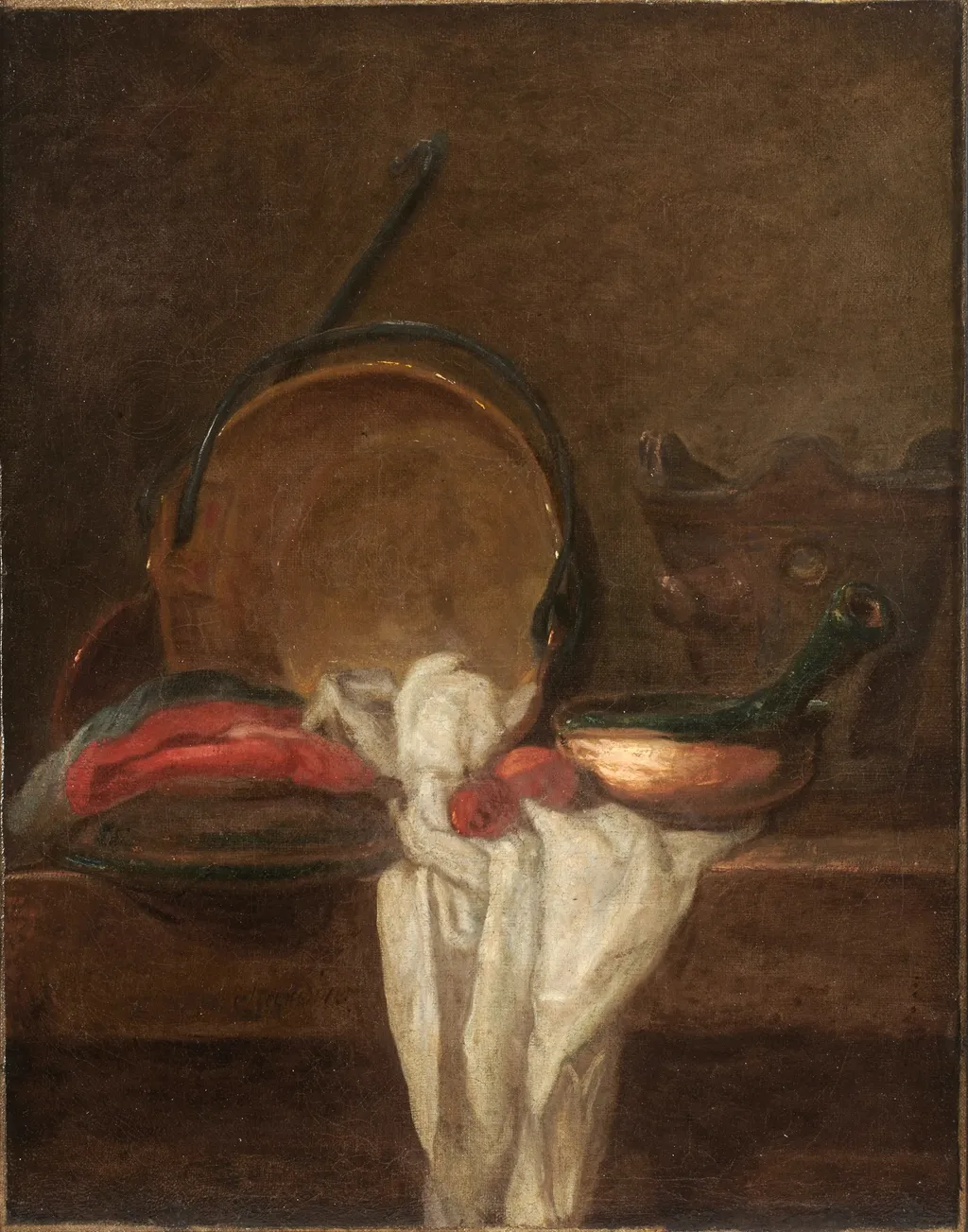
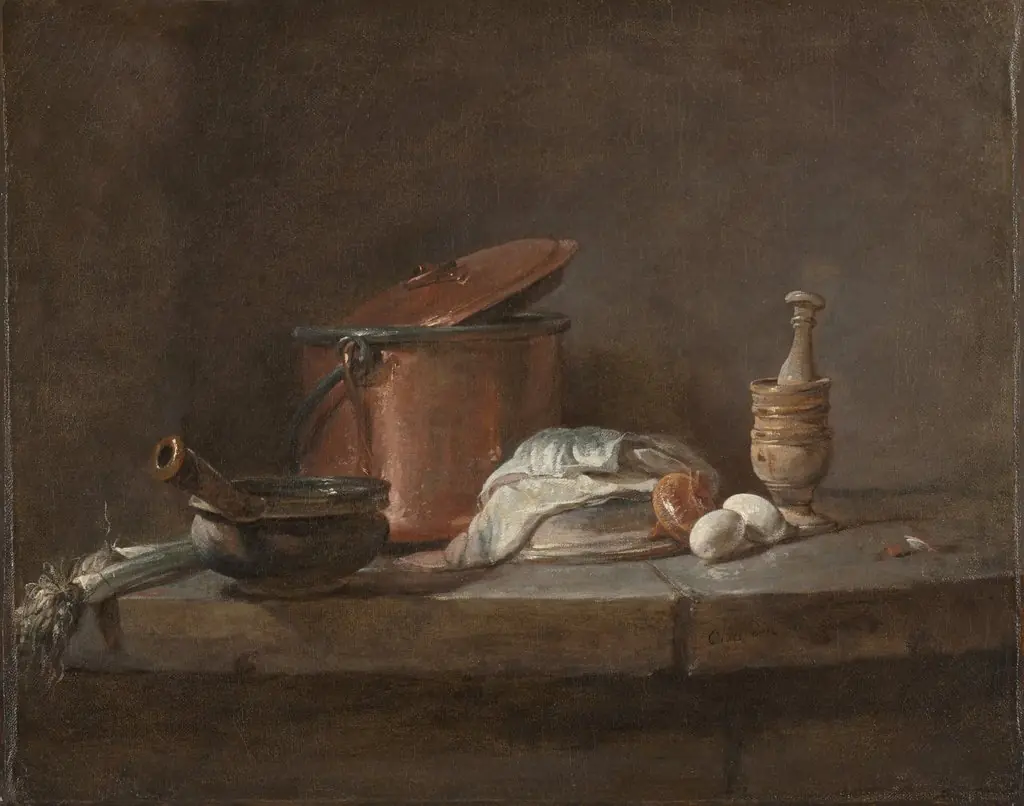
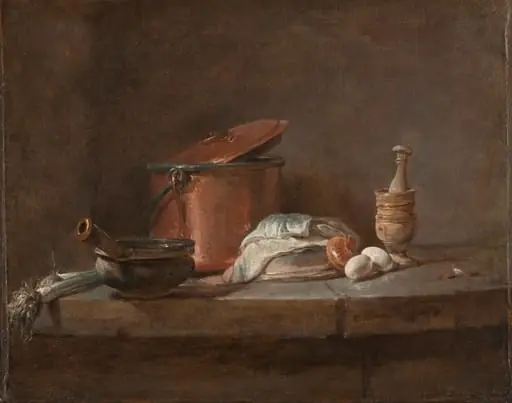
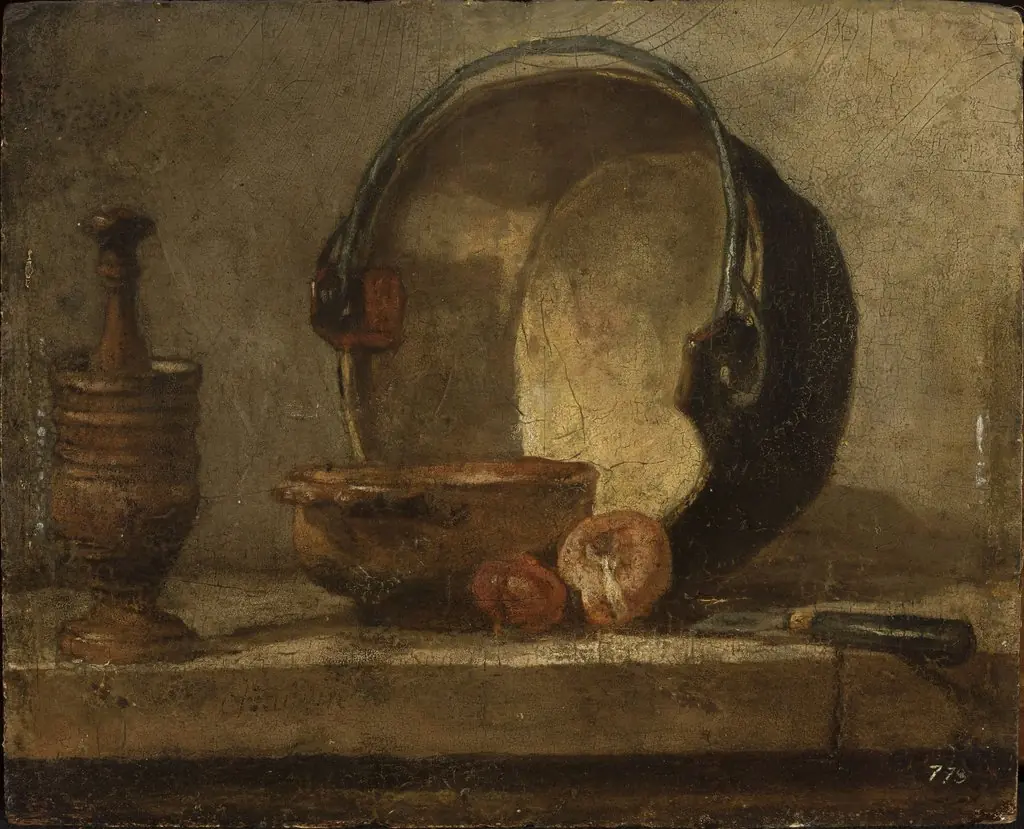
Cooking Pots and Ladle with a White Cloth is an oil painting by the Rococo painting artist Jean-Baptiste-Siméon Chardin. It dates from 1729 and is held in the collection of the Clark Art Institute.
About this work
Overview
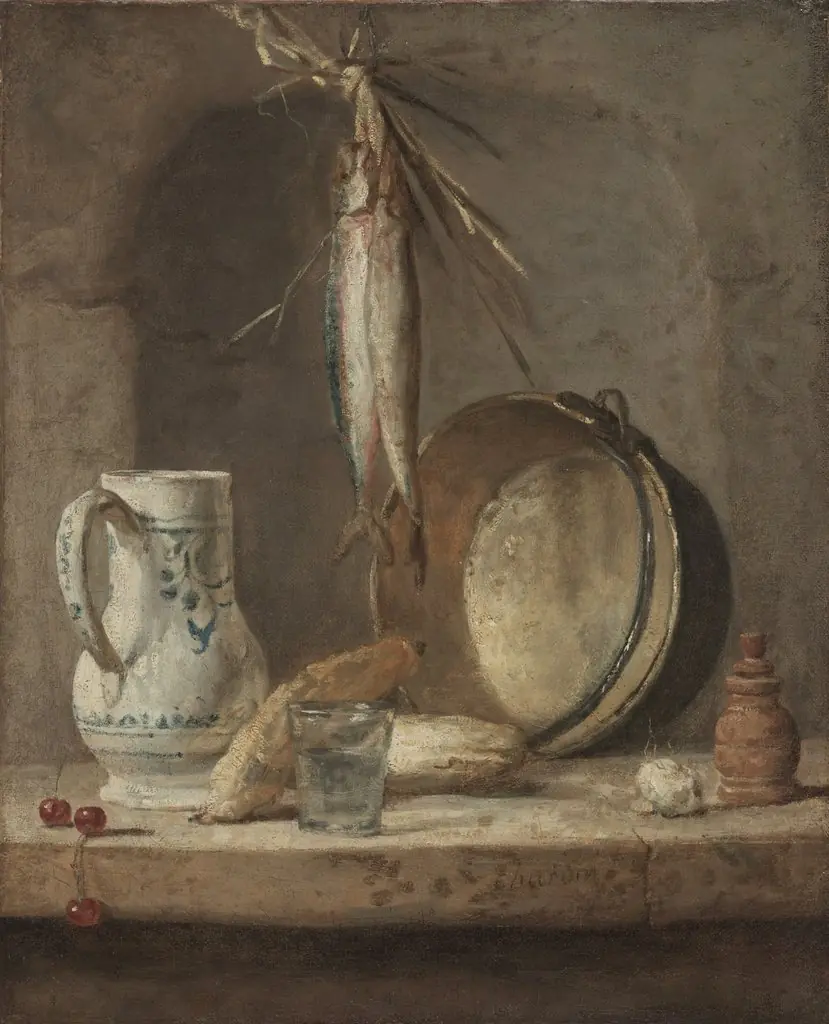
Jean-Baptiste-Siméon Chardin’s oil painting *Cooking Pots and Ladle with a White Cloth* (1729) presents a modest kitchen still life. Rendered in the early eighteenth‑century Rococo era, the work focuses on ordinary metal cookware and a white linen drape, arranged on a darkened surface that emphasizes their warm tones.
Subject & Meaning
The composition gathers copper and bronze pots, a long‑handled ladle, and a folded cloth, all items associated with everyday culinary labor. By isolating these functional objects, Chardin invites contemplation of the quiet dignity of domestic work, turning the mundane into a subject worthy of artistic attention.
Technique & Style
Chardin employs a restrained palette and soft, diffused lighting, allowing subtle variations of sheen on the metal surfaces. The contrast between illuminated highlights and the deep, shadowed background creates a chiaroscuro effect that gives the objects a palpable sense of volume and three‑dimensionality.
History & Provenance
Executed in 1729, the painting belongs to Chardin’s early mature period, when he was establishing his reputation for still lifes that combined realism with a calm, measured composition. The work has remained in public collections, reflecting its continued relevance to studies of French Rococo still life.
Context
During the Rococo, French art often favored decorative extravagance, yet Chardin’s approach remained sober, focusing on everyday subjects rather than aristocratic leisure. This painting exemplifies his counter‑trend, aligning with a broader Enlightenment interest in the ordinary and the observable world.
Artist & collection
Artist
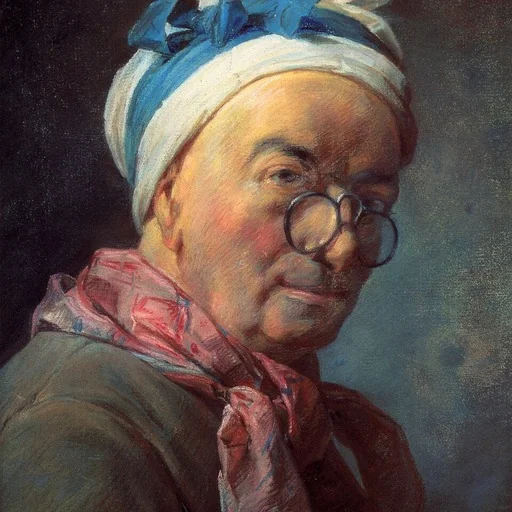
Jean Siméon Chardin (French: ; November 2, 1699 – December 6, 1779) was an 18th-century French painter.