Artwork
Street Scene, St Malo
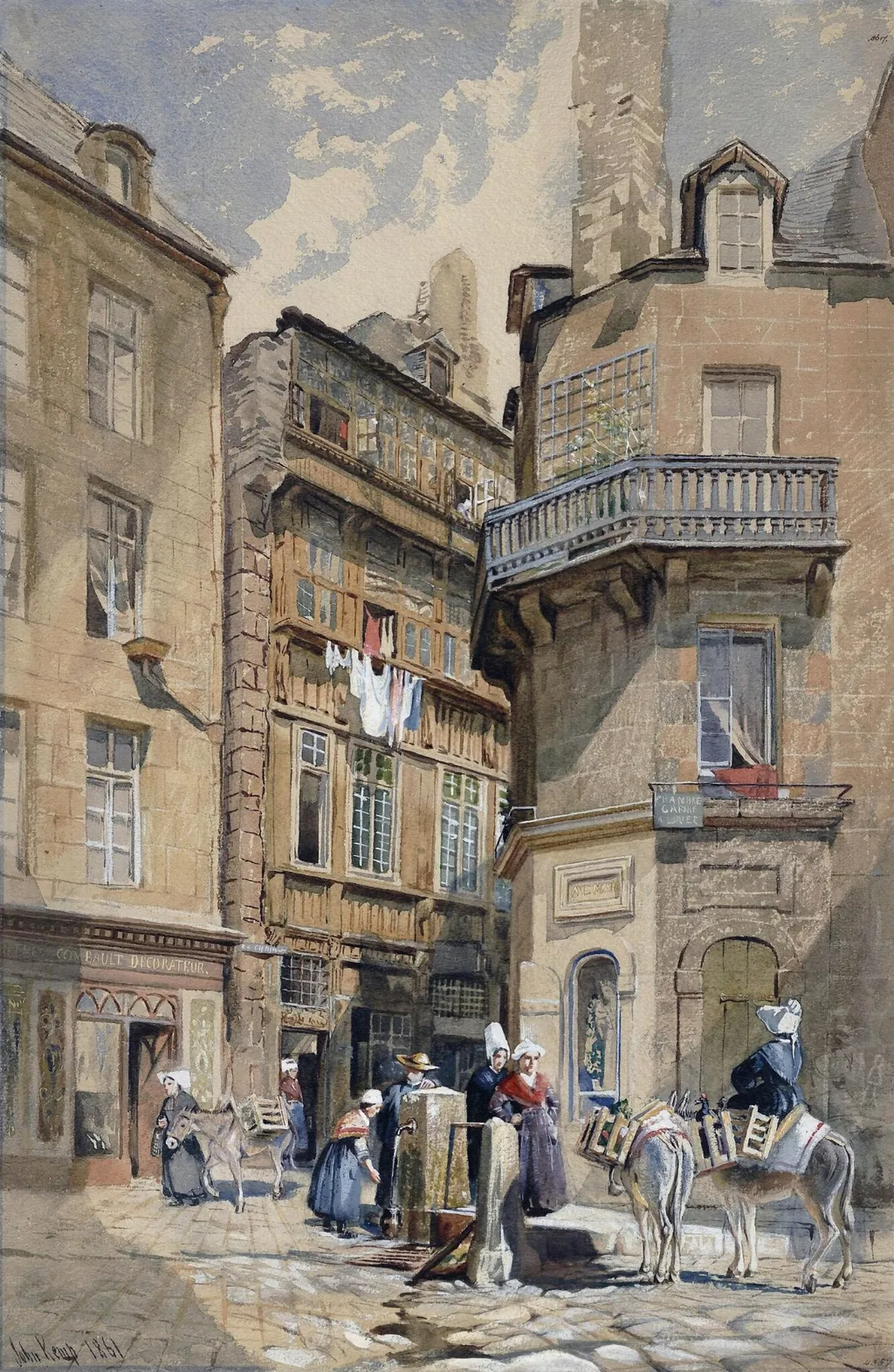
Street Scene, St Malo is a watercolor work on paper by the Impressionist artist Unknown. It dates from 1861 and is held in the collection of the Victoria and Albert Museum. This watercolour depicts a quiet, narrow street in Saint-Malo, a coastal town in Brittany.
About this work
Overview
Laundry strung between upper windows and a donkey-drawn cart add motion to the scene, grounding it in daily routine rather than idealized spectacle.
This watercolour depicts a quiet, narrow street in Saint-Malo, a coastal town in Brittany. The composition emphasizes ordinary urban life rather than monumental architecture. Buildings lean closely together, their weathered surfaces and shuttered windows suggesting age and use. Laundry strung between upper windows and a donkey-drawn cart add motion to the scene, grounding it in daily routine rather than idealized spectacle.
Subject & Meaning
The painting captures the unremarkable rhythms of a small French town: residents moving about, a shop with a faded sign reading 'Confit Frit Decorateur,' and the quiet presence of domestic labor. No single figure dominates; instead, the scene unfolds as a collective experience. The focus on mundane details—worn stone, hanging linens, uneven light—suggests an appreciation for the quiet dignity of everyday existence.
Technique & Style
Loose yet controlled brushwork defines the watercolour’s character. The artist uses diluted pigments to suggest texture and atmosphere, allowing the paper’s whiteness to imply highlights on cobblestones and walls. Shadows are rendered with subtle washes, not outlines, creating a sense of natural light. The technique avoids polish in favor of immediacy, reflecting a preference for observation over idealization.
History & Provenance
The work is attributed to a 19th-century British watercolourist active in northern France, though the artist’s full identity remains unconfirmed. It entered the Victoria and Albert Museum’s collection in the early 20th century, likely acquired during a period of growing interest in topographical watercolours. Its modest scale and subject align with the tastes of collectors seeking authentic regional scenes over grand historical narratives.
Context
Created during a time when travel to coastal France became more accessible to British artists, this work reflects a broader trend of sketching everyday life abroad. Unlike academic painting, which favored myth or history, watercolourists of this era valued spontaneity and local character. Saint-Malo, with its fortified old town and maritime trade, offered rich visual material for those documenting vernacular architecture and daily routines.
Legacy
The painting contributes to a tradition of British watercolour that prioritized observational realism over romanticism. Its quiet intimacy influenced later artists interested in urban life and transient light. While not widely exhibited, it remains a representative example of how 19th-century watercolourists transformed humble subjects into thoughtful records of place and time.
Artist & collection

 Domestic Scene
 Giacomo and Cardinal Marco, investing Andrea, Abbot of San Zeno, with his Benefice
 The Nymph of Fontainebleau
 Portrait of a Woman
 Madonna and Child with Saints in the Enclosed Garden
 Venus and Minerva
 Family Group of Four on Sofa
 Wall painting from Room H of the Villa of P. Fannius Synistor at Boscoreale
 Street scene in Dent, Yorkshire
 A Street in a Continental City
 Old Houses at Lisieux, Normandy
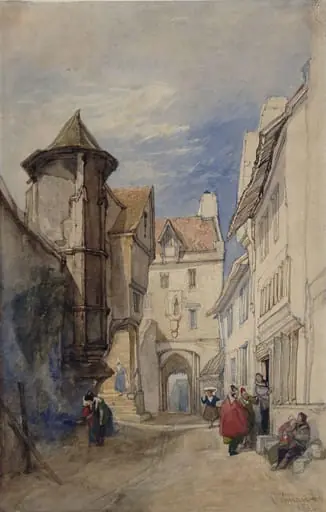 A Gateway in a Norman Town
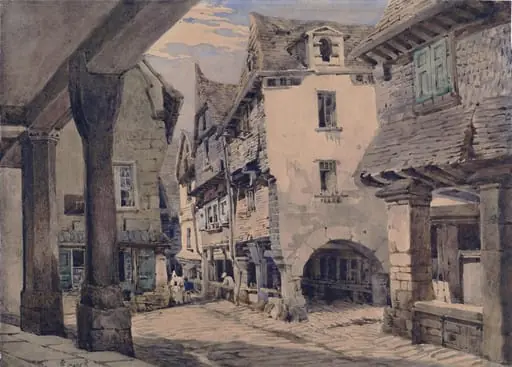 Old Houses, Vitré
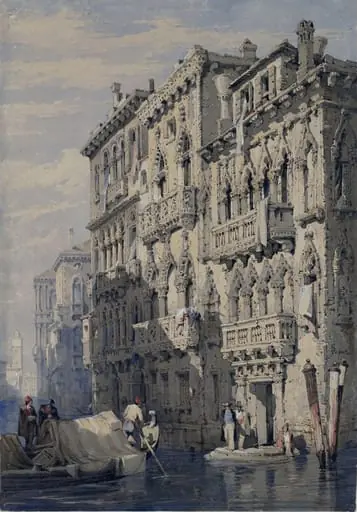 Palazzo Contarini Fasan, on the Grand Canal, Venice
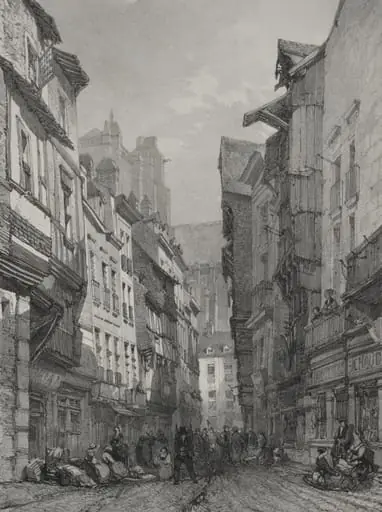 Voyages pittoresques et romantiques dans l'ancienne France. Bretagne: Grande rue vieille à Nantes
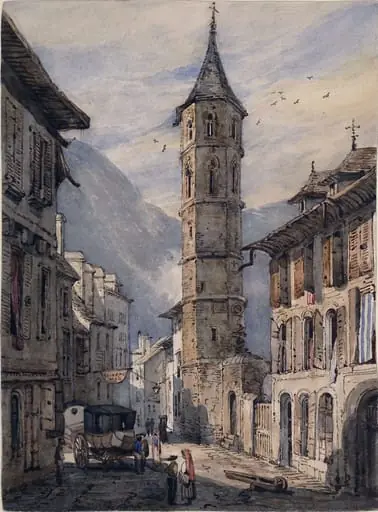 Street scene, with bell tower
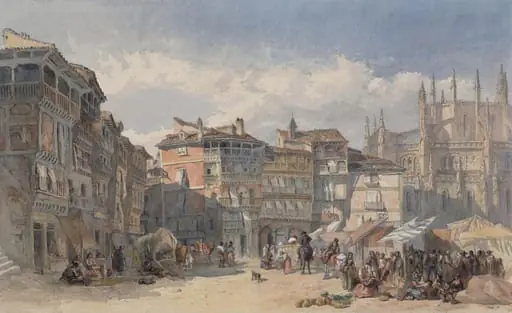 Segovia, Spain
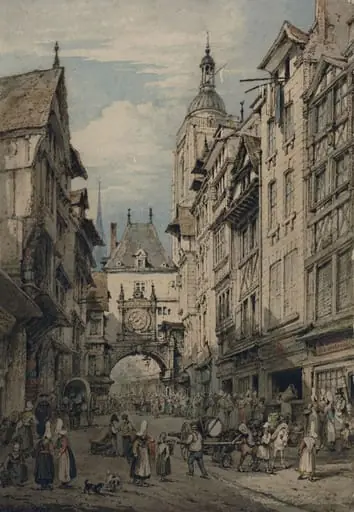 Rue de la Grosse Horloge