Artwork
Old Houses, Vitré
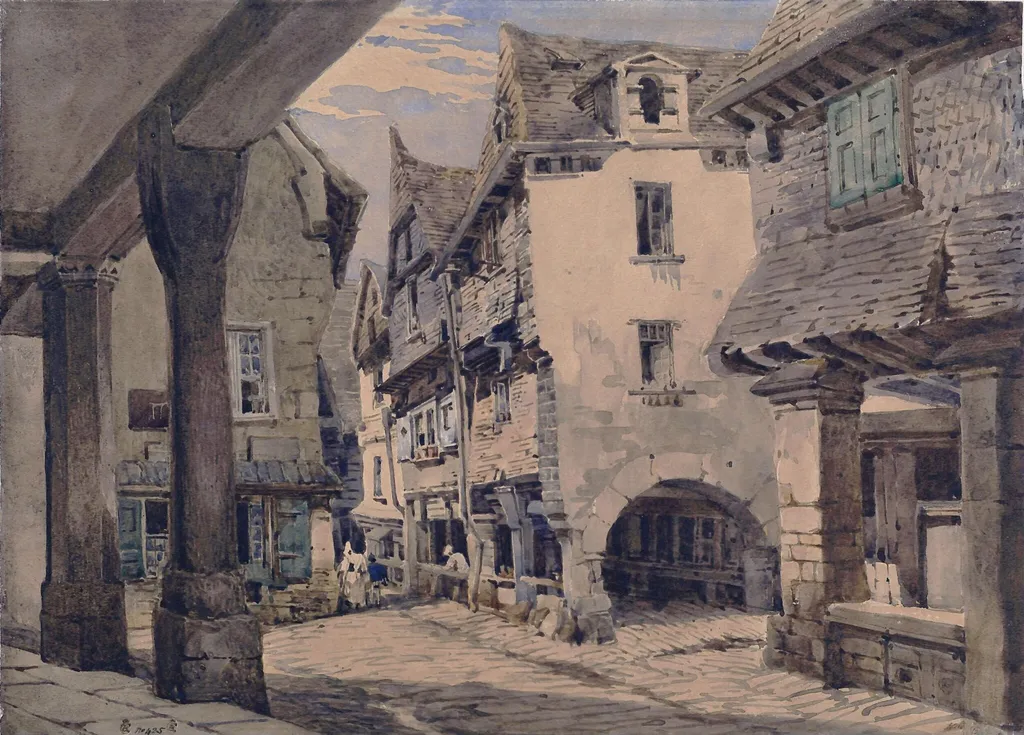
Old Houses, Vitré is a watercolor work on paper by Charles Claude Pyne. It dates from 1850 and is held in the collection of the Victoria and Albert Museum.
About this work
Overview
Painted in 1850 by Charles Claude Pyne, this watercolour depicts a quiet street in Vitré, a historic town in Brittany. The scene captures the modest architecture of local dwellings, rendered with careful attention to the effects of time and weather. The composition is subdued, emphasizing stillness and the quiet rhythm of daily life rather than dramatic action.
Subject & Meaning
The painting presents ordinary domestic life in a provincial French town. Figures are sparse—a seated figure near a doorway, a lone walker—suggesting routine rather than event. The focus on aged structures and unadorned streets implies a reverence for the endurance of everyday spaces, reflecting a quiet appreciation for vernacular architecture over grandeur.
Technique & Style
Pyne employed delicate watercolour washes to convey the texture of weathered stone and uneven cobblestones. Light and shadow are used subtly to define the slanted roofs and recessed windows, while muted earth tones—ochres, greys, and soft browns—dominate the palette. The brushwork is restrained, avoiding bold lines in favor of atmospheric gradations that enhance the sense of age and stillness.
History & Provenance
Created during Pyne’s travels in Brittany, the work is part of a series documenting regional architecture in mid-19th century France. It entered the Victoria and Albert Museum’s collection in the late 19th century, likely acquired as an example of topographical watercolour, a genre valued for its documentary precision and quiet aesthetic.
Context
In the 1850s, artists increasingly turned to rural and provincial subjects as industrialization reshaped urban life. Pyne’s depiction of Vitré aligns with a broader interest in preserving the visual character of traditional settlements. His approach, neither romanticized nor idealized, reflects a growing cultural awareness of regional identity and architectural heritage.
Legacy
The painting contributes to a body of work that records France’s architectural vernacular before widespread modernization. While not widely exhibited, it remains a representative example of 19th-century topographical watercolour, valued for its observational clarity and understated tone. It continues to inform studies of regional history and artistic documentation of everyday environments.
Artist & collection

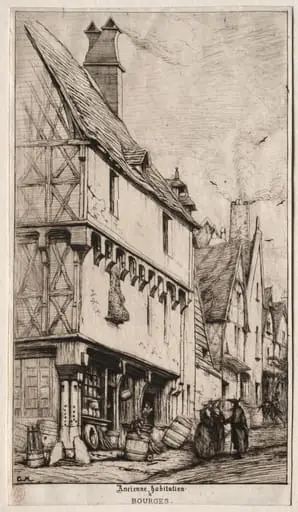 An Old House at Bourges, sometimes called the Musician's House
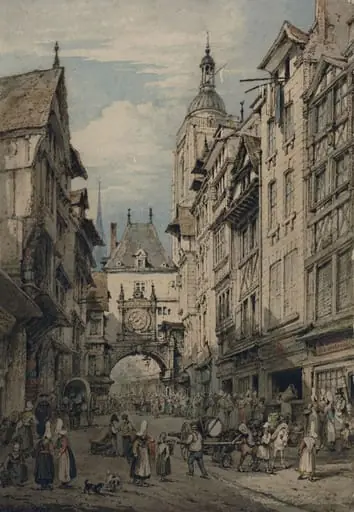 Rue de la Grosse Horloge
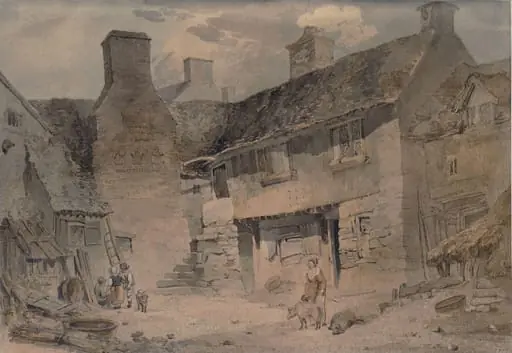 Owen Glendower's Parliament House, Dolgellau
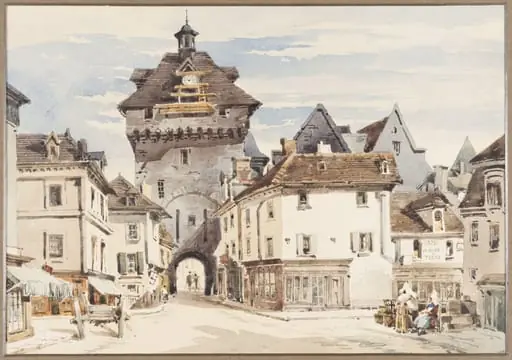 Street Scene in Loches, France
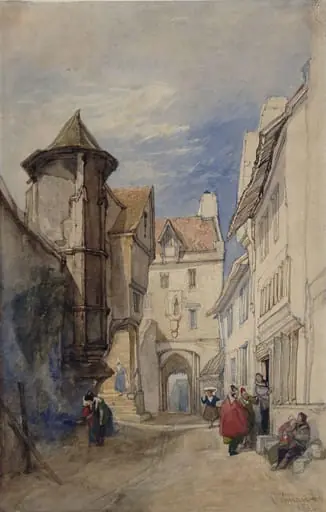 A Gateway in a Norman Town
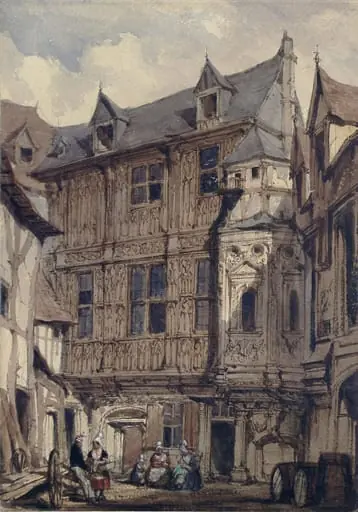 Rouen, St. Etienne
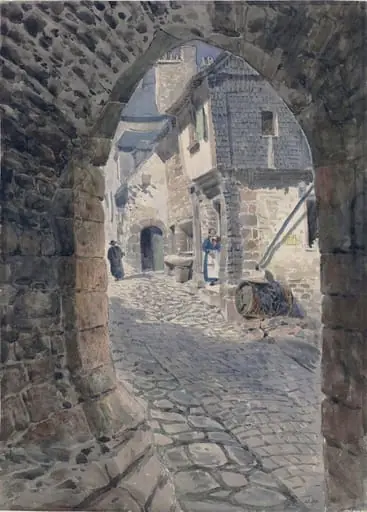 Gateway and houses at Mont St. Michel, Normandy
 Market Place, Frankfort
 The Market Place, Ross, Herefordshire