Artwork
Study of a bull in a landscape
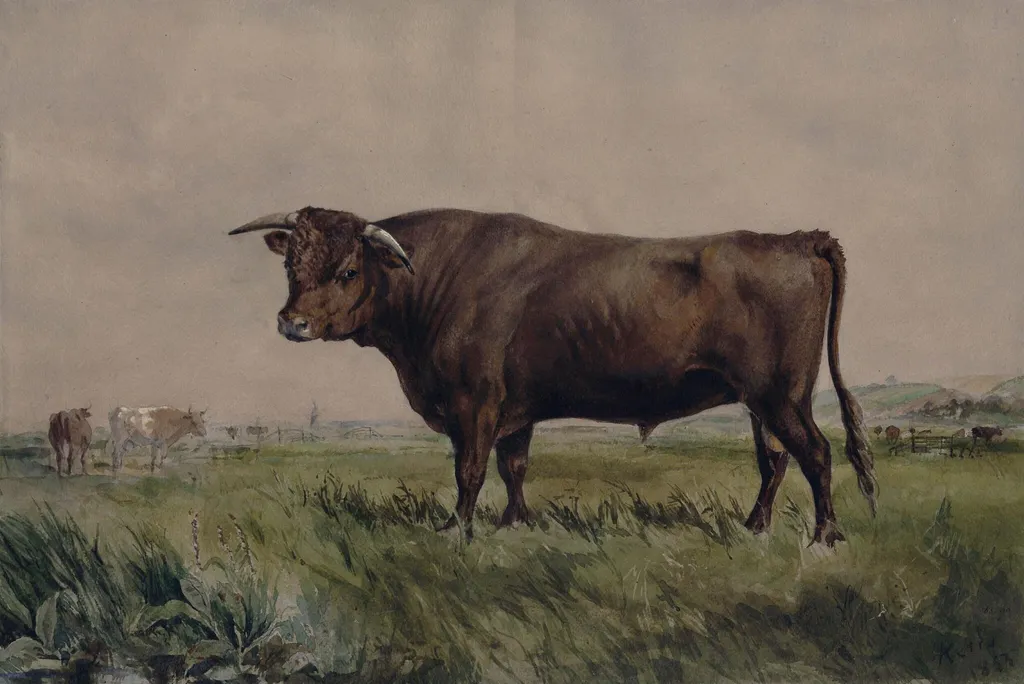
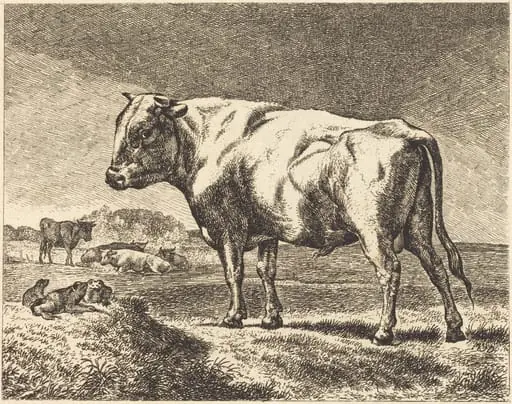
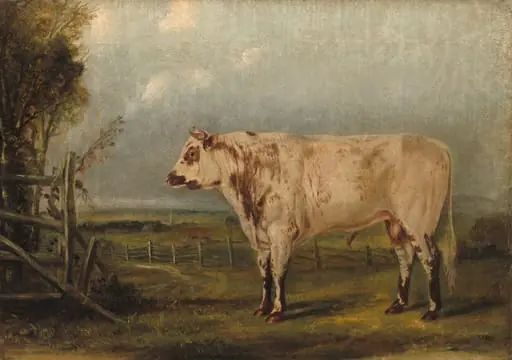
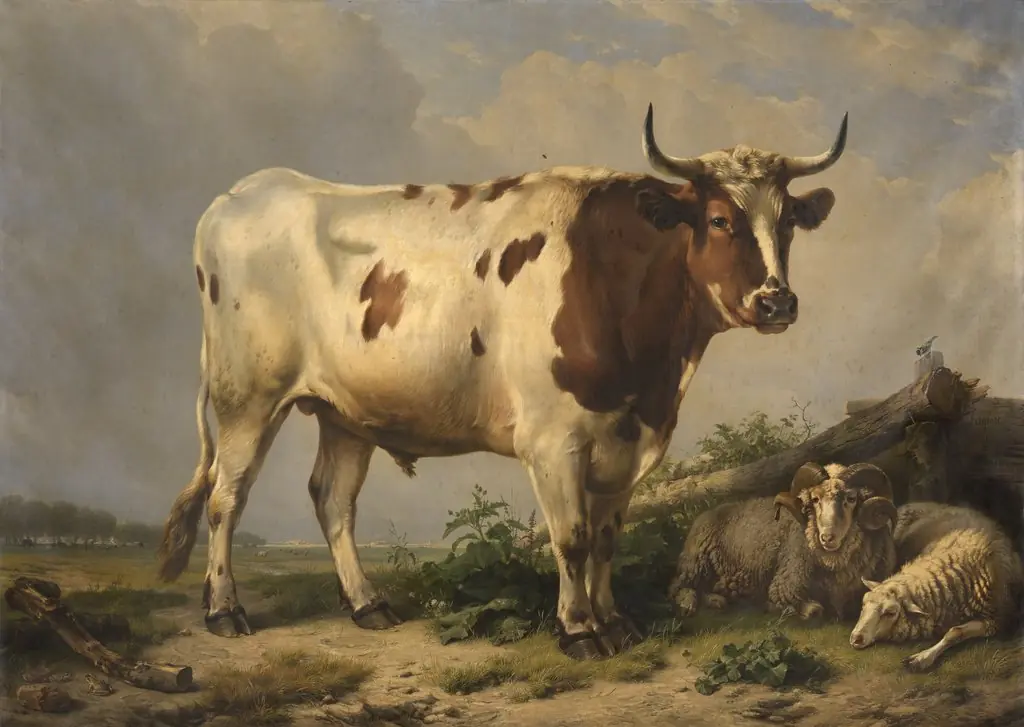
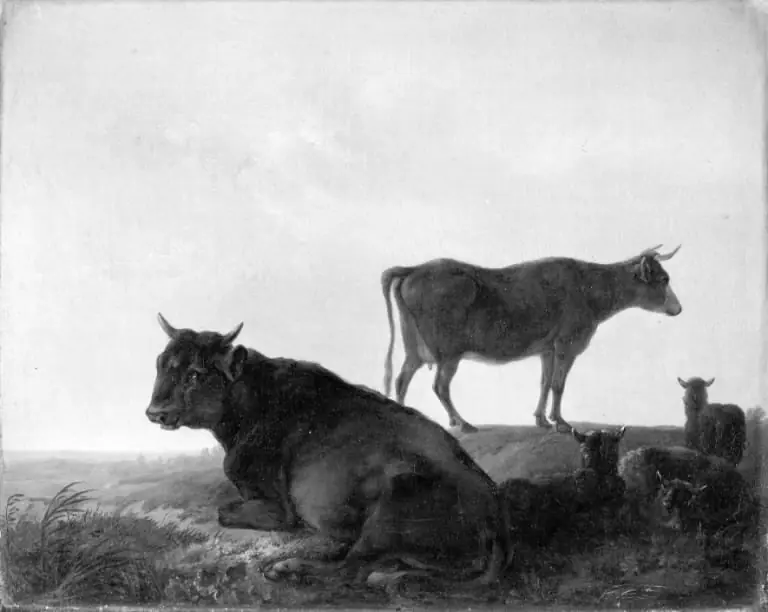
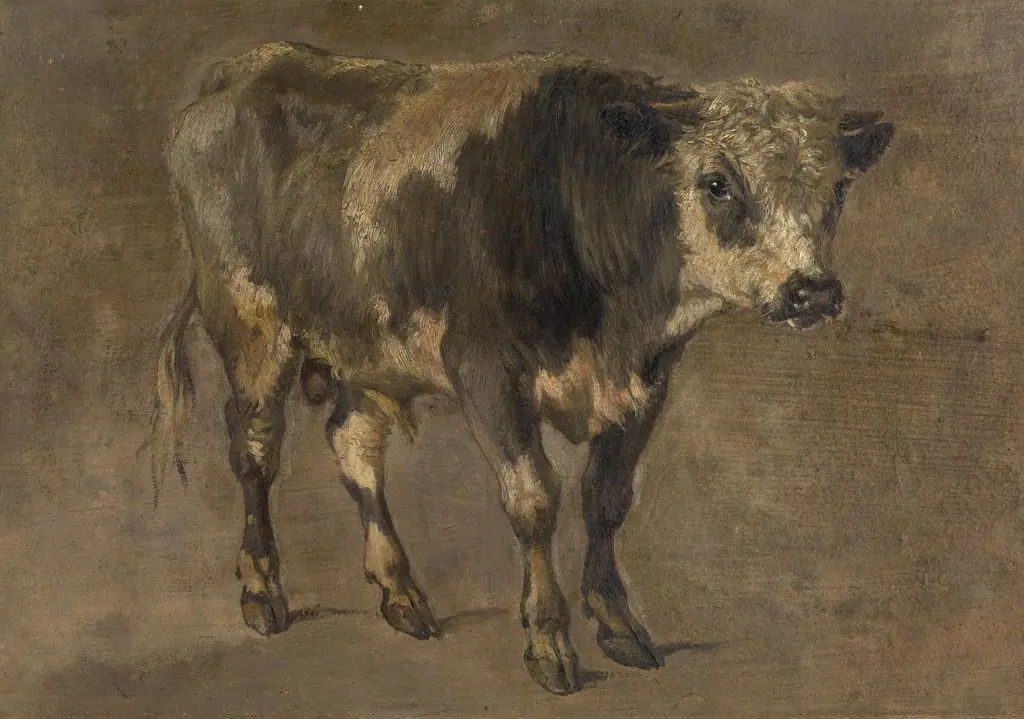
Study of a bull in a landscape is a watercolor work on paper by the Impressionist artist Unknown. It dates from 1853 and is held in the collection of the Victoria and Albert Museum. This watercolour depicts a single large bull standing in an open pasture, surrounded by a few grazing cows, a low fence, and a distant hill.
About this work
Overview
This watercolour depicts a single large bull standing in an open pasture, surrounded by a few grazing cows, a low fence, and a distant hill. The sky is softly rendered in pale tones, emphasizing the animal’s solid form. The composition is restrained, focusing on the bull’s presence within a quiet rural setting. The medium’s fluidity supports a spontaneous, observational approach.
Subject & Meaning
The bull is the central subject, portrayed without drama or symbolism. Its weight and stillness contrast with the gentle movement of the cows nearby. The scene reflects an unembellished view of agricultural life, valuing the animal’s physicality over narrative. There is no indication of human activity beyond the fence, reinforcing a sense of natural solitude.
Technique & Style
Loose, fluid brushwork defines the bull’s thick fur and the grassy terrain, suggesting form through suggestion rather than detail. Watercolour’s transparency allows underlying layers to show, enhancing the texture of the animal’s coat. The artist avoids sharp outlines, instead using tonal shifts to convey volume and depth within a limited palette.
History & Provenance
The work is an unpublished study, likely created during field observations rather than in a studio. No documented ownership history or exhibition record is known. Its informal nature suggests it was made as part of the artist’s personal practice, possibly to understand animal anatomy or landscape dynamics.
Context
Created within the broader tradition of 19th-century naturalism, the piece aligns with artists who sought to depict rural subjects with directness. Unlike idealized pastoral scenes, this work avoids sentimentality, focusing instead on the quiet reality of farm animals in their environment. It reflects a shift toward empirical observation over romanticized imagery.
Legacy
As a private study, it holds little public recognition but contributes to understanding the artist’s process. Its unpolished quality offers insight into how formal compositions were developed through direct observation. It remains a quiet example of how everyday rural subjects were engaged with through intimate, experimental media.
Artist & collection

 Domestic Scene
 Giacomo and Cardinal Marco, investing Andrea, Abbot of San Zeno, with his Benefice
 The Nymph of Fontainebleau
 Portrait of a Woman
 Madonna and Child with Saints in the Enclosed Garden
 Venus and Minerva
 Family Group of Four on Sofa
 Wall painting from Room H of the Villa of P. Fannius Synistor at Boscoreale