Artwork
Bull
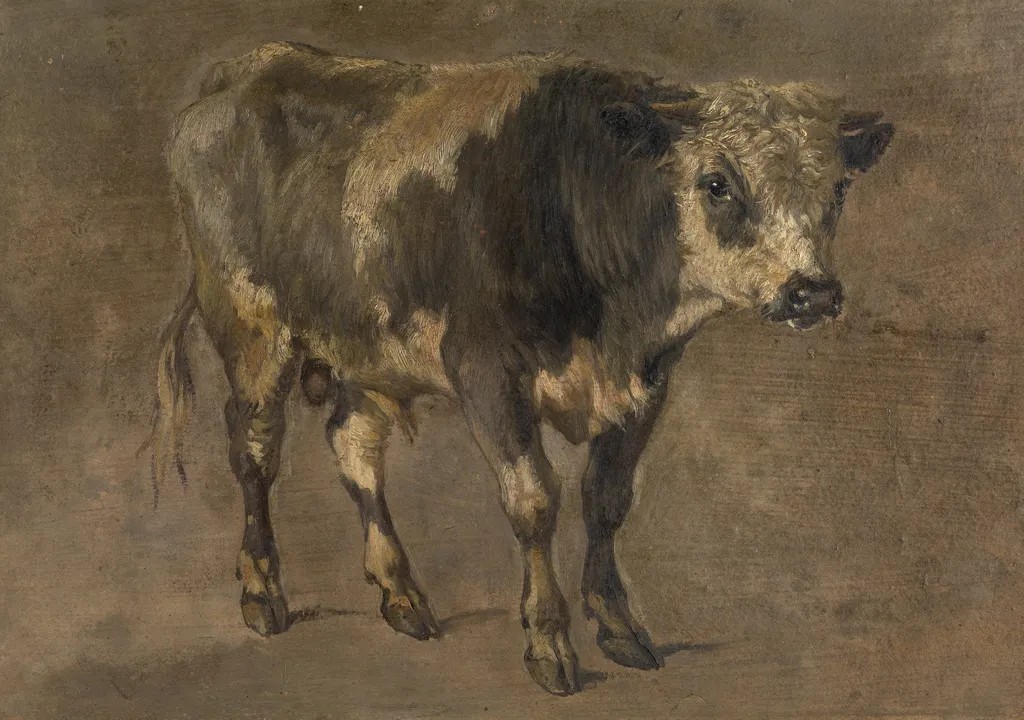
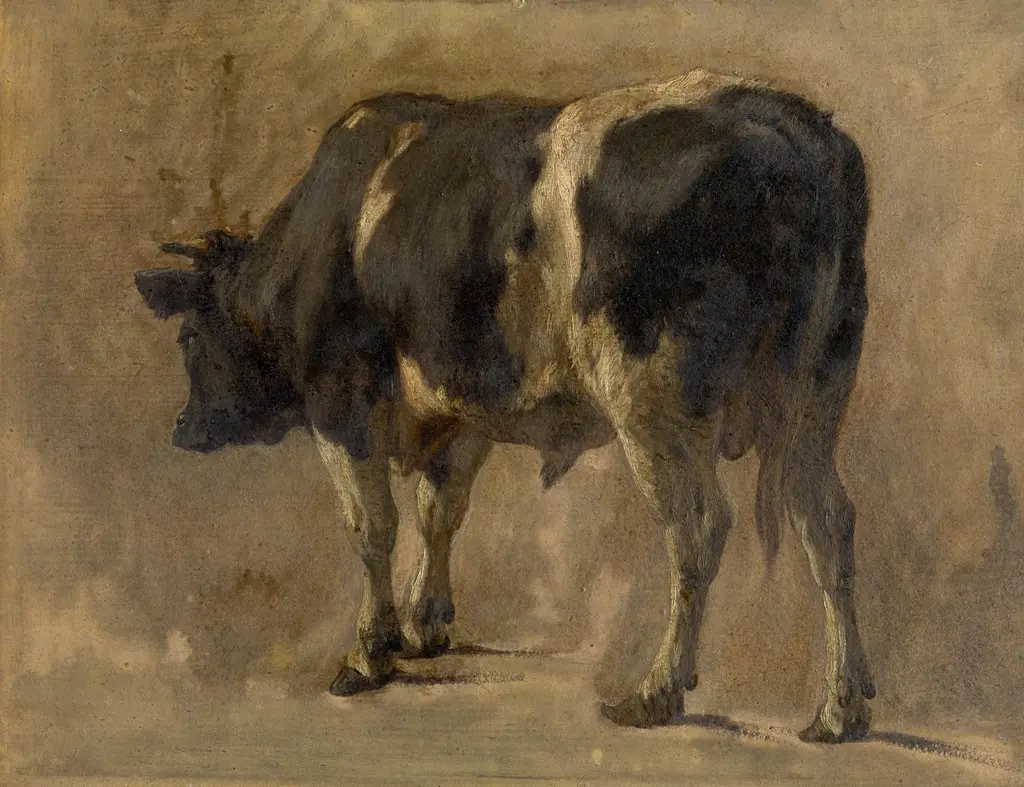
Bull is an unspecified painting by André Plumot. It dates from 1877 and is held in the collection of the Royal Museum of Fine Arts Antwerp.
About this work
Overview
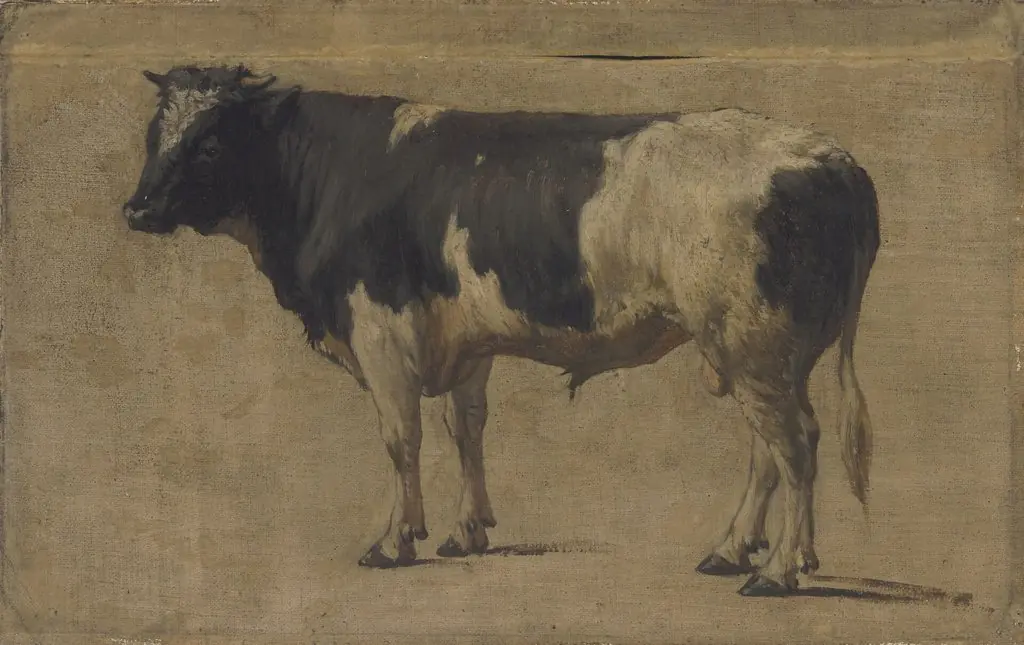
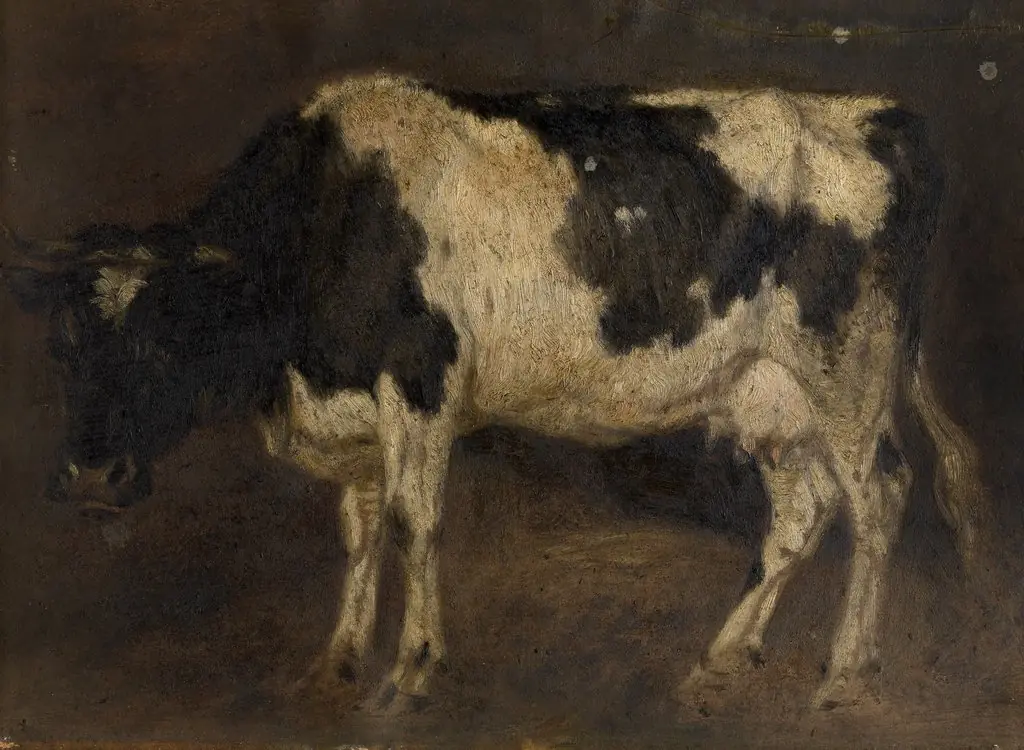
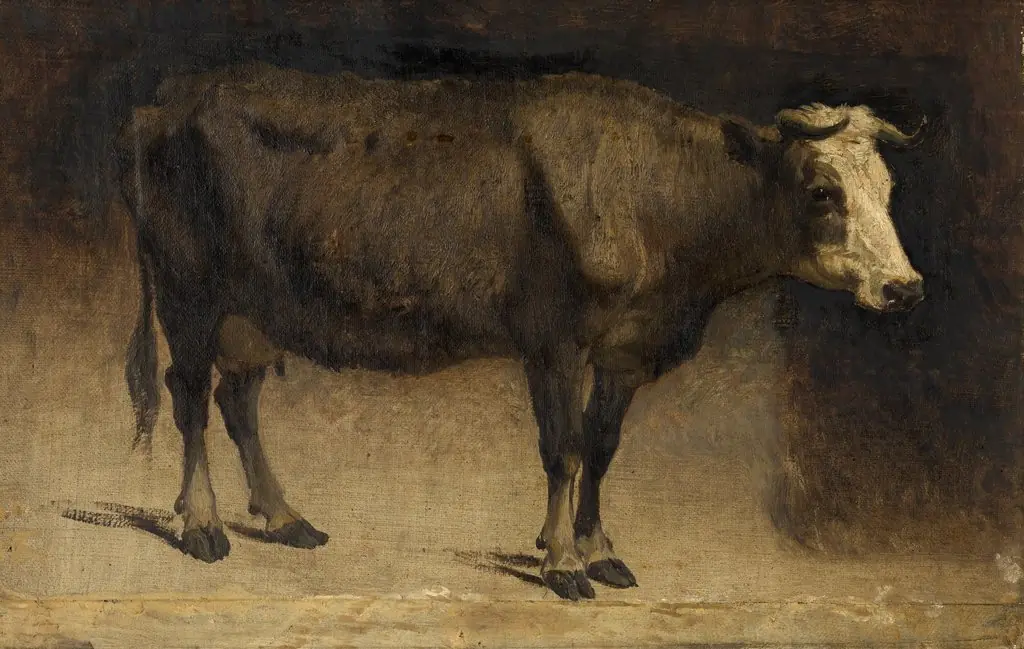
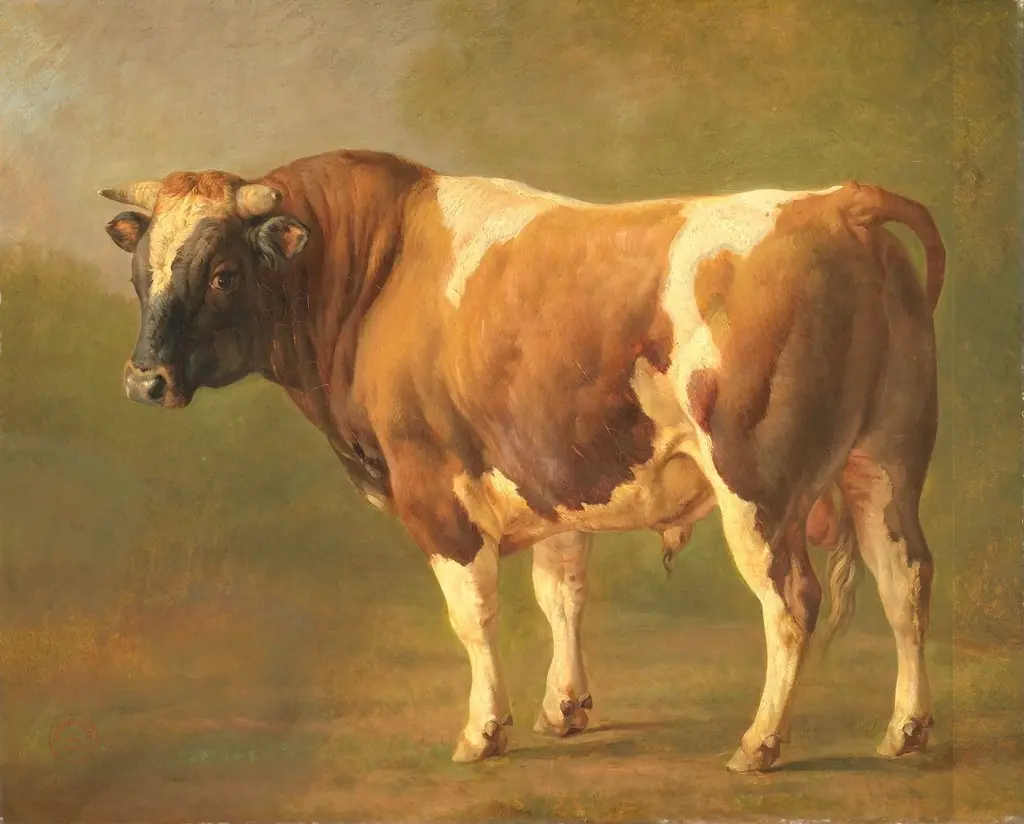
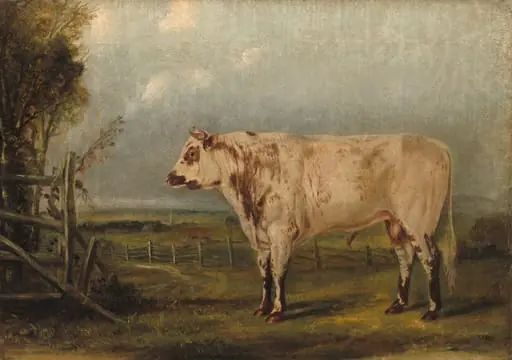
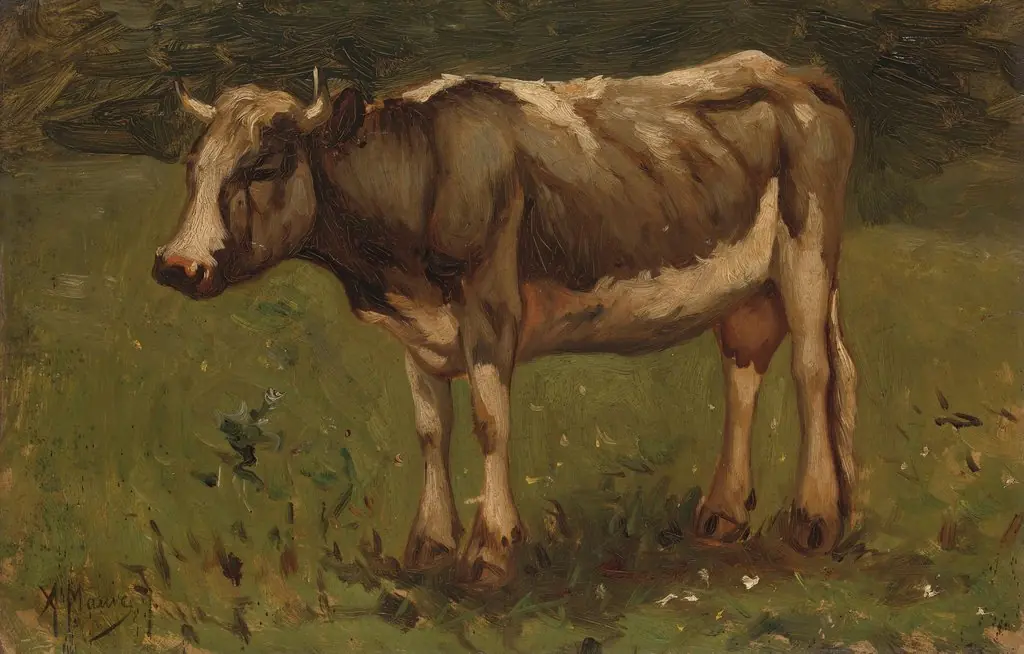
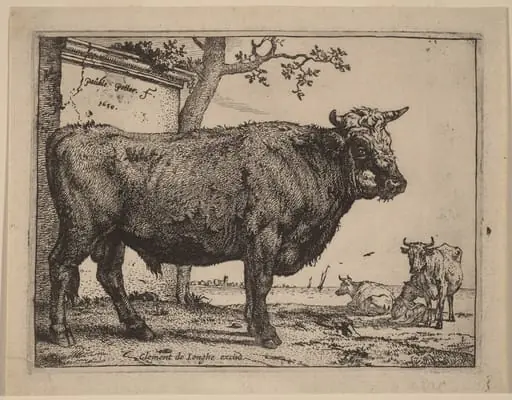
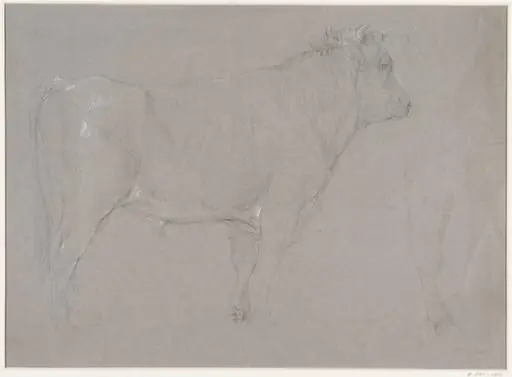
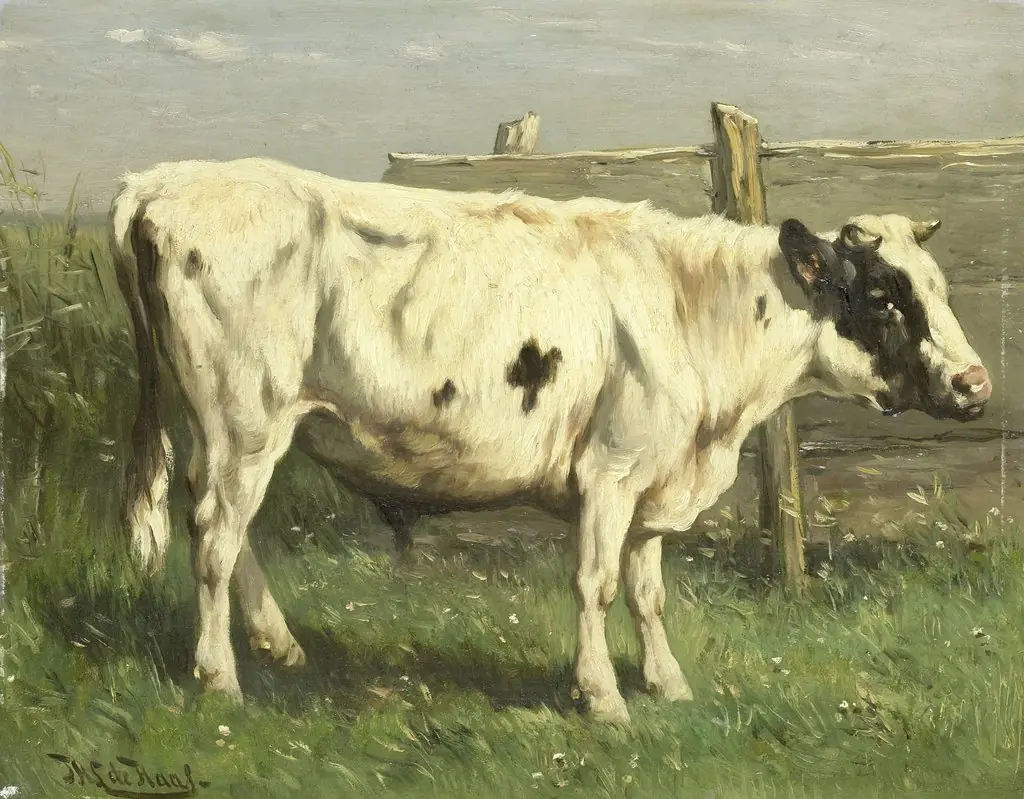
Painted around 1877 by André Plumot, this work depicts a single bull centered on a neutral background. The composition emphasizes stillness and presence, with no landscape or contextual elements to distract from the animal’s form. The painting is part of the collection at the Royal Museum of Fine Arts Antwerp, where it is displayed as an example of 19th-century Belgian animal portraiture.
Subject & Meaning
The bull is rendered without symbolic or narrative context, focusing instead on its physical presence.
The bull is rendered without symbolic or narrative context, focusing instead on its physical presence. Its calm posture, alert ears, and gentle gaze suggest tranquility rather than strength or aggression. The absence of human figures or rural settings implies an intention to portray the animal as an object of quiet contemplation, reflecting a broader 19th-century interest in natural forms independent of allegory.
Technique & Style
Plumot employs a restrained palette of browns and blacks, with subtle tonal variations to define the bull’s musculature and fur texture. The brushwork is smooth and precise, avoiding dramatic contrasts or expressive strokes. The plain background enhances the subject’s solidity, grounding it in a space that feels neither studio nor field, but a neutral stage for observation.
History & Provenance
The painting entered the collection of the Royal Museum of Fine Arts Antwerp in the late 19th or early 20th century, likely through acquisition or donation. While little is documented about its early ownership, its preservation in a major public institution suggests it was recognized within contemporary artistic circles for its technical restraint and quiet realism.
Context
During the 1870s, Belgian artists increasingly turned to rural and animal subjects as part of a broader movement away from historical and mythological themes. Plumot’s work aligns with this trend, reflecting a growing appreciation for everyday life and natural forms. Unlike more dramatic depictions of livestock, this painting favors stillness over action, mirroring contemporary shifts in aesthetic priorities.
Legacy
Though André Plumot is not widely known today, this painting remains a representative example of modest, observational animal painting from late 19th-century Belgium. Its endurance in a major museum collection underscores its value as a quiet, unembellished study of form and presence, offering insight into a less celebrated but persistent strand of realist practice.
Own this work as a print
Artist & collection