Artwork
Study of Camels
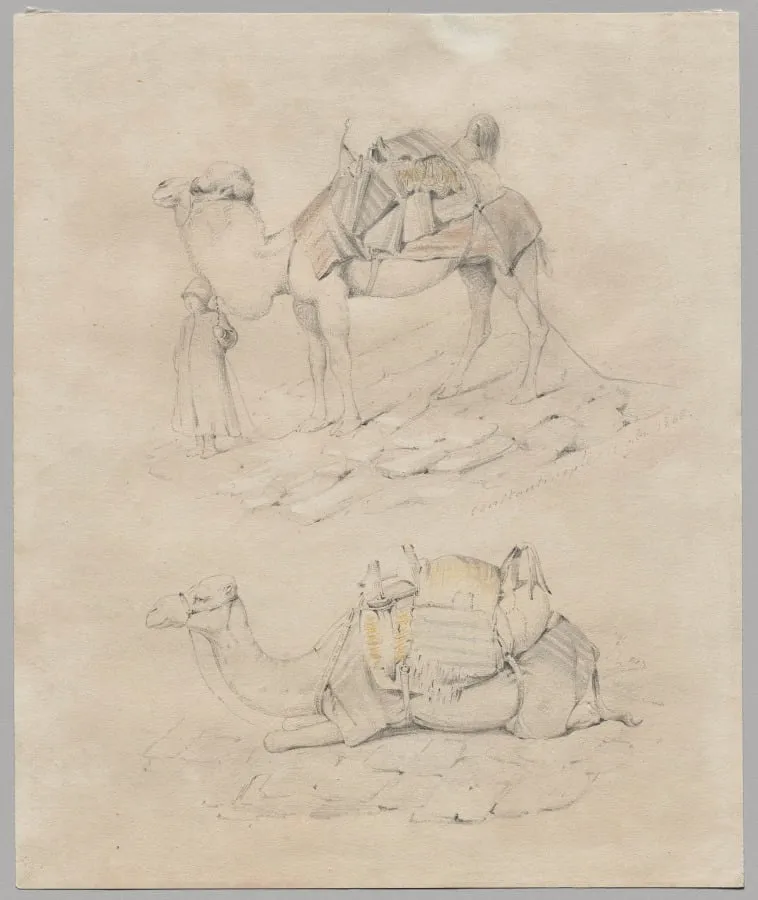
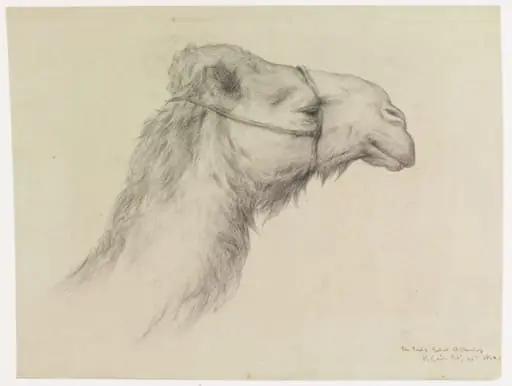
Study of Camels is a drawing by the Romanticist artist Unknown. It dates from 1848 and is held in the collection of the Cleveland Museum of Art. This drawing, dated to 1848, depicts three camels standing in a row, rendered with swift, assured strokes.
About this work
Artists at the time brought back images of unfamiliar places and people, giving folks back home a glimpse of life there.
You see three camels standing side by side, drawn in quick, confident lines.
This sketch was likely made by a French traveler in North Africa around 1848—right when France took control of Algeria. Artists at the time brought back images of unfamiliar places and people, giving folks back home a glimpse of life there. The camels feel alive, like the artist was in a hurry to get it all down.
If you like this, look up more about france, 19th century—there’s a whole world of travel sketches like this one.
Overview
This drawing, dated to 1848, depicts three camels standing in a row, rendered with swift, assured strokes. Created by an unidentified artist during a journey in North Africa, likely in Algeria, it reflects the surge of European interest in the region following French military expansion. The work belongs to a broader category of travel sketches produced by visitors seeking to document unfamiliar landscapes and customs for audiences back home.
Subject & Meaning
The three camels, depicted with minimal detail but strong gestural energy, serve as quiet witnesses to daily life in a region newly under French control. Their calm posture contrasts with the urgency of the drawing’s execution, suggesting the artist observed them in passing. The subject holds no overt political message but implicitly records a presence central to local transport and economy, offering a neutral, observational record of a foreign environment.
Technique & Style
Executed in a rapid, linear style, the drawing emphasizes movement and form over precision. The artist used confident, unhesitating strokes to define the camels’ contours and bulk, capturing their weight and posture without shading or elaborate detail. This approach reflects the spontaneity of on-site sketching, prioritizing immediacy over finish—a common trait among travelers documenting scenes they could not revisit.
History & Provenance
Created in 1848, the year Algeria was formally annexed by France, the drawing emerged during a period of intensified French colonial presence. While its exact origin and owner are unknown, it aligns with a wave of sketches made by soldiers, administrators, and tourists who traveled to the region. Such works were often kept as personal records or later circulated among collectors interested in exotic locales.
Context
In mid-19th century France, images of North Africa became increasingly popular as the country expanded its imperial reach. Artists and amateurs produced sketches and watercolors of local people, architecture, and animals to satisfy public curiosity. This drawing fits within that trend—not as a finished illustration, but as a direct, unembellished record made in the field, part of a larger visual archive of colonial encounter.
Legacy
Though unsigned and unremarked upon in its time, the drawing survives as a quiet artifact of cross-cultural observation. It contributes to a historical record of how European travelers perceived and recorded North African life during a period of political transformation. Its value lies not in artistic fame, but in its unvarnished testimony to a moment of encounter between cultures.
Artist & collection

 Domestic Scene
 Giacomo and Cardinal Marco, investing Andrea, Abbot of San Zeno, with his Benefice
 The Nymph of Fontainebleau
 Portrait of a Woman
 Madonna and Child with Saints in the Enclosed Garden
 Venus and Minerva
 Family Group of Four on Sofa
 Wall painting from Room H of the Villa of P. Fannius Synistor at Boscoreale
![Arabs and camels beside a Tomb, Algeria[?], by Victor-Pierre Huguet](https://artifactworldgallery.com/img/victor-pierre-huguet--arabs-and-camels-beside-a-tomb-algeria--d8831a130920c80b-w320.webp)