Artwork
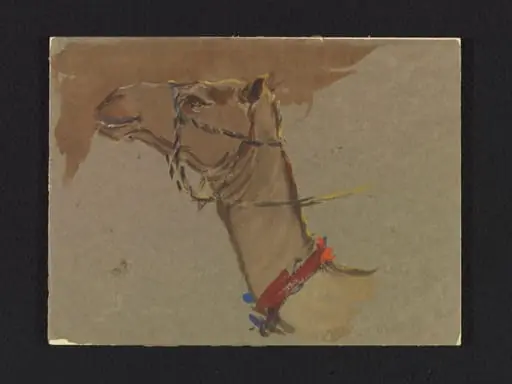
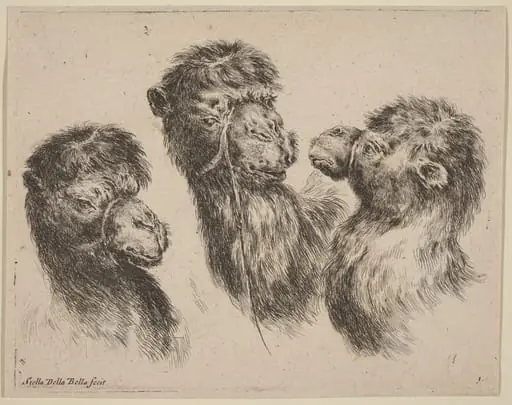
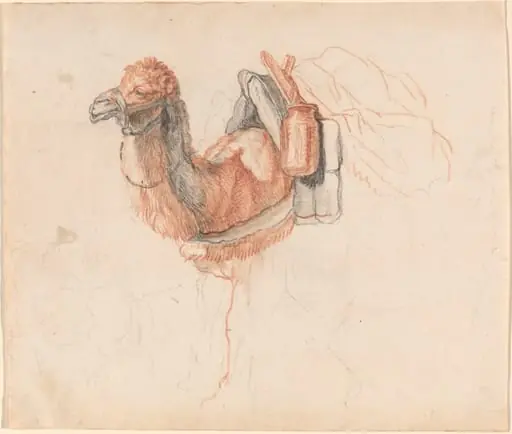
Head of a Camel
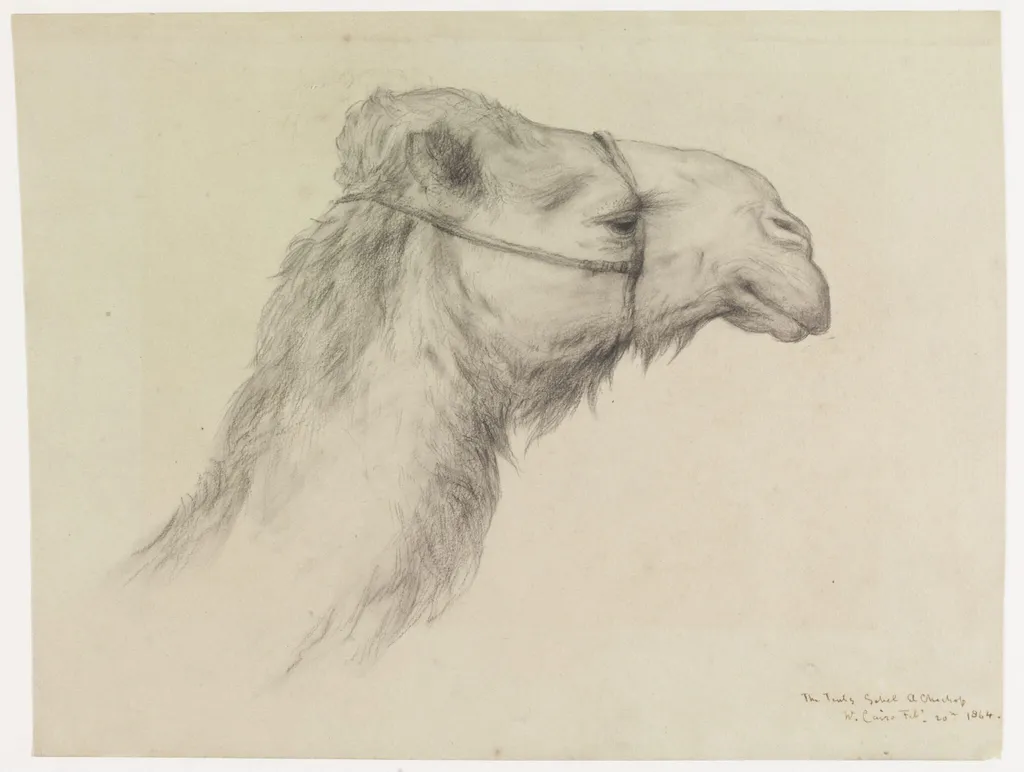
Head of a Camel is a drawing by the Impressionist artist Elijah Walton. It dates from 1864 and is held in the collection of the Victoria and Albert Museum.
About this work
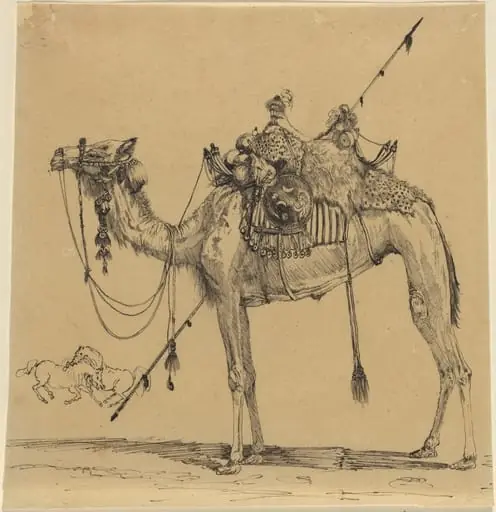
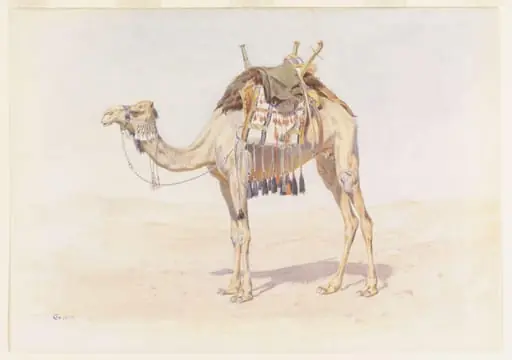
Walton shows the dromedary, the single-hump kind used by Ottoman caravans to haul tents and goods.
Elijah Walton drew this camel in 1864. It’s a sharp, careful study—not a quick sketch. Walton focused on the camel after trips to Egypt, trading Alpine peaks for desert beasts.
Lord Byron once wrote he missed Asia Minor every time he saw a camel in London. Walton shows the dromedary, the single-hump kind used by Ottoman caravans to haul tents and goods.
Check out more Walton drawings at the Victoria and Albert Museum.
Overview
This drawing, created by Elijah Walton in 1864, is a detailed study of a camel's head. It showcases the artist's careful observation and rendering of the animal's features.
Subject & Meaning
The drawing depicts a young dromedary camel, characterized by its single hump. In the Ottoman Empire, such camels were used by nomads to transport goods and tents between seasonal pastures.
Technique & Style
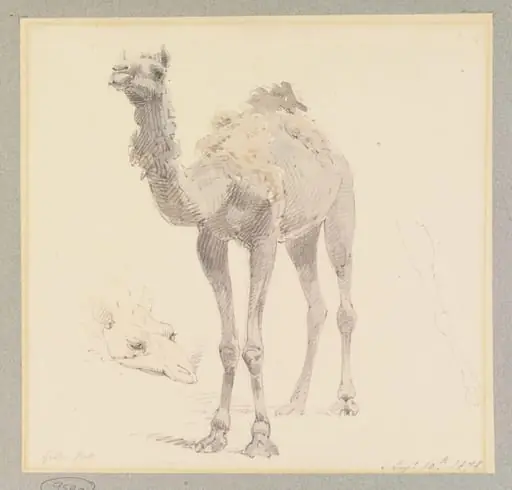
Walton's drawing is notable for its precision and attention to detail, reflecting his thorough study of the camel's anatomy. The artist's focus on the animal's furry head and long eyelashes conveys a sense of affectionate observation.
History & Provenance
Elijah Walton developed an interest in camels after visiting Egypt in the early 1860s. He spent time in a Bedouin encampment near Cairo in 1863-1864, studying the animals' habits and anatomy, and later published his findings in a detailed treatise.
Own this work as a print
Artist & collection
Artist
Elijah Walton (November 1832 – 25 August 1880) was a British landscape painter, and best known for his landscapes of mountains in the Alps.