Artwork
Study of Monks
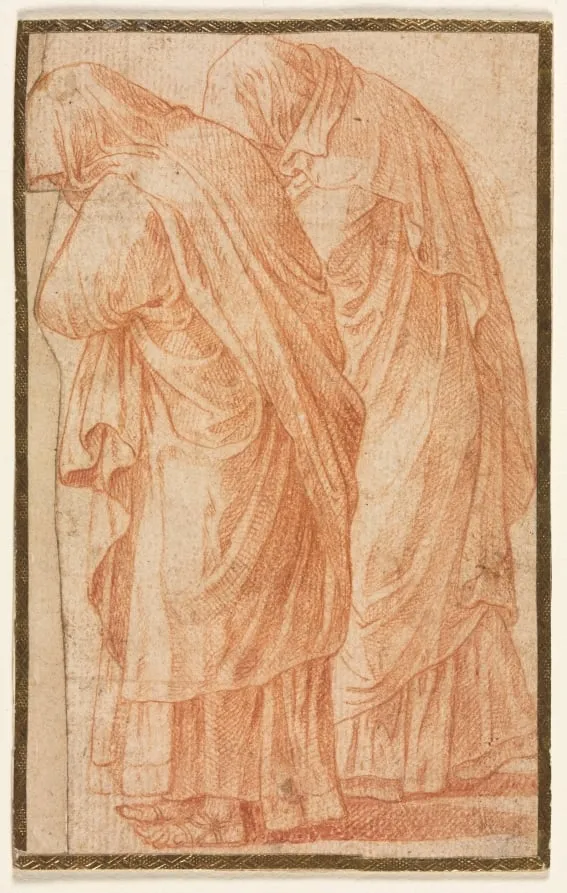
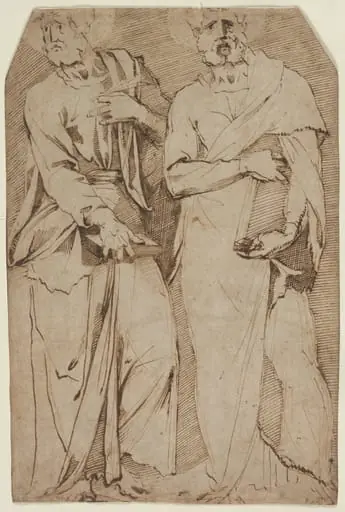
Study of Monks is a drawing by the Baroque artist Unknown. It dates from 1604 and is held in the collection of the Cleveland Museum of Art. This drawing depicts two robed figures walking in tandem, viewed from behind.
About this work
Overview
The focus is on the flow of fabric rather than facial detail, indicating its purpose as a study in drapery and posture.
This drawing depicts two robed figures walking in tandem, viewed from behind. Executed on warm-toned paper, the work uses soft, smudged lines to suggest movement and volume. The focus is on the flow of fabric rather than facial detail, indicating its purpose as a study in drapery and posture. Such exercises were routine for artists refining their ability to render form through gesture and texture.
Subject & Meaning
The figures appear to be monks, their bowed heads and unified motion suggesting contemplation or procession. Their anonymity emphasizes the ritualistic nature of their movement rather than individual identity. The composition conveys quiet solemnity, aligning with devotional practices of the time. The absence of setting or context directs attention to the physicality of their robes and shared rhythm.
Technique & Style
The artist employed loose, fluid linework to capture the natural fall of fabric, using subtle smudging to soften edges and imply depth. The peach-hued paper contributes to the warmth of the scene, enhancing the tactile quality of the robes. The technique avoids sharp definition, favoring atmospheric suggestion over precision—a hallmark of preparatory studies aimed at understanding motion and material.
History & Provenance
The drawing’s origin is unattributed, but its style and purpose align with 17th-century artistic training practices. Such studies were often kept in sketchbooks or private collections, not intended for public display. Its survival suggests it was valued by its creator or later collectors for its observational clarity, though its exact provenance remains undocumented.
Context
In the Baroque era, artists increasingly emphasized dynamic movement and emotional resonance in religious subjects. This study reflects a broader trend of observing human form in motion, particularly within monastic or spiritual contexts. While not a finished work, it reveals how artists trained to translate quiet, repetitive actions into compelling visual narratives.
Legacy
Though unsigned and unexhibited in its time, this drawing exemplifies the disciplined practice underpinning Baroque figural art. Its emphasis on drapery and posture influenced later generations studying anatomy and movement. Today, it serves as a quiet testament to the unseen labor behind more monumental works of the period.
Artist & collection

 Domestic Scene
 Giacomo and Cardinal Marco, investing Andrea, Abbot of San Zeno, with his Benefice
 The Nymph of Fontainebleau
 Portrait of a Woman
 Madonna and Child with Saints in the Enclosed Garden
 Venus and Minerva
 Family Group of Four on Sofa
 Wall painting from Room H of the Villa of P. Fannius Synistor at Boscoreale
![Prudence [verso], by Giovanni Alberti](https://artifactworldgallery.com/img/giovanni-alberti--prudence-verso--8518f1793a33df97-w320.webp)
![Prudence [recto], by Cherubino Alberti](https://artifactworldgallery.com/img/cherubino-alberti--prudence-recto--3f44e6d72db5eb8c-w320.webp)