Artwork
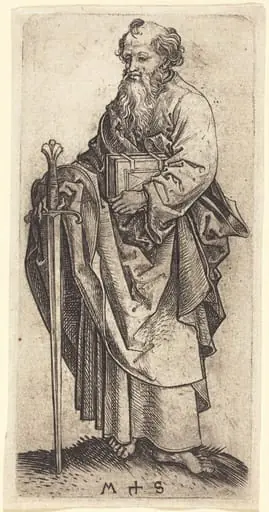
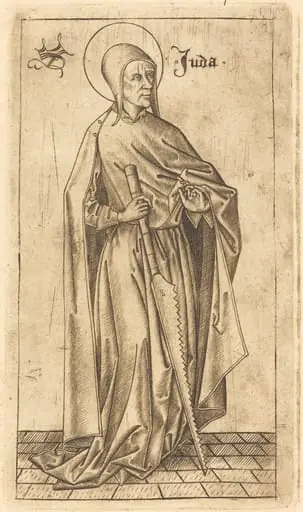
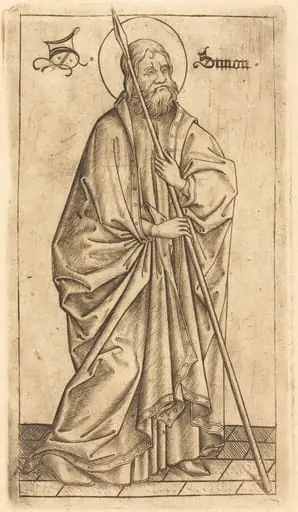
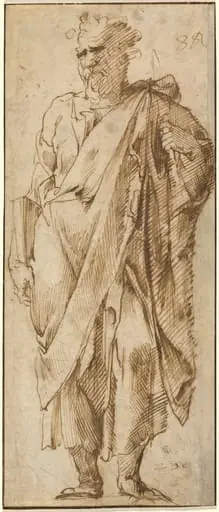
Standing Apostle
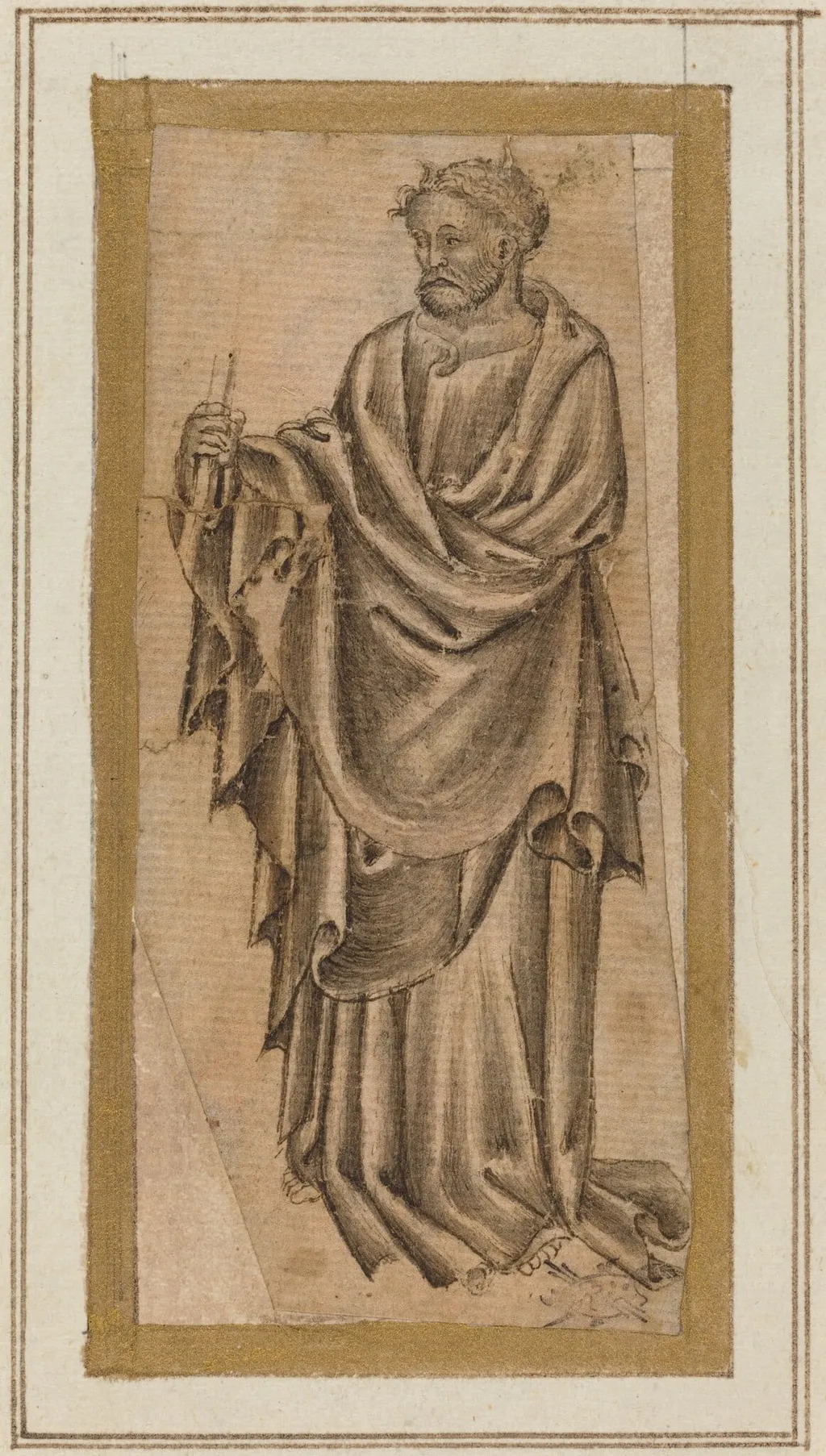
Standing Apostle is an ink drawing by the Renaissance artist Italian 15th Century. It dates from 1400 and is held in the collection of the National Gallery of Art.
About this work
You can learn more about similar art at the National Gallery of Art, Washington, which holds this piece, or by exploring the movement: Renaissance.
The painting is titled Standing Apostle.
It was made by an Italian artist in the 15th Century.
The artist used pen, brown ink, and brown wash on prepared laid paper to create this work, which is a part of the Renaissance movement, although the exact date is earlier than expected, around 1400.
You can learn more about similar art at the National Gallery of Art, Washington, which holds this piece, or by exploring the movement: Renaissance.
Overview
Standing Apostle is a 15th-century Italian drawing created with pen, brown ink, and brown wash on prepared laid paper, attributed to the early Renaissance period, circa 1400.
Subject & Meaning
The subject of the drawing is an apostle depicted in a standing position, though specific details about the apostle's identity or the work's symbolic intentions are not provided.
Technique & Style
The artist employed traditional Renaissance drawing techniques, combining pen and brown ink for outlines and details with brown wash for shading, on specially prepared laid paper.
History & Provenance
The exact artist remains unidentified, but the work is dated to around 1400, earlier than much of the Renaissance output. It is currently part of the collection at the National Gallery of Art in Washington.
Context
Standing Apostle reflects the early Renaissance emphasis on detailed, realistic representations of religious figures. For comparable works, the National Gallery of Art and broader studies on the Renaissance offer relevant context.
Legacy
While Standing Apostle does not have a detailed legacy outlined, it contributes to the understanding of early Renaissance drawing techniques and the evolution of religious art during this period.
Artist & collection

Artist
This anonymous Italian engraver from the 1490s carved images that could be peeled apart like paper dolls—each knot in the "First Knot" print was cut from a single sheet so you could lift the loops right off the page.

![The Destruction of the Egyptian Idols [verso], by Italian 15th Century](https://artifactworldgallery.com/img/italian-15th-century--the-destruction-of-the-egyptian-idols-verso--646d3c2b8098cfee-w320.webp)
![The Flight into Egypt [recto], by Italian 15th Century](https://artifactworldgallery.com/img/italian-15th-century--the-flight-into-egypt-recto--8f4d5275d7f90f98-w320.webp)