Artwork
Swiss Landscape
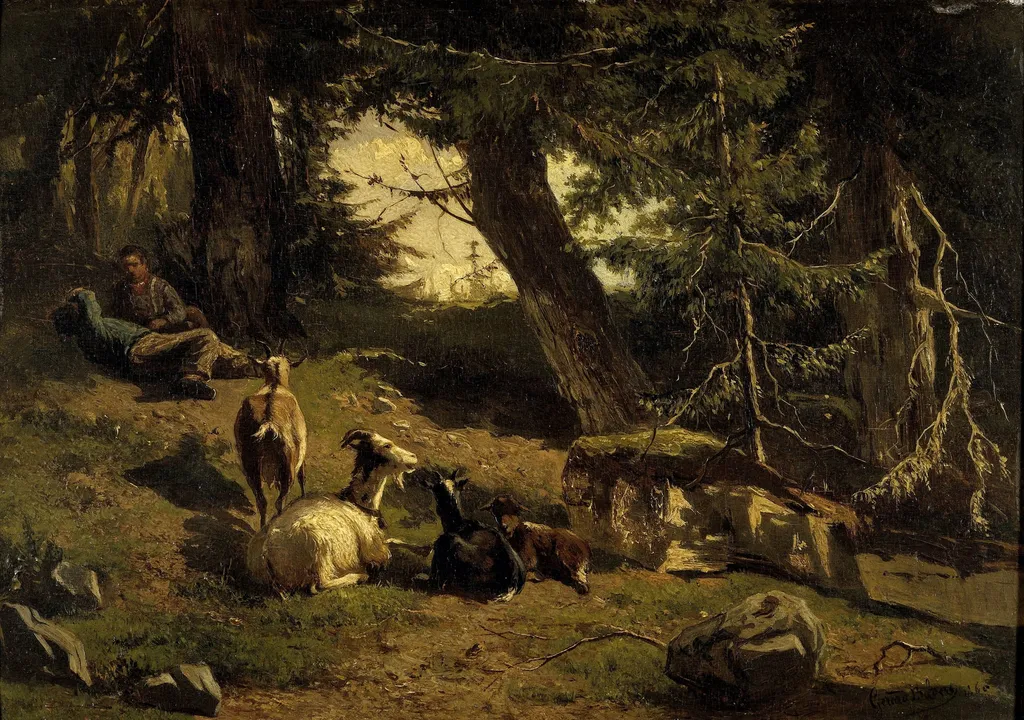
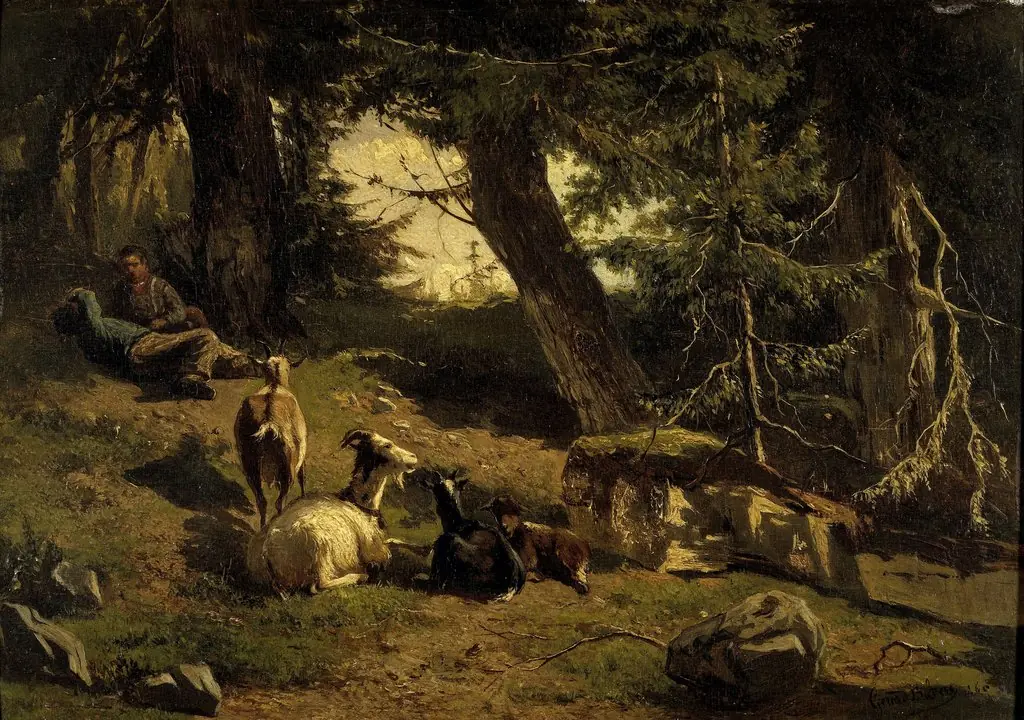
Swiss Landscape is an unspecified painting by the Barbizon school artist Unknown. It dates from 1848 and is held in the collection of the Rijksmuseum. The canvas depicts a tranquil Swiss valley where two goat herders have paused beneath towering pine trees.
About this work
Overview
The canvas depicts a tranquil Swiss valley where two goat herders have paused beneath towering pine trees. In the background, snow‑capped mountains loom, while dappled sunlight filters through the foliage, illuminating the scene with a soft, natural glow. The composition captures a fleeting, unposed moment of everyday rural life.
Subject & Meaning
The central figures are simple shepherds, seated in the shade, suggesting a brief respite from their duties. Their relaxed posture—perhaps conversing or dozing—conveys a sense of quiet labor and connection to the landscape. The painting emphasizes the harmony between human activity and the alpine environment, highlighting the modest rhythms of pastoral work.
Technique & Style
Rendered with meticulous attention to texture, the pines display detailed bark and needle work that convey a tactile realism. The artist employs a restrained palette of greens, earth tones, and muted whites, allowing the distant peaks to recede softly. Light is handled delicately, creating subtle contrasts that enhance the sense of depth and atmospheric calm.
History & Provenance
The work, titled "Swiss Landscape," originates from an unidentified 19th‑century school that focused on Alpine genre scenes. It entered the Rijksmuseum collection through a mid‑20th‑century acquisition, where it has been displayed alongside other European pastoral paintings, contributing to the museum’s representation of rural life in the Alps.
Artist & collection

 Domestic Scene
 Giacomo and Cardinal Marco, investing Andrea, Abbot of San Zeno, with his Benefice
 The Nymph of Fontainebleau
 Portrait of a Woman
 Madonna and Child with Saints in the Enclosed Garden
 Venus and Minerva
 Family Group of Four on Sofa
 Wall painting from Room H of the Villa of P. Fannius Synistor at Boscoreale
 Landscape with a Peasant and His Flock
 Landscape with a Peasant and His Flock
 The Flock
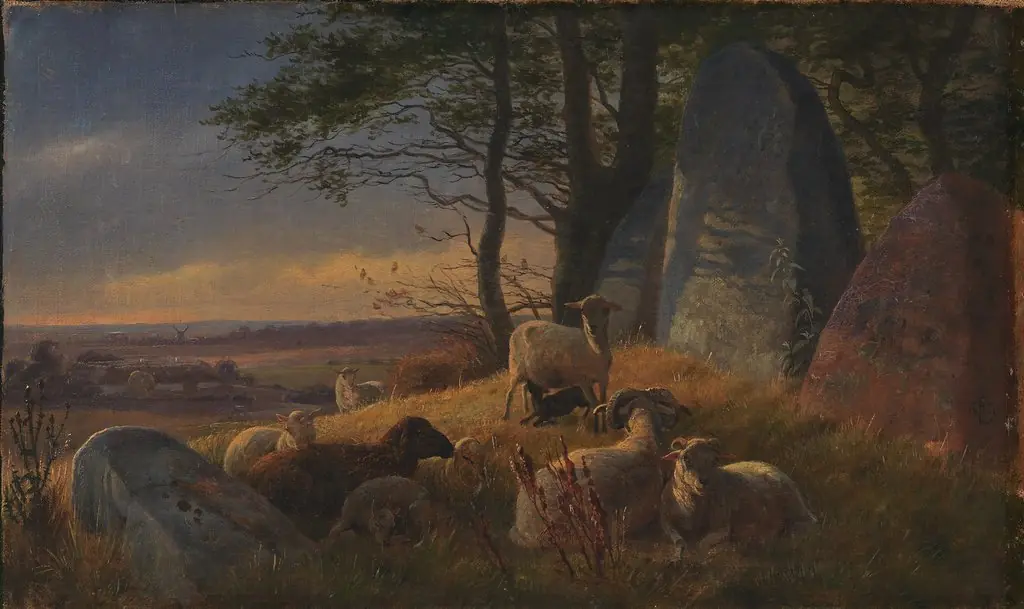 Evening Scene with Sheep on a Mound
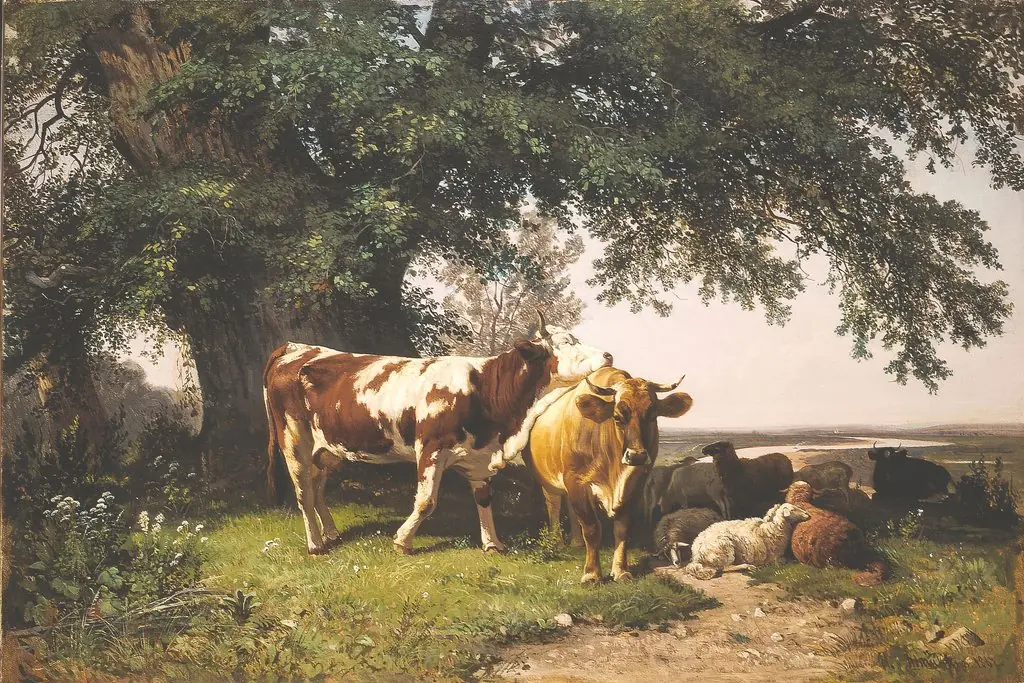 Herd under the Trees
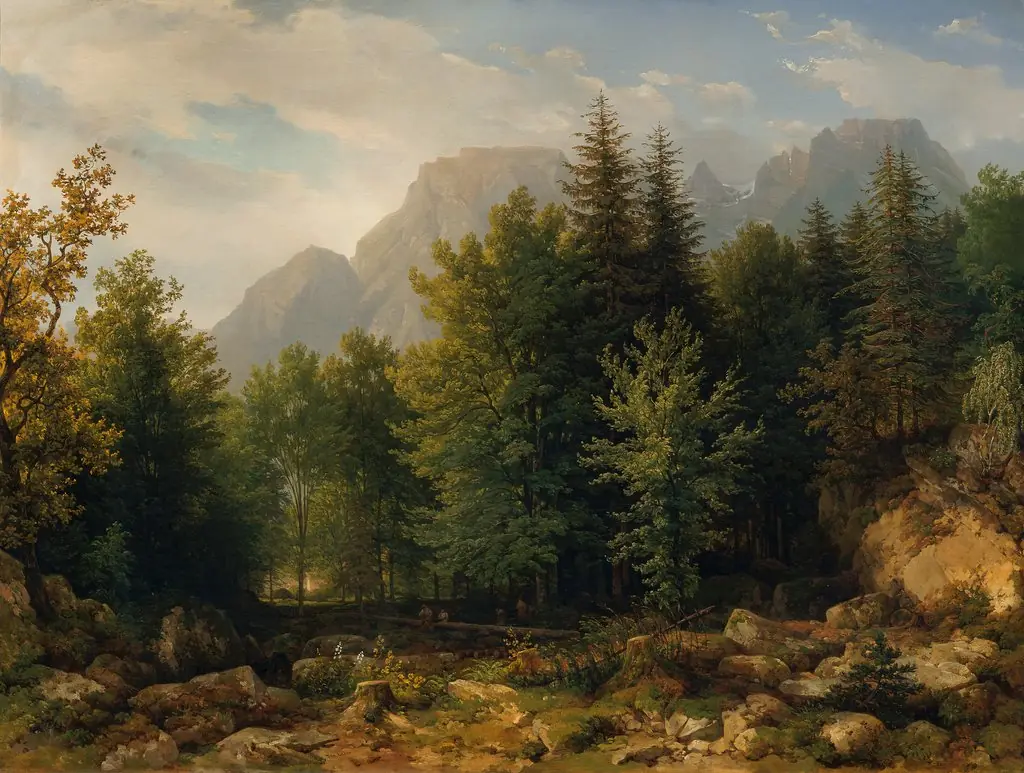 Forest Landscape in the High Mountains
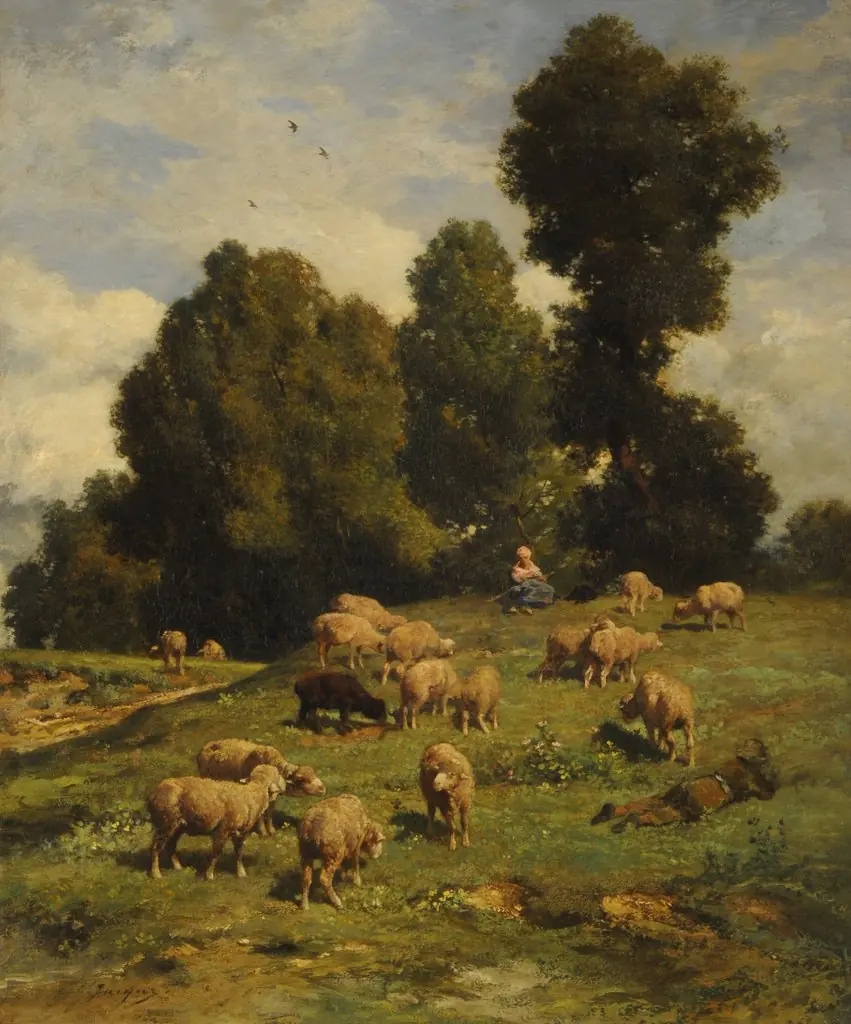 Sheep in pasture
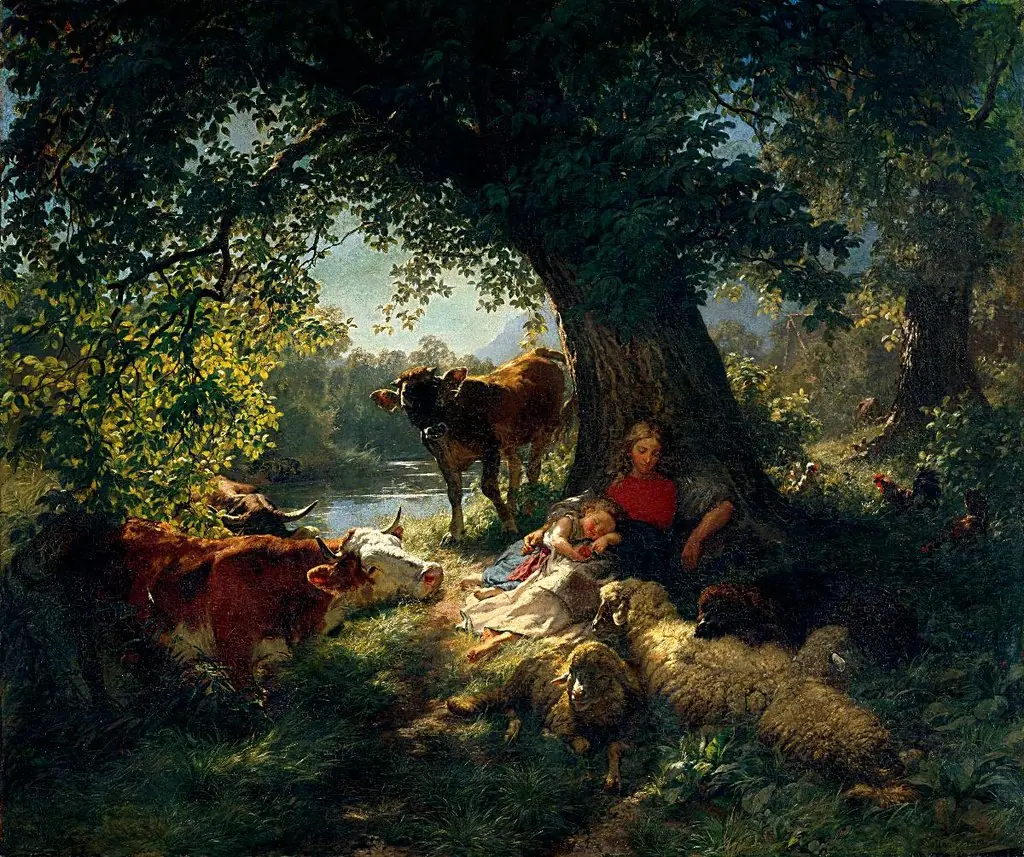 Mittagsruhe
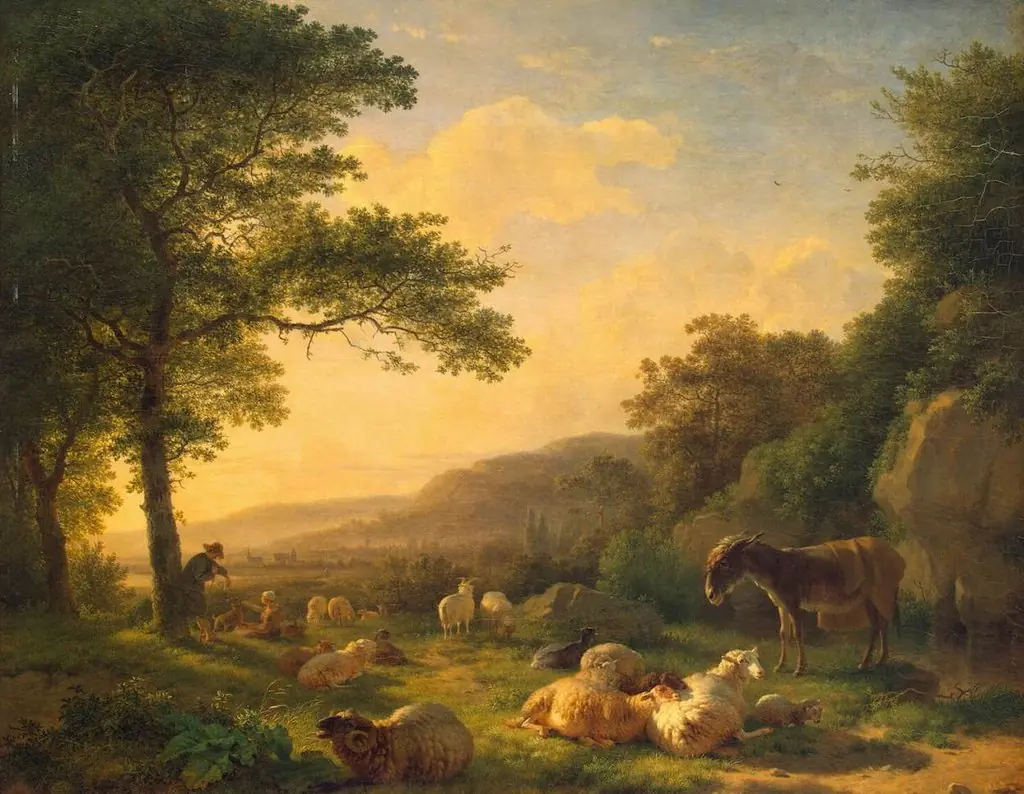 Landscape with a Flock of Sheep
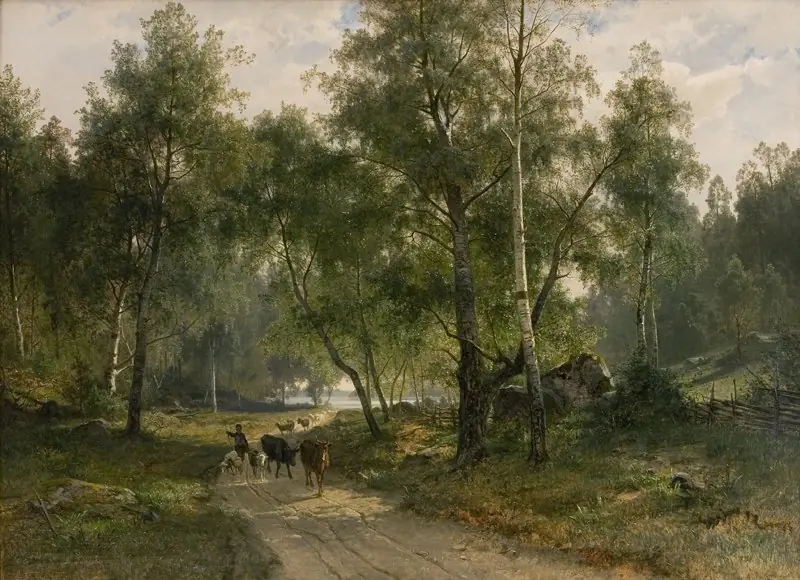 Beneath the Birches. Motif from Mälaren
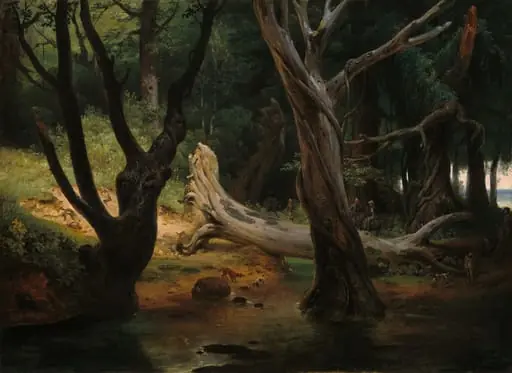 Departure for the Hunt in the Pontine Marshes
 Swiss Landscape