Artwork
Tailor
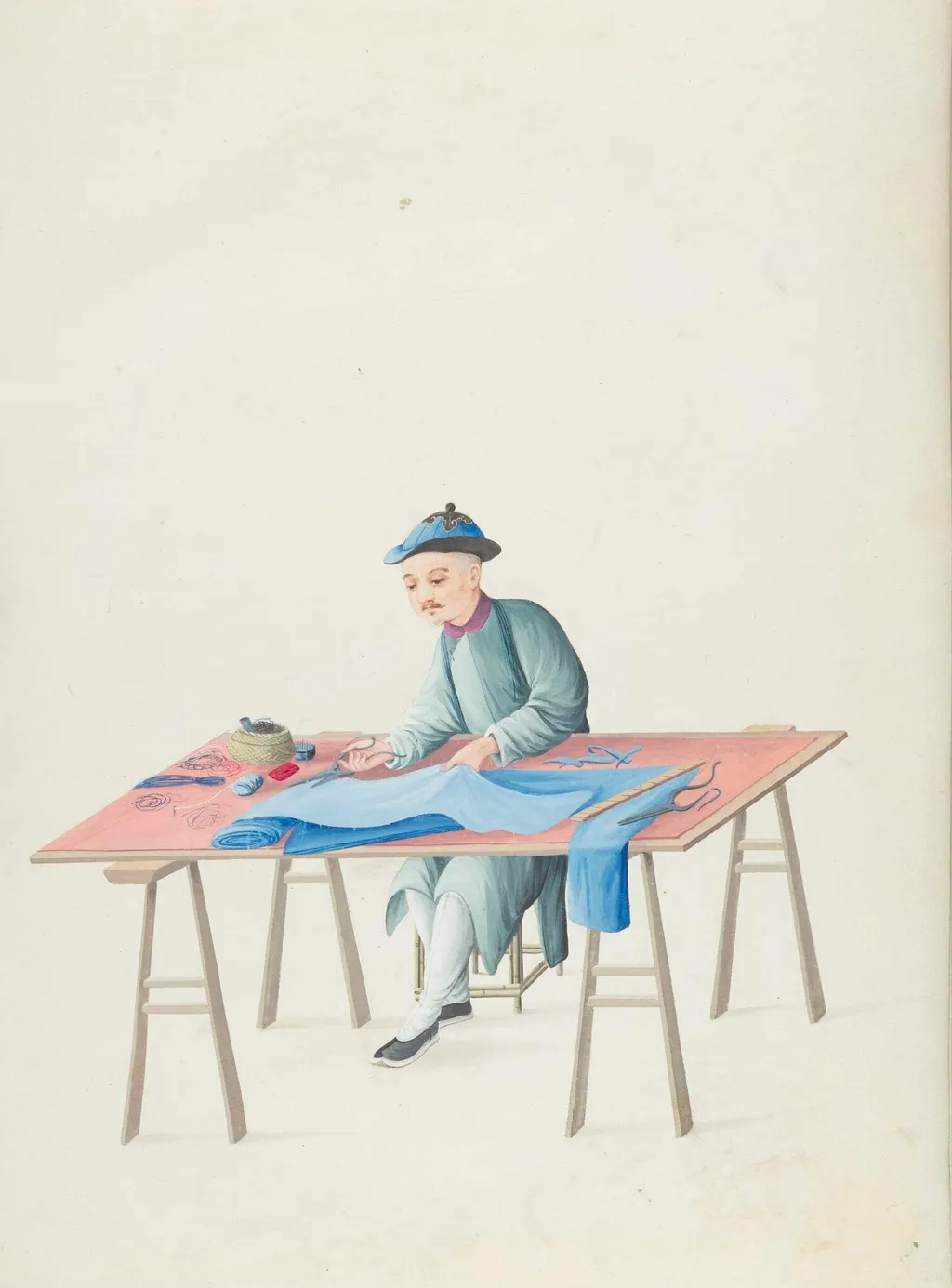
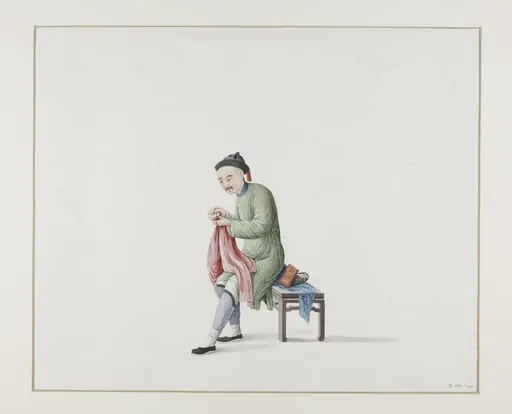
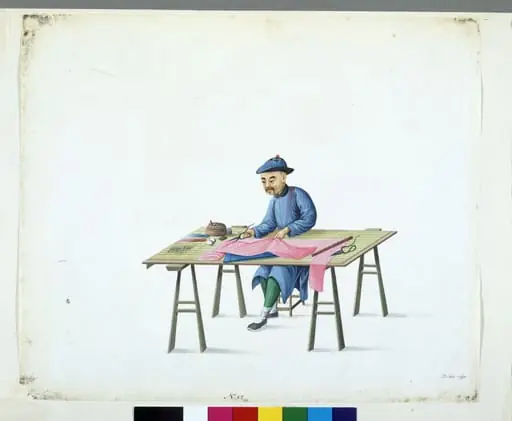
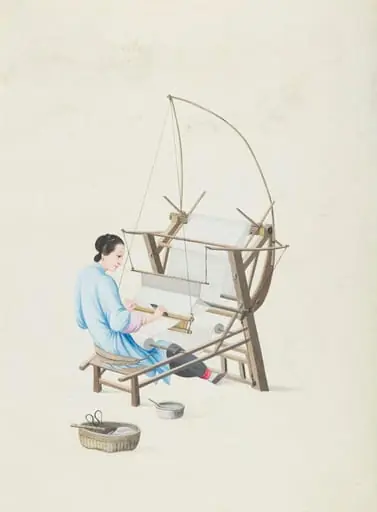
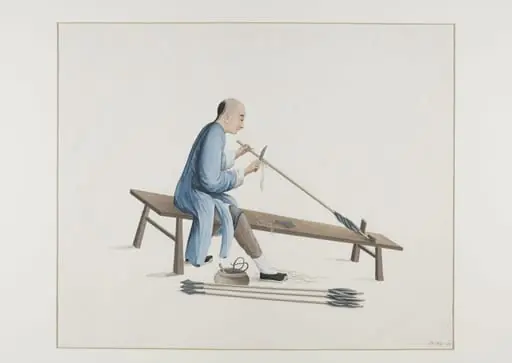
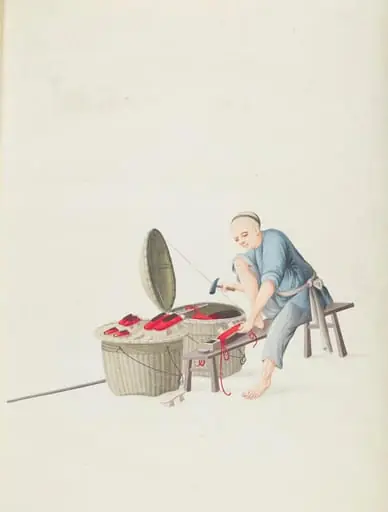
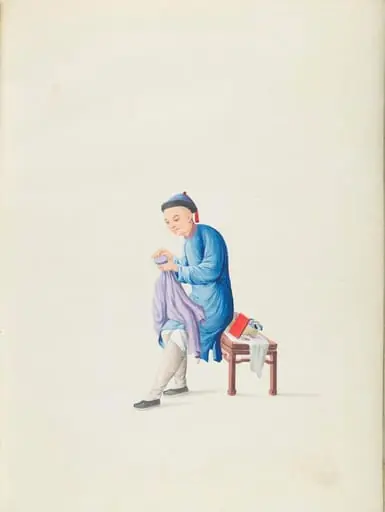
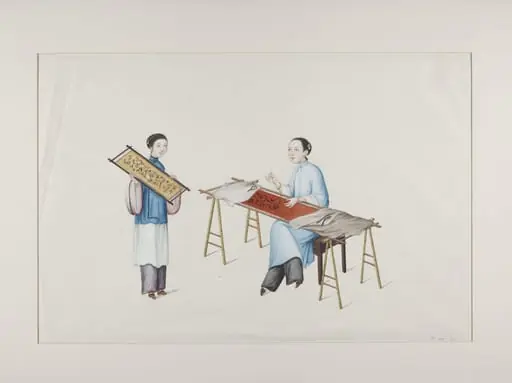
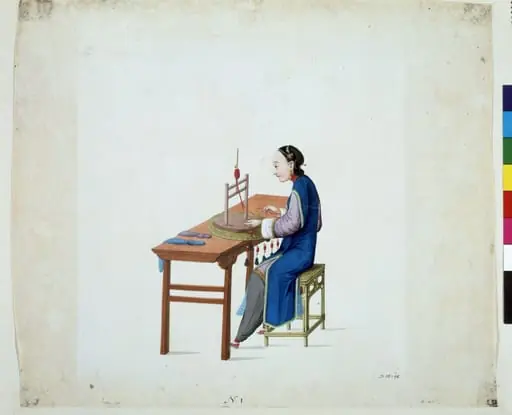
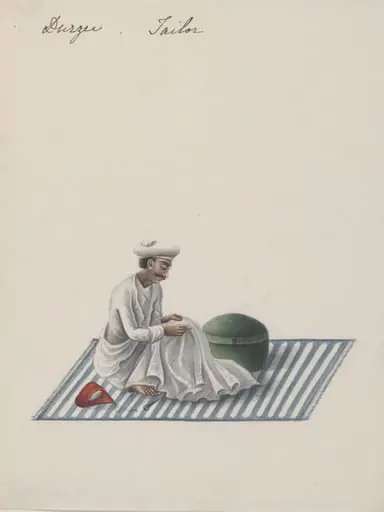
Tailor is a paint painting by the Romanticist artist Unknown. It dates from 1800 and is held in the collection of the Victoria and Albert Museum. This painting is one of twenty-four small works in a documented album depicting various trades of the period.
About this work
Overview
The composition centers on the figure and his tools, set against a neutral backdrop that emphasizes the intimacy of labor.
This painting is one of twenty-four small works in a documented album depicting various trades of the period. It portrays a tailor at work, rendered with quiet precision and minimal distraction. The composition centers on the figure and his tools, set against a neutral backdrop that emphasizes the intimacy of labor. The album, now held in a major collection, was likely compiled to record the diversity of artisanal professions.
Subject & Meaning
The subject is a tailor engaged in the routine act of sewing, his focus fixed on the fabric in his hands. The presence of thread, scissors, and a small ball of yarn suggests a moment of concentrated effort rather than a staged performance. The work does not idealize the trade but presents it as a quiet, dignified daily practice, reflecting a broader interest in documenting ordinary labor during the time.
Technique & Style
The artist employed soft, muted tones—light blues, warm pinks, and gentle greens—to create a serene atmosphere. Brushwork is restrained, with attention given to the texture of fabric and the arrangement of tools. The background is deliberately plain, directing the viewer’s gaze to the tailor’s hands and the materials of his craft. This restrained approach underscores the dignity of manual work through simplicity.
History & Provenance
The painting belongs to a numbered series acquired by a major museum in the late 19th century, cataloged as D.322-1894 through D.345-1894. Its origins are likely tied to a regional workshop or collector interested in documenting trades. The album’s survival suggests it was valued as a record of occupational life, though the artist’s identity remains unconfirmed in surviving records.
Context
Created during a period when artisanal trades were being systematically recorded, this painting reflects a cultural interest in preserving the visual language of labor. Similar albums appeared across Europe, often commissioned by institutions or wealthy patrons seeking to document social structures. This work fits within that trend, offering a non-idealized glimpse into the daily rhythm of a skilled craftsperson.
Legacy
Though not widely exhibited, the painting contributes to a broader historical archive of occupational imagery. Its quiet realism has influenced later studies of labor in art, offering a counterpoint to grander historical narratives. Today, it remains a reference point for scholars examining how everyday work was visually represented in pre-industrial societies.
Artist & collection

 Domestic Scene
 Giacomo and Cardinal Marco, investing Andrea, Abbot of San Zeno, with his Benefice
 The Nymph of Fontainebleau
 Portrait of a Woman
 Madonna and Child with Saints in the Enclosed Garden
 Venus and Minerva
 Family Group of Four on Sofa
 Wall painting from Room H of the Villa of P. Fannius Synistor at Boscoreale