Artwork
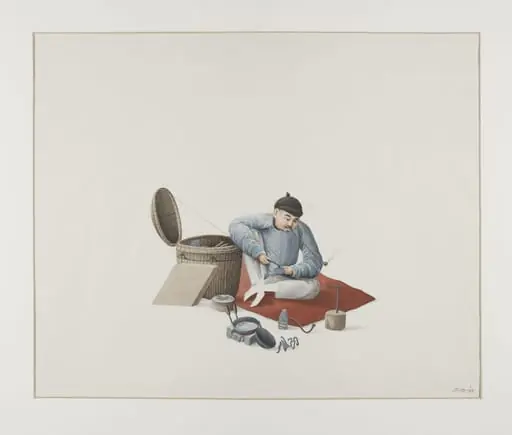
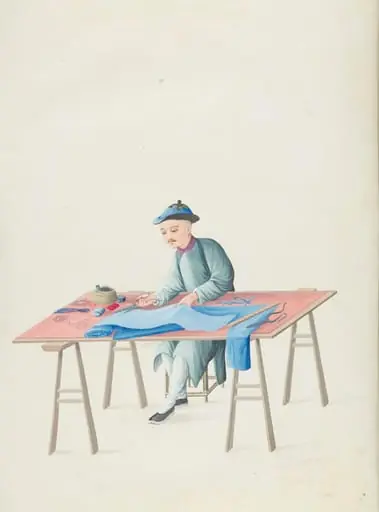
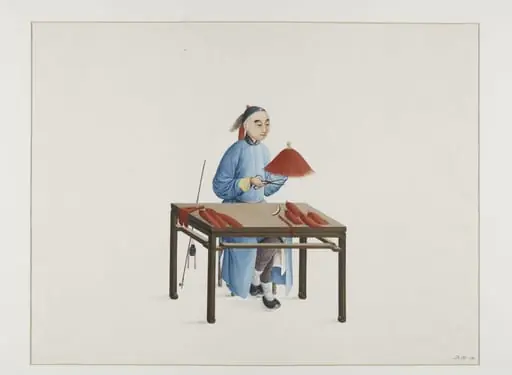
A Clothes Mender
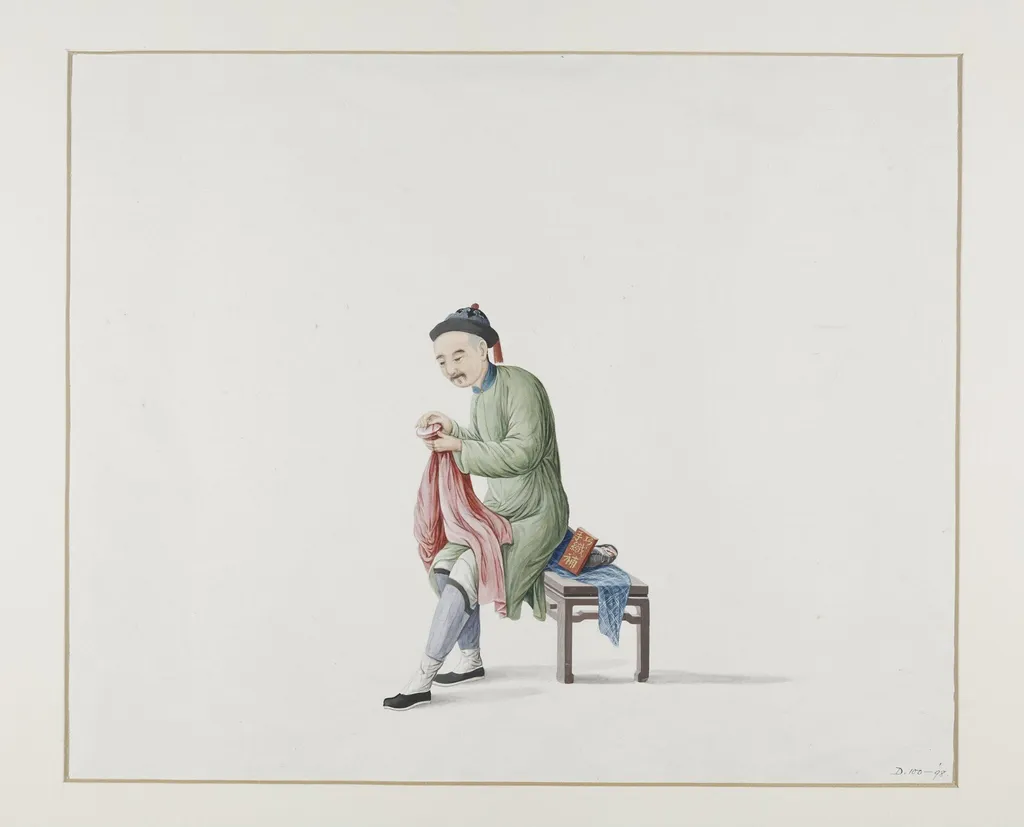
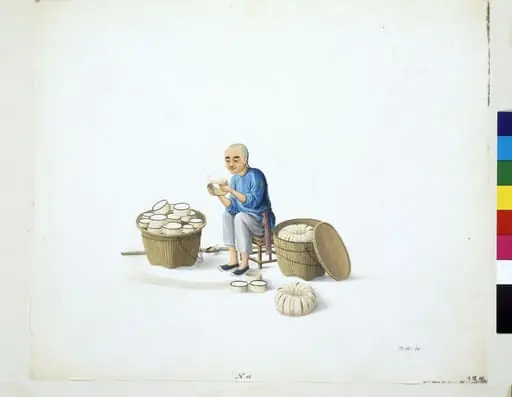
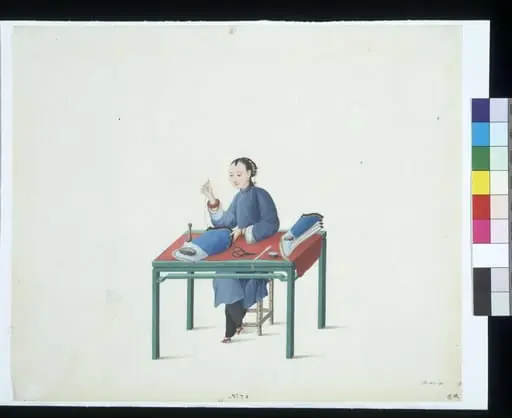
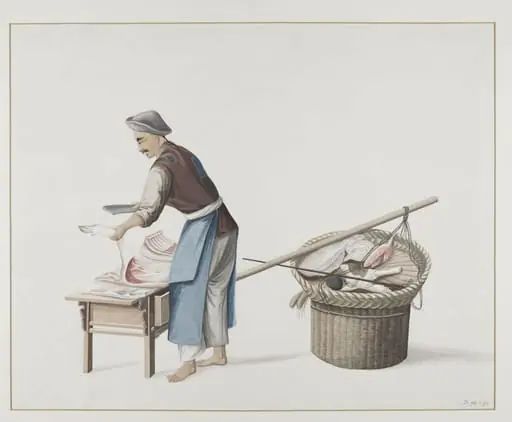
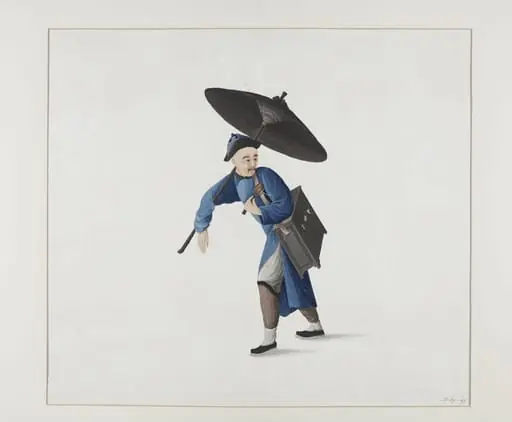
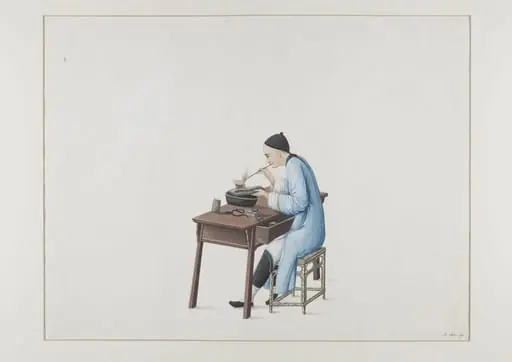
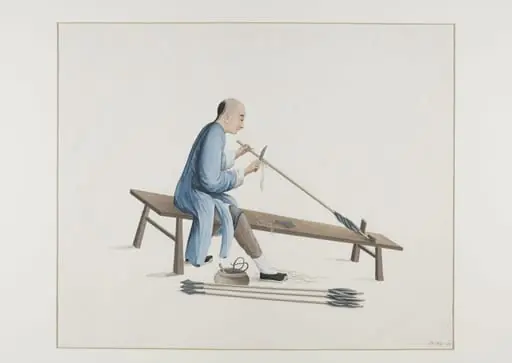
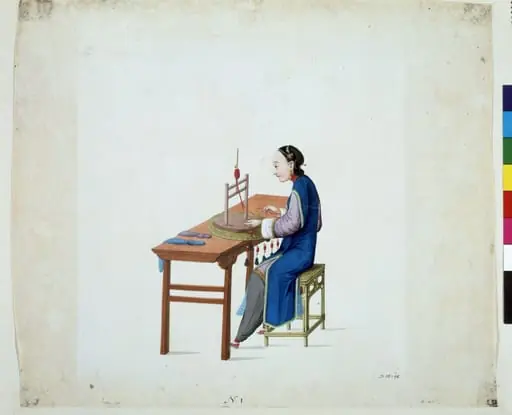
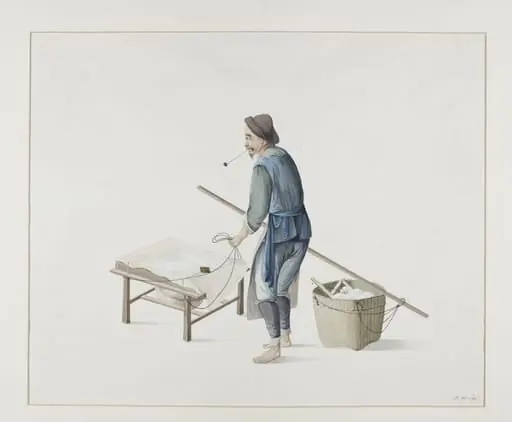
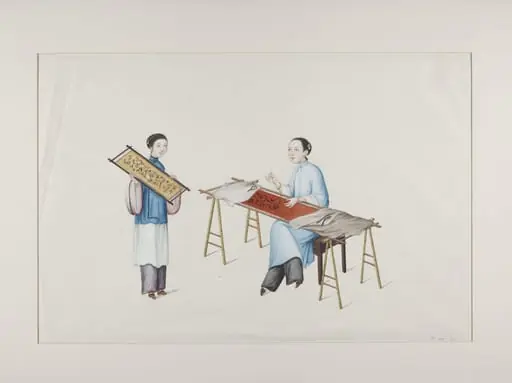
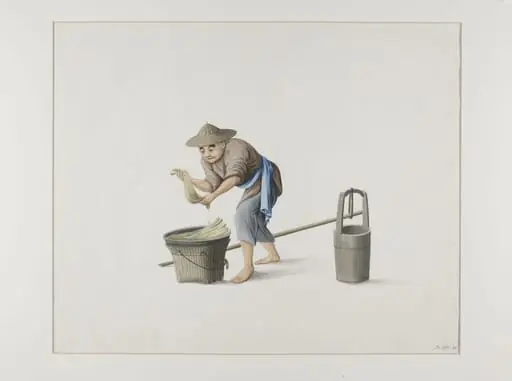
A Clothes Mender is a paint painting by the Patna School of Painting artist Puqua. It dates from 1790 and is held in the collection of the Victoria and Albert Museum. This watercolor painting is one of a hundred works documenting daily labor in Canton during the late 18th or early 19th century.
About this work
Overview
This watercolor painting is one of a hundred works documenting daily labor in Canton during the late 18th or early 19th century. It portrays a single tradesman at work, rendered in muted tones with careful linear precision. The piece belongs to a systematic visual record of occupational life, likely produced for export or domestic circulation as a cultural document rather than as fine art.
Subject & Meaning
The figure, an elderly man in a green robe and black curled-brim hat, is absorbed in mending a red fabric, his lined face conveying quiet concentration. Tools and materials—a wooden box and folded blue cloth—lie nearby, emphasizing the modest scale of his labor. The scene rejects grandeur, instead honoring routine craft as a vital, visible part of urban economy and social structure.
Technique & Style
Executed in transparent watercolor, the painting uses soft, restrained hues and clean, deliberate lines to define form without embellishment. The composition is tightly framed, focusing attention on the hands and fabric. Background elements are minimized, reinforcing the intimacy of the moment and the artist’s interest in observational accuracy over atmospheric depth.
History & Provenance
The work entered the collection in 1898 through acquisition from Parsons & Sons, a documented source of Chinese export art. Its inclusion in the Asia Department registers was confirmed during a 2022 provenance review. While the artist’s identity remains unverified, stylistic traits align with works attributed to Puqua, a known painter of Cantonese trade scenes.
Context
These paintings emerged from a Cantonese artistic tradition that catered to foreign and local demand for images of native crafts. They served as ethnographic records, capturing the textures of everyday life during a period of intense trade between China and the West. Unlike imperial commissions, these works prioritized realism and specificity over symbolic or narrative complexity.
Legacy
The series of one hundred paintings, including this one, preserves a visual archive of pre-modern labor practices now largely vanished. Though not widely exhibited, they remain important references for scholars studying material culture, artisanal life, and cross-cultural representation in 19th-century China.
Artist & collection