Artwork
Talger
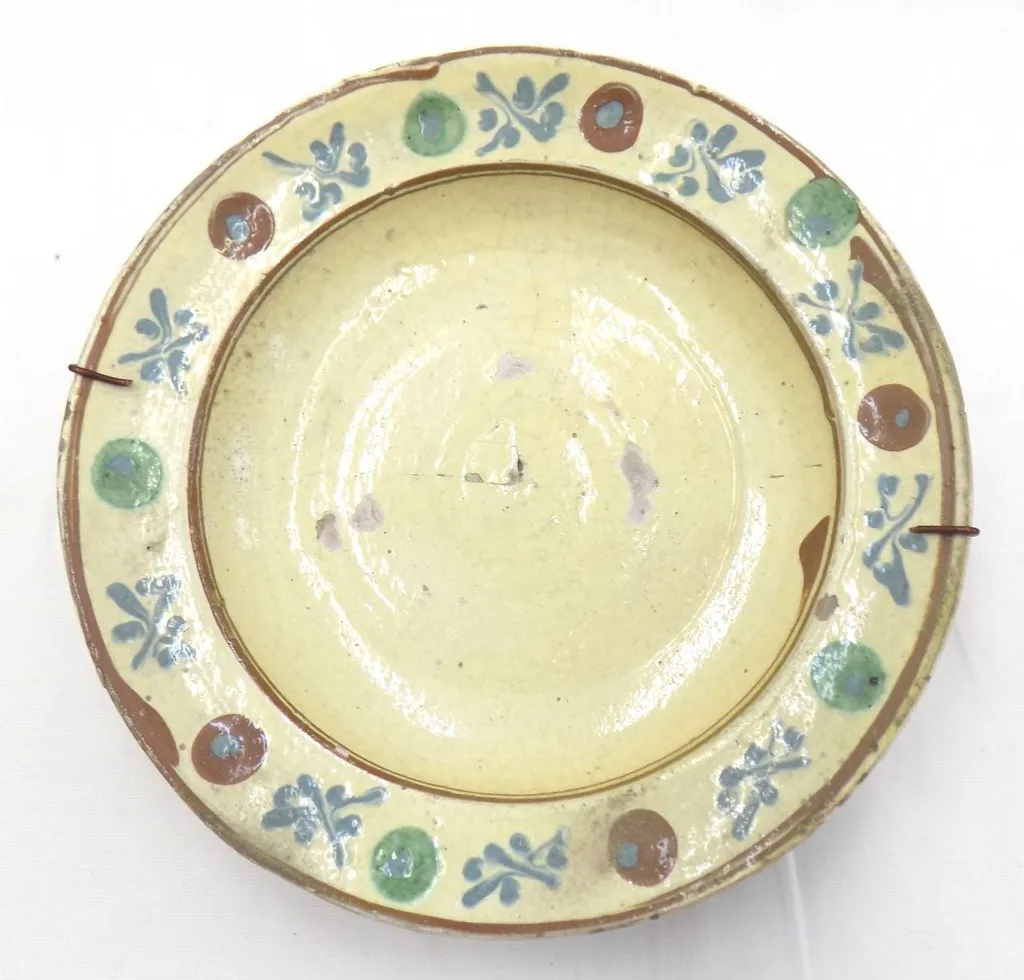
Talger is a print by Unknown. It dates from 1963 and is held in the collection of the Moldova National Museum Complex.
About this work
Overview
The paint application is uneven, and the edge shows signs of wear or cracking, reinforcing its utilitarian origin and informal making process.
This circular ceramic plate, labeled Talger, features a modest, handcrafted aesthetic. Its pale yellow surface is bordered by a narrow brown rim, with minimal decoration consisting of small, irregular clusters of blue-green foliage and brown dots resembling berries. The paint application is uneven, and the edge shows signs of wear or cracking, reinforcing its utilitarian origin and informal making process.
Subject & Meaning
The decoration suggests natural motifs—leaves and small fruit or seed pods—but lacks symbolic precision. These elements appear observational rather than narrative, evoking a connection to domestic or rural life. The absence of figural or mythological content points to a focus on everyday beauty, possibly reflecting regional craft traditions where ornamentation arises from familiarity with local flora.
Technique & Style
The plate was likely hand-painted with simple brushes and natural pigments, resulting in uneven strokes and subtle variations in tone. The rough edge and inconsistent glaze hint at non-industrial production, possibly fired in a home or village kiln. The style prioritizes function over polish, embracing imperfections as part of its character, aligning with vernacular ceramic practices rather than formal artistic conventions.
History & Provenance
No documented origin or maker is recorded for this object. Its materials and construction suggest it may derive from a regional pottery tradition, perhaps from the late 19th or early 20th century, when handmade tableware remained common in rural households. Its survival as a standalone piece implies it was preserved for its utility or sentimental value rather than as a collectible.
Context
In its time, such plates would have been part of ordinary domestic life, used for serving food in homes without access to mass-produced ceramics. Similar wares appear in folk traditions across Europe and the Mediterranean, where decorative elements often drew from the immediate natural environment. The absence of elaborate design reflects economic and cultural priorities centered on practicality.
Legacy
Today, Talger stands as an example of unassuming craft, valued for its authenticity rather than artistic ambition. It contributes to broader understandings of everyday material culture, reminding viewers that aesthetic expression often emerges from necessity and repetition, not intentionality. Its quiet presence invites reflection on the dignity of ordinary objects.
Artist & collection
 Domestic Scene
 Giacomo and Cardinal Marco, investing Andrea, Abbot of San Zeno, with his Benefice
 The Nymph of Fontainebleau
 Portrait of a Woman
 Madonna and Child with Saints in the Enclosed Garden
 Venus and Minerva
 Family Group of Four on Sofa
 Wall painting from Room H of the Villa of P. Fannius Synistor at Boscoreale
 Farfurie de formă tronconică, adâncită, cu buza foarte înaltă; pe fund are găuri pentru agățare. Este smălțuit în interior și exterior (buza). Decorat cu motive geometrice: linie; motive fitomorfe; motive florale. Cromatică: fond: alb; motive: verde; maro; albastru.
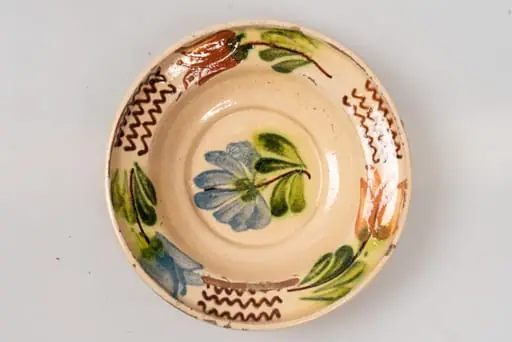 Farfurie adâncă, cu buza evazată și muchia buzei ridicată. Piesa este acoperită pe suprafața interioară cu un strat de angobă albă peste care este pictat cu pensula și cu cornul decorul format din motive florale și geometrice: fundul farfuriei conține o floare cu petale alungite de culoare albastră și frunze verzi. Alte trei flori (una cu petale de culoare albastră, a doua de culoare maro-roșcat iar cea de-a treia de culoare siena arsă), cu tulpină maro și frunze verzi, decorează buza farfuriei. Între cele trei flori, sunt pictate trei motive aproximativ identice, formate din trei linii vălurite paralele, de culoare maro. Suprafața ornamentată a farfuriei este acoperită cu un strat de smalț transparent. Cromatica: alb, verde, siena arsă, maro, maro-roșcat, albastru.
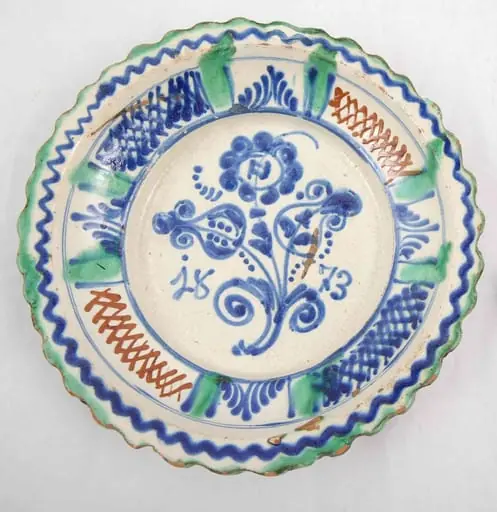 farfurie
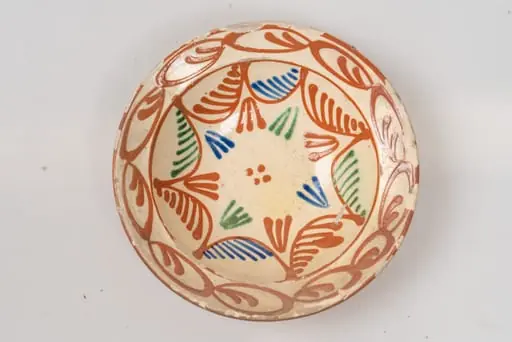 Farfurie adâncă, cu buză relativ îngustă, evazată; este acoperită pe suprafața interioară cu un strat de angobă albă, peste care este pictat cu cornul decorul format din motive geometrice: fundul farfuriei și peretele acesteia este decorat cu motive formate din linii curbe de culoare maro, ce au pe suprafața interioară linii oblice paralele, inegale ca mărime, de culoare verde, albastru, maro; grupuri de câte trei linii colorate, în formă de V și patru puncte centrale, de culoare maro. Buza farfuriei este decorată cu un șir continuu din motive formate din linii ovale, de culoare maro, cu câte două linii sub formă de virgulă în interior. Suprafața ornamentată a farfuriei este acoperită cu un strat de smalț transparent. Cromatica: alb, albastru, verde, maro.
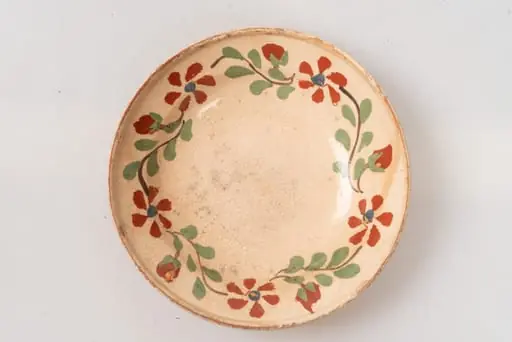 Farfurie semi-adâncă, acoperită pe suprafața interioară cu un strat de angobă albă, peste care este pictat cu pensula decorul format din motive vegetale dispuse pe buza farfuriei: o ghirlandă circulară formată din cinci flori cu petale de culoare roșu-cărămiziu și mijloc albastru, cu câte cinci boboci de aceași culoare și frunze verzi. Farfuria este acoperită pe întreaga sa suprafață cu un strat de smalț transparent. Cromatica: alb, verde, maro, roșu-cărămiziu, albastru.
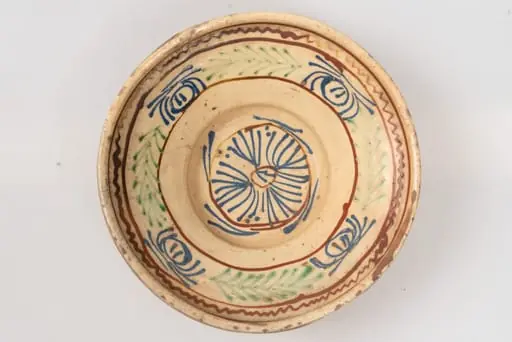 Farfurie adâncă, de tip castron, cu fund îngust, corp tronconic și buză dreaptă, verticală; este angobată pe fața interioară și pe suprafața exterioară a buzei cu un strat de humă albă. Este decorată prin pictare cu cornul cu motive florale și fitomorfe geometrizate: pe fundul farfuriei este pictată o floare cu petalele din linii subțiri albastre și centrul marcat cu un cerc mic maro, încadrată într-un cerc de asemenea de culoare maro. Peretele farfuriei este decorat cu patru grupuri de motive formate din linii verzi, sugerând o ramură cu frunze, intercalate de patru flori geometrizate, realizate din linii albastre. Decorul este completat cu trei linii circulare simple și o linie circulară ondulată. Suprafața ornamentată a farfuriei este acoperită cu un strat de smalț transparent. Cromatica: alb, verde, albastru, maro.
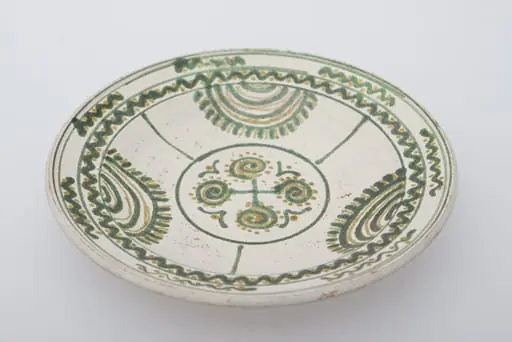 Vas ceramic de formă circulară și profil tronconic. Fața farfuriei a fost introdusă în angobă albă. Decorația a fost făcută cu pensula. Pe fundul farfuriei un cerc circumscris patru motive în spirală. Pereții farfuriei, au fost împărțiți în trei părți egale, pe circumferință, delimitate fiecare parte de o linie verticală, motivul bradului este reprezentat printr-o succesiune de semicercuri, pe ultima dintre ele pictându-se "țepii" bradului. Buza farfuriei a fost împărțită în două registre, în primul fiind pictat valul continuu, a doua cu val întrerupt. Pe fundul vasului, la spate, ștanțat ”D. Șchiopu C. Vlădești 1980'' înscris într-un cerc. Pe inelul de susținere dispuse două orifficii pentru atârnare. Cromatică: fond de angobă albă; motive: smalț verde și maro.
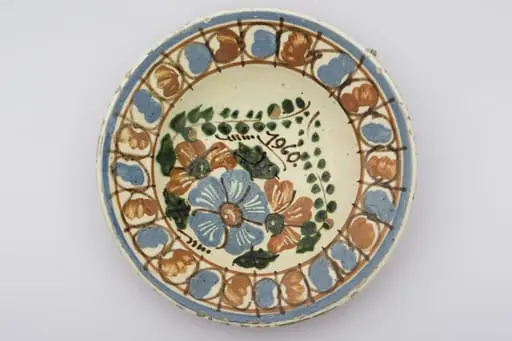 Recipient ceramic smălțuit, de formă tronconică, cu baza plată, pereții ușor ridicați și buza profilată. Peste stratul alb de angobă au fost realizate două registre ornamentate cu motive geometrizante și fitomorfe stilizate. Primul registru, situat pe fundul vasului este format din trei flori: una, centrală cu mijlocul maro și petalele albastre, celelalte două de culoare maro roșcat. Crenguțelor, pe care sunt poziționate florile, li se unesc vârfurile, deasupra cărora a fost trecută datare: „1960”. Marginal a fost realizat cel de-al doilea registru, format din boboci de culoare albastru și maro roșcat, despărțiți de linii verticale drepte. Două linii circulare drepte încadrează ultimul registru. Farfuria era utilizată în gospodărie pentru decorarea interioarelor. Prezintă uzură funcțională. Cromatică: fond: alb; motive: albastru; maro roșcat; verde.
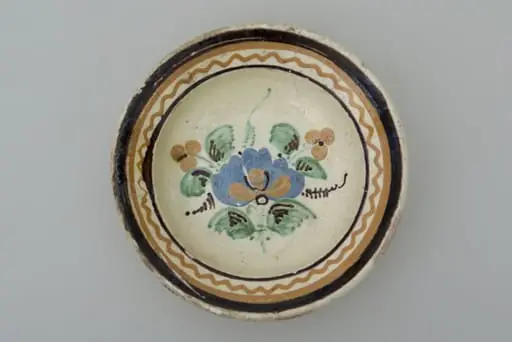 Blid de formă tronconică cu buza evazată. Smălțuit. Decorat cu motive florale: buchet, plasat pe fundul vasului și motive geoemtrice plasate pe gură: alternantă de cercuri și spirale ce se închid îm cerc. Cromatică: fond: alb; motive: maro; crem; verde; albastru.
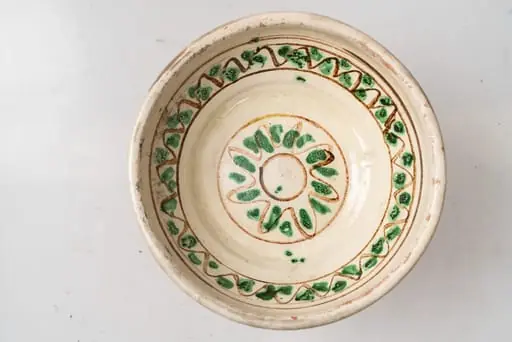 Farfurie adâncă de tip castron, cu fund larg, corp tronconic ușor rotunjit și buză îngustă rotunjită; piesa este modelată din lut la roata olarului și angobată cu humă albă pe fața interioară. Decorul este realizat prin pictare cu cornul și cu pensula și se compune din motive vegetale și florale foarte stilizate (o floare centrală cu petale alungite, desenată cu contur maro și umplută cu puncte verzi, neglijent realizate, încadrată într-un cerc de culoare maro; un registru decorativ în zona mediană a peretelui, format dintr-o linie ondulată sub formă de cerc, având puncte verzi între bucle și încadrată între două cercuri de culoare maro). Cromatica: alb, verde, maro. Farfuria este acoperită pe fața ornamentată cu un strat de smalț transparent.
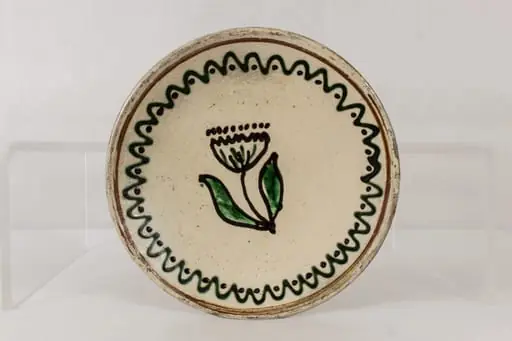 Vas de formă rotundă, smălțuit în interior, decorat pe suprafața interioară prin pictare astfel: motivul floarea de mac în centru, cercul vălurit, dublat de motive punctiforme, și un motiv circular cărămiziu (spre margini). Cromatică: negru, verde, alb, maro, cărămiziu.
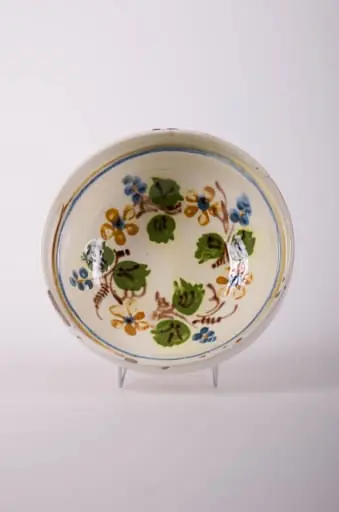
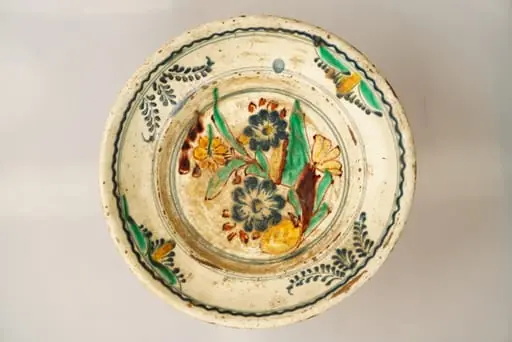 Farfurie adâncă, cu buza dreaptă evazată; suprafața exterioară este acoperită cu un strat de angobă albă peste care este pictat cu cornul și cu pensula decorul format din motive florale și geometrice, dispuse astfel: registrul decorativ de pe fundul farfuriei conține, încadrat într-un cerc dublu albastru, un buchet desenat cu contur subțire maro, format din două flori cu petale ușor alungite albastre, un boboc și două flori galbene și din frunze verzi. Registrul decorativ de pe buza farfuriei, marcat de două linii circulare duble albastre, conține două motive decorative formate din trei frunze realizate din linii mici albastre și două motive formate din două frunze verzi și o floare centrală galbenă, decorată cu linii mici albastre. Marginea buzei este decorată cu o linie circulară albastră. Suprafața ornamentată a farfuriei este acoperită cu un strat de smalț transparent. Cromatica: alb, galben, verde, maro, albastru.