Artwork
Temple Banner with pilgrimage sites and scenes from the "Svayambhu-purana" (Ancient Text of the Primordial Buddha)
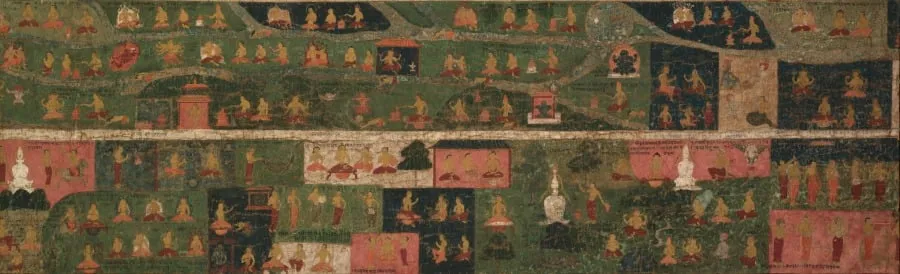
Temple Banner with pilgrimage sites and scenes from the "Svayambhu-purana" (Ancient Text of the Primordial Buddha) is an unspecified painting by the Baroque artist Unknown. It dates from 1635 and is held in the collection of the Cleveland Museum of Art. This tall, narrow temple banner features intricate painted scenes across two primary bands.
About this work
Overview
This tall, narrow temple banner features intricate painted scenes across two primary bands. The upper section presents a detailed map of Kathmandu's pilgrimage sites, annotated with Newari script labels. Below, a narrative unfolds through vignettes depicting a king, serpent deities, and the revered Svayambhu Stupa, illustrating a story of drought relief through divine and Buddhist intervention.
Subject & Meaning
The banner juxtaposes the real geography of Kathmandu with a mythological narrative from the 'Svayambhu-purana'. The story highlights the collaboration between serpent deities (depicted as seated, snake-headed figures) and a Buddhist master in aiding a king to end a drought, emphasizing the interplay between religious and natural forces in achieving prosperity.
Technique & Style
The artwork showcases meticulous miniature painting techniques, blending cartography with figurative storytelling. The use of Newari script for labels and the consistent depiction of the Svayambhu Stupa (in its recognizable white, vase-shaped form) reflect the banner's local, devotional context.
History & Provenance
Originally part of a complete banner, this piece likely hung in a monastic courtyard during annual festivals. Its design and content suggest it was created for a temple environment rather than a royal setting, indicating its purpose in communal religious practice.
Context
The inclusion of identifiable Kathmandu landmarks, such as the Svayambhu Stupa, grounds the mythological narrative in the local topography, making the story more relatable and sacred to the audience. The banner's format may have served both as a visual guide to pilgrimage sites and a storytelling device for religious teachings.
Legacy
As a surviving example of Newari religious art, the banner provides insight into the synthesis of Buddhist mythology and local geography in medieval Nepal. Its themes and detailed cartography offer historians and art historians a window into the religious practices and cultural values of the time.
Artist & collection

 Domestic Scene
 Giacomo and Cardinal Marco, investing Andrea, Abbot of San Zeno, with his Benefice
 The Nymph of Fontainebleau
 Portrait of a Woman
 Madonna and Child with Saints in the Enclosed Garden
 Venus and Minerva
 Family Group of Four on Sofa
 Wall painting from Room H of the Villa of P. Fannius Synistor at Boscoreale