Artwork
Seated Amitabha with Attendants
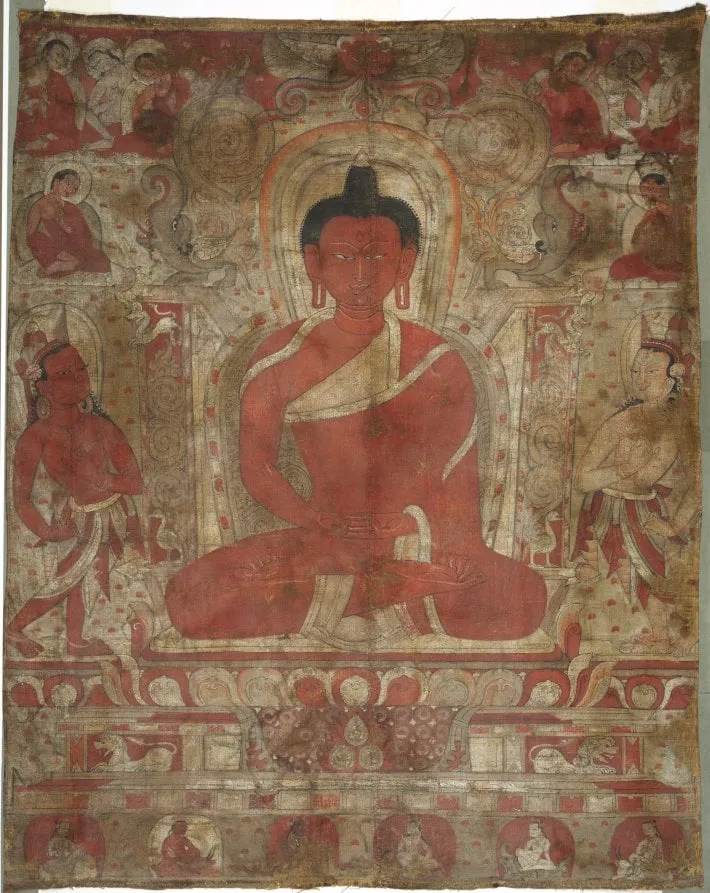
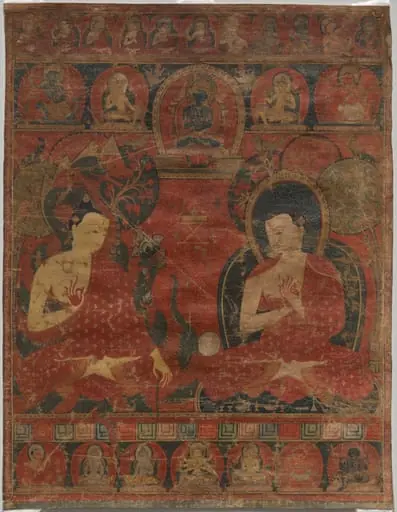
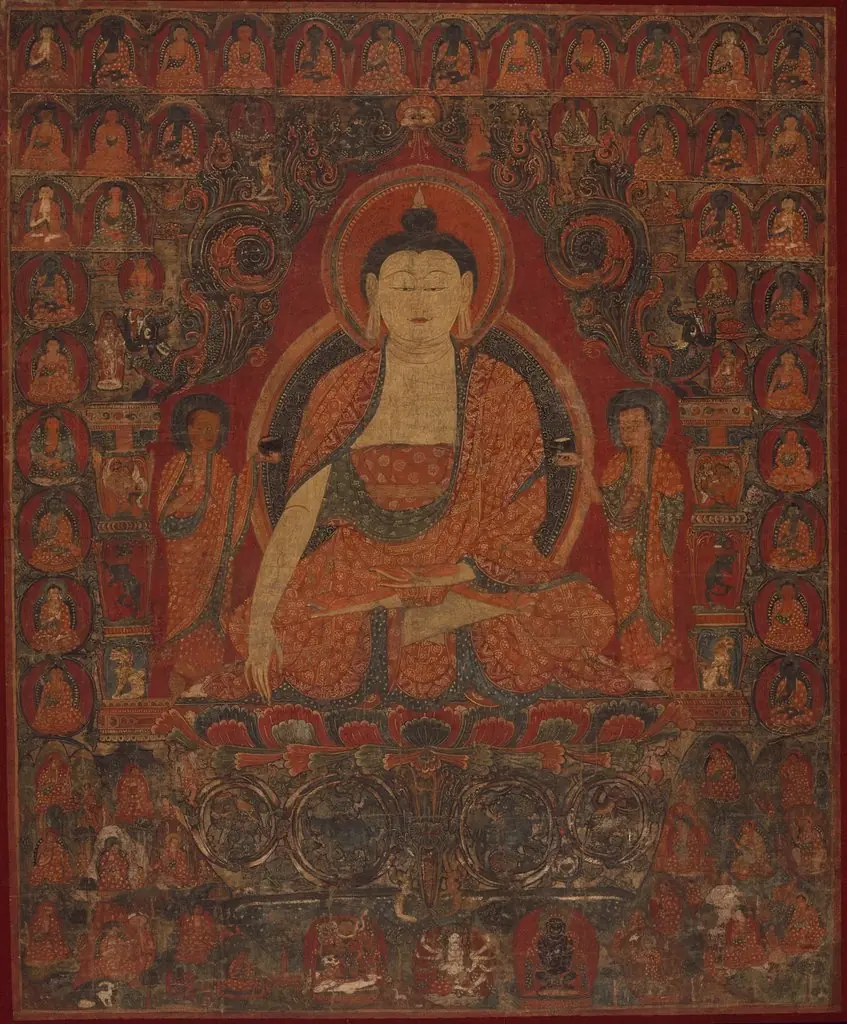
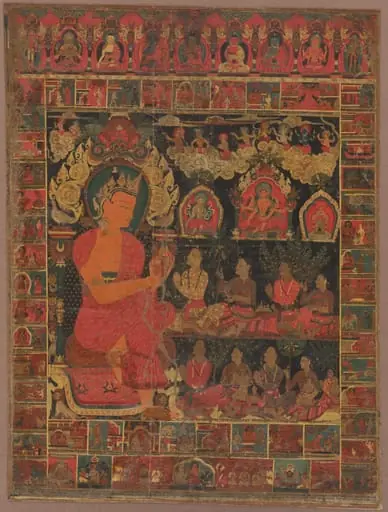
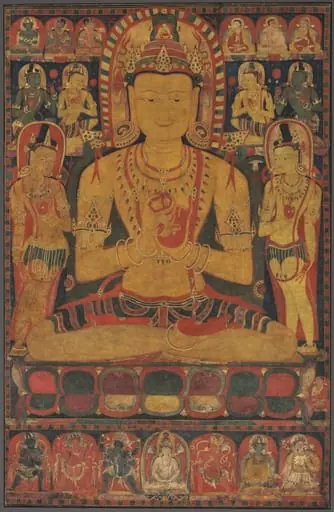
Seated Amitabha with Attendants is an unspecified painting by the Byzantine icon painting artist Unknown. It dates from 1104 and is held in the collection of the Cleveland Museum of Art. The work depicts Amitabha, the Western Buddha, seated in meditation on an elaborate throne.
About this work
Overview
The work depicts Amitabha, the Western Buddha, seated in meditation on an elaborate throne. He is flanked by bodhisattvas, while two tiers of monks hover above, and a line of six adept practitioners stands below. In front of the throne three luminous symbols—representing the Buddha, the Dharma, and the Sangha—hover as the iconic Three Jewels of Buddhism.
Subject & Meaning
Amitabha is presented as the focal point of devotion, embodying the promise of rebirth in the Pure Land.
Amitabha is presented as the focal point of devotion, embodying the promise of rebirth in the Pure Land. The surrounding bodhisattvas and monks convey the transmission of his teachings, and the lower adepts illustrate the active practice of mantra recitation and ritual magic aimed at rapid enlightenment. The three jeweled icons reinforce the foundational Buddhist triad of teacher, doctrine, and community.
Technique & Style
The painting remains unfinished, exposing the swift ink outlines that define each figure. These fluid brushstrokes reveal the artist’s hand and the preparatory stage of a thangka, a devotional cloth painting. The composition balances bold color—most notably the red hue of the Buddha—with delicate line work, allowing the underlying drawing to convey movement and spiritual presence.
History & Provenance
Originating from the Guge kingdom of western Tibet, a region governed from the 10th to the 17th centuries, the piece is among the earliest surviving thangkas. It was housed at Tabo Monastery, situated high in the Himalayas, an institution known for its long artistic tradition. The monastery’s location now falls within the modern borders of India.
Artist & collection

 Domestic Scene
 Giacomo and Cardinal Marco, investing Andrea, Abbot of San Zeno, with his Benefice
 The Nymph of Fontainebleau
 Portrait of a Woman
 Madonna and Child with Saints in the Enclosed Garden
 Venus and Minerva
 Family Group of Four on Sofa
 Wall painting from Room H of the Villa of P. Fannius Synistor at Boscoreale