Artwork
Text, Folio 40 (verso), from a Kalpa-sutra
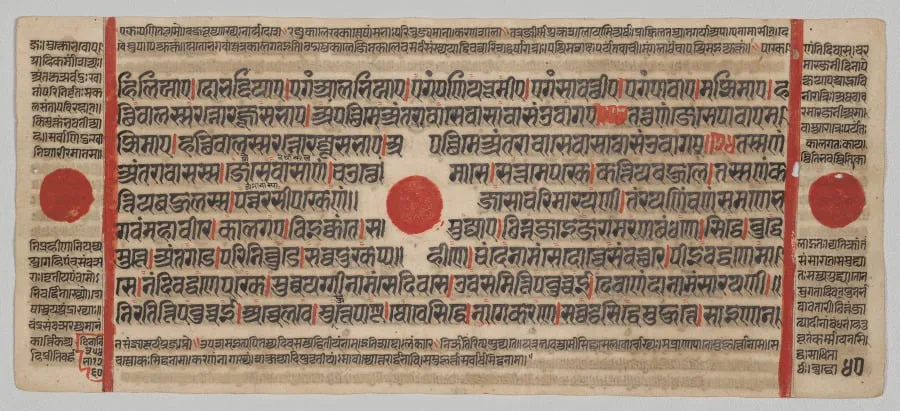
Text, Folio 40 (verso), from a Kalpa-sutra is an unspecified painting by the Mughal Painting artist Unknown. It dates from 1488 and is held in the collection of the Cleveland Museum of Art.
About this work
Overview
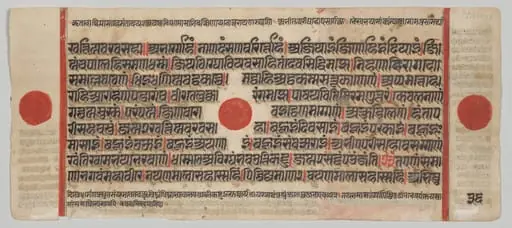
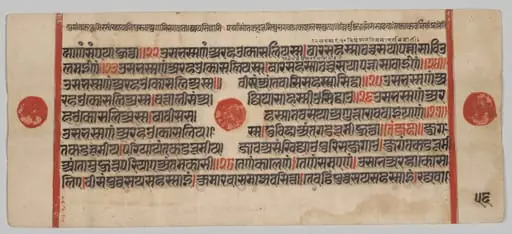
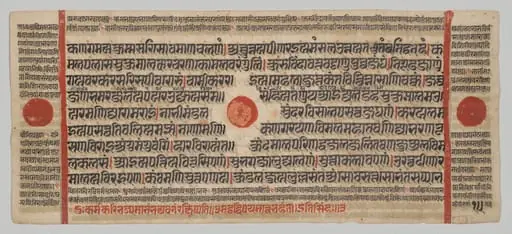
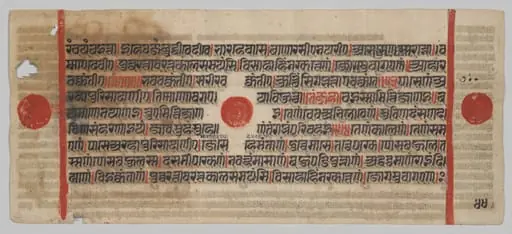
This folio originates from a Kalpa-sutra manuscript, a Jain religious text, and features calligraphic writing in black and red ink on a beige parchment surface. Four red circular marks appear symmetrically on either side of the text block. The script is rendered with ornamental flourishes, typical of medieval Indian manuscript traditions, not Renaissance art as mistakenly noted.
Subject & Meaning
The content is a section of the Kalpa-sutra, a sacred Jain scripture detailing the lives of the Tirthankaras. The decorative script serves both liturgical and devotional purposes, with red ink highlighting key passages to aid recitation and ritual focus. The geometric red circles may function as markers for textual divisions or ritual pauses during recitation.
Technique & Style
The script is executed in a highly stylized form of Prakrit, using iron-gall black ink and vermilion red. Flourishes and ligatures reflect regional Gujarati or Mewar calligraphic conventions. The ink is applied with precision, and the red accents are deliberately placed to guide the reader’s eye, emphasizing sacred names or doctrinal phrases within the text.
History & Provenance
Created in western India during the 15th or 16th century, this folio belonged to a larger manuscript used in Jain monastic communities. Such texts were often commissioned by wealthy patrons for temple libraries. The folio’s preservation suggests it was carefully handled and stored, likely in a temple or private collection before entering a modern institutional archive.
Context
Jain manuscript painting flourished in Gujarat and Rajasthan between the 14th and 17th centuries, with texts like the Kalpa-sutra serving as central objects of veneration. Unlike European illuminated manuscripts, these works prioritized textual sanctity over figural representation. The emphasis on script as sacred art reflects Jain principles of non-violence and reverence for knowledge.
Legacy
This folio exemplifies the enduring Jain tradition of elevating written scripture to an aesthetic and spiritual plane. Its preservation contributes to the study of pre-colonial Indian scribal practices and the role of calligraphy in religious life. Today, such manuscripts are valued as cultural artifacts that illustrate the intersection of devotion, literacy, and craftsmanship in medieval India.
Artist & collection

 Domestic Scene
 Giacomo and Cardinal Marco, investing Andrea, Abbot of San Zeno, with his Benefice
 The Nymph of Fontainebleau
 Portrait of a Woman
 Madonna and Child with Saints in the Enclosed Garden
 Venus and Minerva
 Family Group of Four on Sofa
 Wall painting from Room H of the Villa of P. Fannius Synistor at Boscoreale
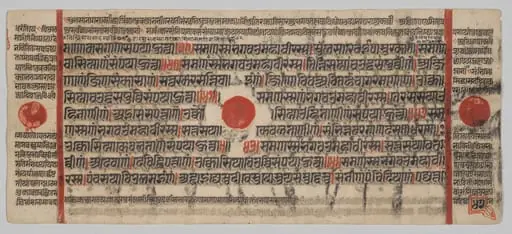 Text, Folio 42 (verso), from a Kalpa-sutra
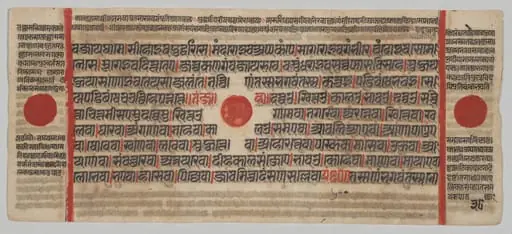 Text, Folio 38 (verso), from a Kalpa-sutra
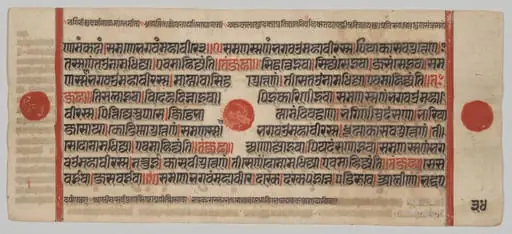 Text, Folio 34 (verso), from a Kalpa-sutra
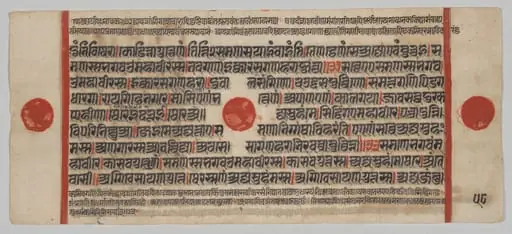 Text, Folio 58 (verso), from a Kalpa-sutra
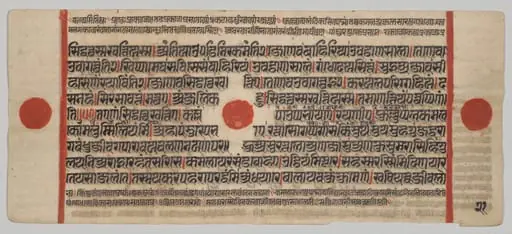 Text, Folio 21 (verso), from a Kalpa-sutra
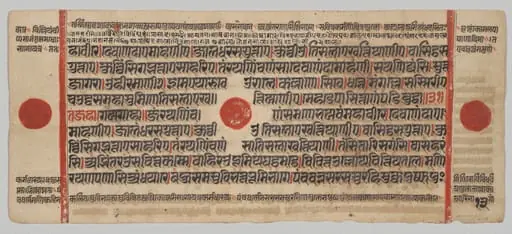 Text, Folio 13 (verso), from a Kalpa-sutra
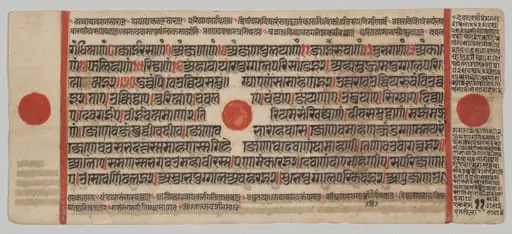 Text, Folio 11 (verso), from a Kalpa-sutra
 Text, Folio 36 (verso), from a Kalpa-sutra
 Text, Folio 56 (verso), from a Kalpa-sutra
 Text, Folio 15 (verso), from a Kalpa-sutra
 Text, Folio 44 (verso), from a Kalpa-sutra