Artwork
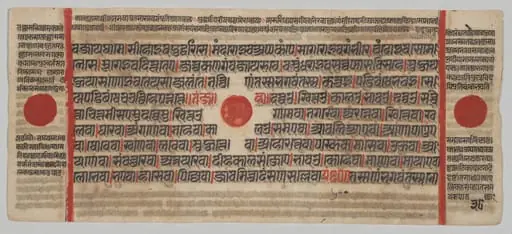
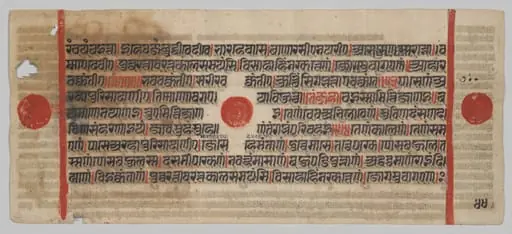
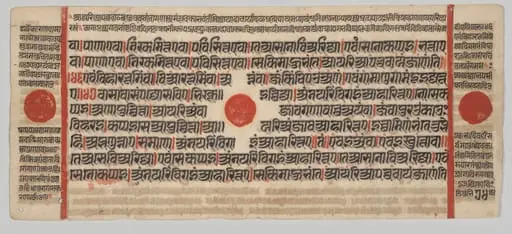
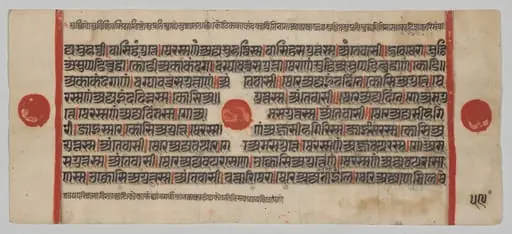
Text, Folio 36 (verso), from a Kalpa-sutra
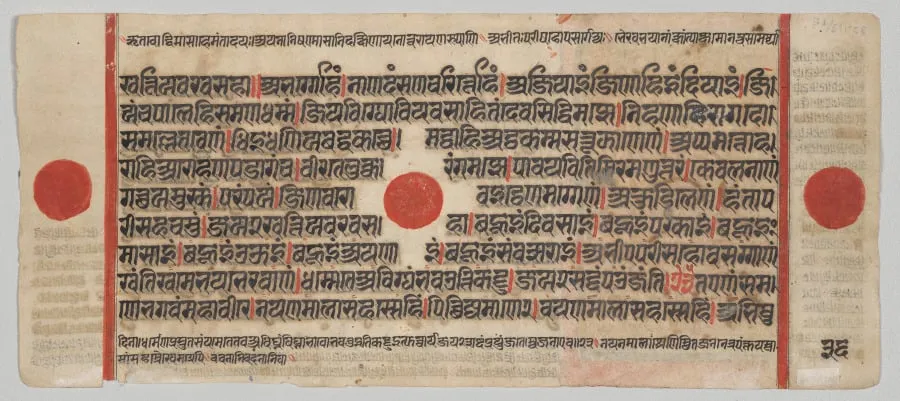
Text, Folio 36 (verso), from a Kalpa-sutra is an unspecified painting by the Mughal Painting artist Unknown. It dates from 1488 and is held in the collection of the Cleveland Museum of Art. This folio is a handwritten page from a Kalpa-sutra manuscript, a Jain religious text.
About this work
Overview
The absence of imagery and the uniformity of script suggest a devotional function centered on textual precision rather than visual ornamentation.
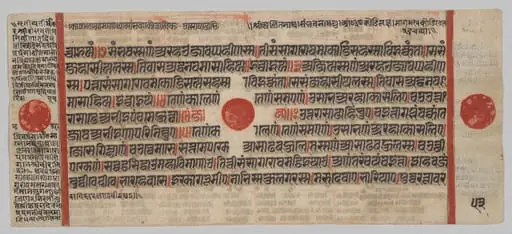
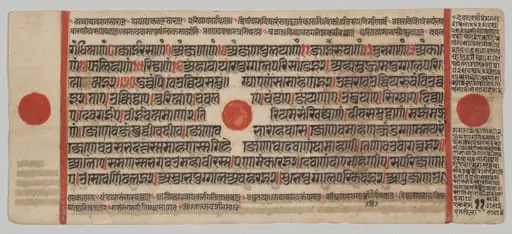
This folio is a handwritten page from a Kalpa-sutra manuscript, a Jain religious text. The surface is densely covered in black ink script with selective red highlights, filling every available space. The paper shows signs of age—faint discoloration and subtle wear—indicating prolonged use or storage. The absence of imagery and the uniformity of script suggest a devotional function centered on textual precision rather than visual ornamentation.
Subject & Meaning
The text contains passages from the Kalpa-sutra, which details the lives of Jain Tirthankaras and monastic rules. The red accents likely mark sacred names, key doctrinal phrases, or liturgical markers, guiding recitation or meditation. The empty red circles in the corners may symbolize spiritual completeness or serve as ritual markers, reinforcing the page’s sacred character through absence and repetition.
Technique & Style
The script is executed in a fine, uniform hand with meticulous spacing and consistent stroke weight, reflecting trained calligraphic discipline. Red ink, possibly derived from cinnabar or vermilion, was applied sparingly to emphasize specific words. The lack of margins and decorative borders underscores a focus on textual integrity over aesthetic embellishment, typical of ascetic Jain manuscript traditions.
History & Provenance
This folio likely originated in western India between the 14th and 16th centuries, a period when Jain communities actively produced and preserved religious manuscripts. Its survival suggests it was carefully maintained within a monastic or lay devotional context. The wear on the paper implies repeated handling, possibly during ritual readings or study sessions over generations.
Context
In contrast to contemporary European Renaissance manuscripts, which often featured gold leaf and figural illumination, this folio prioritizes textual purity. Its austerity reflects Jain values of non-attachment and reverence for the word as a vessel of truth. The absence of imagery aligns with aniconic traditions in Jainism, where spiritual focus resides in the precision of sacred language.
Legacy
Folios like this preserve the transmission of Jain doctrine through centuries of oral and written practice. They represent a quiet but enduring tradition of textual devotion, where the act of copying and reading was itself a spiritual discipline. Today, such manuscripts serve as critical sources for understanding medieval Jain scholarship and material culture.
Artist & collection

 Domestic Scene
 Giacomo and Cardinal Marco, investing Andrea, Abbot of San Zeno, with his Benefice
 The Nymph of Fontainebleau
 Portrait of a Woman
 Madonna and Child with Saints in the Enclosed Garden
 Venus and Minerva
 Family Group of Four on Sofa
 Wall painting from Room H of the Villa of P. Fannius Synistor at Boscoreale