Artwork
The baptism of Christ
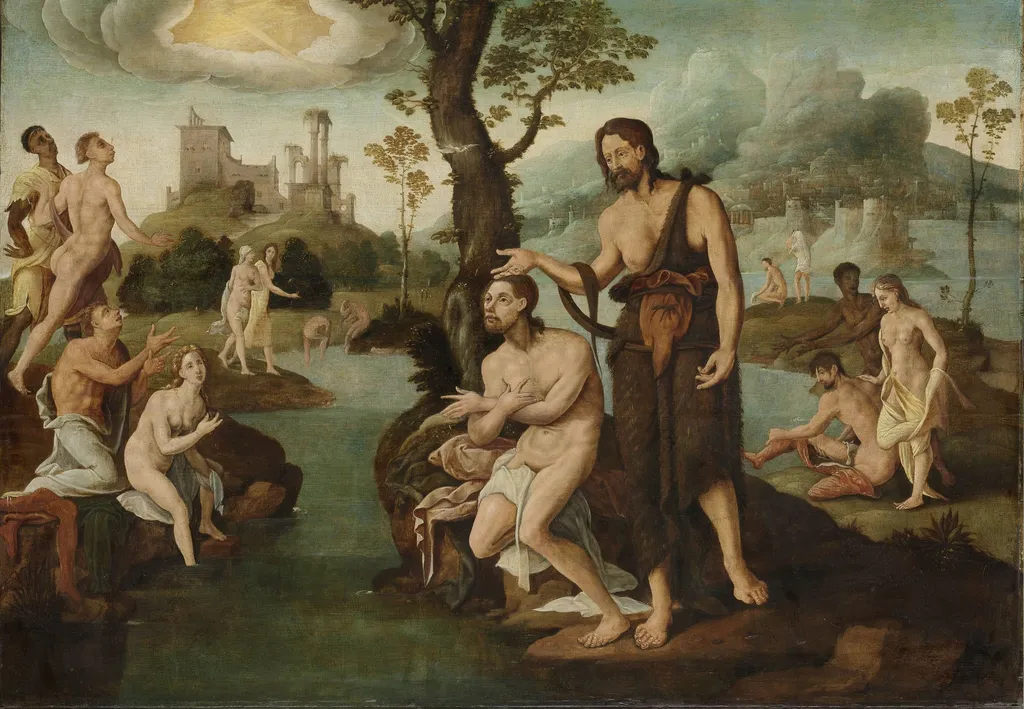
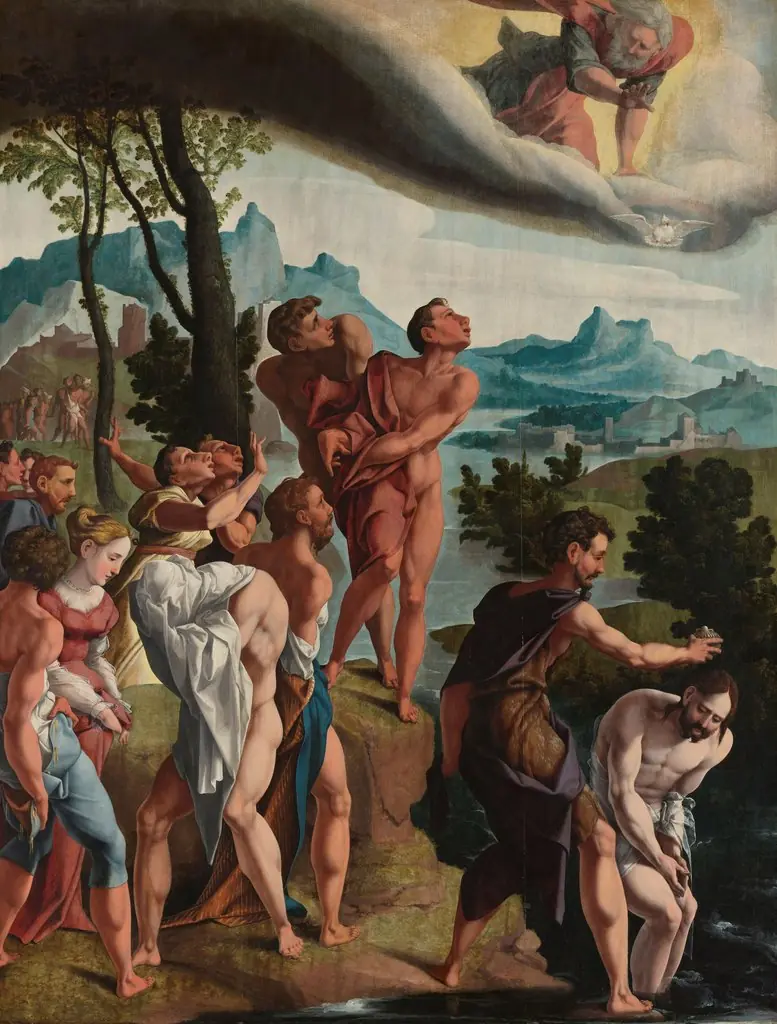
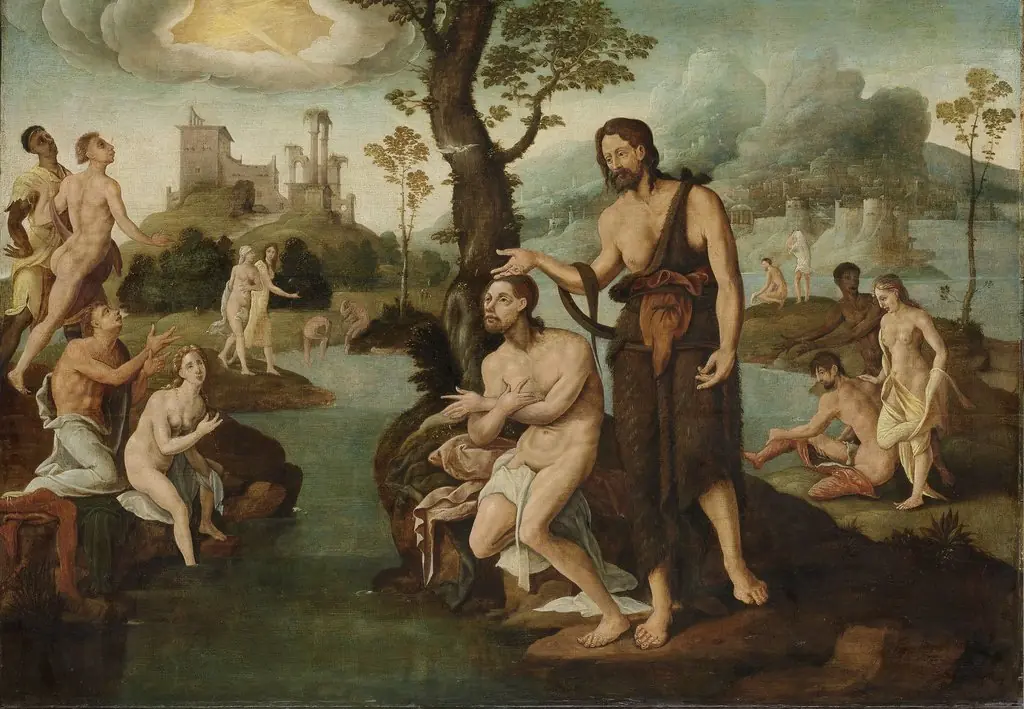
The baptism of Christ is an unspecified painting by the Mannerist artist Unknown. It dates from 1560 and is held in the collection of the Rijksmuseum. Painted around 1560, this work depicts the baptism of Jesus by John the Baptist in the Jordan River.
About this work
The way the light breaks through the clouds feels dramatic, almost like a spotlight on the scene.
A man kneels in a river while another pours water over his head. Around them, people bathe naked in the water. A dove flies down from a break in the clouds. In the distance, you see a city and a ruined building.
This painting was made around 1560, but no one knows who painted it. The way the light breaks through the clouds feels dramatic, almost like a spotlight on the scene. The ruins in the background might hint at old beliefs giving way to new ones.
To see more works like this, visit the Rijksmuseum.
Overview
Painted around 1560, this work depicts the baptism of Jesus by John the Baptist in the Jordan River. The scene includes nude figures bathing nearby, a dove descending through a break in the clouds, and a distant city with ruins. The artist remains unidentified, and the painting lacks a documented provenance prior to its inclusion in public collections. Its composition balances sacred narrative with naturalistic detail, characteristic of mid-16th-century Northern European religious art.
Subject & Meaning
The central moment shows Christ kneeling as John pours water over his head, marking the beginning of his public ministry. The dove above symbolizes the Holy Spirit, affirming divine approval. The nude bathers may represent purification or the broader human condition receiving grace. The ruined structure in the background suggests the decline of older systems, possibly alluding to the transition from Jewish law to Christian revelation.
Technique & Style
The painter uses chiaroscuro to isolate the baptismal scene with dramatic light filtering through the clouds, creating a focused, almost theatrical effect. Figures are rendered with careful attention to anatomy and movement, while the landscape recedes with muted tones. The brushwork is precise yet unembellished, reflecting a regional style that prioritizes narrative clarity over ornamental flourish, typical of anonymous workshop production in the Low Countries.
History & Provenance
The painting’s early ownership is undocumented. It entered a public collection in the 19th century, likely through acquisition from a private Dutch estate. No signatures or inscriptions identify the artist, and stylistic analysis has not conclusively linked it to any known master. Its survival suggests it was valued locally, perhaps as a devotional piece, before being recognized as a representative example of its period.
Context
Created during the Reformation, the painting reflects a time when religious imagery was being redefined across Northern Europe. While Catholic traditions persisted in some regions, Protestant critiques of elaborate iconography led to simpler, more direct depictions of biblical events. This work’s restrained composition and focus on a single scriptural moment align with evolving devotional practices of the era.
Legacy
Though unsigned and unattributed, the painting endures as a representative example of mid-16th-century religious painting in the Netherlands. It contributes to scholarly understanding of how biblical narratives were visually interpreted outside the circles of famous masters. Its presence in a major museum collection ensures continued study and public access, preserving its quiet role in the history of Northern European art.
Artist & collection

 Domestic Scene
 Giacomo and Cardinal Marco, investing Andrea, Abbot of San Zeno, with his Benefice
 The Nymph of Fontainebleau
 Portrait of a Woman
 Madonna and Child with Saints in the Enclosed Garden
 Venus and Minerva
 Family Group of Four on Sofa
 Wall painting from Room H of the Villa of P. Fannius Synistor at Boscoreale