Artwork
The Chinese Poet Pan Lang on a Donkey
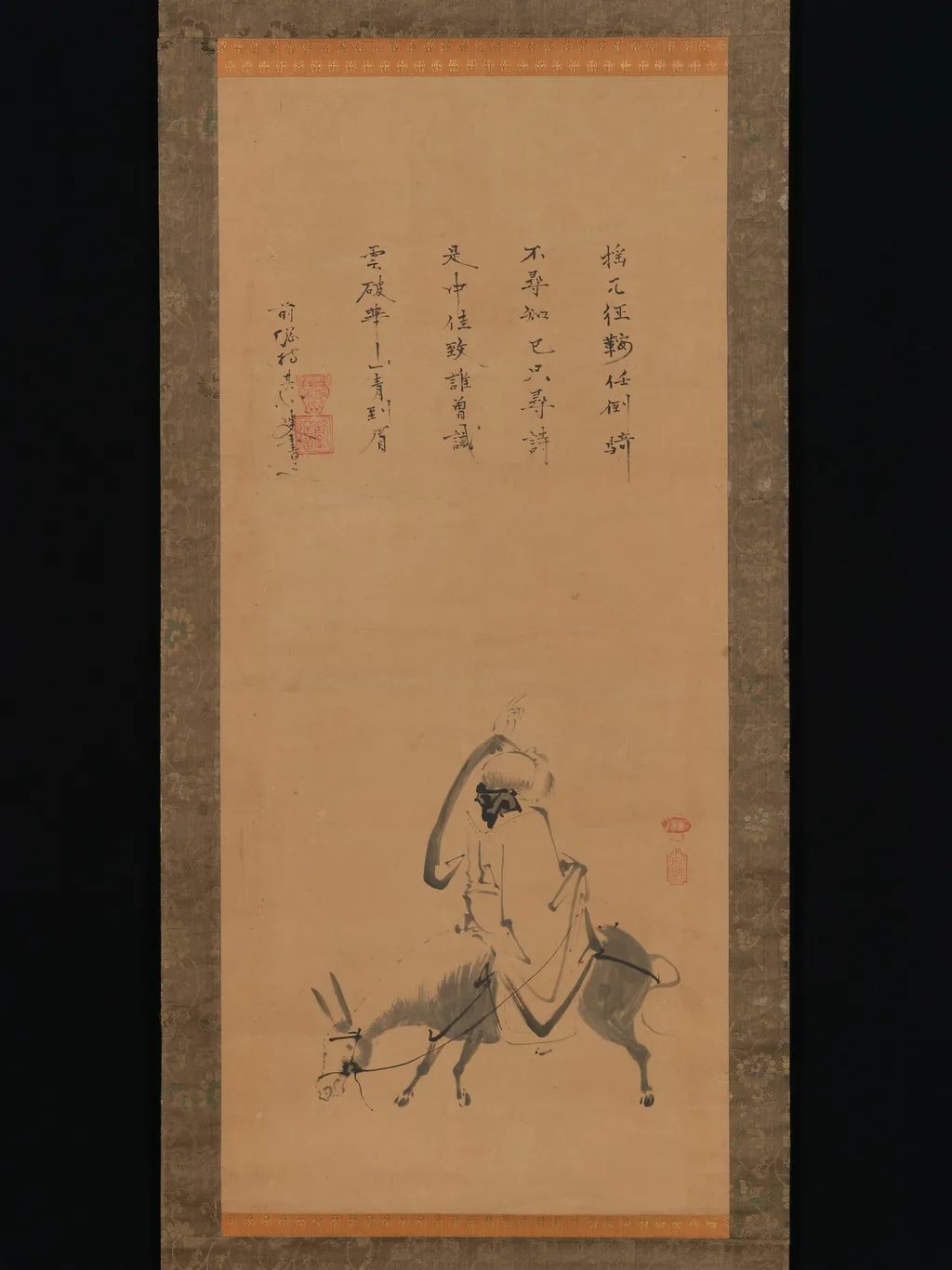
The Chinese Poet Pan Lang on a Donkey is an unspecified painting. It dates from 1644 and is held in the collection of the Metropolitan Museum of Art. The work depicts a solitary figure astride a donkey, clutching a long staff in his right hand.
About this work
Overview
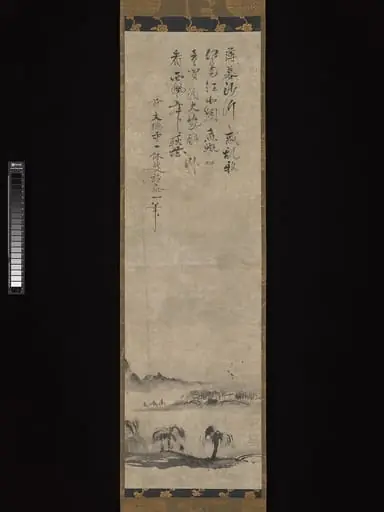
The work depicts a solitary figure astride a donkey, clutching a long staff in his right hand. Dressed in a flowing robe and capped headwear, the rider gazes downward toward the animal. The composition rests against a uniform light‑brown ground, while a line of black Chinese characters crowns the upper edge of the painting.
Subject & Meaning
The central figure is identified as the Chinese poet Pan Lang, traditionally associated with itinerant scholarship and modest travel. By placing him on a humble donkey rather than a horse, the image underscores themes of simplicity, perseverance, and the poet’s connection to the everyday world.
Technique & Style
Executed with bold, confident brushstrokes, the painting employs a restrained palette, limiting color to the muted background and the inked forms of the rider and donkey. This minimalistic approach emphasizes line and gesture, creating a calm, contemplative atmosphere characteristic of literati painting.
Context
The inclusion of calligraphic characters at the top suggests a literary or poetic inscription, a common practice in Chinese paintings where text and image intertwine to convey the artist’s erudition and to frame the visual narrative within a broader cultural discourse.
Legacy
Works portraying Pan Lang have served as visual exemplars of the wandering scholar ideal in Chinese art. This particular rendition continues the tradition of integrating portraiture, calligraphy, and landscape elements to convey moral and philosophical ideas.
Artist & collection