Artwork
The Dice Shooters
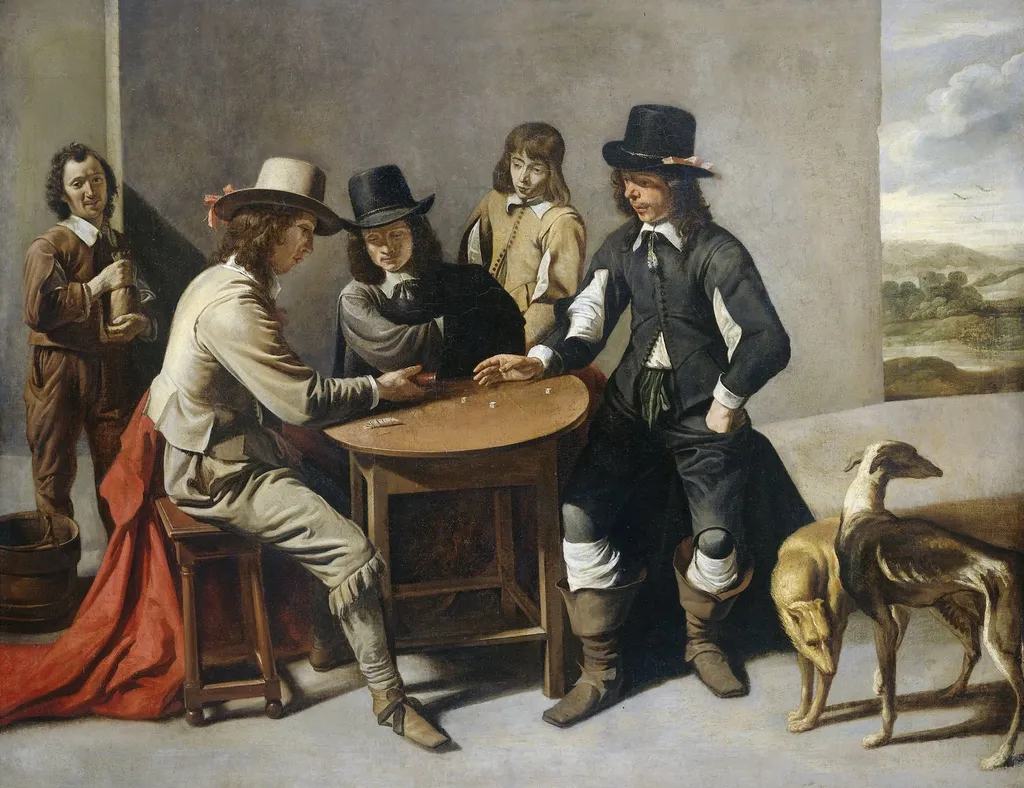
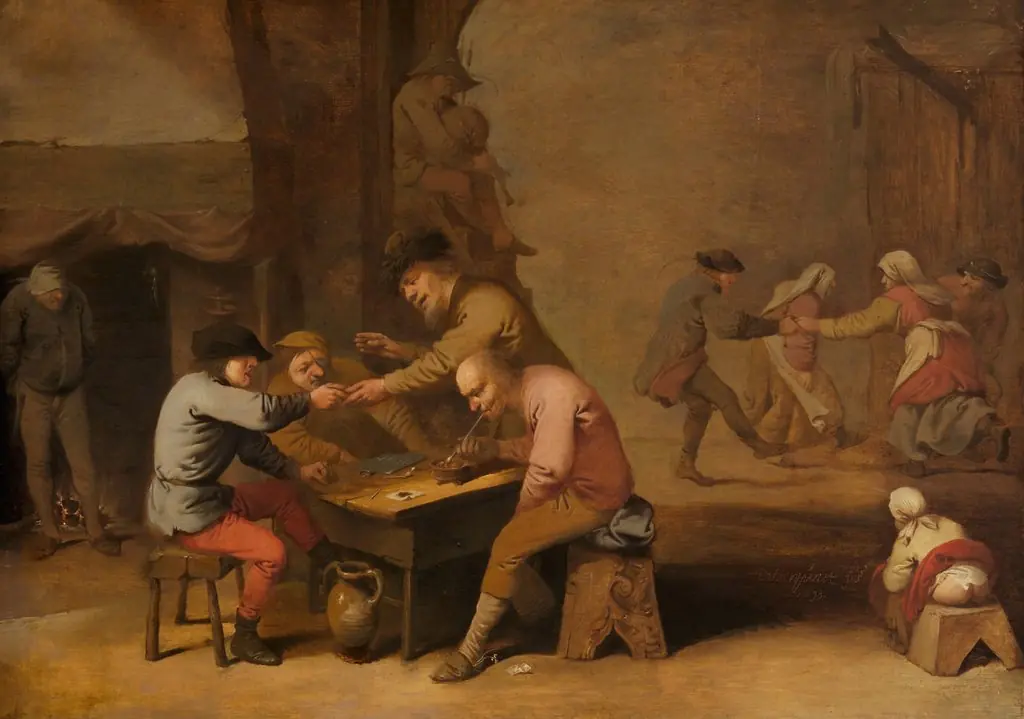
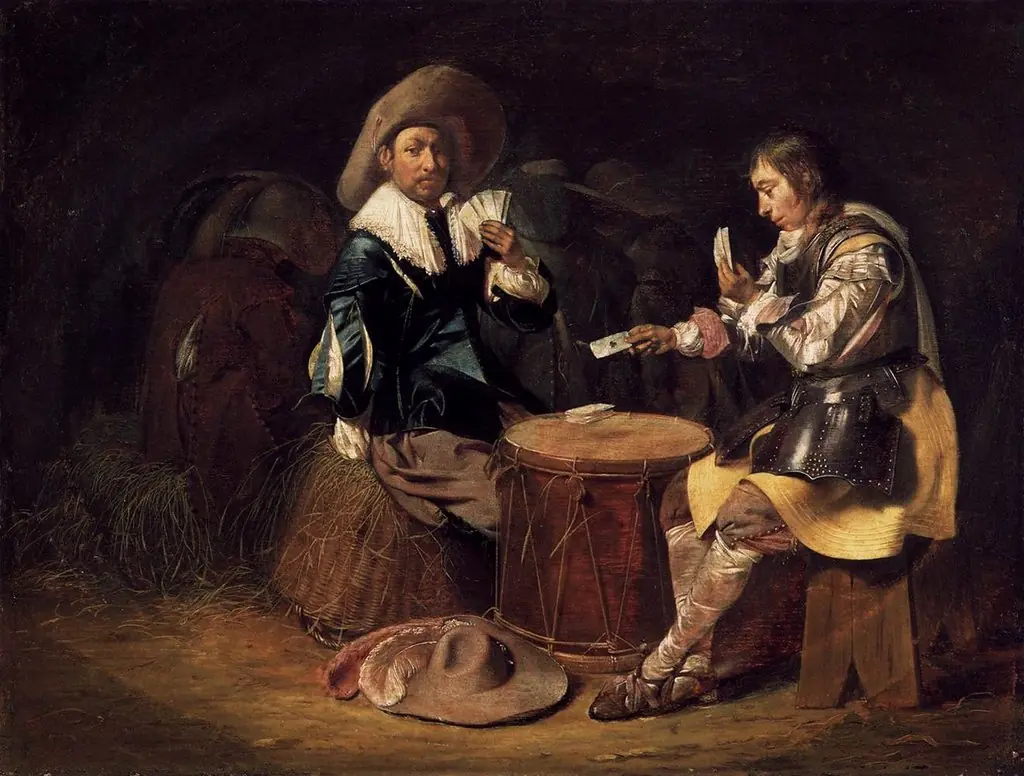
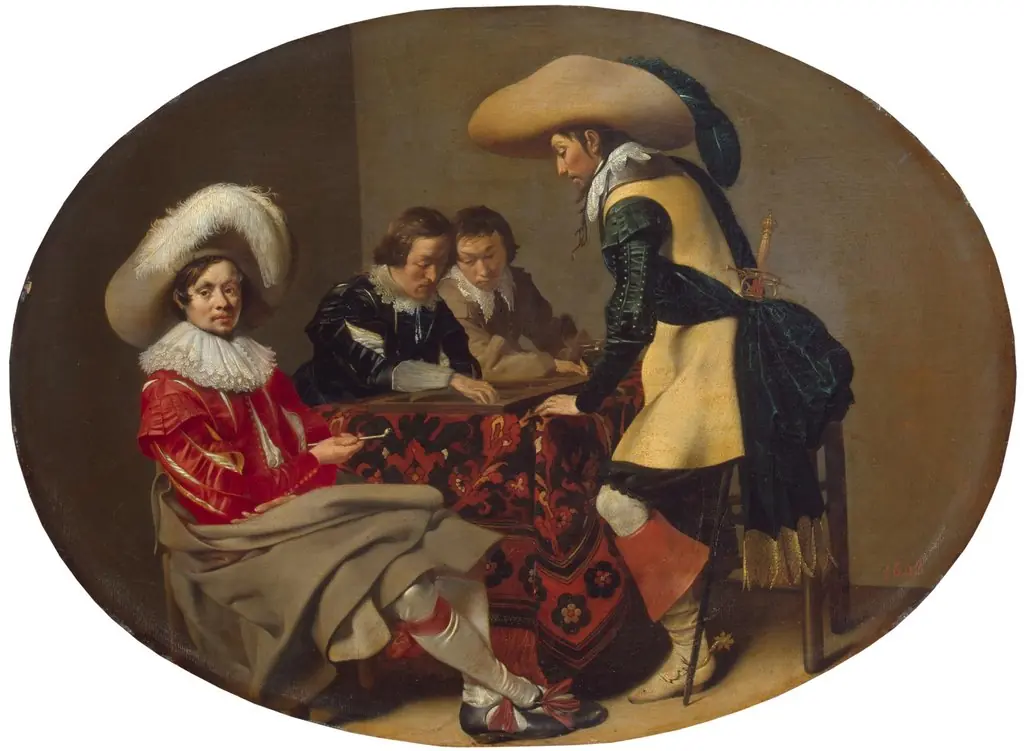
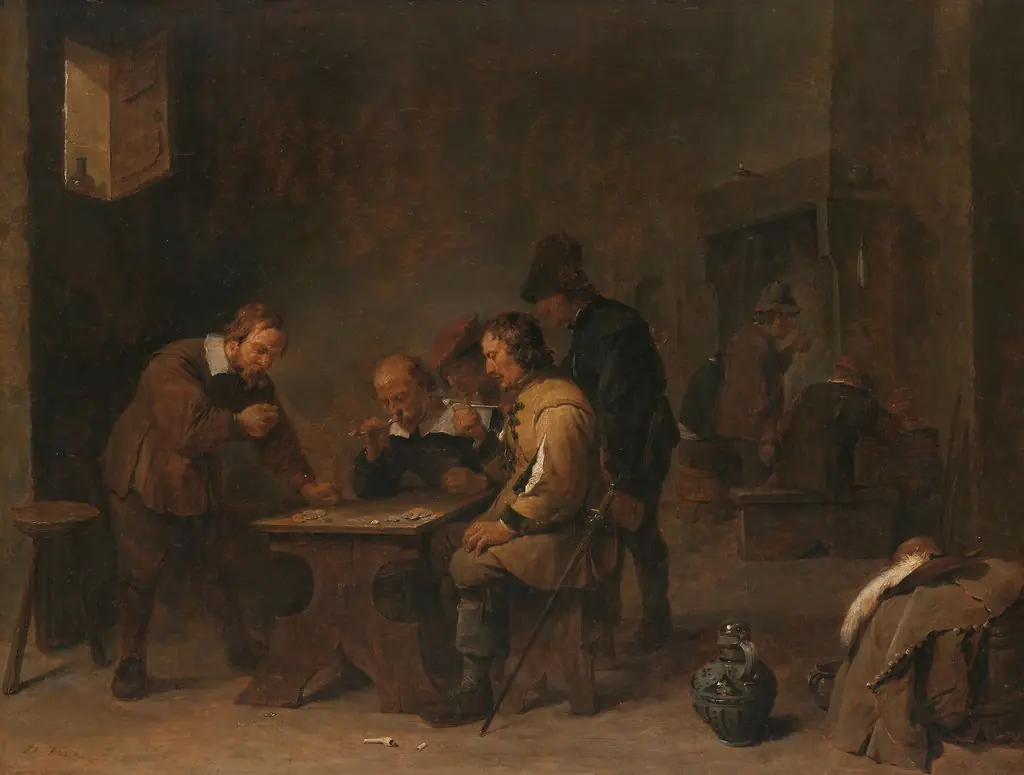
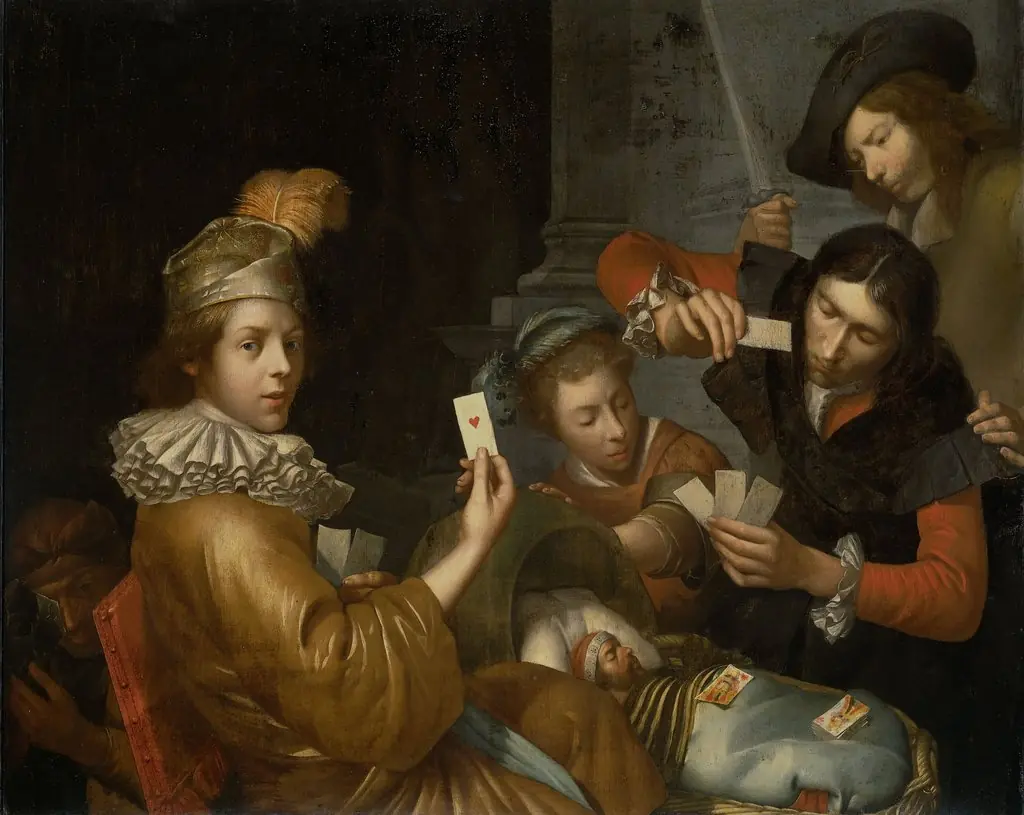
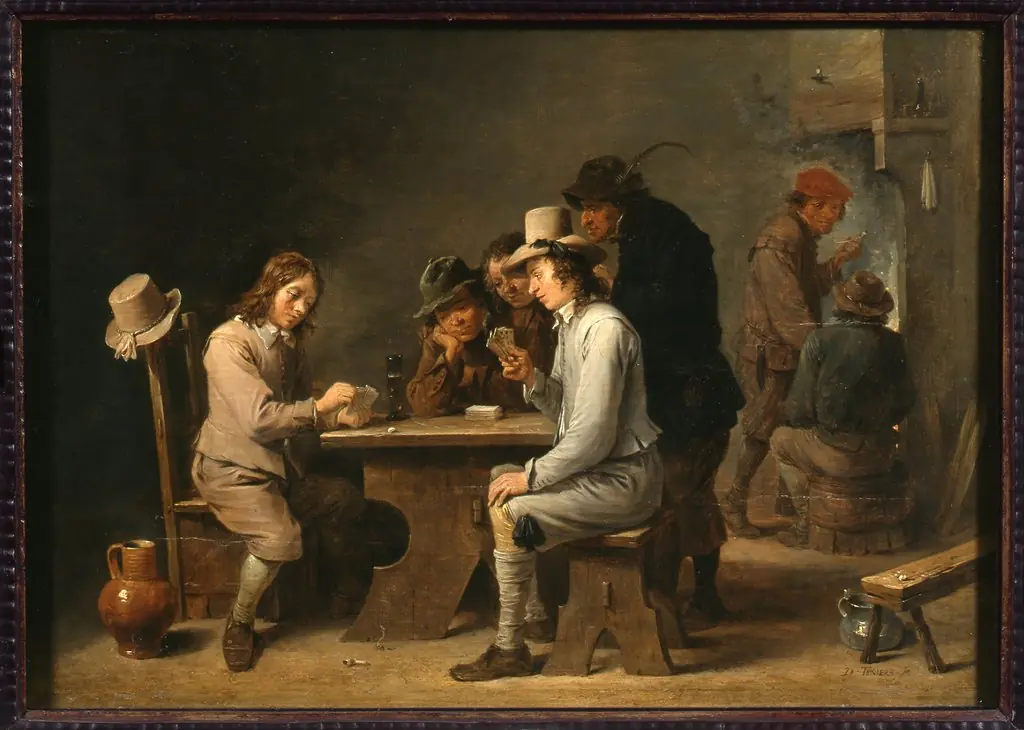
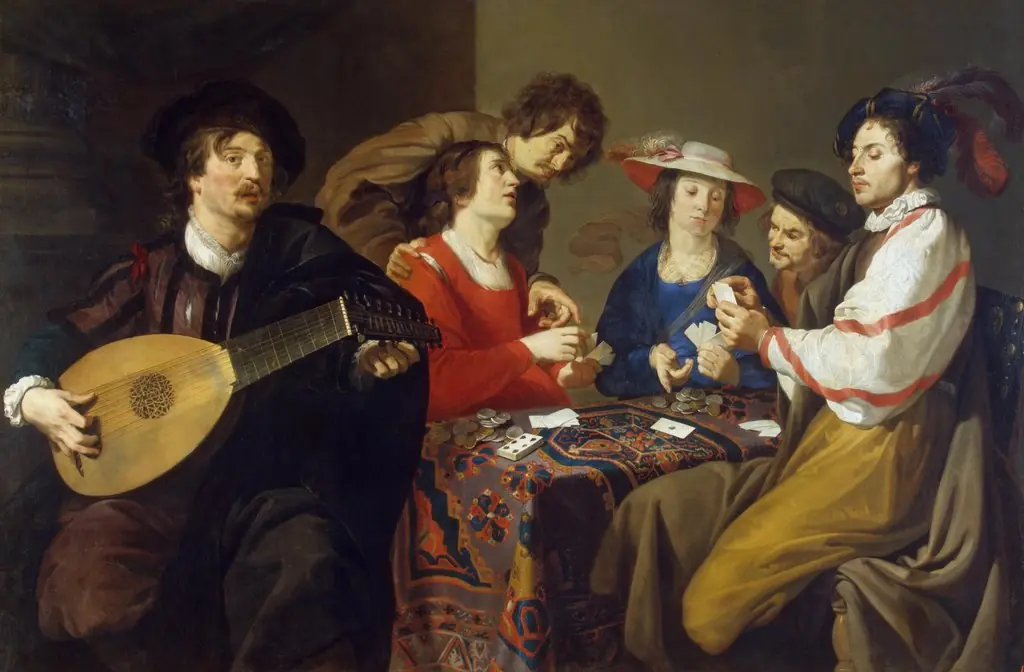
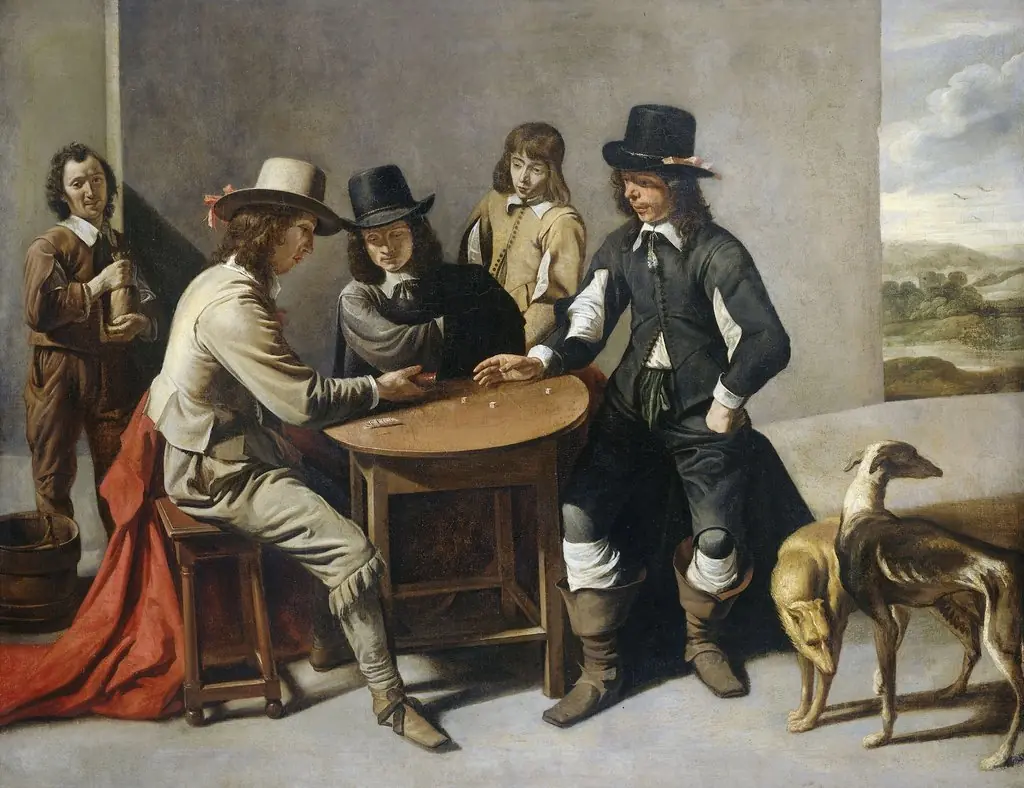
The Dice Shooters is an unspecified painting by the Dutch Golden Age artist Unknown. It dates from 1655 and is held in the collection of the Rijksmuseum. An unsigned painting depicts five men gathered around a table engaged in a game of dice, with two additional figures observing from behind.
About this work
Overview
An unsigned painting depicts five men gathered around a table engaged in a game of dice, with two additional figures observing from behind.
An unsigned painting depicts five men gathered around a table engaged in a game of dice, with two additional figures observing from behind. Two dogs are present—one standing alert, the other sniffing the ground—adding a quiet, unposed realism to the scene. The work lacks formal grandeur, instead capturing a fleeting, informal moment. A related sketch by Gabriel de Saint-Aubin in Paris suggests the composition was part of a broader visual tradition, though the painter’s identity remains unknown.
Subject & Meaning
The scene portrays a common pastime among working-class men, rendered without moral judgment or theatricality. The focus on concentration, observation, and animal presence suggests an interest in everyday behavior rather than narrative or symbolism. The dogs, neither pets nor symbols, behave naturally, reinforcing the painting’s documentary tone. It reflects a moment of leisure, unadorned and unidealized.
Technique & Style
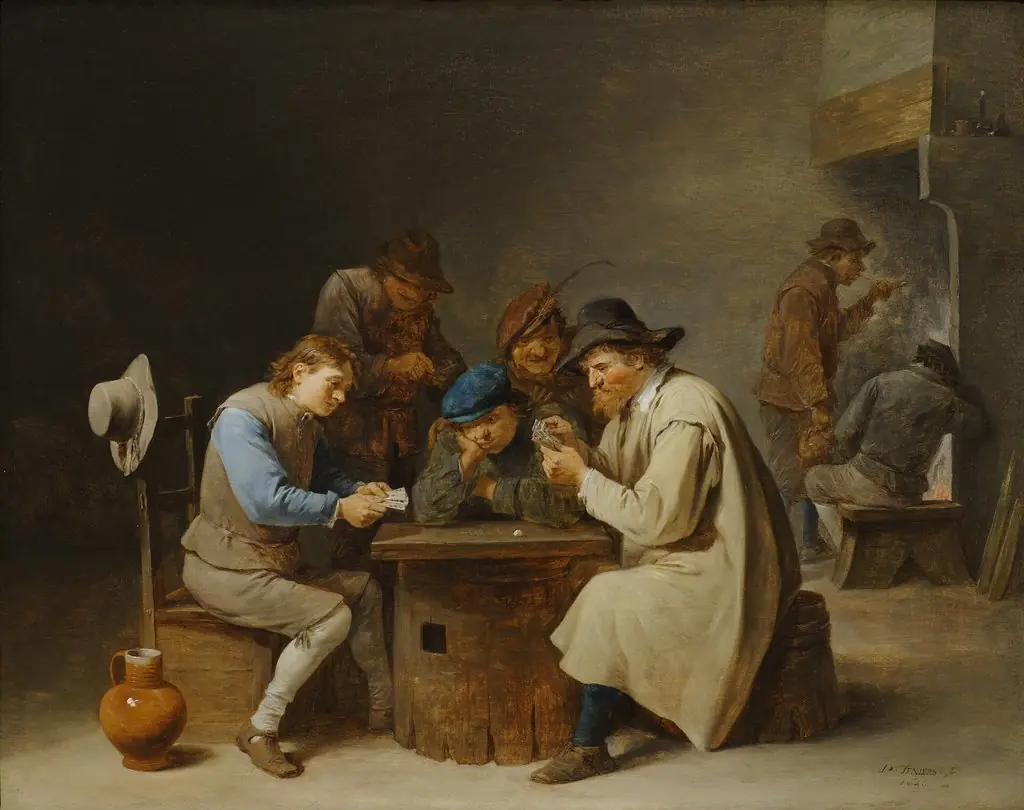
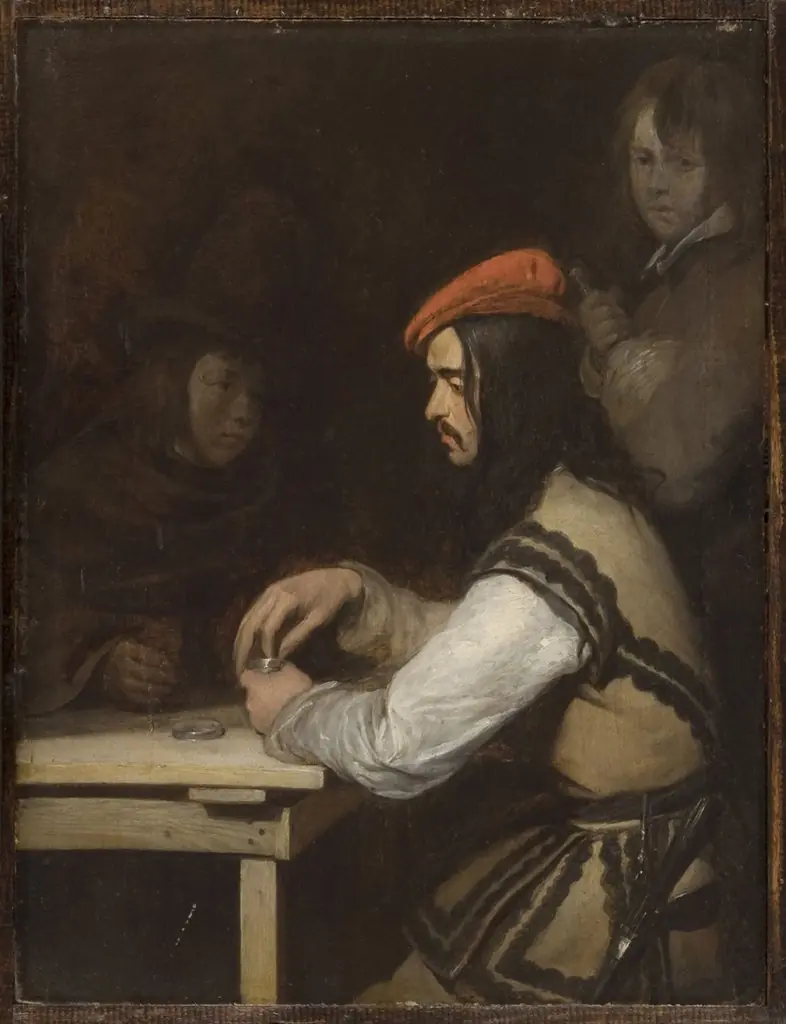
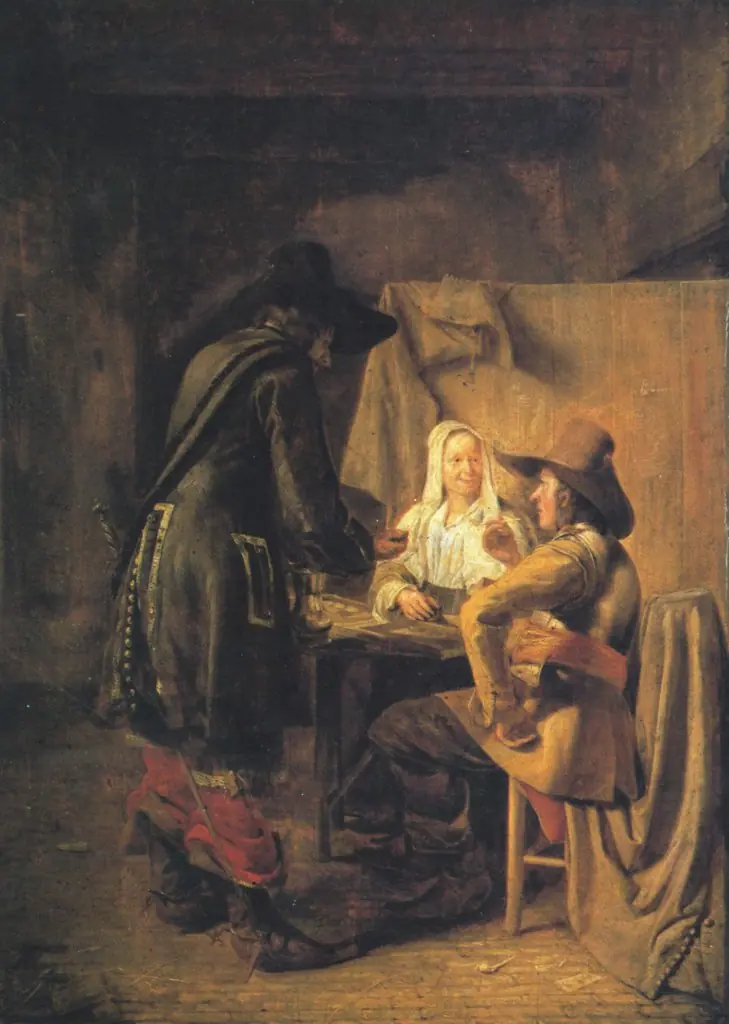
Loose, rapid brushwork conveys movement and immediacy, as if the scene were caught mid-action. Shadows and forms are suggested rather than meticulously defined, giving the figures a sense of presence without polish. The palette is muted, dominated by earth tones, enhancing the work’s informal character. The lack of fine detail and visible brushstrokes point to a spontaneous approach, aligning with genre painting traditions of the period.
History & Provenance
The painting carries no signature or documented origin, leaving its creator unidentified. A comparable sketch by Gabriel de Saint-Aubin, held in the Bibliothèque Nationale in Paris, indicates that similar compositions were circulating in 18th-century visual culture. While the painting’s early ownership is unknown, its presence in the Rijksmuseum’s collection suggests it was acquired as a representative example of Dutch genre scenes from the 17th or early 18th century.
Context
This work belongs to a broader Dutch tradition of genre painting that favored ordinary life over mythological or religious themes. While contemporaries like Metsu or de Hooch refined their scenes with careful lighting and composition, this painting embraces a more immediate, almost sketchlike quality. Its unpolished nature may reflect regional styles or an artist working outside academic norms, offering a raw counterpoint to more polished contemporaries.
Legacy
Though unsigned and unattributed, the painting survives as a quiet testament to the observation of daily life in early modern Holland. Its resemblance to Saint-Aubin’s sketch underscores how such scenes transcended borders and media. Today, it contributes to scholarly understanding of informal genre painting, valued not for its fame but for its unvarnished glimpse into a moment shared by strangers and their dogs.
Artist & collection

 Domestic Scene
 Giacomo and Cardinal Marco, investing Andrea, Abbot of San Zeno, with his Benefice
 The Nymph of Fontainebleau
 Portrait of a Woman
 Madonna and Child with Saints in the Enclosed Garden
 Venus and Minerva
 Family Group of Four on Sofa
 Wall painting from Room H of the Villa of P. Fannius Synistor at Boscoreale