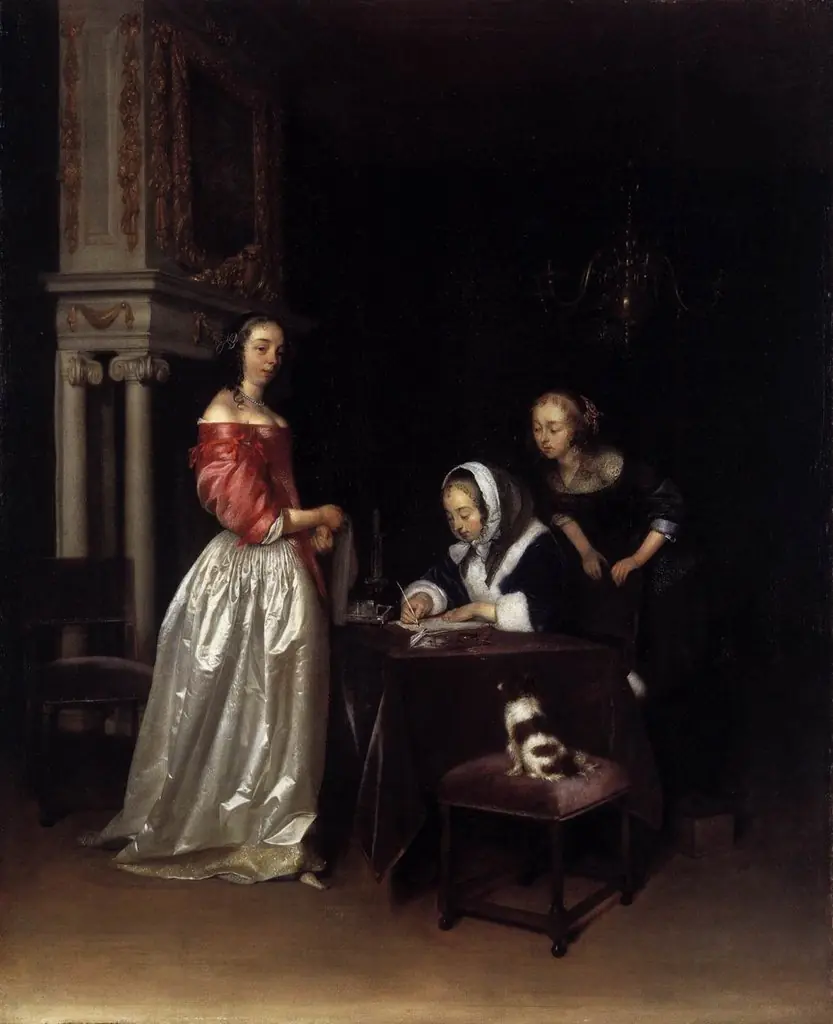
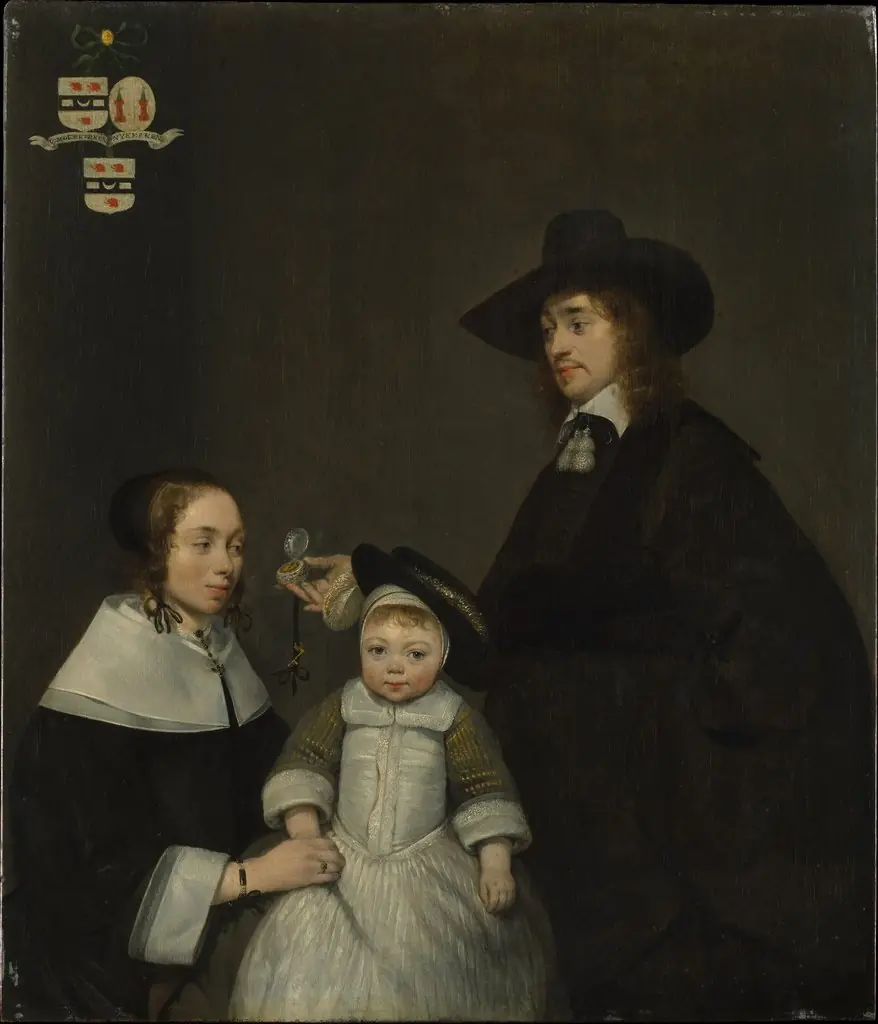
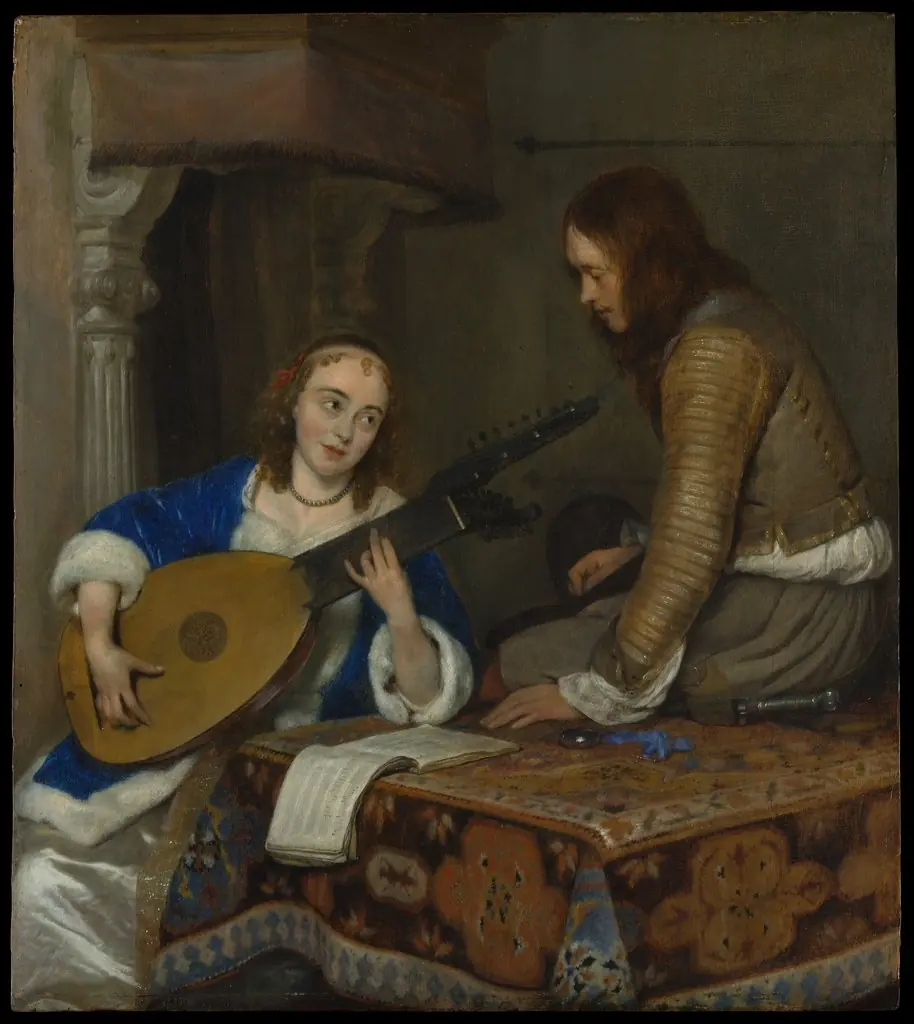
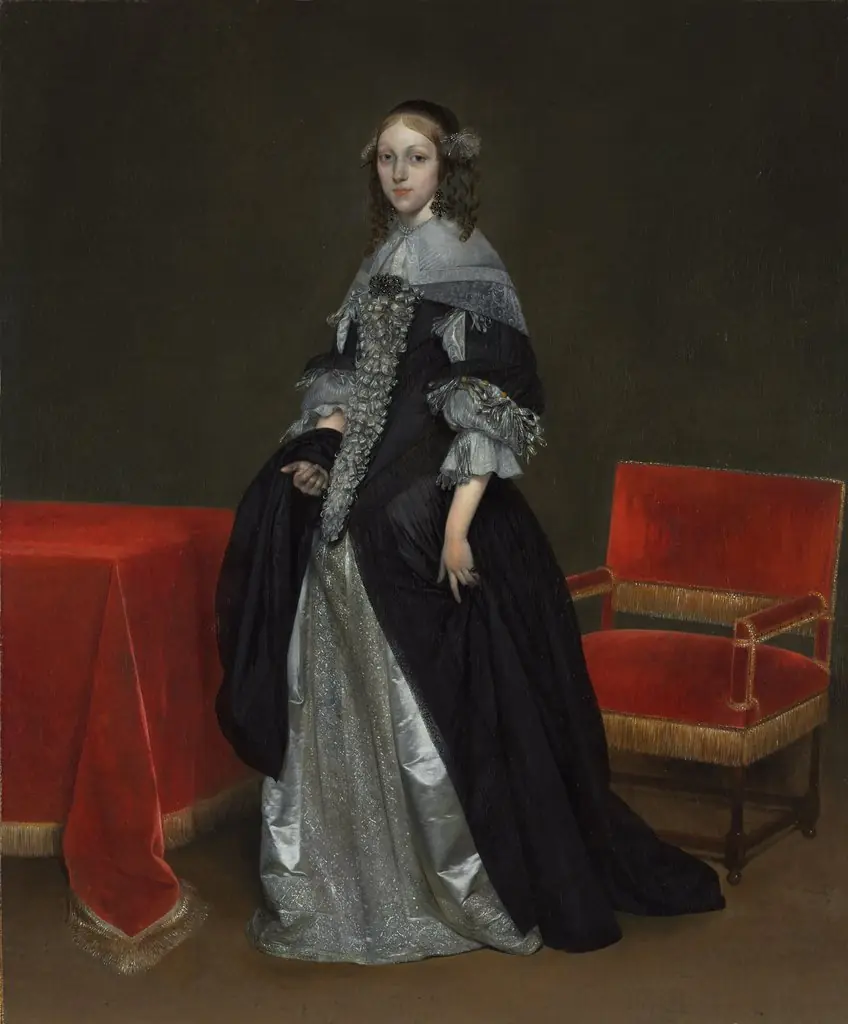
Artwork
Scene in an Inn
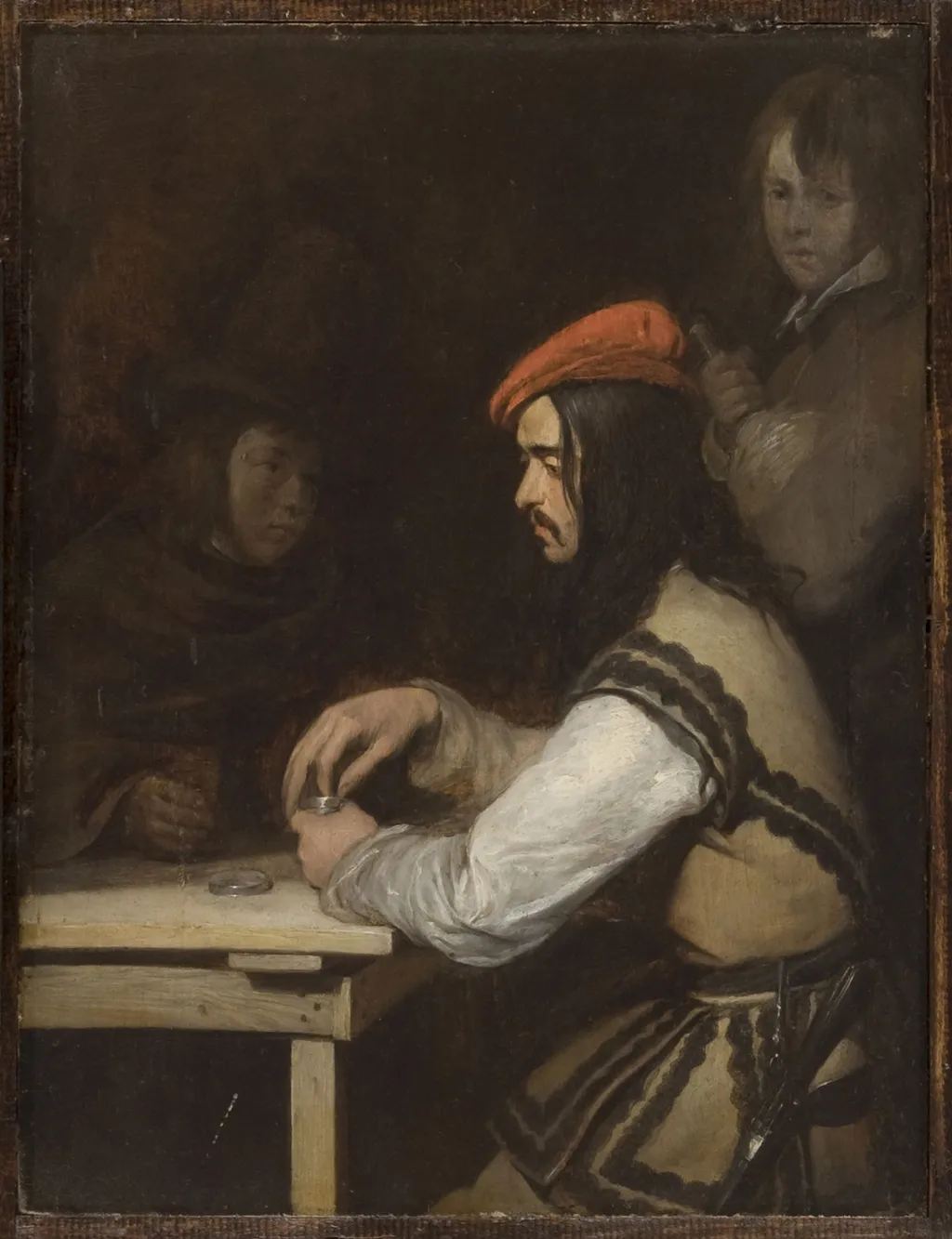
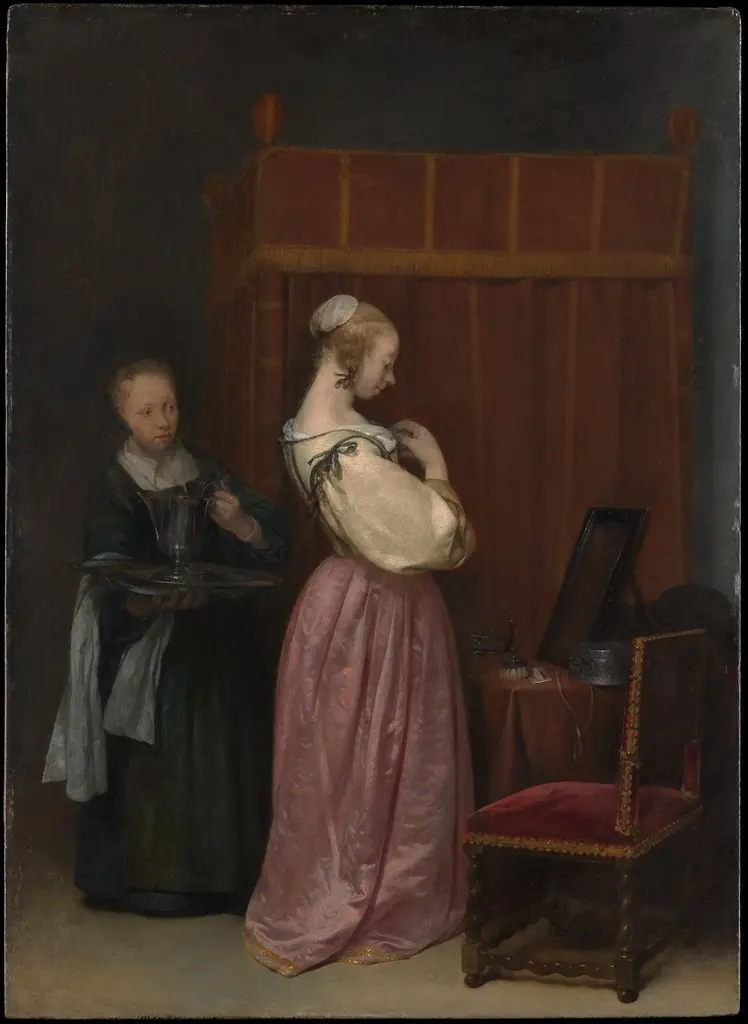
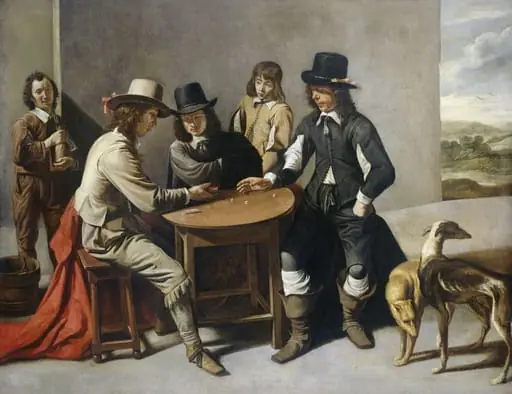
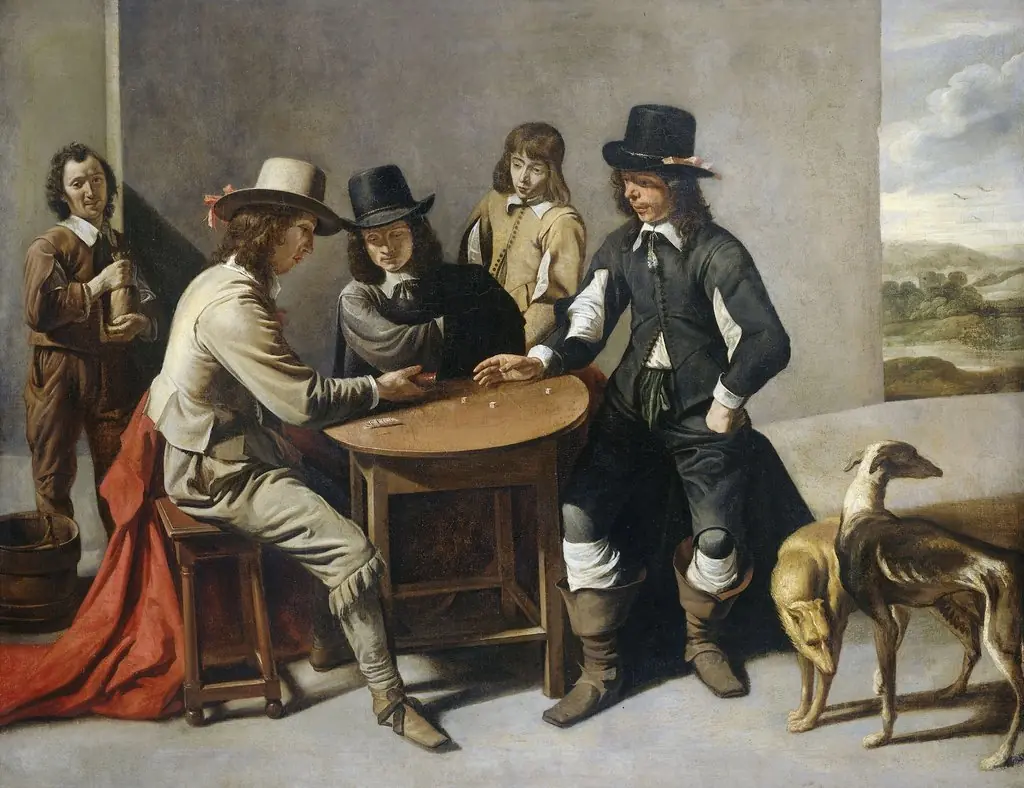
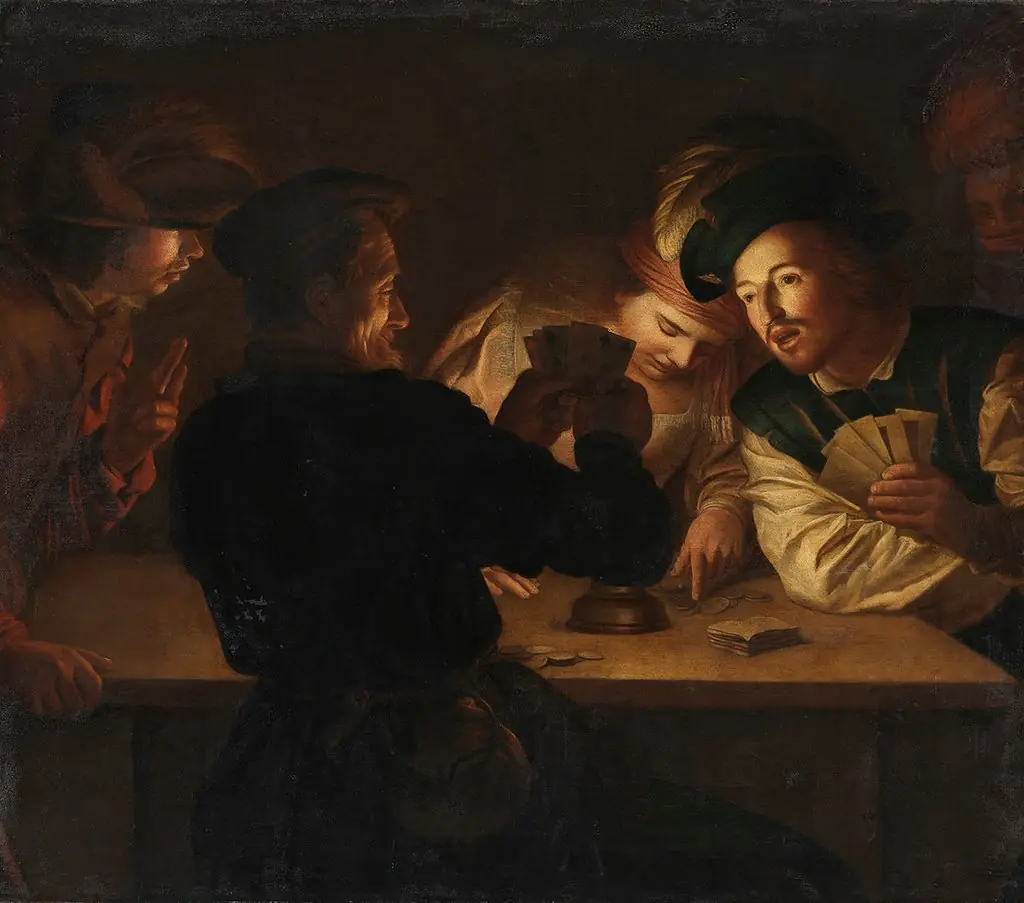
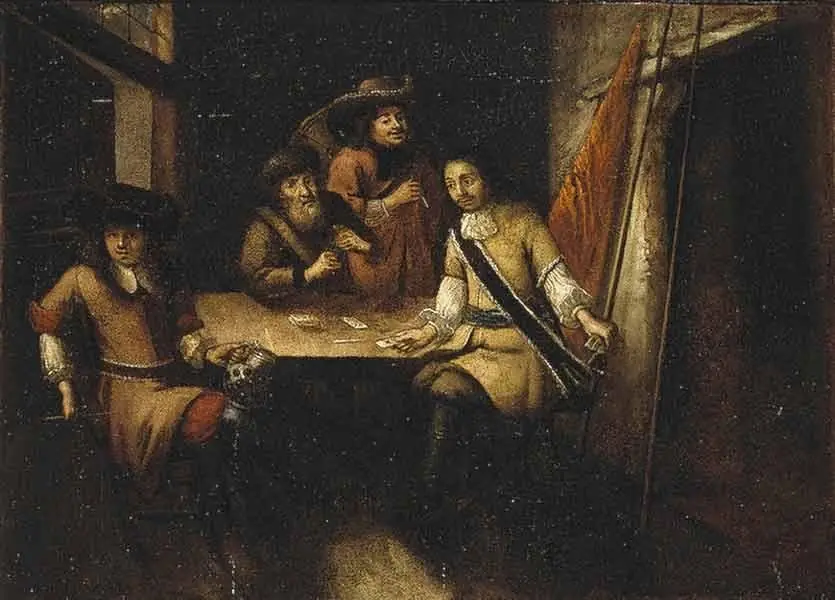
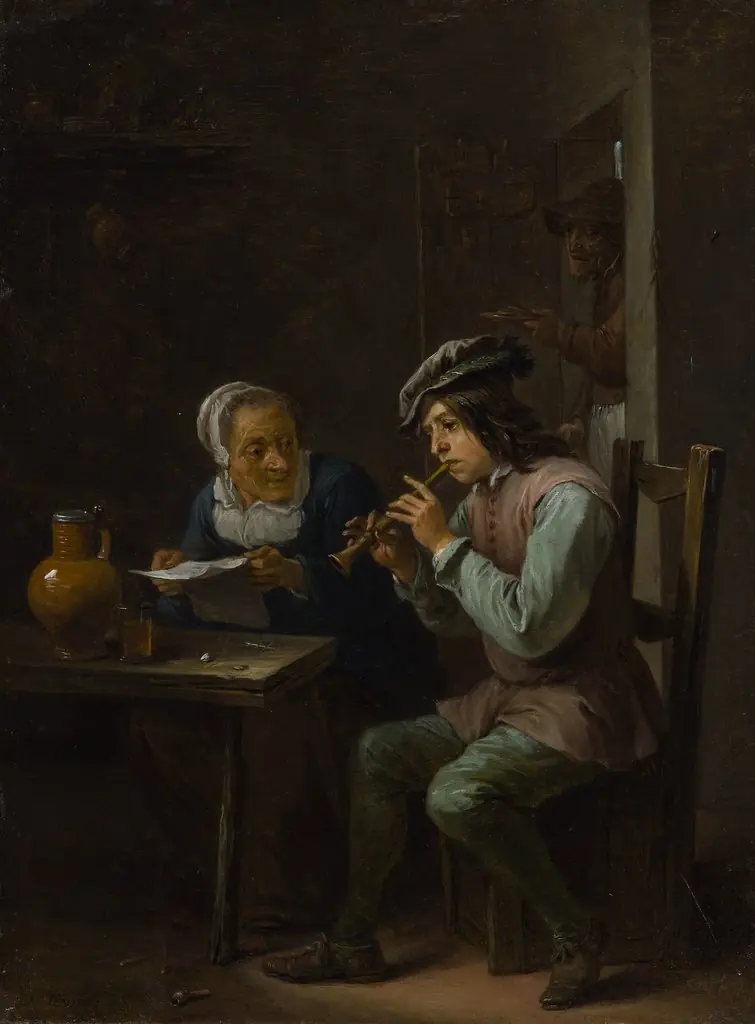
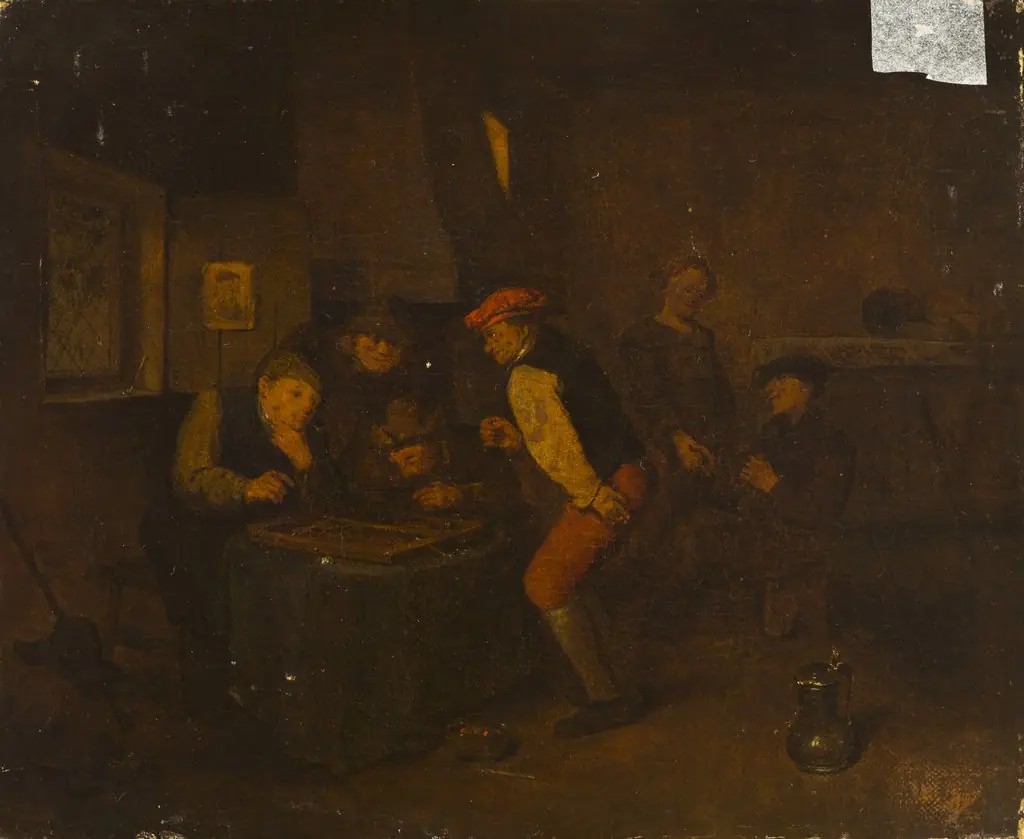
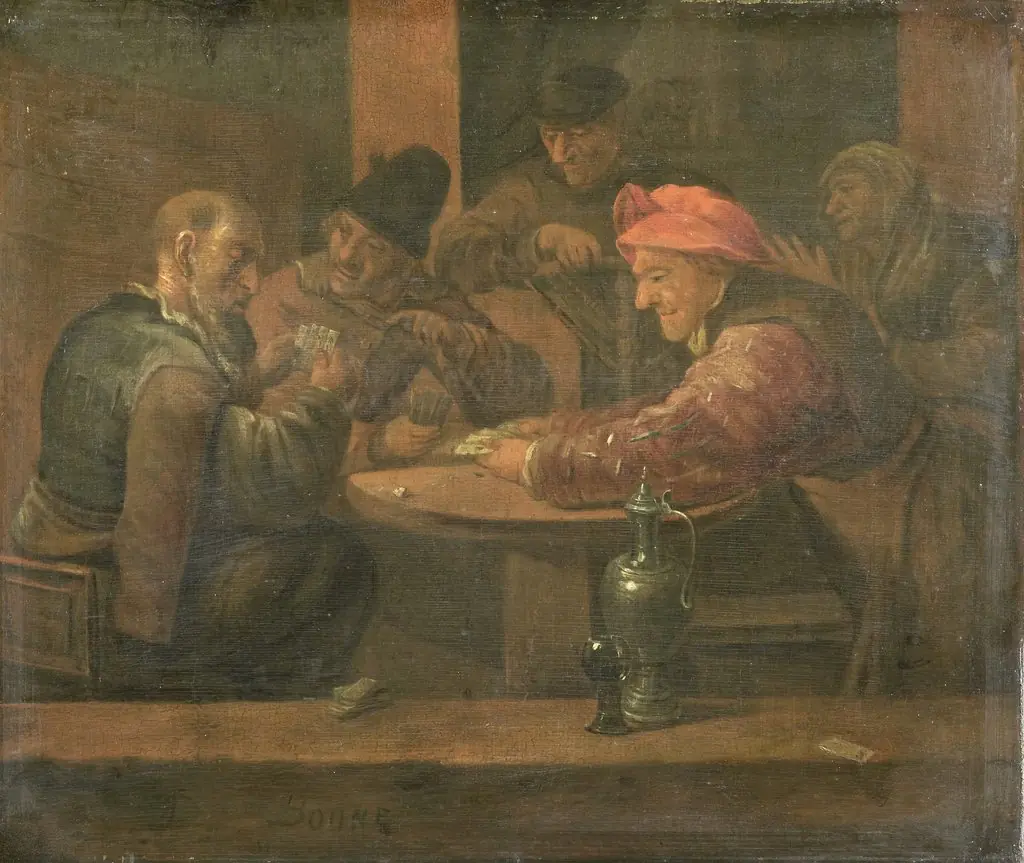
Scene in an Inn is an oil painting by the Dutch Golden Age artist Gerard ter Borch. It dates from 1670 and is held in the collection of the Philadelphia Museum of Art.
About this work
Overview
It belongs to the Philadelphia Museum of Art’s collection and exemplifies ter Borch’s interest in restrained, intimate social interactions.
Painted in 1670 by Gerard ter Borch, this oil-on-canvas work captures a quiet moment in a Dutch tavern. It belongs to the Philadelphia Museum of Art’s collection and exemplifies ter Borch’s interest in restrained, intimate social interactions. Unlike grand historical or religious subjects common in other traditions, the painting elevates ordinary behavior through careful observation and subtle composition.
Subject & Meaning
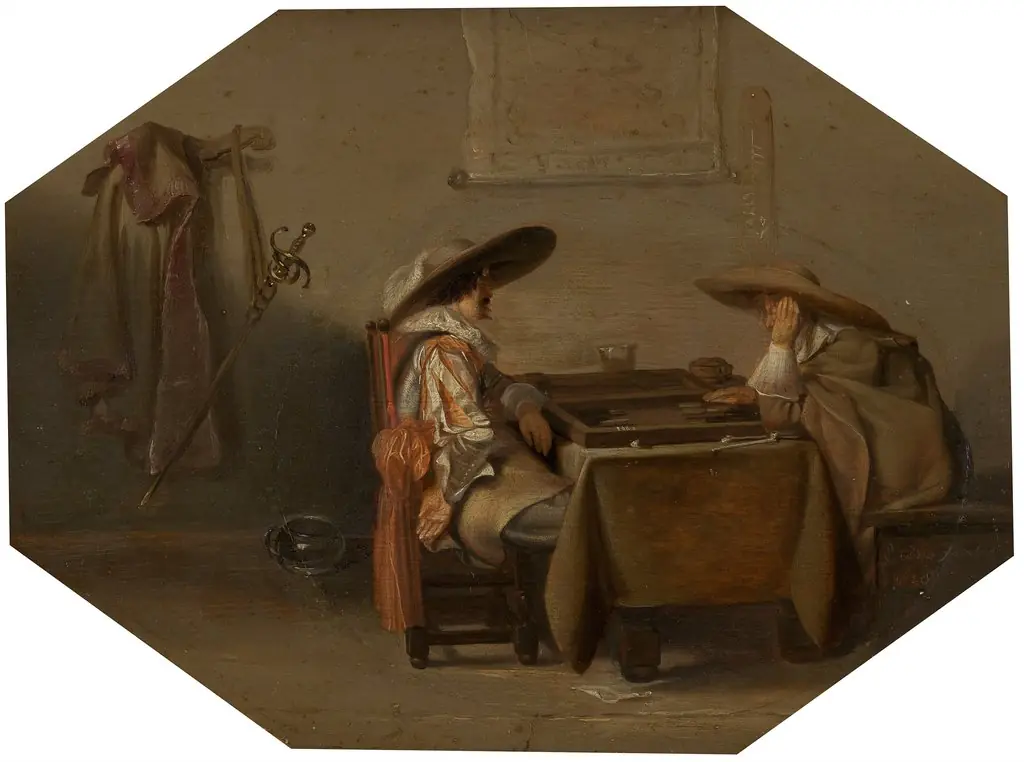
Three men occupy the scene: one at the table takes snuff, a refined habit signaling social ritual; another leans in attentively, while the third gazes outward, detached. The absence of narrative climax suggests a pause in daily life, emphasizing stillness over action. The painting reflects 17th-century Dutch values—modesty, self-containment, and the dignity found in mundane routines.
Technique & Style
Ter Borch employs soft, diffused lighting to model forms with precision, highlighting textures—fabric folds, polished wood, skin—without theatrical contrast. The dark, unmodeled background isolates the figures, focusing attention on gesture and expression. His brushwork is controlled, avoiding visible strokes; surfaces are rendered with quiet realism, reflecting a preference for psychological nuance over dramatic effect.
History & Provenance
The painting entered the Philadelphia Museum of Art’s collection in the early 20th century, though its earlier ownership remains undocumented. It was created during the final decade of ter Borch’s career, when his focus on interior scenes had matured. While less celebrated today than Vermeer’s works, it was once admired by contemporaries for its refined depiction of bourgeois life.
Context
In mid-17th-century Holland, genre painting flourished as urban elites sought art reflecting their own world. Ter Borch’s scenes of quiet interaction stood alongside those of Pieter de Hooch and Vermeer, all emphasizing domestic order and social nuance. Snuff-taking, though a personal habit, was also a marker of status, making this moment both intimate and culturally coded.
Legacy
Ter Borch’s influence on Dutch genre painting lies in his restraint and attention to psychological subtlety. Though later overshadowed by Vermeer’s luminous compositions, his approach to light, texture, and quiet gesture informed a generation of painters. This work remains a quiet testament to the artistic value placed on ordinary moments in Dutch Golden Age culture.
Artist & collection
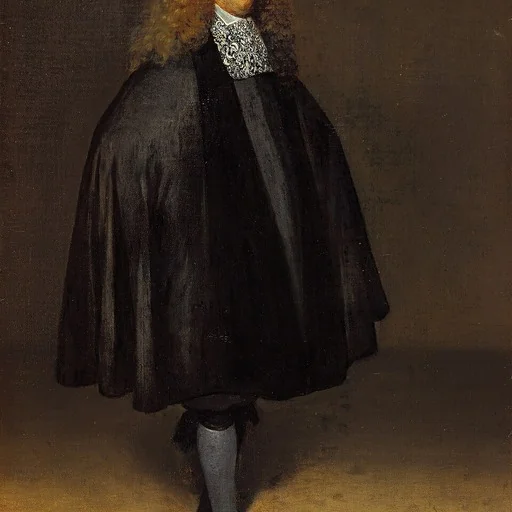
Artist
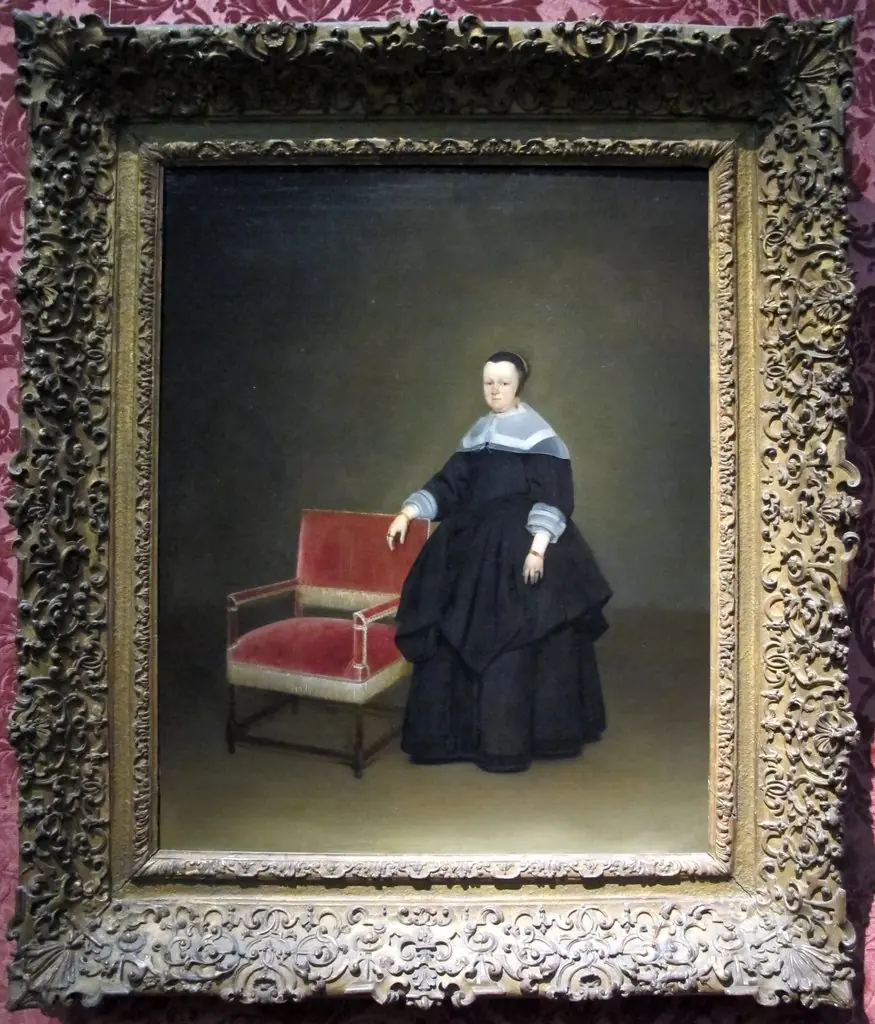
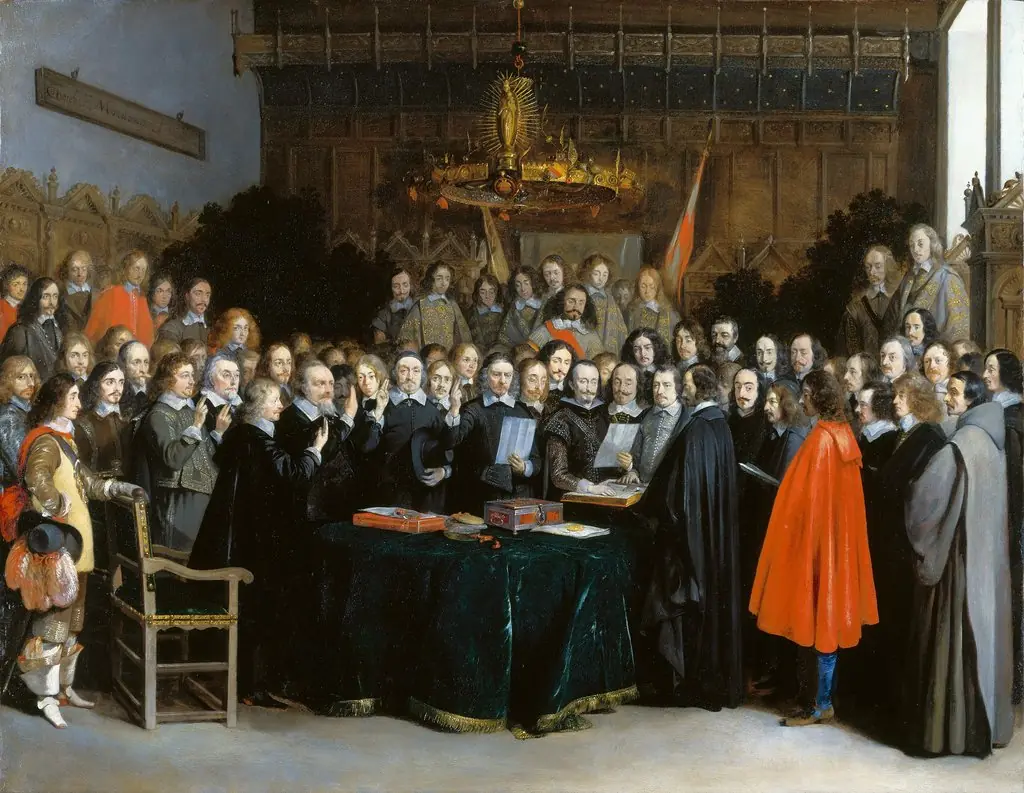
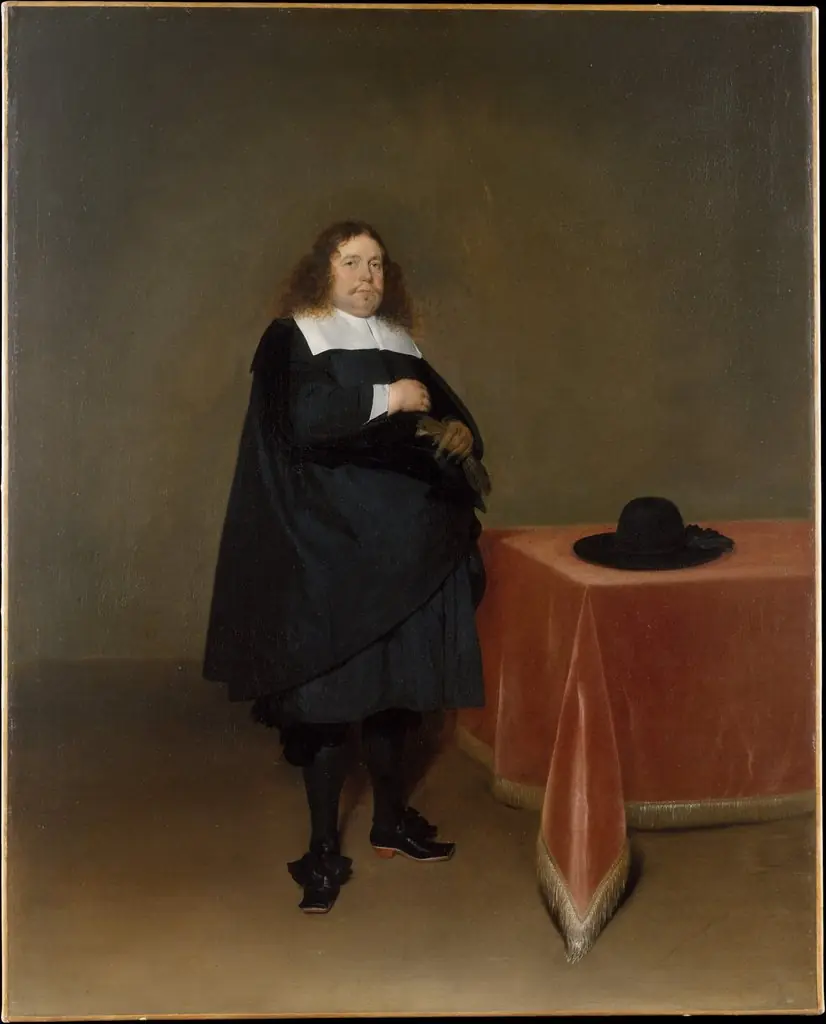
Gerard ter Borch (Dutch: ; December 1617 – 8 December 1681), also known as Gerard Terburg (Dutch: ), was a Dutch Golden Age painter mainly of genre subjects.