Artwork
The Four Seasons
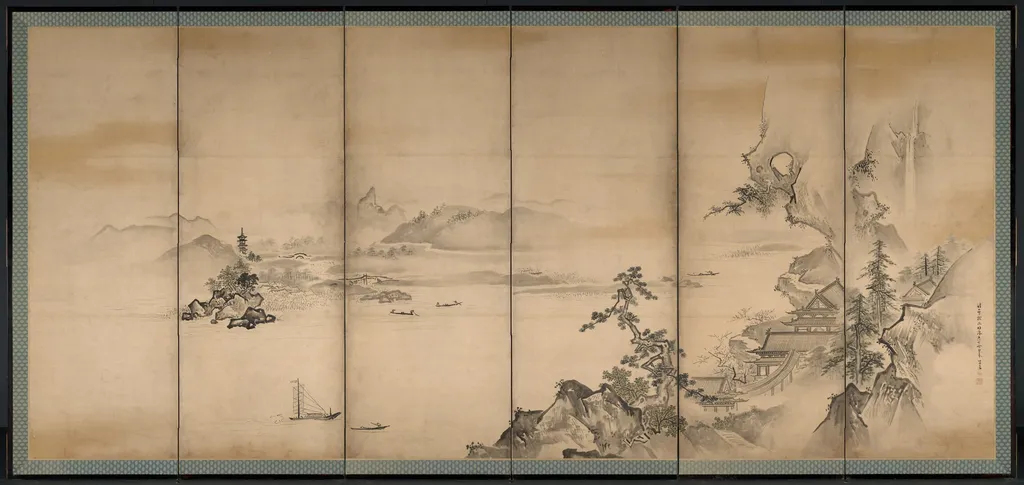
The Four Seasons is an unspecified painting. It dates from 1668 and is held in the collection of the Cleveland Museum of Art.
About this work
Overview
The entire surface is executed in a restrained palette of grays, employing subtle tonal shifts to suggest spatial recession.
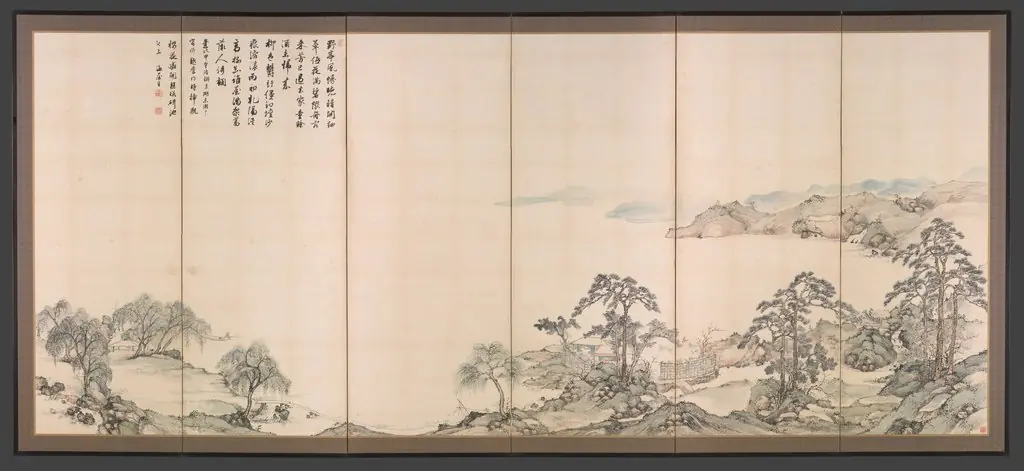
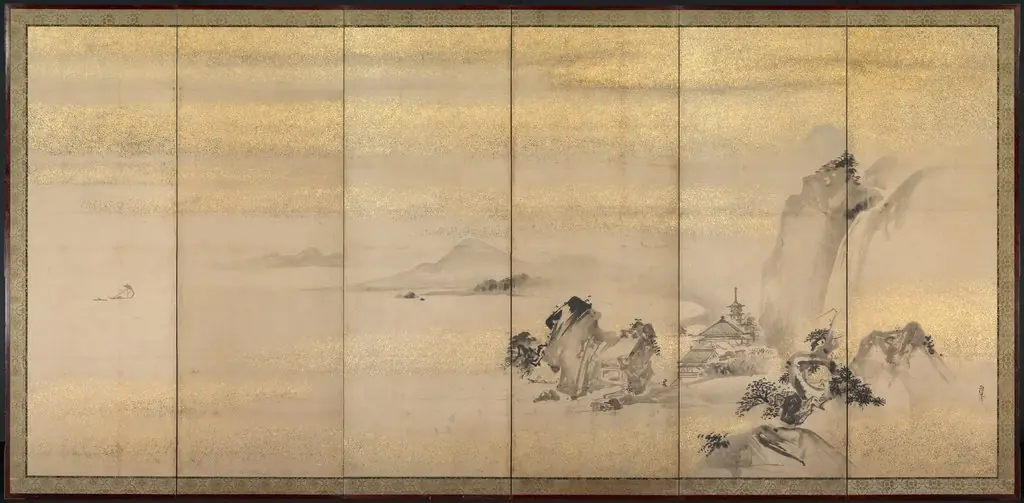
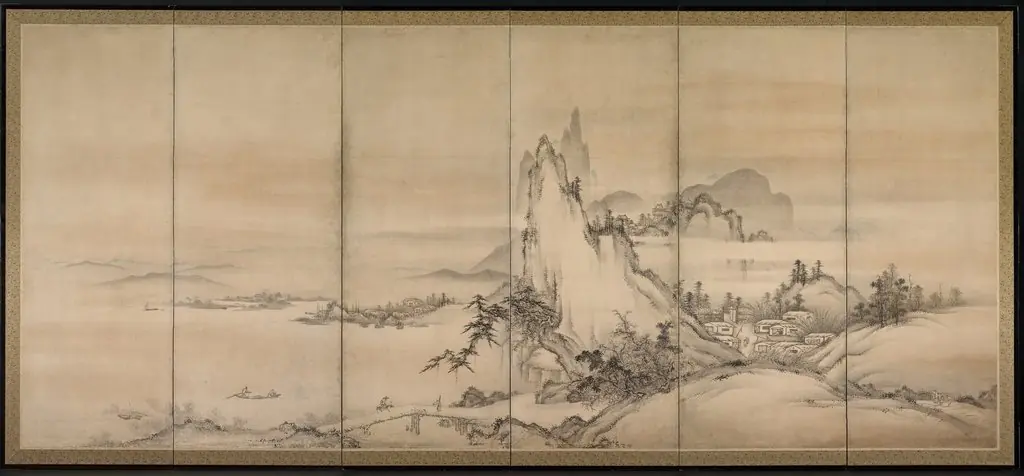
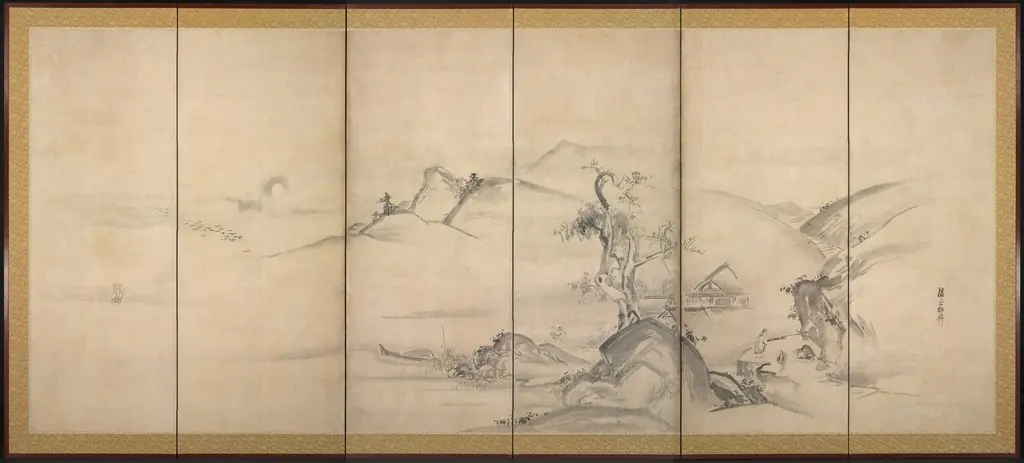
The work titled The Four Seasons is a six‑panel folding screen that presents a tranquil landscape across its breadth. The composition divides into a left segment dominated by a rocky promontory, scattered trees and a diminutive boat on water, while the right segment opens onto a mountainous vista with a building and additional foliage. The entire surface is executed in a restrained palette of grays, employing subtle tonal shifts to suggest spatial recession.
Subject & Meaning
The panels juxtapose two natural settings that together evoke the passage of time and the cyclical nature implied by the title. The modest boat and quiet shoreline suggest human activity within a broader, enduring environment, whereas the distant mountains and architecture hint at permanence. The balance of detailed and open areas fosters a contemplative atmosphere, encouraging viewers to reflect on the harmony between humanity and the natural world.
Technique & Style
The artist employs a monochromatic scheme, relying on variations of gray to model form and depth. Careful modulation of light and shadow creates a chiaroscuro effect, enhancing the illusion of three‑dimensional space without the use of color. Negative space is deliberately left unfilled, allowing the eye to rest and reinforcing the overall sense of calm. The brushwork is fine and controlled, producing delicate transitions between planes.
Context
Folding screens of this type were traditionally used as portable room dividers in East Asian interiors, often serving both functional and decorative purposes. The choice of a landscape theme aligns with a long‑standing artistic interest in representing nature as a source of philosophical contemplation. The work’s muted tonal approach reflects a period when ink‑based media were favored for their capacity to convey atmosphere through subtle gradations.
Artist & collection