Artwork
The Heroine Who Waits Anxiously for Her Absent Lover: Utka Nayika
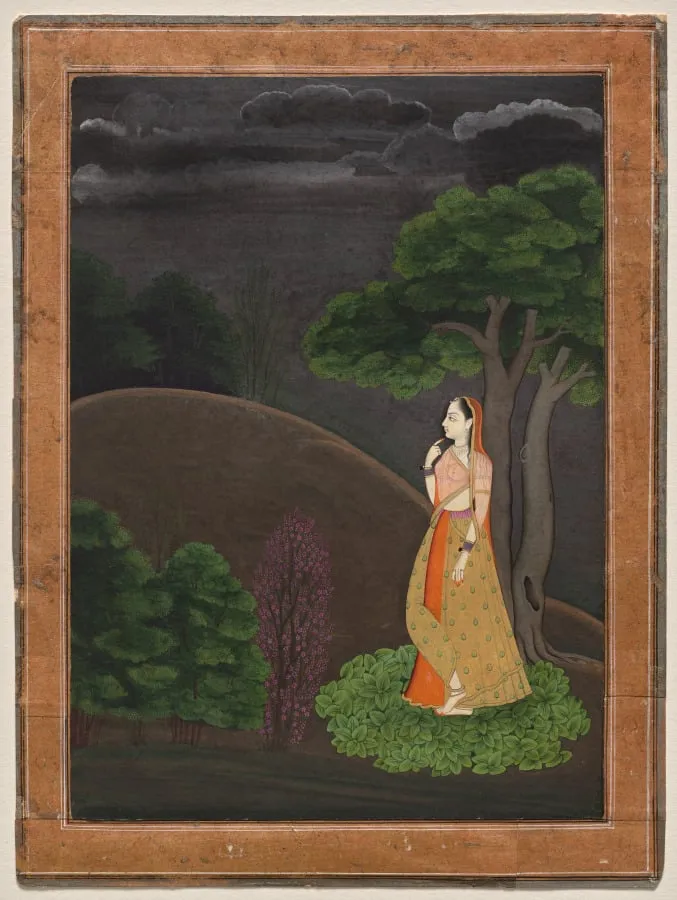
The Heroine Who Waits Anxiously for Her Absent Lover: Utka Nayika is an unspecified painting by the Baroque artist Unknown. It dates from 1742 and is held in the collection of the Cleveland Museum of Art. This painting depicts an utka nayika, a classical Indian archetype of a woman awaiting her lover under cover of night.
About this work
Overview
She stands alone on a balcony, illuminated by a small lamp, her presence a quiet counterpoint to the surrounding darkness.
This painting depicts an utka nayika, a classical Indian archetype of a woman awaiting her lover under cover of night. Unlike other nayika types defined by despair or anger, the utka embodies patient endurance. She stands alone on a balcony, illuminated by a small lamp, her presence a quiet counterpoint to the surrounding darkness. The composition isolates her emotional state, emphasizing stillness over drama.
Subject & Meaning
The utka nayika represents a woman whose longing has matured into quiet resolve. Her posture suggests neither desperation nor resignation, but a contemplative vigilance. The lamp she holds is both a practical tool and a symbolic anchor—its glow defies the night’s obscurity, mirroring her inner steadiness. Her gaze, directed upward, may register hope for the moon’s emergence or an internal reckoning with her own endurance.
Technique & Style
The figure is rendered in vivid orange and gold, sharply contrasting with the deep, unmodulated shadows of the night. Brushwork is precise yet restrained, focusing on the clarity of form rather than ornate detail. The background lacks spatial depth, reinforcing the psychological isolation of the subject. Light is used not for realism but to elevate the emotional weight of the moment, a hallmark of Pahari miniature traditions.
History & Provenance
The painting originates from the Pahari school, likely produced in the hill kingdoms of northern India during the 18th century. These courts cultivated illustrated manuscripts and standalone works based on Sanskrit poetic traditions, particularly the Nayika-bheda classifications. While the specific artist and patron are unknown, the style aligns with workshops in Basohli or Guler, where emotional nuance was prized over narrative spectacle.
Context
The utka nayika emerges from a literary tradition dating to at least the first century CE, where women’s emotional states were systematically categorized in poetry and drama. These archetypes served not as portraits but as vessels for exploring love’s psychological dimensions. In Pahari painting, such themes were visualized with refined subtlety, transforming literary abstraction into intimate, contemplative scenes suited to private devotion or courtly reflection.
Legacy
The utka nayika type influenced later Indian miniature painting and continues to inform modern interpretations of feminine resilience in art. Its quiet intensity stands apart from more theatrical depictions of longing, offering instead a model of inner strength expressed through restraint. The painting’s enduring appeal lies in its ability to convey profound emotion without spectacle, anchoring the viewer in a moment of suspended time.
Artist & collection

 Domestic Scene
 Giacomo and Cardinal Marco, investing Andrea, Abbot of San Zeno, with his Benefice
 The Nymph of Fontainebleau
 Portrait of a Woman
 Madonna and Child with Saints in the Enclosed Garden
 Venus and Minerva
 Family Group of Four on Sofa
 Wall painting from Room H of the Villa of P. Fannius Synistor at Boscoreale
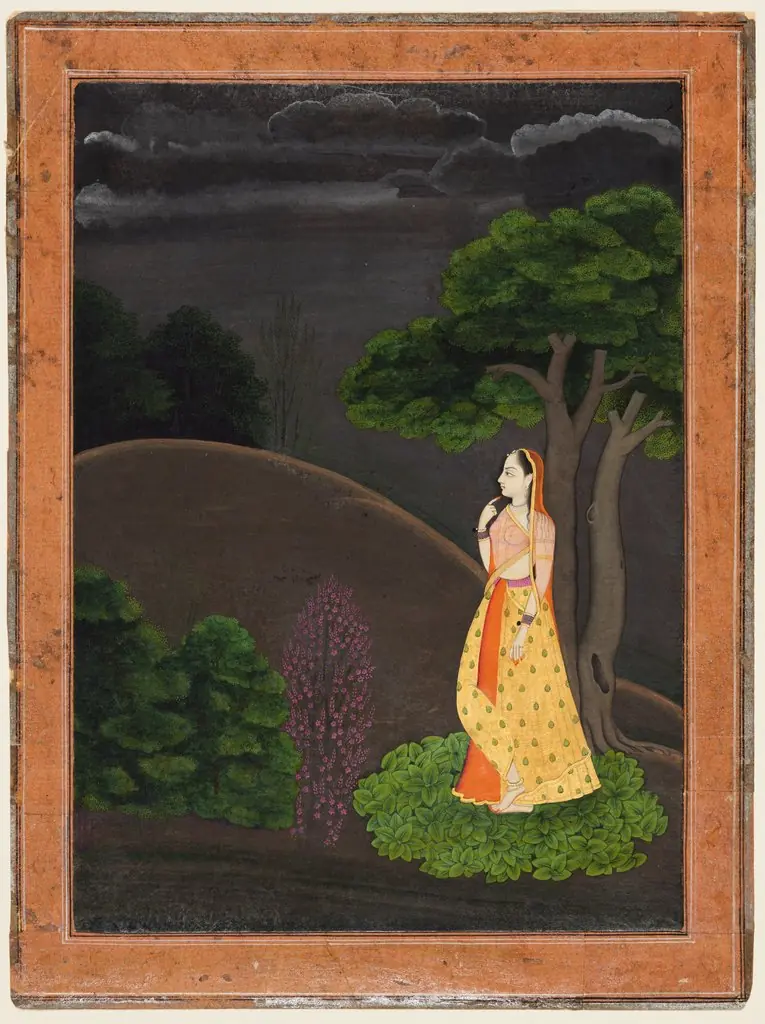 The Heroine Who Waits Anxiously for Her Absent Lover: Utka Nayika
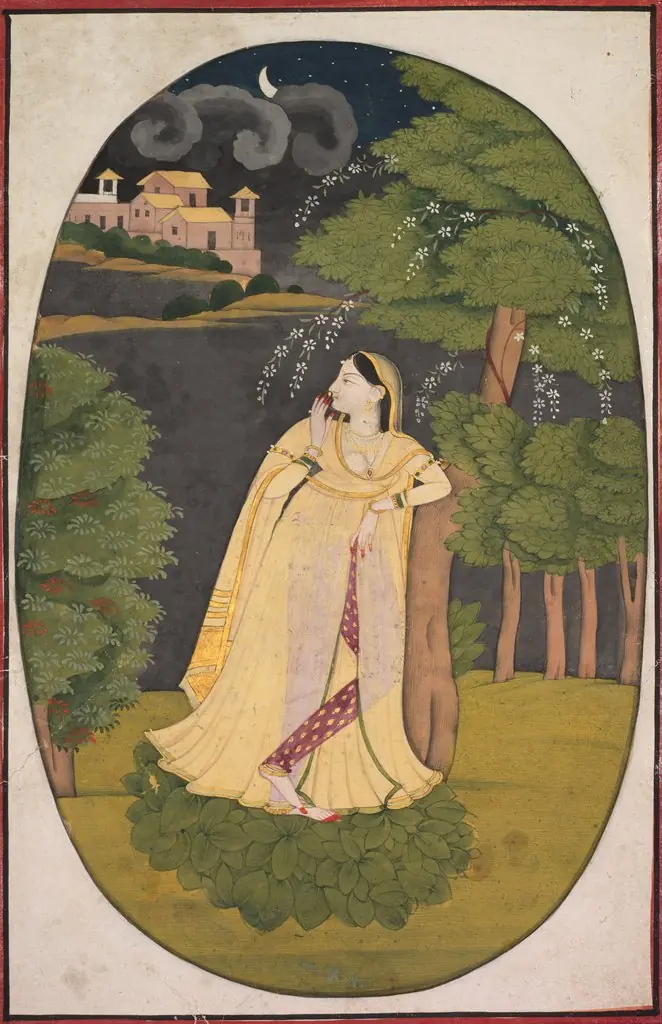 The Heroine Who Waits Anxiously for Her Absent Lover (Utka Nayika)
 The heroine who waits anxiously for her absent lover (Utka Nayika)
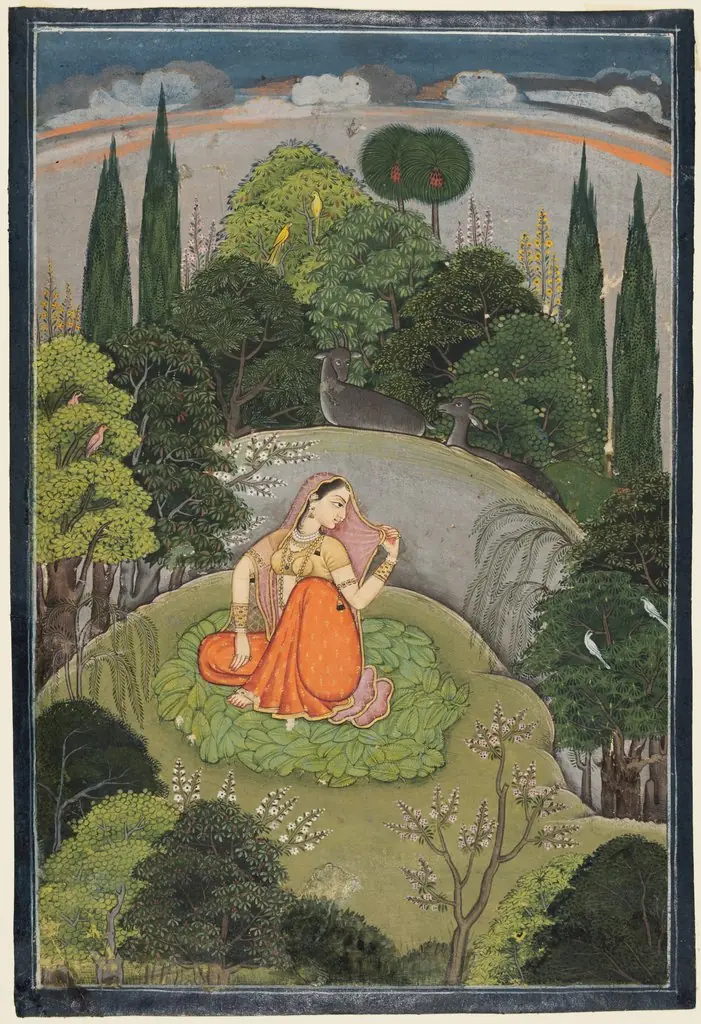 The Heroine Who Waits Anxiously for Her Absent Lover: Utka Nayika
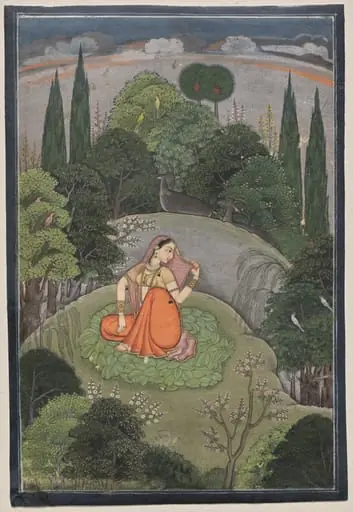 The Heroine Who Waits Anxiously for Her Absent Lover: Utka Nayika
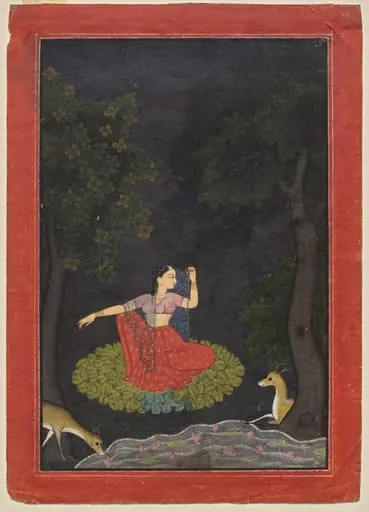 A heroine waiting for her lover: Vasakasajja Nayika, from the "Nurpur" Rasikapriya
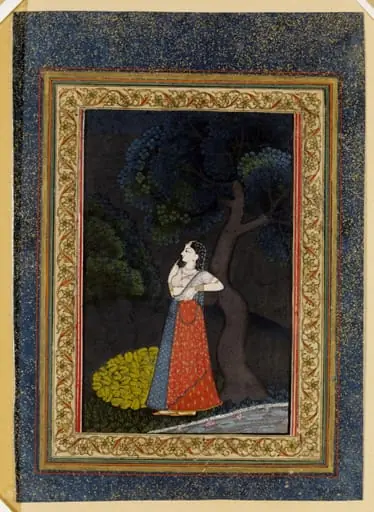 Utka Nayika
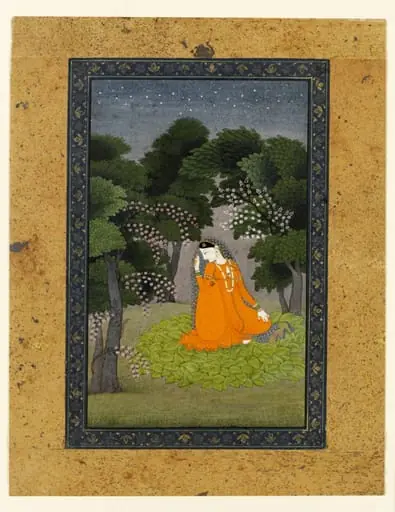 Utka Nayika
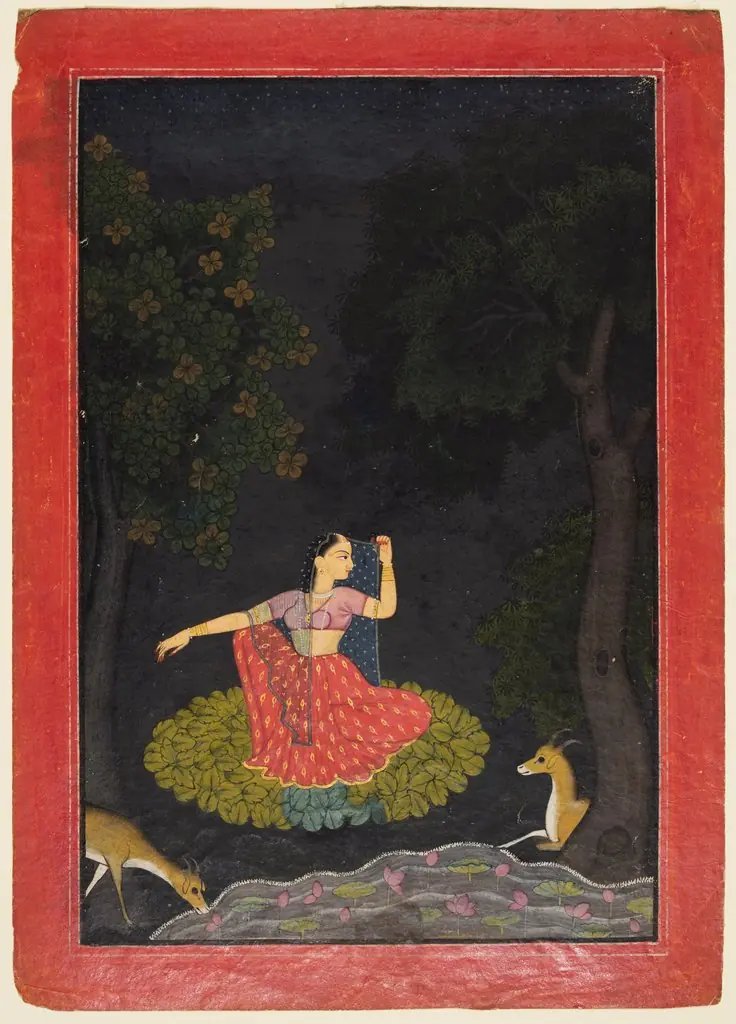 A Heroine Waiting for Her Paramour: Vasakasajja Nayika, from a Nurpur Rasikapriya
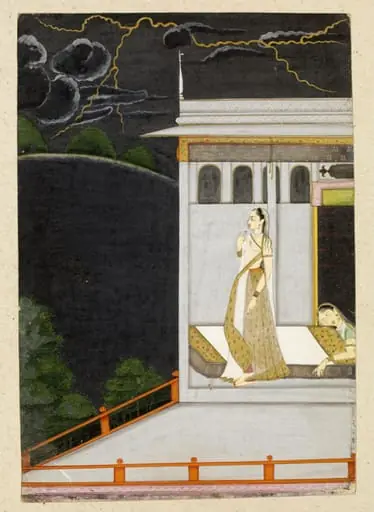 Vasakasayya Nayika
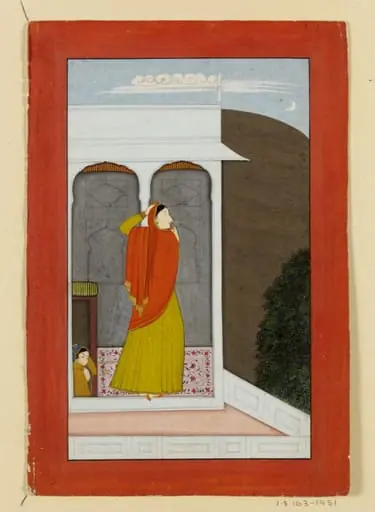 Vasakasajja Nayika