Artwork
The lovelorn heroine, from a Sat Sai of Bihari
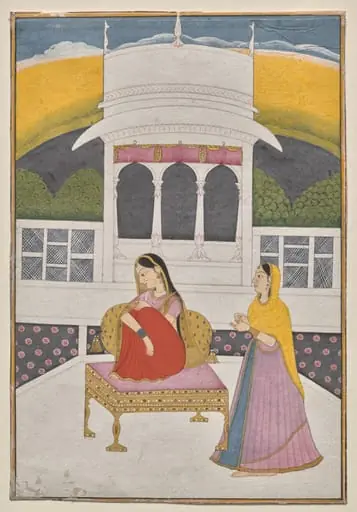
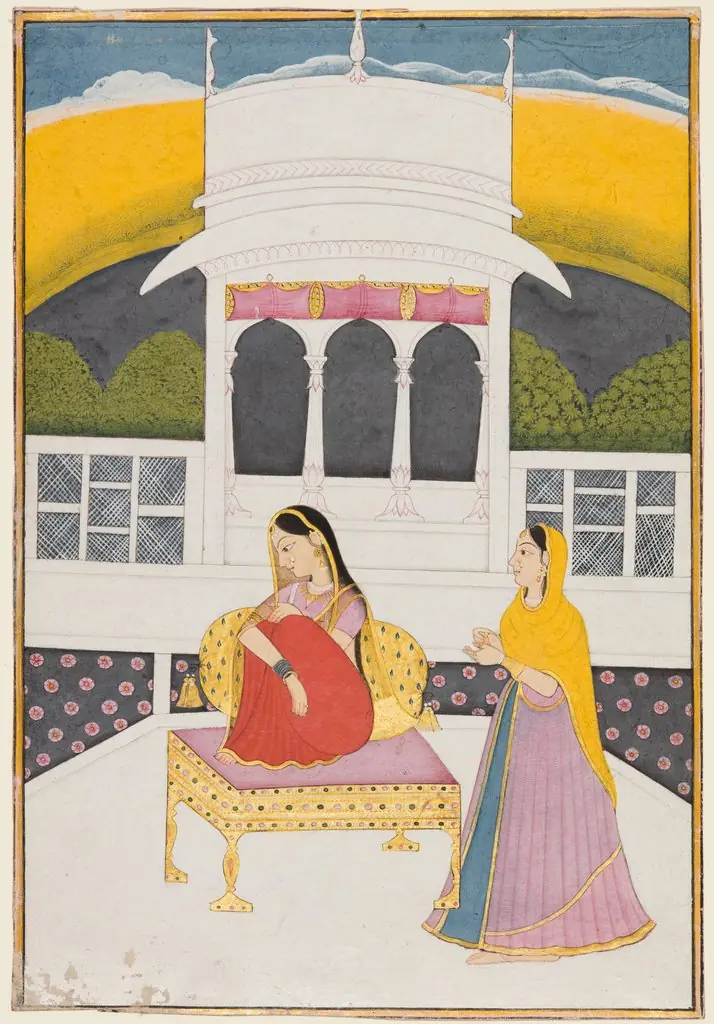
The lovelorn heroine, from a Sat Sai of Bihari is an unspecified painting by the Patna School of Painting artist Unknown. It dates from 1785 and is held in the collection of the Cleveland Museum of Art. This painting illustrates a verse from the Sat Sai, a poetic cycle composed by Bihari Lal that explores the emotional lives of women.
About this work
Overview
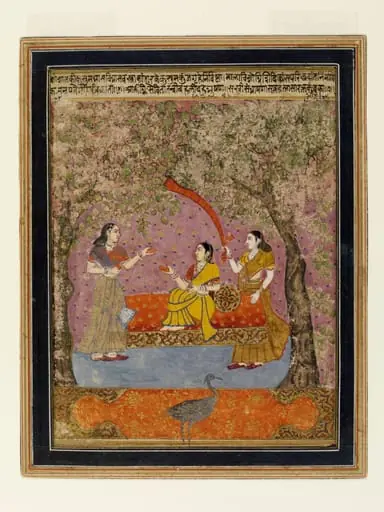
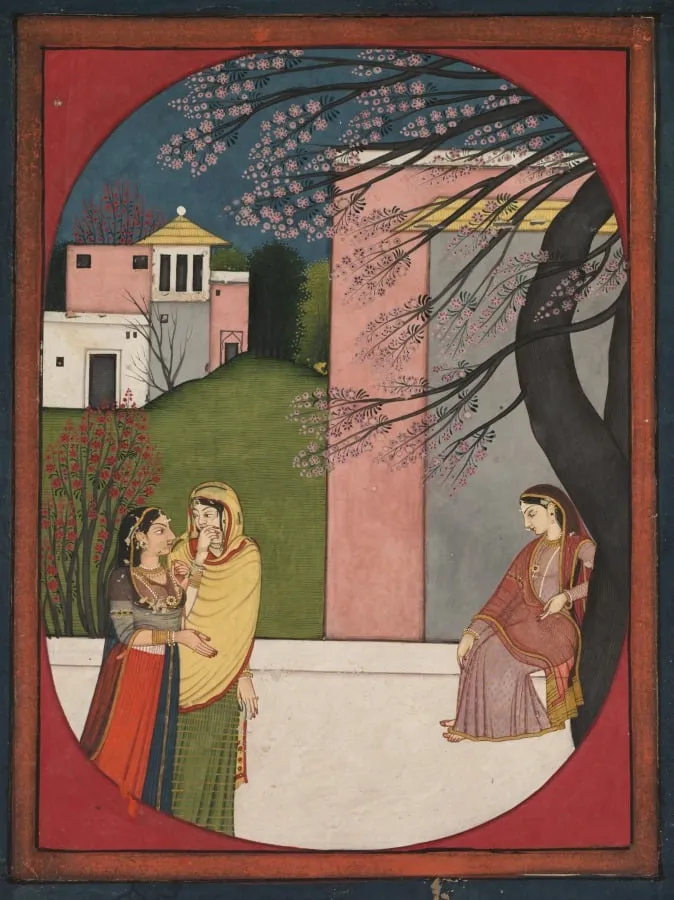
Depicted is a solitary heroine seated beneath a blooming tree, her isolation underscored by the absence of her lover and the indifference of nature.
This painting illustrates a verse from the Sat Sai, a poetic cycle composed by Bihari Lal that explores the emotional lives of women. Depicted is a solitary heroine seated beneath a blooming tree, her isolation underscored by the absence of her lover and the indifference of nature. The scene is drawn from a manuscript tradition associated with the Pahari courts of northern India, where poetry and painting converged to express subtle psychological states.
Subject & Meaning
The heroine’s sorrow is conveyed not through overt gesture but through quiet absence: her turned face, the stillness of the blossoms, and the passing figures of other women who whisper without offering comfort. The blossoms, though vibrant, remain unpollinated—symbolizing unfulfilled desire. Her dress, dyed the same hue as the petals, merges her with the tree, suggesting her emotional entanglement with a world that no longer responds to her presence.
Technique & Style
The artist employs delicate brushwork and muted, harmonious pigments to evoke intimacy. The tree’s blossoms are rendered with fine detail, contrasting with the softer, flattened forms of the background figures. Spatial depth is minimized, focusing attention on the heroine’s solitude. Color symbolism is central: the pink of her garment and the flowers creates visual unity while reinforcing thematic stillness and unreciprocated longing.
History & Provenance
The work originates from a manuscript of the Sat Sai produced in the early 18th century, likely in the Kangra or Guler region. Such illustrated poems were commissioned by local rulers and circulated among courtly elites. This particular folio reflects the refinement of Pahari painting, where literary themes were translated into visual poetry through careful composition and emotional restraint.
Context
The Sat Sai drew from earlier Sanskrit and Brajbhasha poetic traditions, adapting them to local devotional and romantic sensibilities. In Pahari courts, these texts were not merely read but performed and visualized, blending aesthetics with spiritual and emotional introspection. The absence of bees, a subtle natural detail, aligns with broader Indian poetic conventions where nature mirrors inner states, especially in separation poetry.
Legacy
Paintings like this helped define the visual language of Pahari miniatures, influencing later regional styles across the Himalayan foothills. Their emphasis on psychological nuance and symbolic natural elements set them apart from more narrative or decorative traditions. Today, these works are studied for their quiet intensity and their role in sustaining literary culture through visual art.
Artist & collection

 Domestic Scene
 Giacomo and Cardinal Marco, investing Andrea, Abbot of San Zeno, with his Benefice
 The Nymph of Fontainebleau
 Portrait of a Woman
 Madonna and Child with Saints in the Enclosed Garden
 Venus and Minerva
 Family Group of Four on Sofa
 Wall painting from Room H of the Villa of P. Fannius Synistor at Boscoreale