Artwork
Untitled
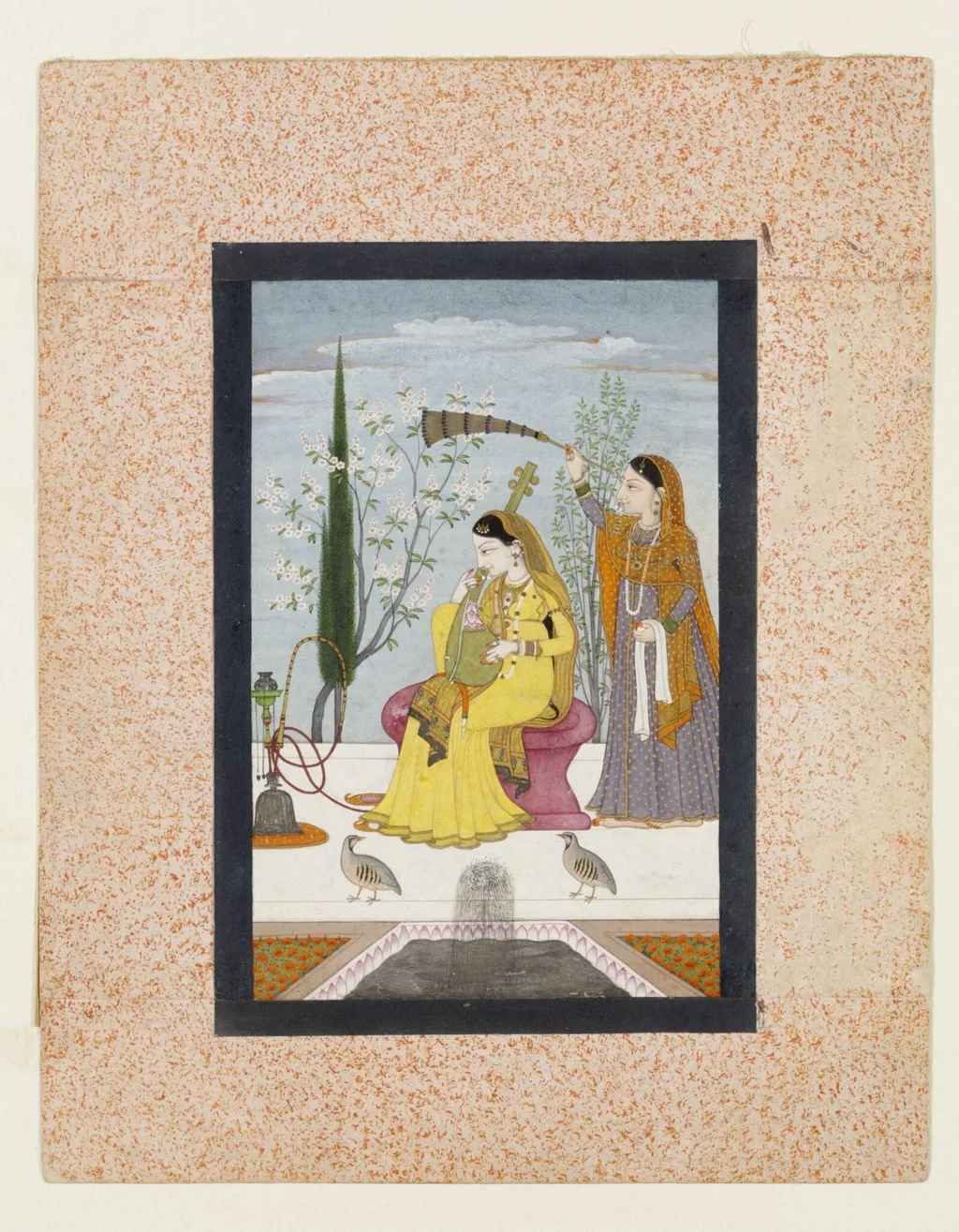
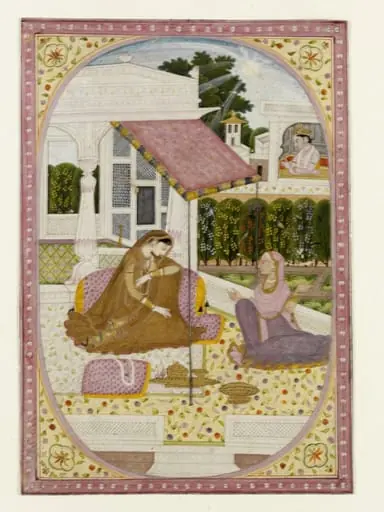
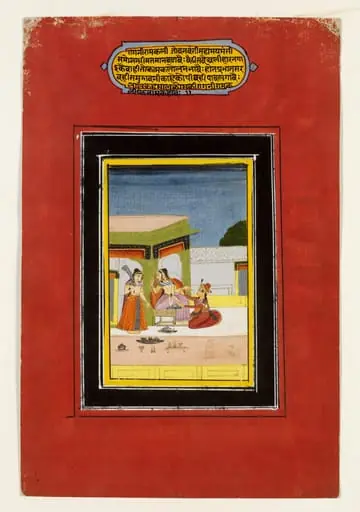
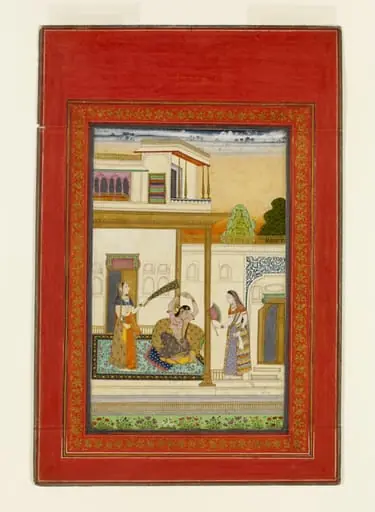
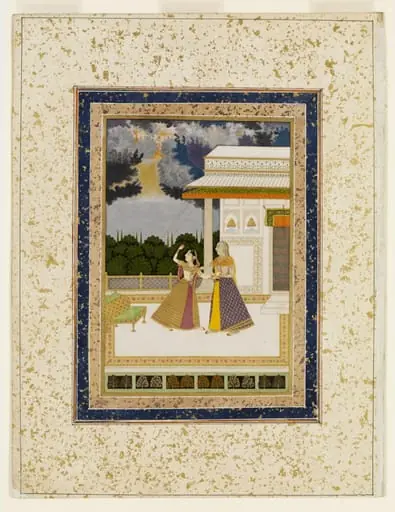
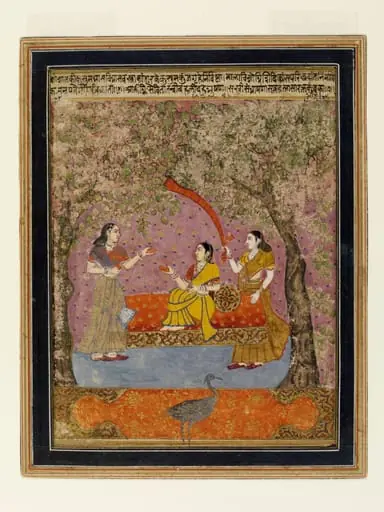
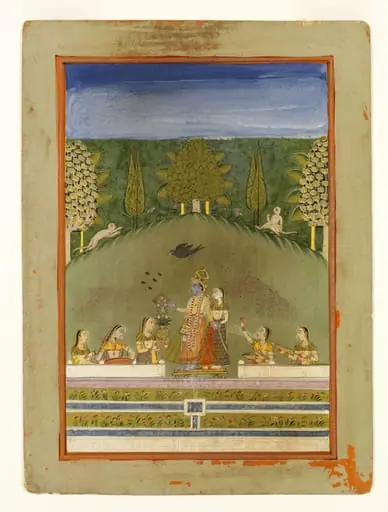
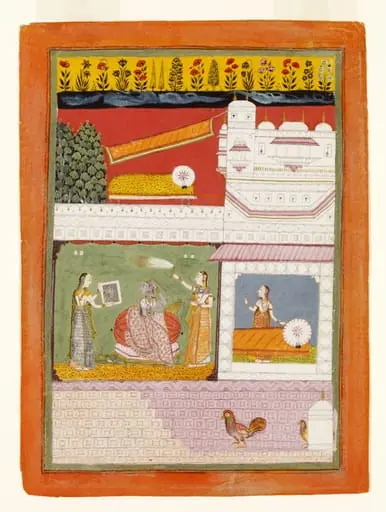
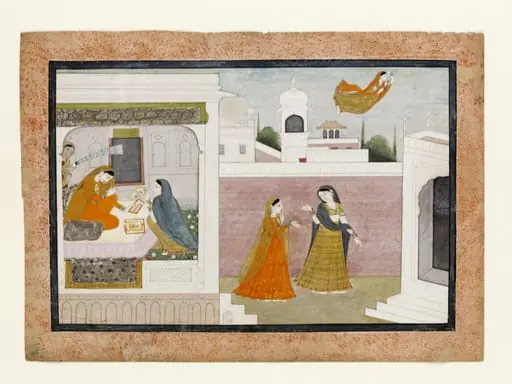
Untitled is a paint painting by the Romanticist artist Unknown. It dates from 1805 and is held in the collection of the Victoria and Albert Museum. The work is an opaque watercolor on paper, portraying a domestic garden scene.
About this work
Overview
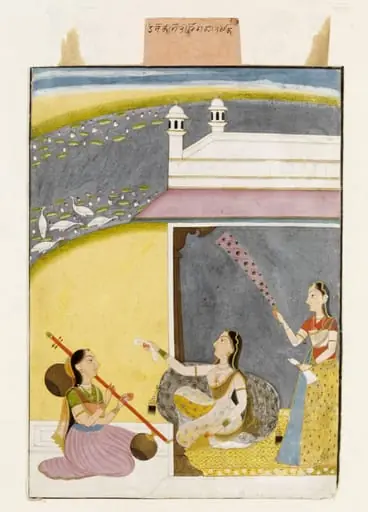
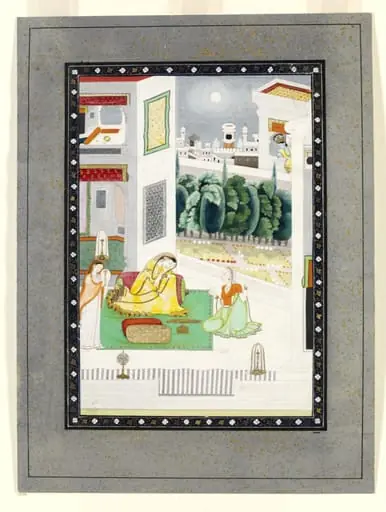
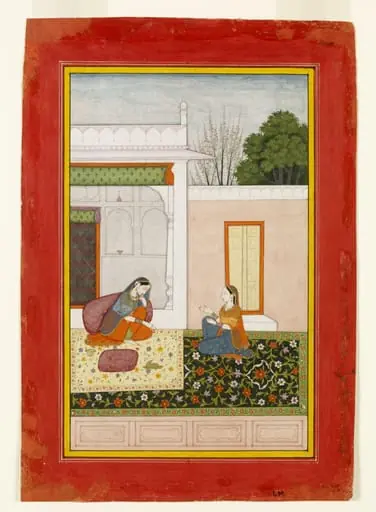
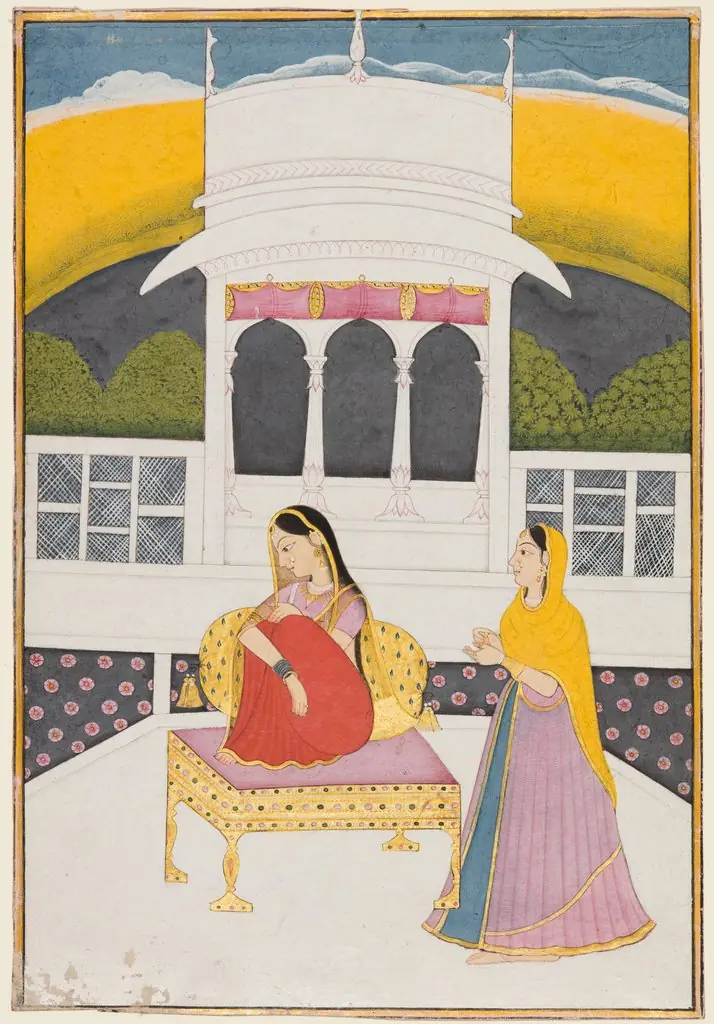
The work is an opaque watercolor on paper, portraying a domestic garden scene. A woman in a pale yellow dress sits on a crimson cane stool, playing a green tambura, while a second figure in a violet dress with a veil holds a peacock‑feather fan. Nearby, two quails and a huqqa complete the composition, set against a muted grey‑blue sky.
Subject & Meaning
The painting captures a quiet, private moment of music and leisure. The seated figure’s instrument and the rose she holds suggest a lyrical or poetic inspiration, while the standing attendant’s fan and the presence of the hookah imply hospitality. The garden setting, with its blooming tree and birds, reinforces a theme of harmonious interaction between humans and nature.
Technique & Style
Executed in opaque watercolor, the artist employs vivid pigments—bright yellow, crimson, violet—contrasted with a soft, cloud‑like background.
Executed in opaque watercolor, the artist employs vivid pigments—bright yellow, crimson, violet—contrasted with a soft, cloud‑like background. Fine brushwork delineates intricate costume patterns and the delicate feathers of the fan. The overall composition reflects the characteristic elegance and decorative richness of the Pahari school, noted for its lyrical narratives and refined color palettes.
History & Provenance
The piece belongs to the Pahari painting tradition that flourished in the Sub‑Himalayan kingdoms from the 17th to the 19th centuries, under the patronage of Rajput courts. Its precise origin within the region is not documented, but the style aligns with works produced for aristocratic collections that celebrated courtly music and garden leisure.
Context
Pahari paintings often drew on poetic texts and courtly entertainments, translating literary scenes into visual form. This work reflects that tradition, depicting a musical performance in a cultivated garden—a favored motif that symbolized refinement and the idealized pleasures of aristocratic life in the Himalayan foothills.
Artist & collection

 Domestic Scene
 Giacomo and Cardinal Marco, investing Andrea, Abbot of San Zeno, with his Benefice
 The Nymph of Fontainebleau
 Portrait of a Woman
 Madonna and Child with Saints in the Enclosed Garden
 Venus and Minerva
 Family Group of Four on Sofa
 Wall painting from Room H of the Villa of P. Fannius Synistor at Boscoreale