Artwork
The Mumbles, Glamorgan
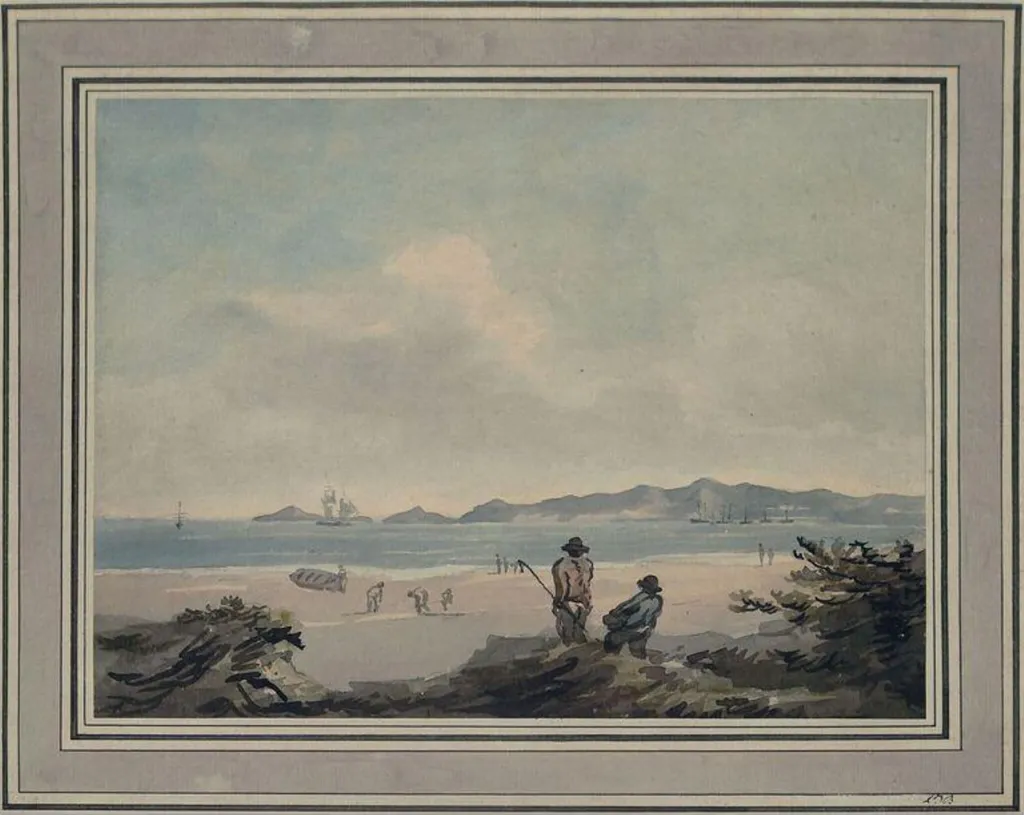
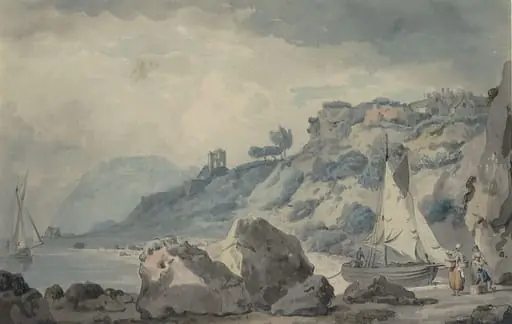
The Mumbles, Glamorgan is a watercolor work on paper by Unknown. It dates from 1850 and is held in the collection of the Victoria and Albert Museum. An unsigned watercolour from 1850 portrays The Mumbles, a coastal hamlet in Glamorgan, Wales.
About this work
Overview
The scene captures the quiet activity of a shoreline where low limestone cliffs meet the sea, with modest vessels anchored near the shore.
An unsigned watercolour from 1850 portrays The Mumbles, a coastal hamlet in Glamorgan, Wales. The scene captures the quiet activity of a shoreline where low limestone cliffs meet the sea, with modest vessels anchored near the shore. The work reflects the area’s dual identity as a working fishing port and a growing destination for local visitors, rendered in a restrained, observational style typical of mid-nineteenth-century topographical art.
Subject & Meaning
The painting presents a tranquil coastal moment: two figures stand on a rocky ledge, one holding a staff, possibly a fisherman or local guide. Scattered along the beach, other figures suggest leisure or daily routines. The calm water and distant ships imply a rhythm of life tied to the sea. No dramatic events are depicted; instead, the scene conveys the ordinary, unromanticized character of the village during its early development as a coastal community.
Technique & Style
The artist employed loose, fluid brushwork to suggest texture and movement—ripples in the water, the roughness of rocks, and the softness of the sky. Palette choices are subdued: ochres, greys, and pale blues dominate, avoiding vivid contrasts. The watercolour medium allows for transparency and subtle gradations, enhancing the atmospheric haze of distant hills. The composition is uncluttered, with careful attention to spatial depth and natural light.
History & Provenance
Created in 1850, the work likely originated from a local artist or visitor documenting the region during a period of modest growth. The Mumbles had recently gained accessibility via the Swansea and Mumbles Railway, one of the world’s first passenger rail lines, which may have inspired such depictions. The painting’s anonymous status suggests it was not commissioned for public display but possibly kept as a personal record or souvenir.
Context
In the mid-1800s, coastal Wales saw increasing interest from urban dwellers seeking seaside retreats. The Mumbles, with its natural cliffs and accessible shoreline, became a minor destination for day-trippers. Simultaneously, its fishing fleet remained active. This watercolour reflects that intersection—neither fully industrialized nor entirely picturesque—capturing a transitional moment in the village’s social and economic life.
Legacy
Though unsigned and unremarkable in scale, the painting contributes to a broader archive of regional topographical art from the period. It offers a quiet counterpoint to grander landscape traditions, preserving the visual character of a working coastal village before mass tourism transformed it. Its preservation in institutional collections underscores its value as a documentary record of everyday Welsh coastal life in the Victorian era.
Artist & collection

 Domestic Scene
 Giacomo and Cardinal Marco, investing Andrea, Abbot of San Zeno, with his Benefice
 The Nymph of Fontainebleau
 Portrait of a Woman
 Madonna and Child with Saints in the Enclosed Garden
 Venus and Minerva
 Family Group of Four on Sofa
 Wall painting from Room H of the Villa of P. Fannius Synistor at Boscoreale
 Coast Scene
 Entrance to a Harbour
 Marine View, with boats and figures on shore
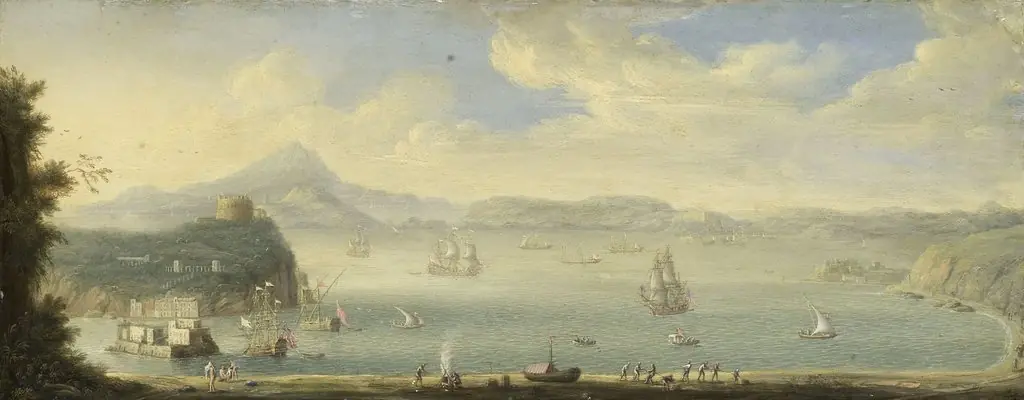 View of the Gulf of Naples
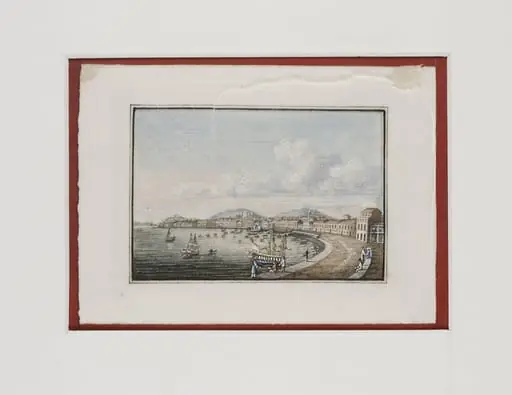 The Praya Grande, Macao
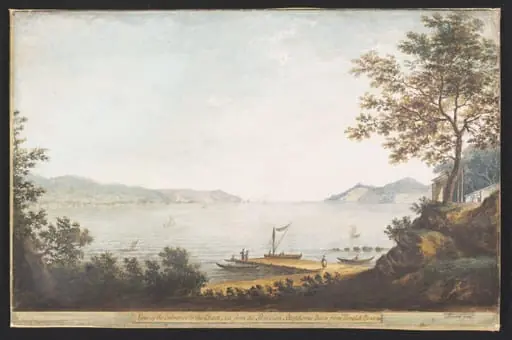 View of the Entrance to the Black Sea from the Thracian Bosphorus taken from Keretch Bournu
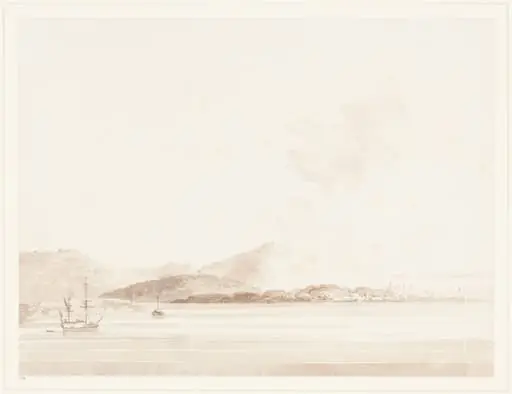 A View in India
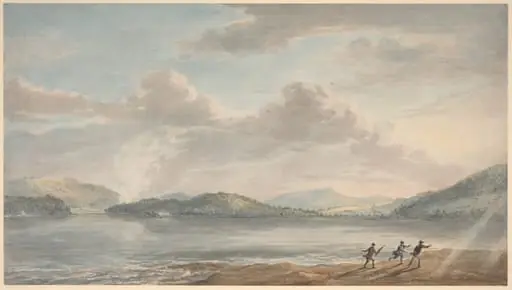 The Tide Rising at Briton Ferry
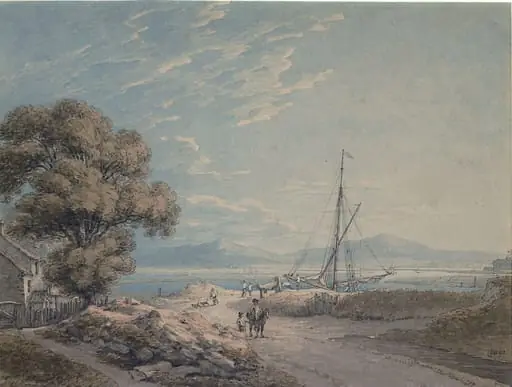 The Isle of Wight from Lymington
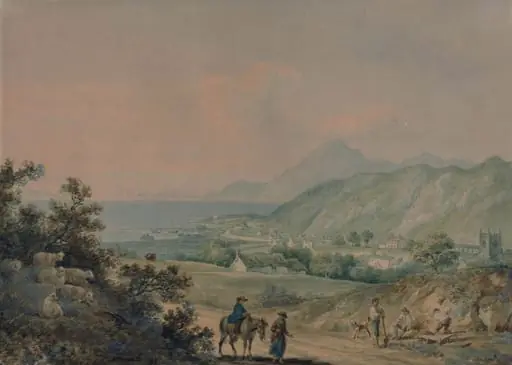 Bangor, with Penmaenmawr in the distance
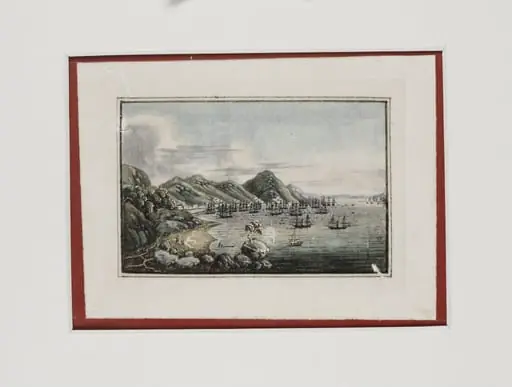 Hong Kong Harbour
 Howth, Ireland