Artwork
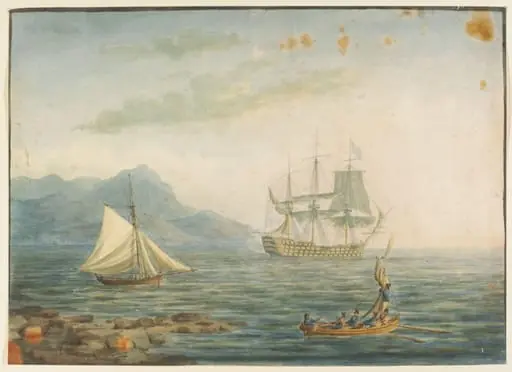
Marine View, with boats and figures on shore
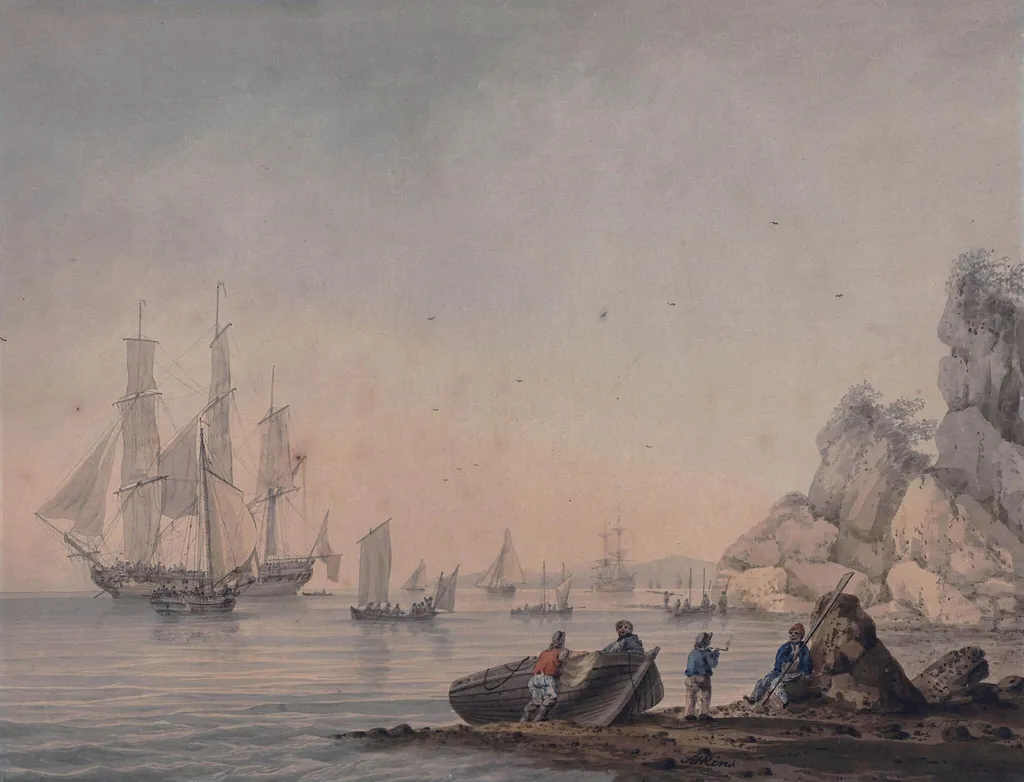
Marine View, with boats and figures on shore is a watercolor work on paper by the Rococo painting artist Samuel Atkins. It dates from 1798 and is held in the collection of the Victoria and Albert Museum. This watercolour presents a tranquil coastal scene, capturing the quiet stillness of a harbor at dawn or dusk.
About this work
Overview
Along the rocky shore, a few figures engage in quiet, unremarkable activities, reinforcing the scene’s sense of solitude and calm.
This watercolour presents a tranquil coastal scene, capturing the quiet stillness of a harbor at dawn or dusk. Tall sailing vessels rest motionless in the water, their forms softened by atmospheric haze. Along the rocky shore, a few figures engage in quiet, unremarkable activities, reinforcing the scene’s sense of solitude and calm. The composition balances scale and space through the contrast of large ships and small boats.
Subject & Meaning
The painting portrays ordinary human presence within a natural maritime setting—figures sit in a rowboat, others stand or crouch on the shore, engaged in undramatic tasks. There is no narrative climax; instead, the work emphasizes quiet observation. The focus on stillness and scale suggests a meditation on human life against the enduring, indifferent landscape of sea and cliff.
Technique & Style
The artist employs delicate watercolour washes to create a hazy, atmospheric effect, with pale blues and grays blending seamlessly into the distance. Rugged cliffs are rendered with soft, layered strokes that suggest texture without sharp definition. The variation in boat sizes and the subtle gradation of tone enhance spatial depth, while the muted palette reinforces the scene’s subdued, contemplative mood.
History & Provenance
The work is a watercolour from the 19th century, likely created by an artist associated with British topographical or maritime traditions. It was probably made for private collection rather than public exhibition, reflecting the period’s interest in quiet, observational landscapes. Its current location is not documented, but similar works are held in institutions such as the Victoria and Albert Museum.
Context
This piece aligns with 19th-century British watercolour practices that favored naturalism and atmospheric effect over dramatic storytelling. Artists of the time often depicted coastal and harbor scenes as studies in light, weather, and quiet human activity. Such works were valued for their technical restraint and emotional subtlety, appealing to collectors interested in the poetic qualities of everyday landscapes.
Legacy
Though not widely known today, this watercolour exemplifies a quiet tradition in British art that prioritized observation over spectacle. Its influence lies in its contribution to the development of landscape watercolour as a medium for conveying mood and spatial harmony. Similar works continue to be studied for their technical precision and understated emotional resonance.
Artist & collection
Artist
Samuel Atkins (fl. 1787–1808), was a British marine painter. Atkins contributed to the Royal Academy between 1787 and 1796. From 1796 to 1804 he was in the East Indies, when he returned to England, and continued to…

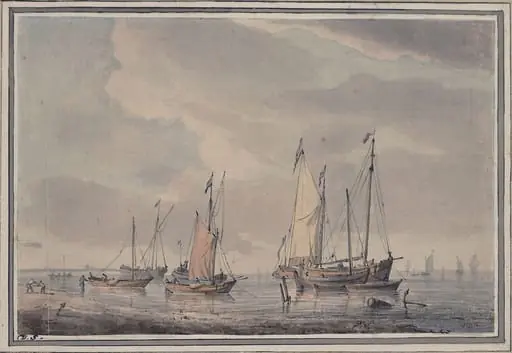 Seashore with fishing vessels at anchor
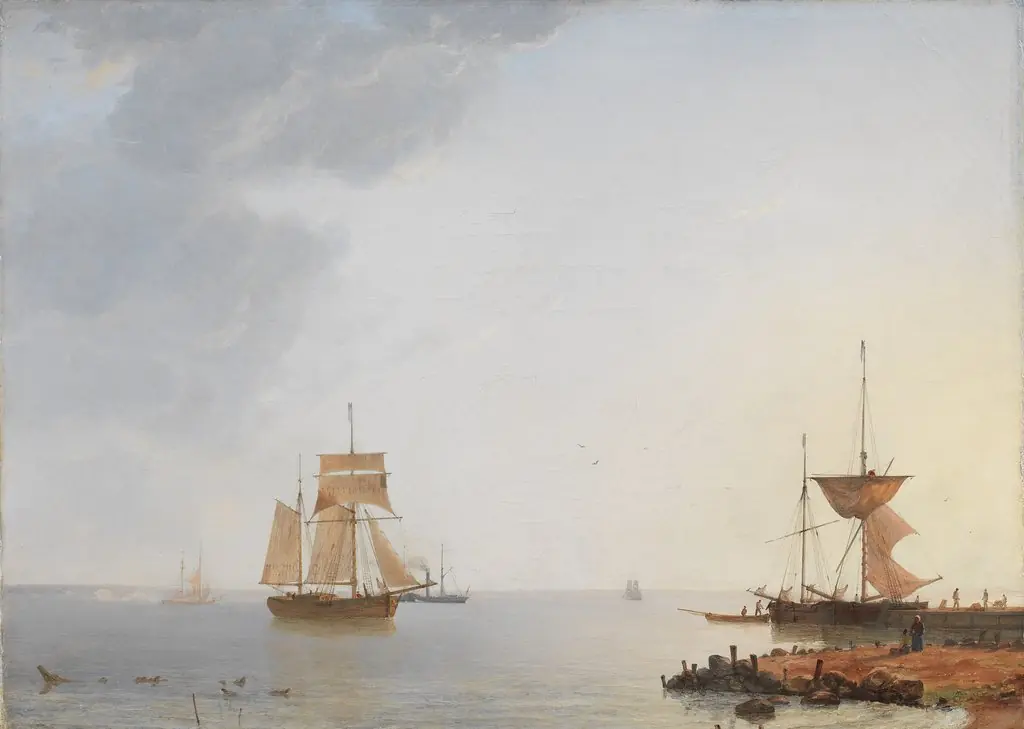 Ships Off the Coast of Zealand. Morning
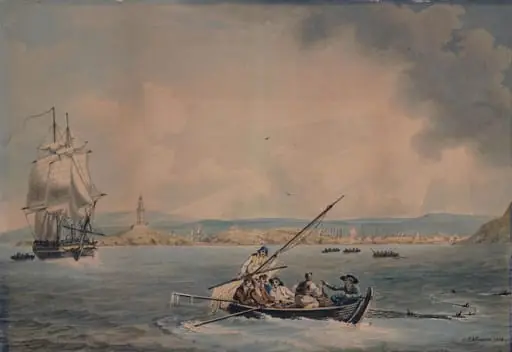 Entrance to a Harbour
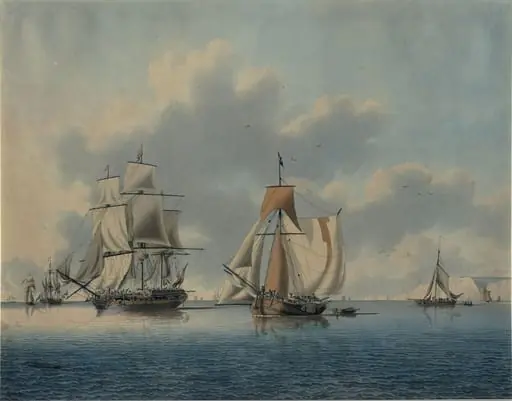 A frigate and Dutch fishing boats off the Isle of Wight
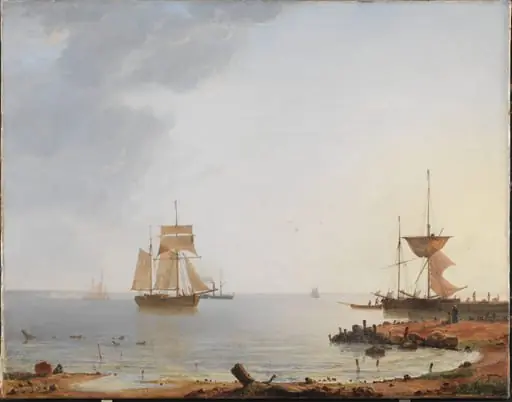 Ships Off the Coast of Zealand. Morning
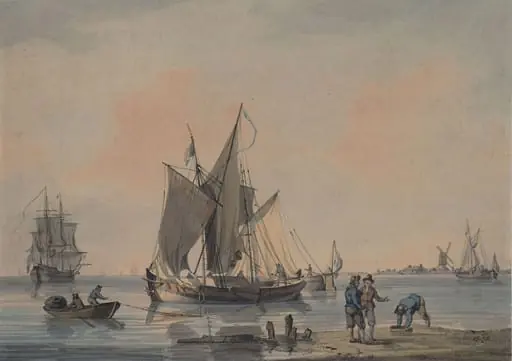 Coast scene with shipping and figures
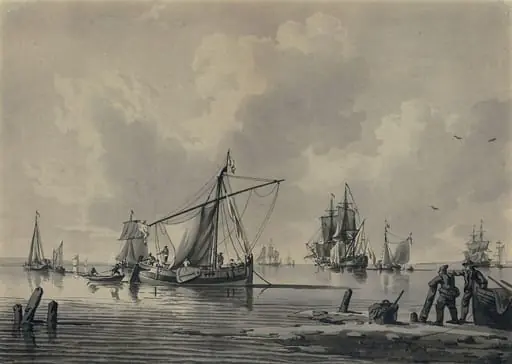 River with Shipping
 H.M.S. Victory off N. Africa
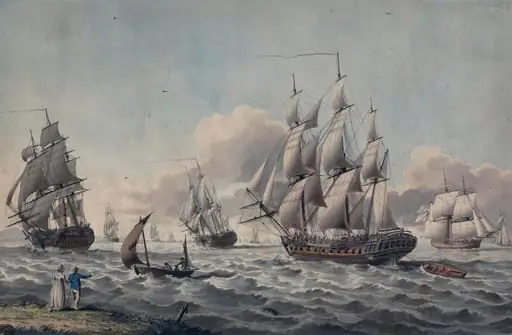 Shipping
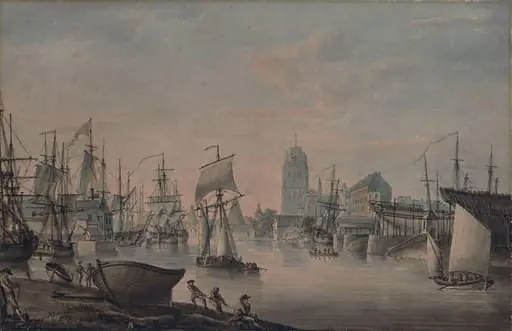 View of Bristol
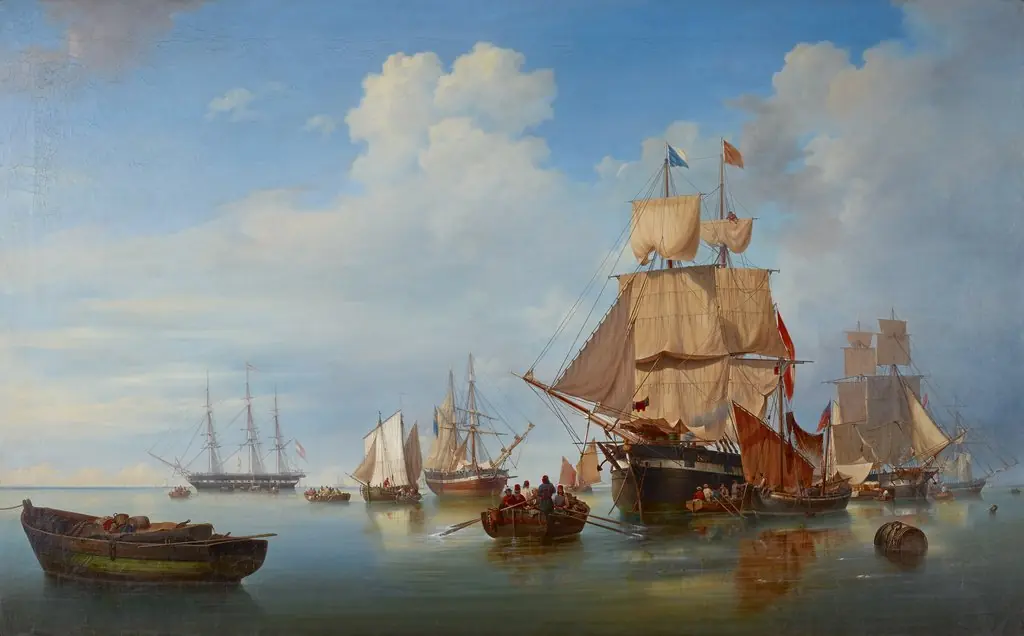 Marine art with Scirocco