Artwork
The Picnic
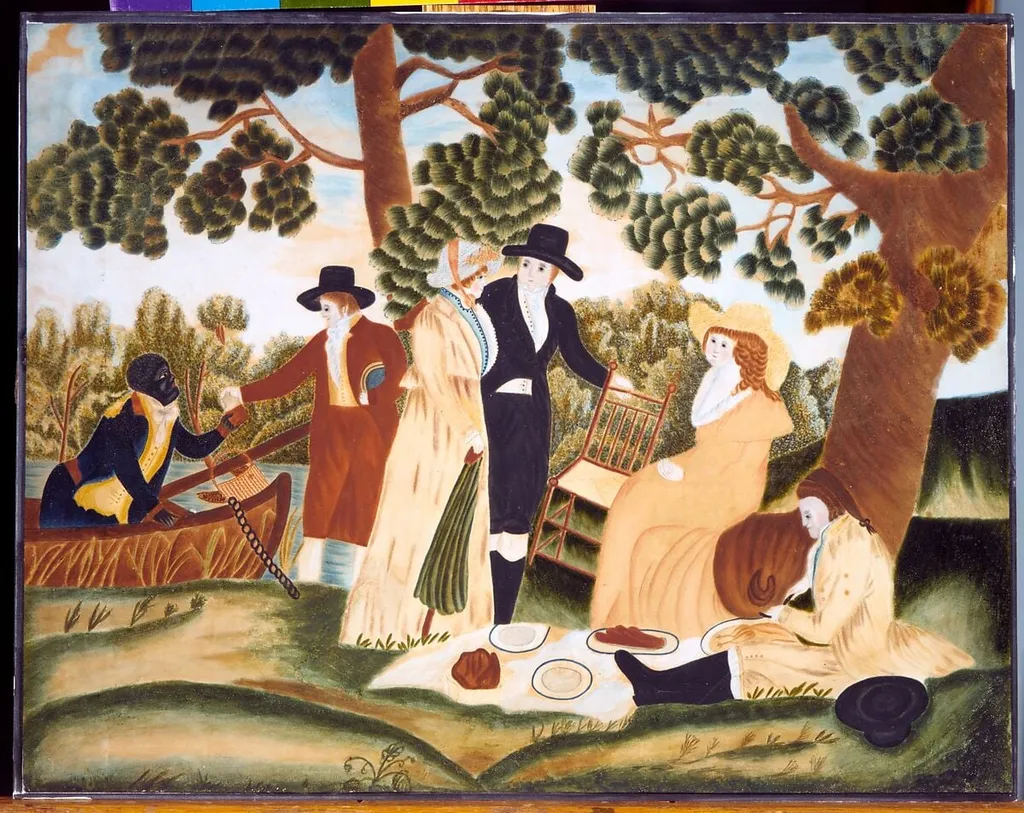
The Picnic is a watercolor work on paper. It dates from 1800 and is held in the collection of the Metropolitan Museum of Art.
About this work
You see a group of men and women lounging on a riverbank, eating, drinking, and laughing under tall trees.
You see a group of men and women lounging on a riverbank, eating, drinking, and laughing under tall trees. A small boat floats nearby, and the scene feels like a lazy summer afternoon.
This painting is unusual because it’s done in watercolor, not oil—rare for outdoor scenes in 1800. The artist used thin layers, called glazing, to build up colors softly, like watercolor still does today. No one knows who made it, but it feels loose and fresh, not stiff like many works from this time.
If you like this, look up more works in the subject: men, women, boats, picnics, food.
Overview
The Picnic depicts a leisurely outdoor gathering, rendered with watercolor, gouache, and ink on paper. This artwork stands out for its choice of medium, as using watercolor for a large-scale outdoor scene was uncommon around 1800. The composition captures a relaxed moment on a riverbank, reflecting a departure from the more formal artistic conventions prevalent during its creation.
Subject & Meaning
The painting portrays a group of men and women enjoying an outing by a river. They are shown engaged in eating, drinking, and conversation beneath a canopy of tall trees, with a small boat resting nearby. The overall impression is one of a tranquil summer afternoon, evoking themes of leisure and social enjoyment in a natural setting.
Technique & Style
Executed primarily in watercolor, augmented with gouache, pen and brown ink, and gum arabic, the artist employed a glazing technique. This involved applying thin, translucent layers to build up colors, a method characteristic of watercolor painting. The resulting aesthetic is notably fluid and spontaneous, contrasting with the more rigid styles often seen in works from this period.
History & Provenance
The creator of "The Picnic" remains unidentified, a common circumstance for many artworks from this era. Despite the lack of attribution, the piece is recognized for its distinctive approach to depicting an outdoor scene. It is housed within The American Wing, suggesting its connection to American art or its collection history within that context.
Artist & collection