Artwork
The players
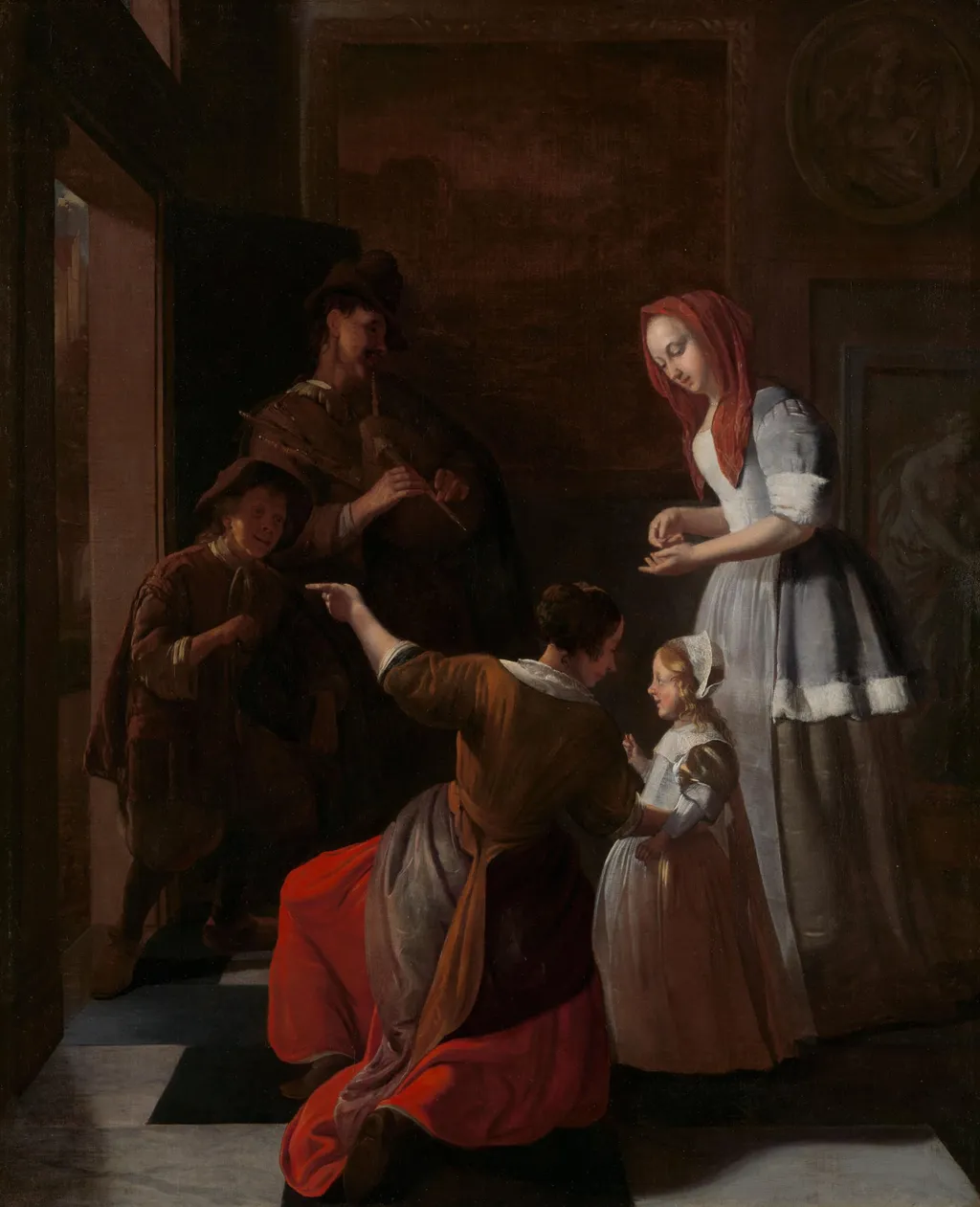
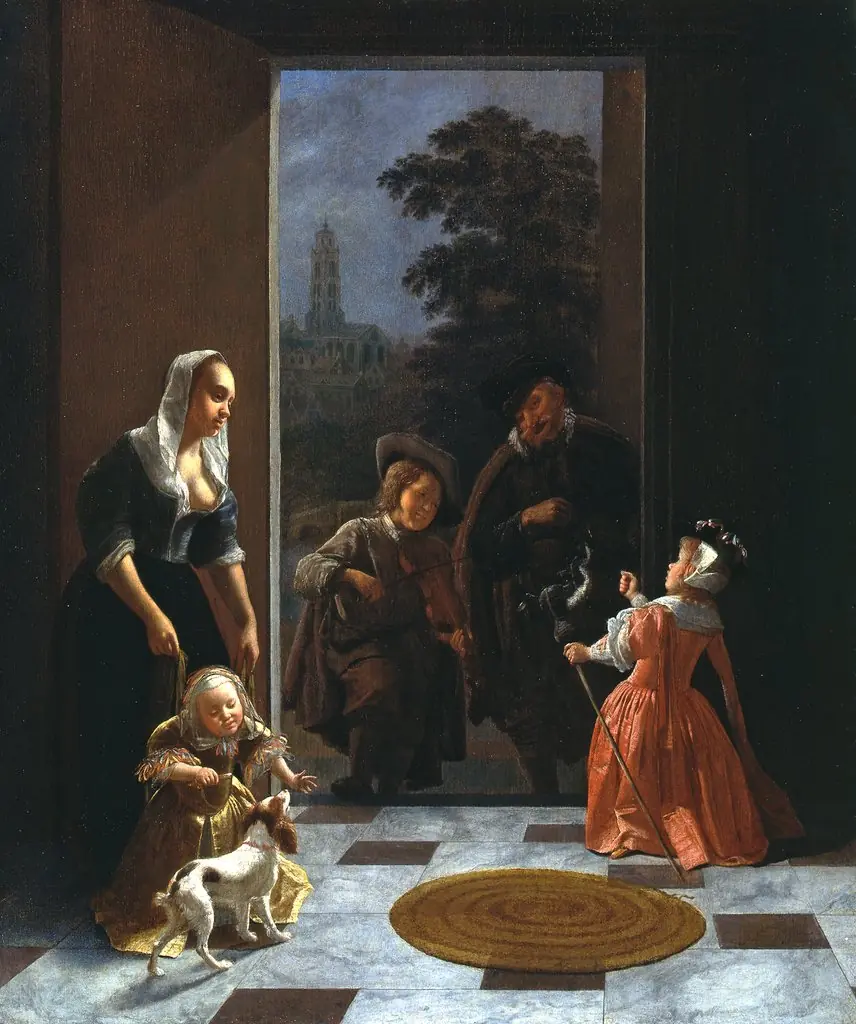
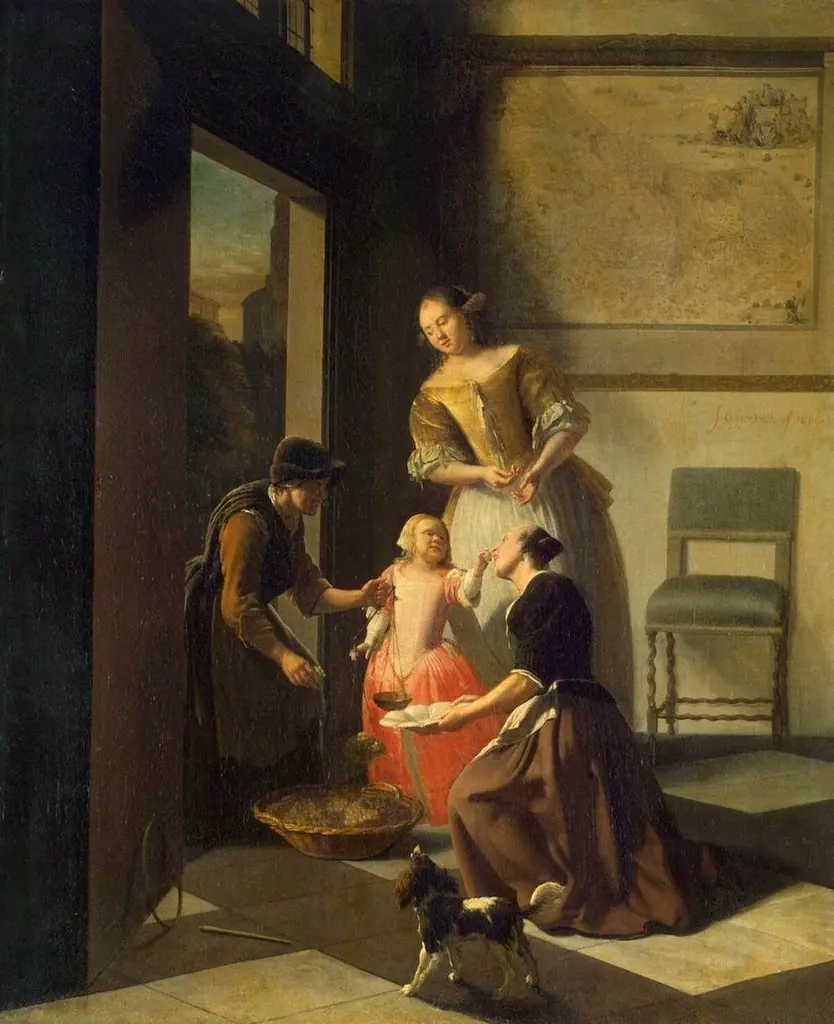
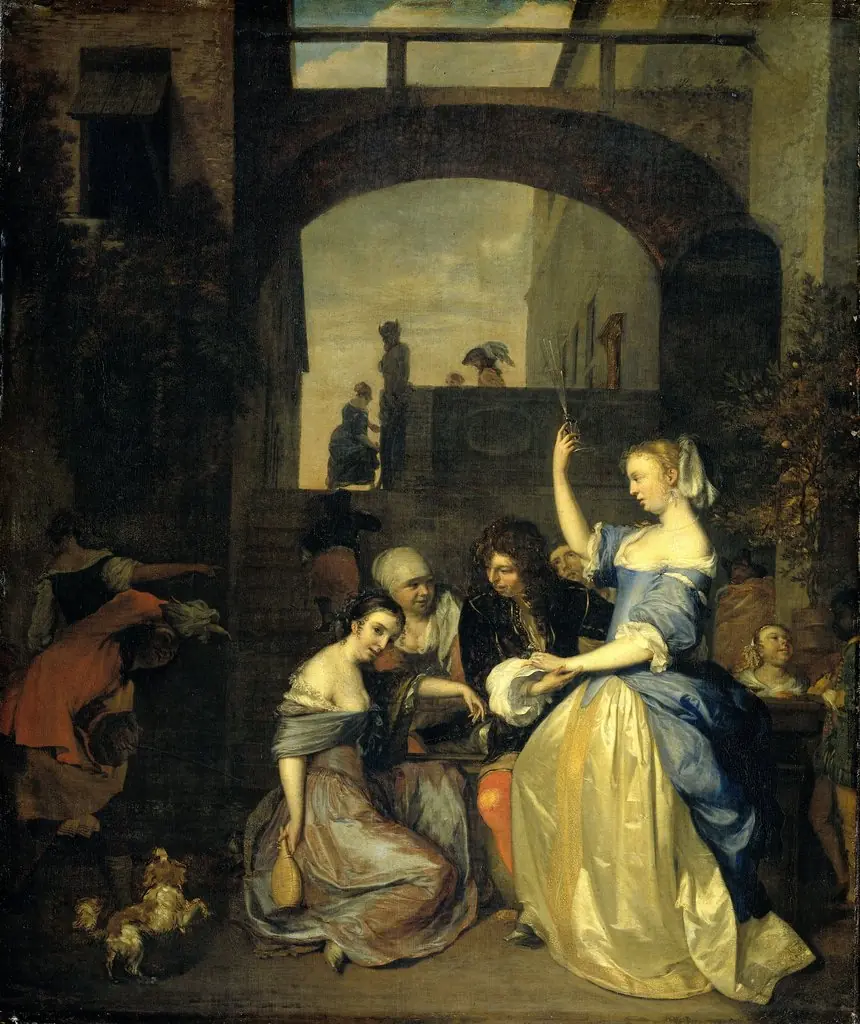
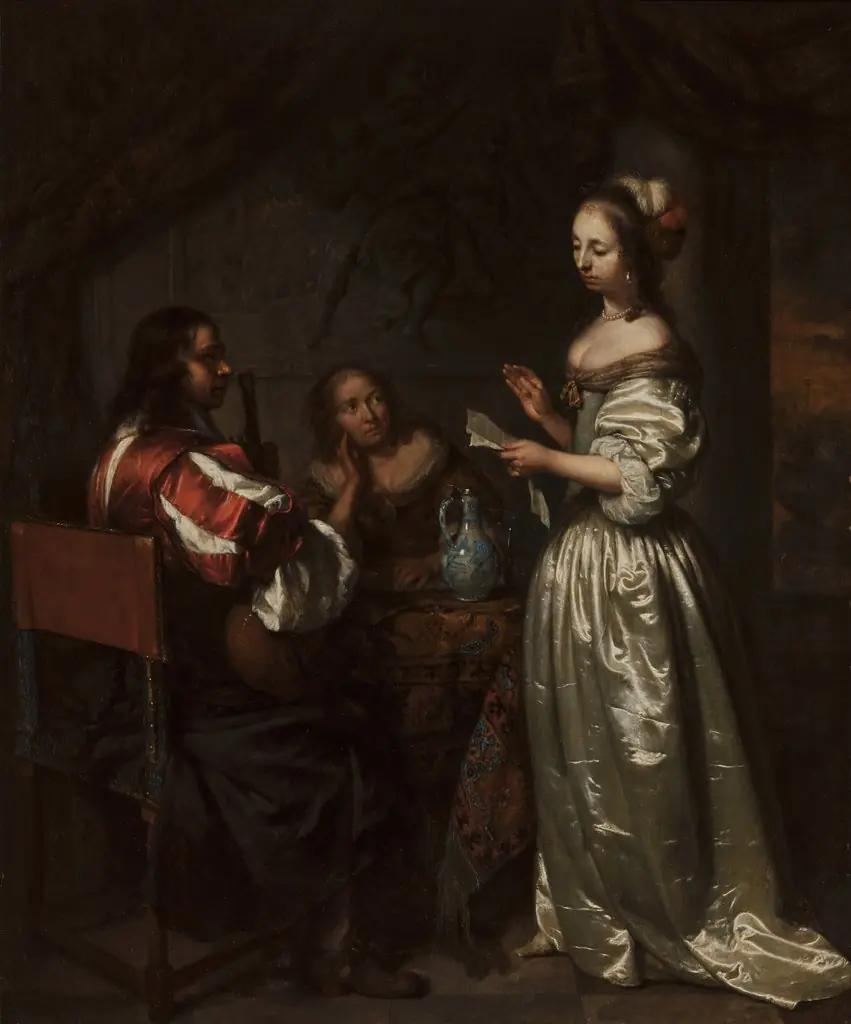
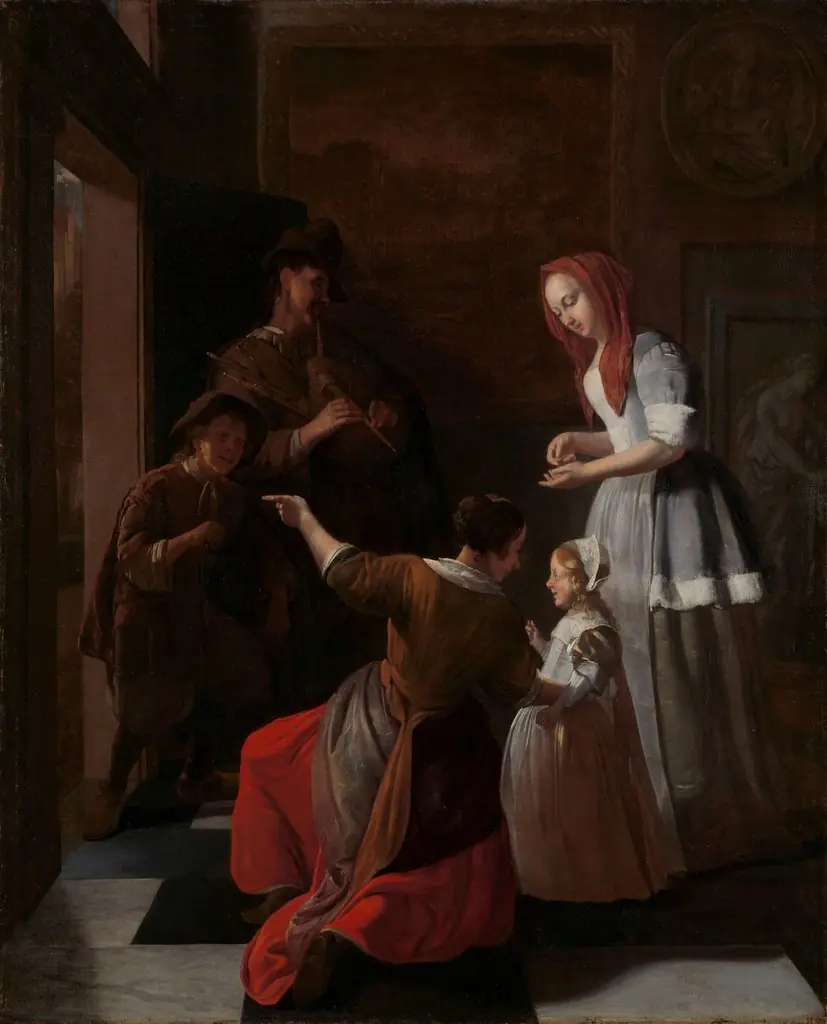
The players is an unspecified painting by the Dutch Golden Age artist Unknown. It dates from 1660 and is held in the collection of the Rijksmuseum. A domestic interior captures a brief, unremarkable encounter: two itinerant musicians perform for a family near a doorway.
About this work
Overview
The figures are arranged with quiet naturalism, their postures and glances suggesting a fleeting moment of everyday interaction.
A domestic interior captures a brief, unremarkable encounter: two itinerant musicians perform for a family near a doorway. The scene is untheatrical, devoid of ceremony, yet carefully composed. The figures are arranged with quiet naturalism, their postures and glances suggesting a fleeting moment of everyday interaction. The setting is modest, with no indication of wealth or grandeur, emphasizing the ordinary rhythm of life.
Subject & Meaning
The musicians—a bagpiper and a boy operating a hurdy-gurdy—offer music in exchange for alms. The mother, counting coins, embodies practical generosity; the maid, turned away, seems indifferent. The child watches with quiet fascination, embodying innocence drawn to sound. The landscape painting on the wall contrasts the humble scene with an idealized world, perhaps hinting at the gap between aspiration and reality.
Technique & Style
Brushwork is restrained and precise, favoring subtle tonal shifts over dramatic lighting. Figures are rendered with soft contours, their expressions understated yet distinct. The textures of fabric, wood, and skin are suggested with minimal detail, avoiding ornamentation. The composition is balanced yet informal, with diagonal lines guiding the eye from the musicians to the counting hand and the distant landscape.
History & Provenance
The painting originates from the Dutch Golden Age, likely created in the mid-17th century. It remained in private collections before entering a public museum, where it is now preserved. Its attribution to a specific artist remains uncertain, though its style aligns with genre painters of the period who focused on quiet domestic moments rather than historical or religious themes.
Context
During this era, street musicians were common in Dutch towns, often performing for small change. Their presence in art reflected a growing interest in everyday life, not just elite subjects. The inclusion of a landscape painting within the scene mirrors contemporary tastes, as such works adorned middle-class homes as symbols of refinement, even amid humble circumstances.
Legacy
This painting contributes to a broader tradition of Dutch genre art that elevated ordinary moments into subjects worthy of careful observation. Its quiet realism influenced later artists who sought to depict social nuance without sentimentality. Today, it stands as a quiet testament to the dignity found in transient, uncelebrated human interactions.
Artist & collection

 Domestic Scene
 Giacomo and Cardinal Marco, investing Andrea, Abbot of San Zeno, with his Benefice
 The Nymph of Fontainebleau
 Portrait of a Woman
 Madonna and Child with Saints in the Enclosed Garden
 Venus and Minerva
 Family Group of Four on Sofa
 Wall painting from Room H of the Villa of P. Fannius Synistor at Boscoreale