Artwork
The Sentiment of Peace: Sama Rasa, from a Rasikapriya
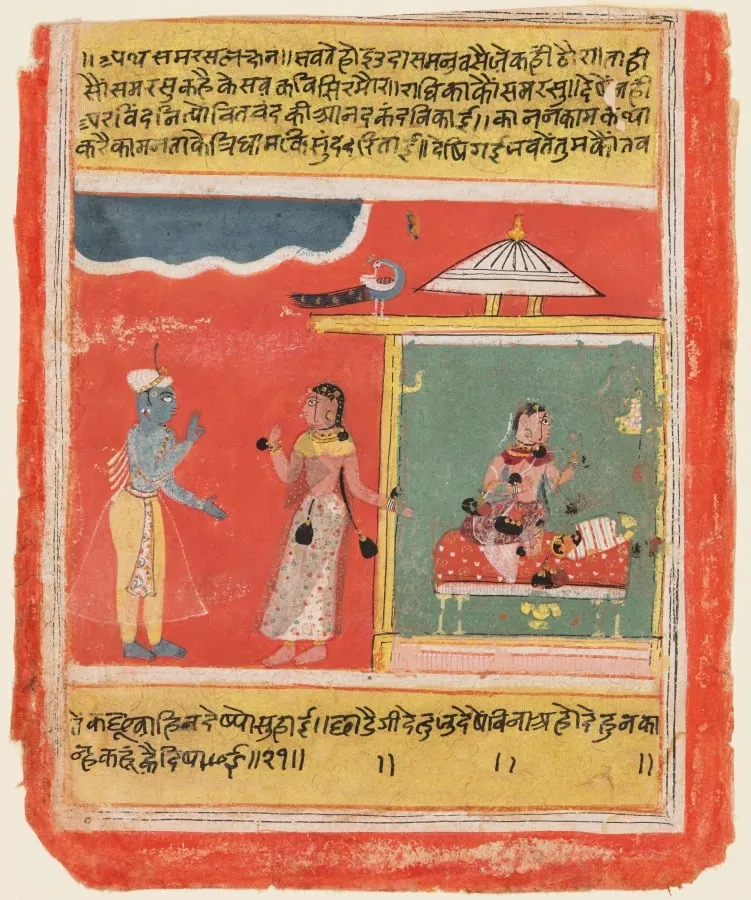
The Sentiment of Peace: Sama Rasa, from a Rasikapriya is an unspecified painting by the Baroque artist Unknown. It dates from 1634 and is held in the collection of the Cleveland Museum of Art. This painting is part of a manuscript illustrating the Rasikapriya, a Sanskrit poetic text on love and devotion.
About this work
Overview
It depicts a moment of emotional tension between a secluded heroine, her confidante, and Krishna, who has arrived as a suitor.
This painting is part of a manuscript illustrating the Rasikapriya, a Sanskrit poetic text on love and devotion. It depicts a moment of emotional tension between a secluded heroine, her confidante, and Krishna, who has arrived as a suitor. Rendered in the Malwa style of central India, the work uses a restrained palette and flattened spatial arrangement, typical of regional manuscript illustration in the late 16th to early 17th century.
Subject & Meaning
The heroine, withdrawn and averted, embodies longing, while her companion gestures toward her in silent appeal to Krishna. His presence, marked by a Mughal-style turban and composed gesture, suggests both recognition and reluctant acknowledgment of her sorrow. The scene translates poetic metaphor into visual narrative, where emotional distance becomes a spiritual and romantic threshold requiring intervention.
Technique & Style
The composition avoids perspective and shading, relying on flat planes of soft color to define space and form. Figures are outlined with fine brushwork, and backgrounds remain unadorned, focusing attention on interpersonal dynamics. The simplicity of the palette—predominantly earth tones and muted hues—reflects the Malwa school’s preference for lyrical restraint over ornamental excess.
History & Provenance
Created in the Malwa region of central India, likely between 1600 and 1620, the painting originated in a manuscript commissioned for a courtly or devotional audience. Its style blends indigenous Rajput traditions with Mughal influences, indicating cultural exchange in regional courts. The work survives as part of a larger illustrated series, now dispersed across collections.
Context
The Rasikapriya was widely illustrated across north and central India, serving as a visual guide to bhakti and courtly love. In Malwa, artists adapted Mughal elements—such as clothing and posture—while retaining local compositional norms. This synthesis reflects the region’s position between imperial centers and regional traditions, where artistic identity was negotiated through subtle hybridity.
Legacy
The painting exemplifies how regional schools preserved distinct aesthetics amid broader stylistic trends. Its quiet emotional intensity and formal simplicity influenced later illustrated manuscripts in central India. Though less celebrated than Mughal or Pahari works, Malwa illustrations like this one remain vital for understanding the diversity of early modern Indian painting traditions.
Artist & collection

 Domestic Scene
 Giacomo and Cardinal Marco, investing Andrea, Abbot of San Zeno, with his Benefice
 The Nymph of Fontainebleau
 Portrait of a Woman
 Madonna and Child with Saints in the Enclosed Garden
 Venus and Minerva
 Family Group of Four on Sofa
 Wall painting from Room H of the Villa of P. Fannius Synistor at Boscoreale
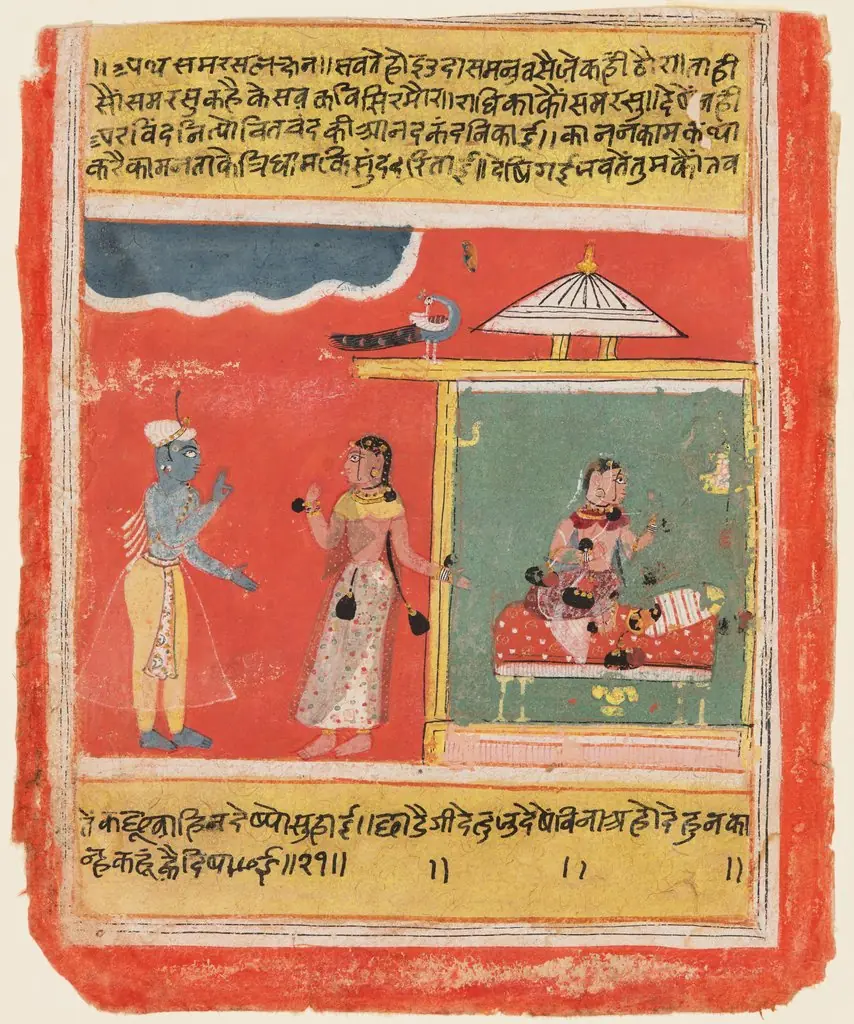 The Sentiment of Peace: Sama Rasa, from a Rasikapriya
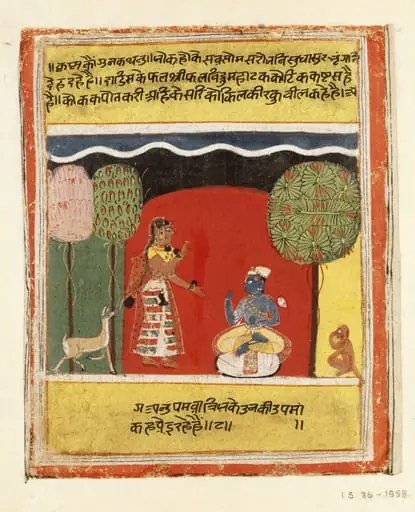 Radha and Krishna
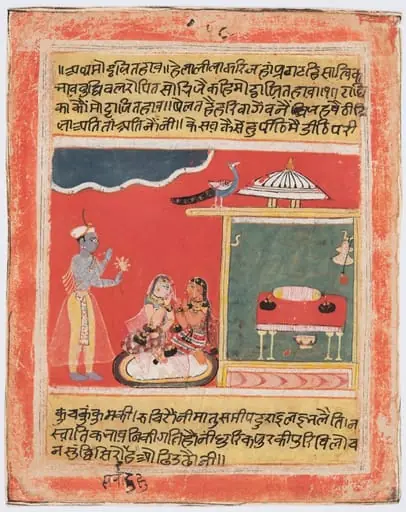 Krishna and Radha Avoid Embarrassment: Mottaita Bhava, from a Rasikapriya
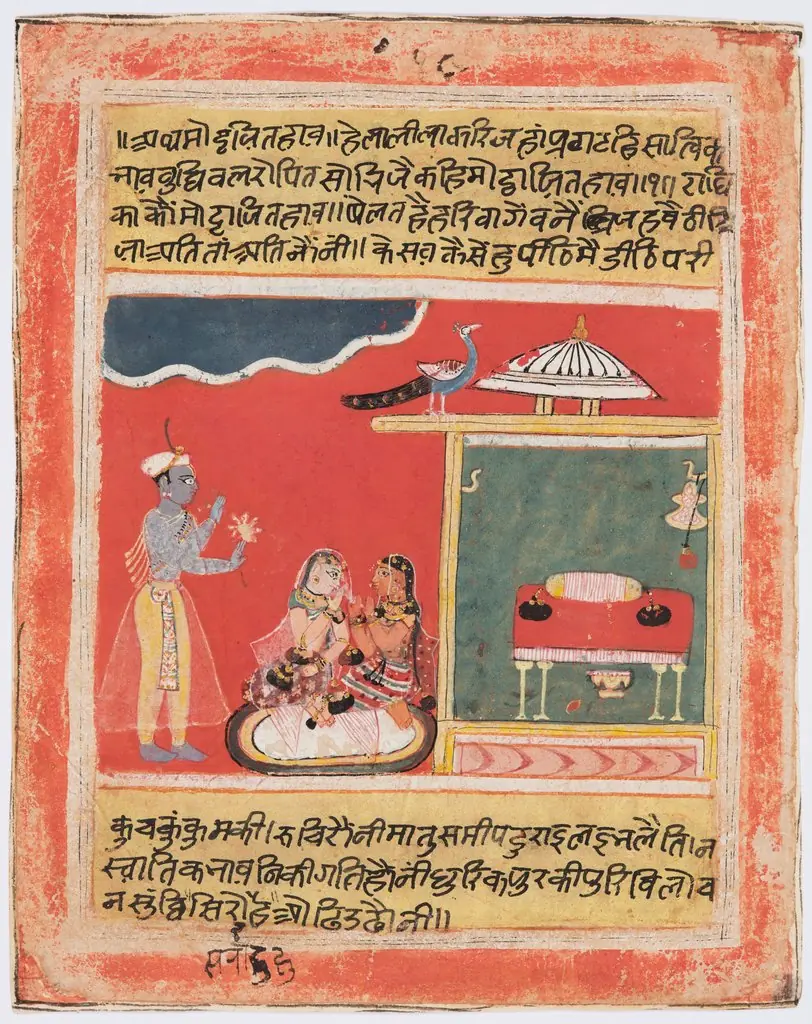 Krishna and Radha Avoid Embarrassment: Mottaita Bhava, from a Rasikapriya
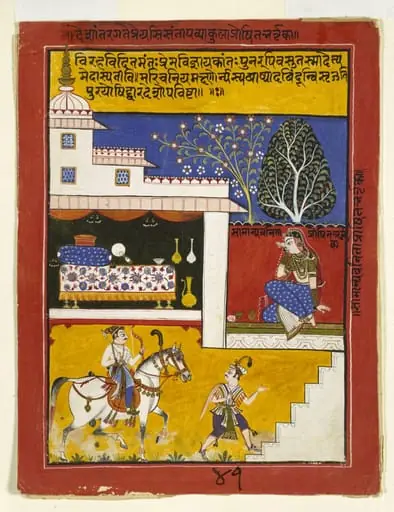 A deceitful lady
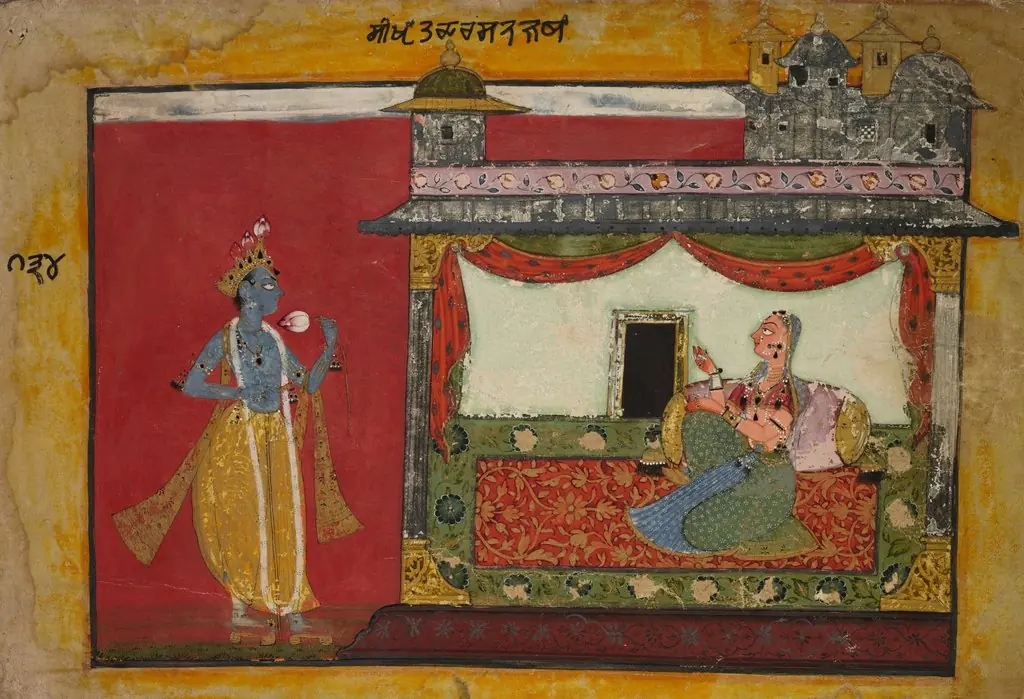 The Approach of Krishna. Page from a Rasamanjari
 The Approach of Krishna. Page from a Rasamanjari