Artwork
The Vedic god Yama, the god of death and guardian of the south
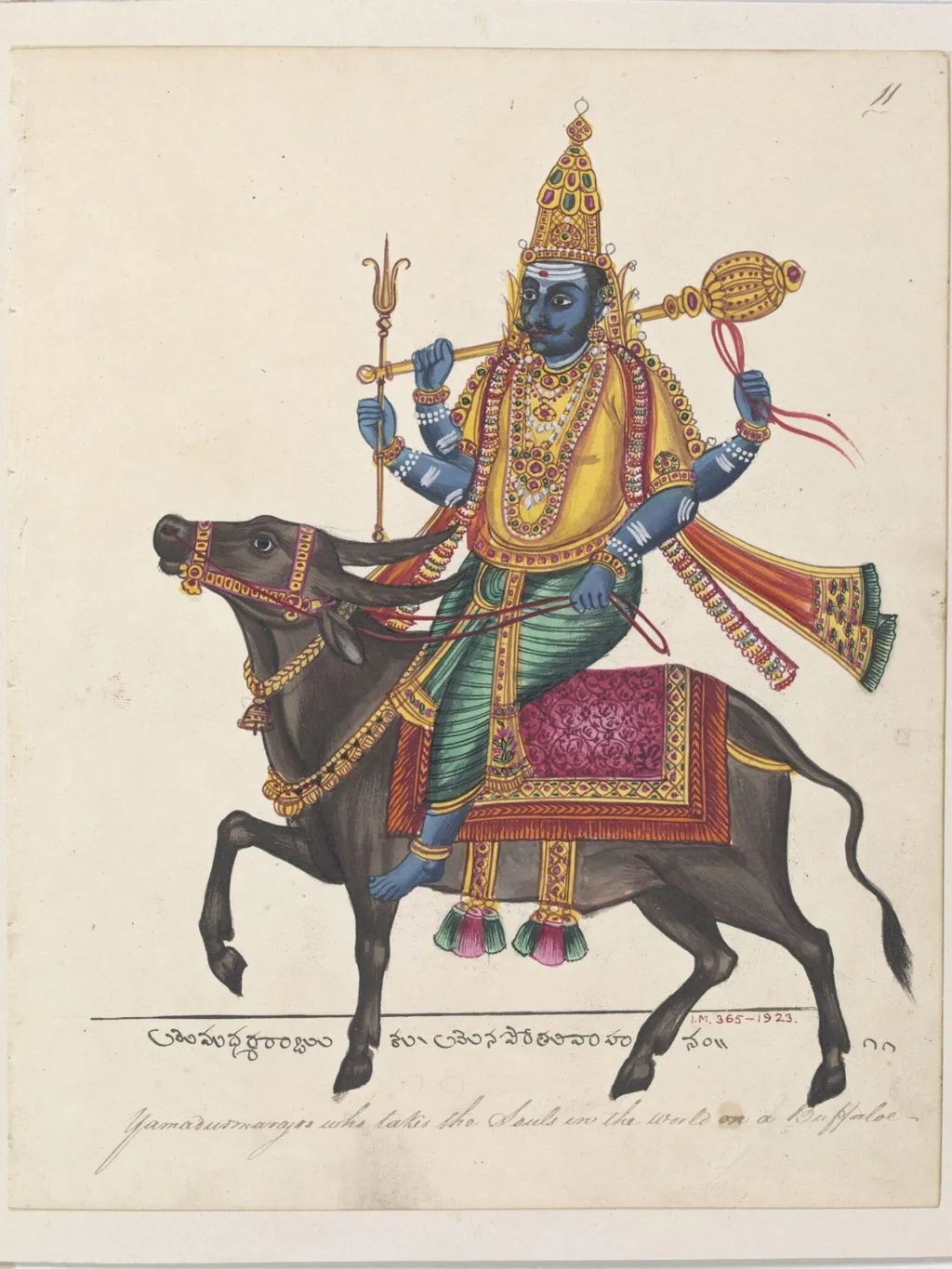
The Vedic god Yama, the god of death and guardian of the south is a paint painting by the Patna School of Painting artist Unknown. It dates from 1820 and is held in the collection of the Victoria and Albert Museum. This painting portrays Yama, the Vedic deity associated with death and the southern direction, mounted on a black buffalo.
About this work
Overview
His four arms hold symbolic implements, and his dark-blue skin is marked with a Saivite tilaka, distinguishing his spiritual lineage.
This painting portrays Yama, the Vedic deity associated with death and the southern direction, mounted on a black buffalo. Rendered in vivid pigments on paper, the composition emphasizes his divine authority through bold lines and saturated hues. His four arms hold symbolic implements, and his dark-blue skin is marked with a Saivite tilaka, distinguishing his spiritual lineage. The scene reflects traditional Indian iconography adapted for devotional or instructional use.
Subject & Meaning
Yama is depicted as the impartial judge of the dead, guiding souls to their afterlife destination. The trident signifies his power over life and death, the mace represents justice, and the noose symbolizes the inescapable nature of fate. His position atop the buffalo—a creature linked to the earth and the underworld—reinforces his role as guardian of the south, the direction traditionally associated with the realm of the departed.
Technique & Style
Executed in a vibrant, flat-color style typical of regional Indian manuscript painting, the work uses mineral pigments to achieve intense blues, yellows, and greens. Gold leaf highlights adorn his crown and garments, adding luminosity without depth. The buffalo’s harness is detailed with ornamental patterns, and the figure’s posture is rigidly frontal, prioritizing symbolic clarity over naturalism. The brushwork is precise, reflecting skilled artisanal training.
History & Provenance
The painting likely originated in northern or central India during the late Mughal or early Rajput period, when devotional imagery was commonly produced for temple or royal collections. Its paper support and stylistic features align with 18th- to 19th-century workshop practices. It entered the Victoria and Albert Museum’s collection through documented acquisitions of South Asian art, though its exact provenance prior to museum custody remains unrecorded.
Context
This image belongs to a broader tradition of Hindu iconographic painting used in ritual, education, and courtly display. During this era, deities were consistently rendered with standardized attributes to ensure immediate recognition. Yama’s depiction here reflects both religious texts and local artistic conventions, blending theological symbolism with regional aesthetics favored by patrons seeking to affirm spiritual order through visual culture.
Legacy
The painting preserves a visual language that continues to inform contemporary representations of Yama in South Asian art and performance. Its adherence to classical iconography underscores the endurance of Vedic cosmology in regional traditions. As part of museum collections, it serves as a reference for scholars studying the transmission of religious imagery across centuries and communities in the Indian subcontinent.
Artist & collection

 Domestic Scene
 Giacomo and Cardinal Marco, investing Andrea, Abbot of San Zeno, with his Benefice
 The Nymph of Fontainebleau
 Portrait of a Woman
 Madonna and Child with Saints in the Enclosed Garden
 Venus and Minerva
 Family Group of Four on Sofa
 Wall painting from Room H of the Villa of P. Fannius Synistor at Boscoreale
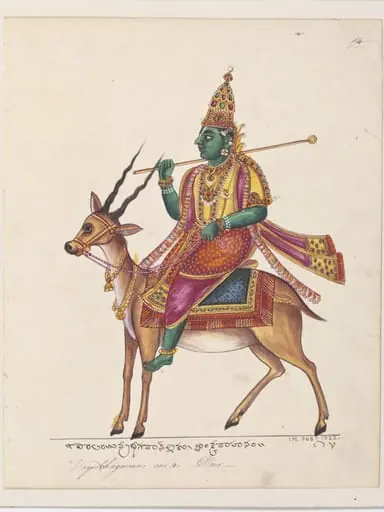 Vayu, the god of the wind and guardian of the north-west, riding on a deer.
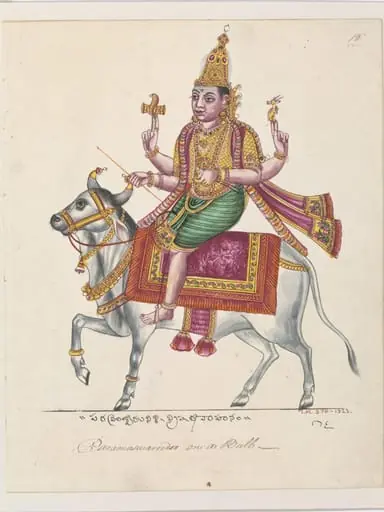 Mahadeva in his form as Isana, guardian of the north-east, riding on a white bull
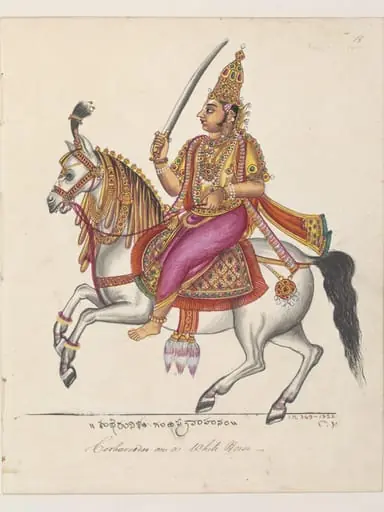 Kubera, the god of wealth and guardian of the north, riding on a horse
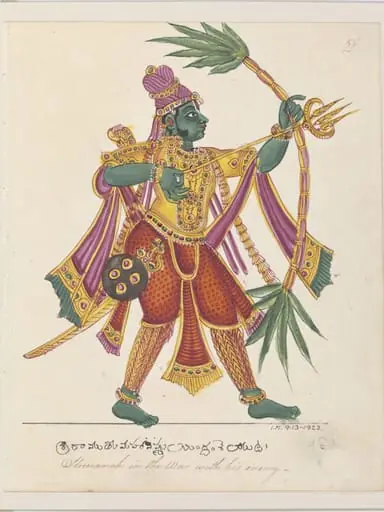 A green-skinned warrior
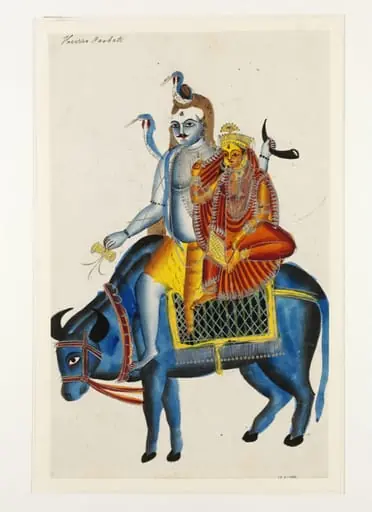 Shiva, Parvati and Nandi
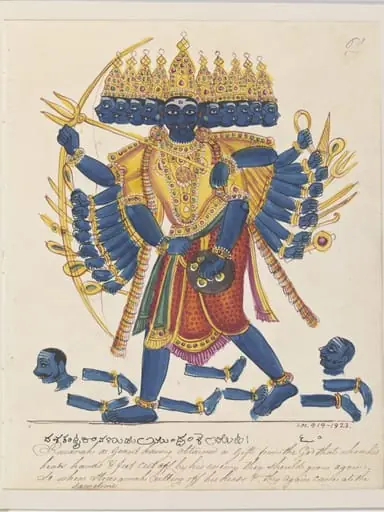 Ravana, King of Lanka, with bow
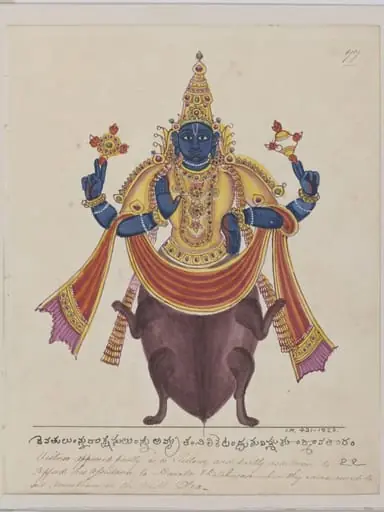 Kurma
Kurma