Artwork
Shiva, Parvati and Nandi
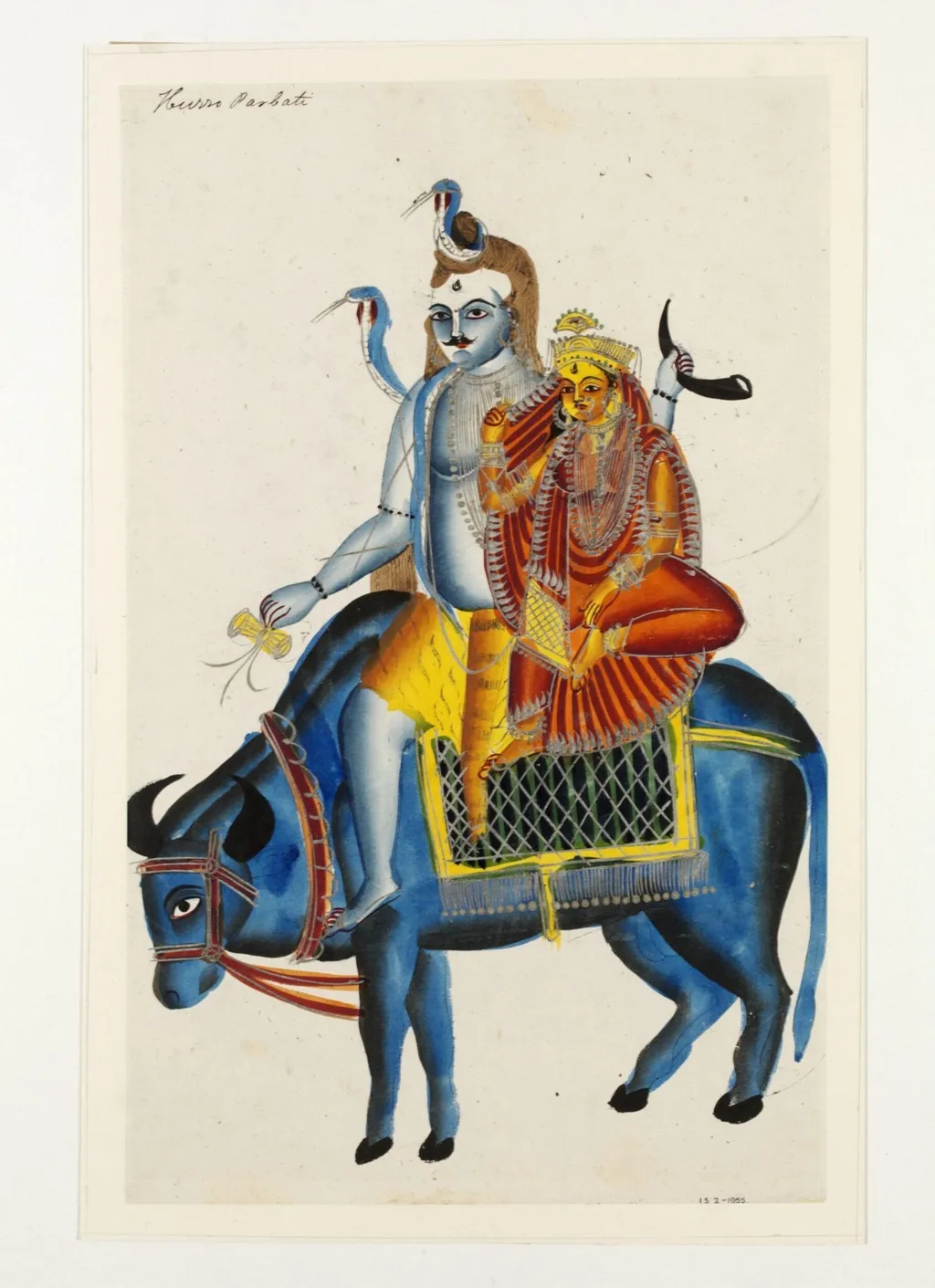
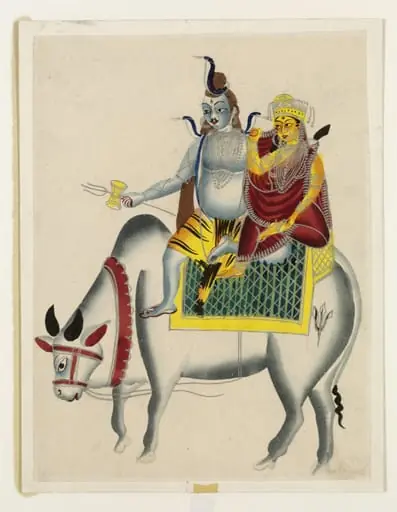
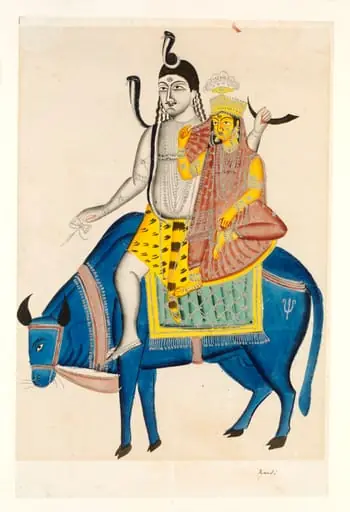
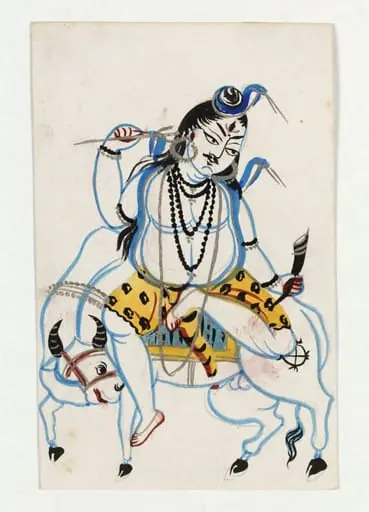
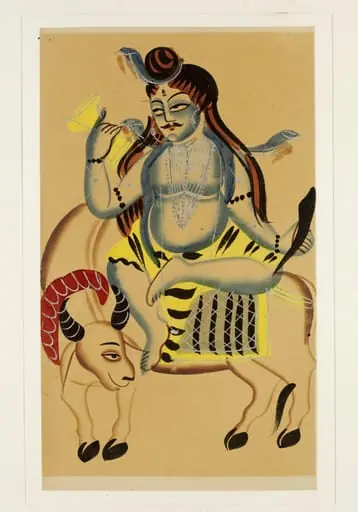
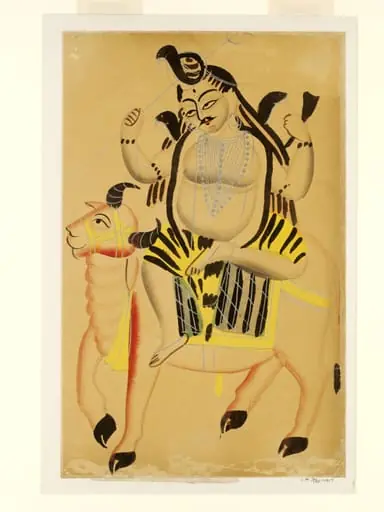
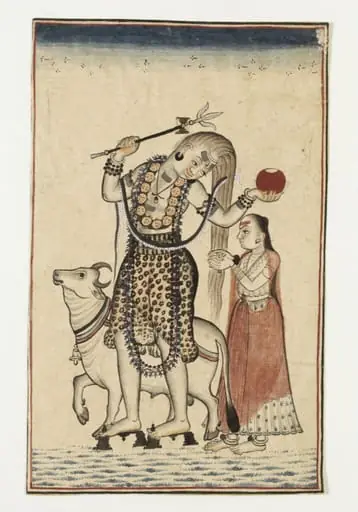
Shiva, Parvati and Nandi is a paint painting by the Impressionist artist Unknown. It dates from 1865 and is held in the collection of the Victoria and Albert Museum. Created in 1865, this work portrays the Hindu deities Shiva and Parvati astride the bull Nandi.
About this work
Overview
Created in 1865, this work portrays the Hindu deities Shiva and Parvati astride the bull Nandi. Executed in opaque watercolour and tin alloy on paper, the composition is characteristic of the Kalighat school that flourished in 19th‑century Calcutta, noted for its vivid palette and brisk brushwork.
Subject & Meaning
Shiva, shown with a trident and a small drum, rides the blue‑toned Nandi, while Parvati, adorned in a red sari, gold jewellery and a crown, sits beside him. The pairing reflects a familiar mythological scene in which the divine couple travel together, embodying themes of marital unity and divine guardianship.
Technique & Style
The artist employed opaque watercolour to achieve saturated hues, complemented by tin alloy accents that enhance the outlines. Bold contours and simplified forms typify the Kalighat aesthetic, while the intricate detailing of Parvati’s jewellery and the bull’s harness demonstrate a balance between rapid execution and careful ornamentation.
History & Provenance
The painting entered the Victoria and Albert Museum’s collection in 1955, acquired from the private holdings of Mrs. H. Wagner. Its provenance traces back to the commercial art market of colonial Calcutta, where Kalighat prints were produced for a growing urban clientele.
Context
Emerging under British colonial rule, Kalighat painting merged traditional Indian iconography with a modern, accessible visual language. Works such as this illustrate how local artists negotiated cultural identity, producing images that resonated both with native devotional practices and the tastes of a colonial audience.
Artist & collection

 Domestic Scene
 Giacomo and Cardinal Marco, investing Andrea, Abbot of San Zeno, with his Benefice
 The Nymph of Fontainebleau
 Portrait of a Woman
 Madonna and Child with Saints in the Enclosed Garden
 Venus and Minerva
 Family Group of Four on Sofa
 Wall painting from Room H of the Villa of P. Fannius Synistor at Boscoreale