Artwork
The White Path Between Two Rivers
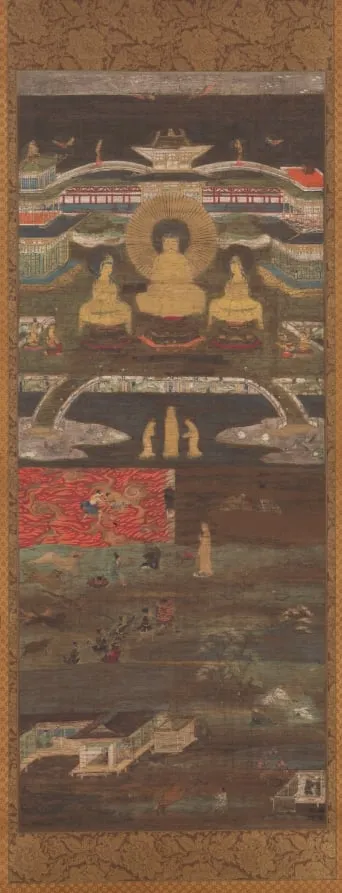
The White Path Between Two Rivers is an unspecified painting by Unknown. It dates from 1204 and is held in the collection of the Cleveland Museum of Art.
About this work
You see a narrow white path winding between two rivers—one of fire, one of water—while tiny figures walk toward a golden Buddha at the top.
You see a narrow white path winding between two rivers—one of fire, one of water—while tiny figures walk toward a golden Buddha at the top.
This painting isn’t just a scene. It’s a map of a Buddhist story about choosing the hard but right way to escape endless rebirth. The rivers stand for anger and desire, and the path is the only way out. The artist never signed it, so we don’t know who made it or what paint they used.
To see more art like this, look up japan, kamakura period (1185–1333).
Overview
The work depicts a slender white trail that snakes between two contrasting streams—one ablaze, the other flowing with water—while diminutive figures advance toward a luminous figure of Amida Buddha positioned at the upper edge. The composition functions as a visual allegory rather than a literal landscape, guiding the viewer through a symbolic journey.
Subject & Meaning
Based on a teaching attributed to the 7th‑century Chinese monk Shandao, the scene illustrates the arduous passage to Amida’s Pure Land. The fiery river represents wrathful passions, the watery river embodies craving, and the narrow path offers the sole route to transcend the six realms of samsara, including heavens, hells, and the various worldly existences.
Technique & Style
Executed in traditional East Asian brushwork, the painting employs a limited palette of stark white against dark backgrounds to emphasize the path’s fragility. The figures are rendered in miniature, creating a sense of scale that underscores the difficulty of the journey. The uppermost Buddha is depicted in golden tones, highlighting his transcendent status.
History & Provenance
The artist’s identity remains unknown, as no signature or documented workshop marks appear on the surface. The medium is presumed to be ink and pigment on silk or paper, typical of the Kamakura period (1185–1333). The work’s provenance traces through private collections before entering its current institutional setting.
Context
During the Kamakura era, Japanese Buddhism emphasized devotion to Amida and the aspiration for rebirth in the Western Paradise. Visual representations of doctrinal concepts, such as this map of the path between fire and water, served both didactic and meditative purposes, reinforcing the moral choice of following the difficult but righteous way.
Artist & collection

 Domestic Scene
 Giacomo and Cardinal Marco, investing Andrea, Abbot of San Zeno, with his Benefice
 The Nymph of Fontainebleau
 Portrait of a Woman
 Madonna and Child with Saints in the Enclosed Garden
 Venus and Minerva
 Family Group of Four on Sofa
 Wall painting from Room H of the Villa of P. Fannius Synistor at Boscoreale
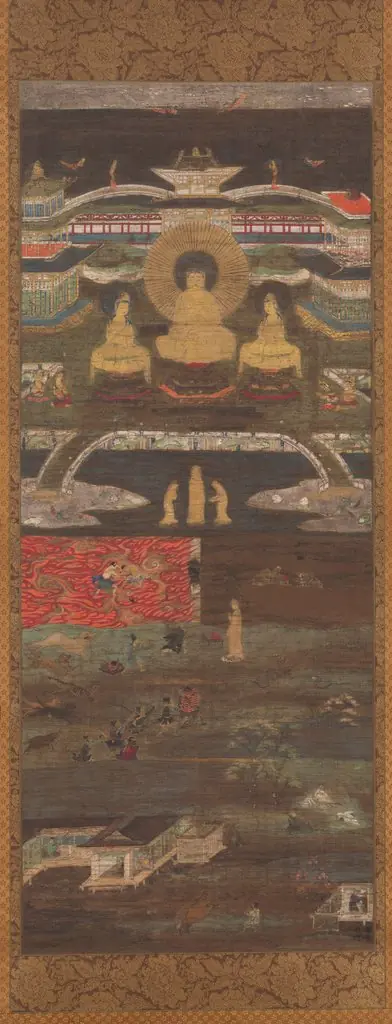 The White Path Between Two Rivers
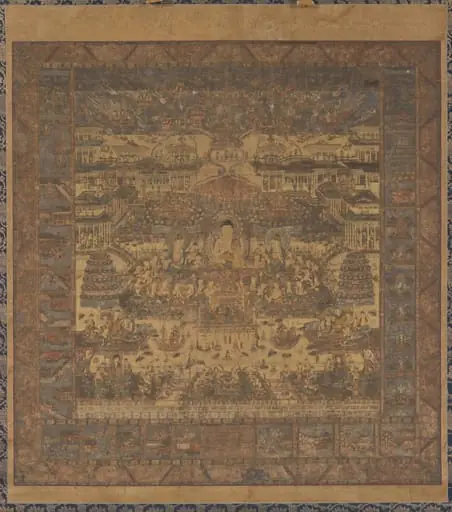 Taima Mandala
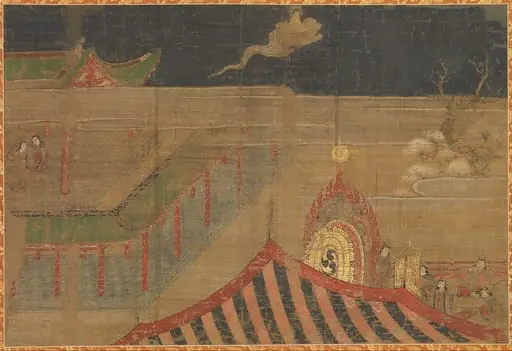 仏伝図|Scene from the Life of the Buddha
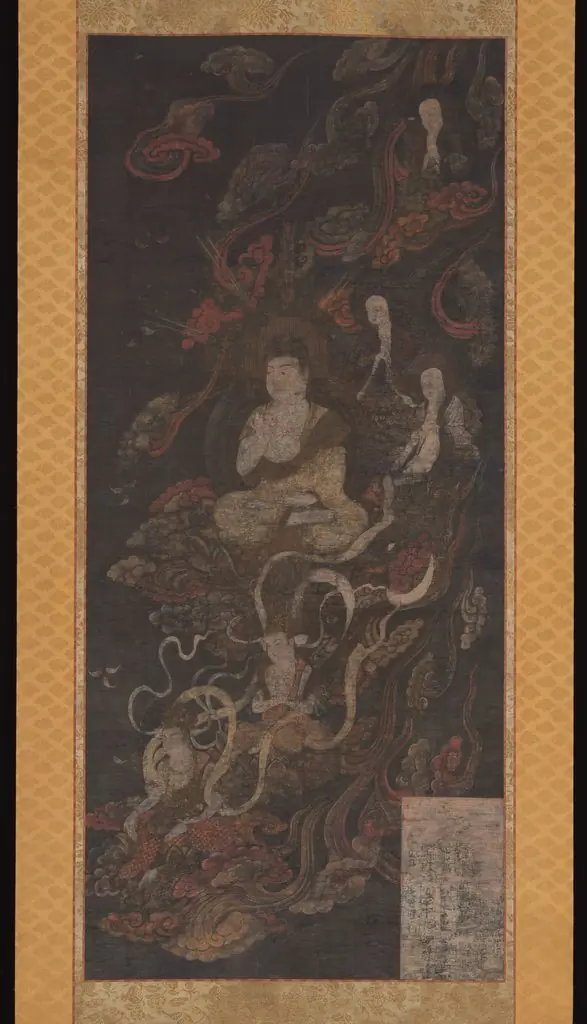 Welcoming Descent of Amida, the Buddha of Infinite Light, and His Holy Retinue
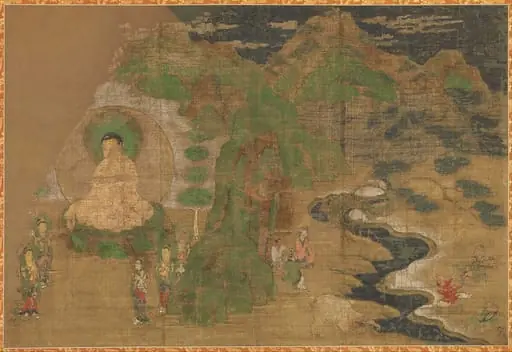 仏伝図|Scene from the Life of the Buddha
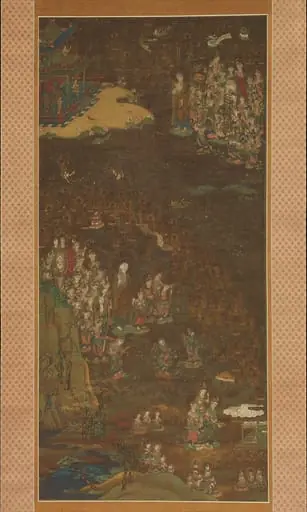 迎接曼荼羅図|Descent and Return of Amida to Western Paradise with a Believer's Soul (Gōshō mandara)
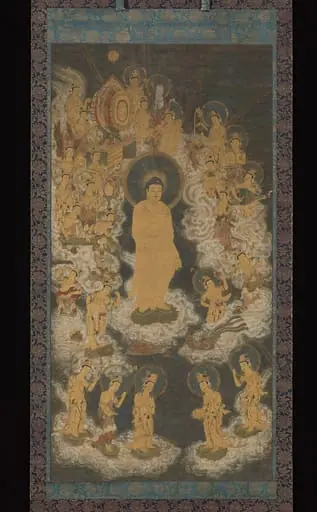 阿弥陀聖衆来迎図 |Welcoming Descent of Amida and Bodhisattvas