Artwork
Taima Mandala
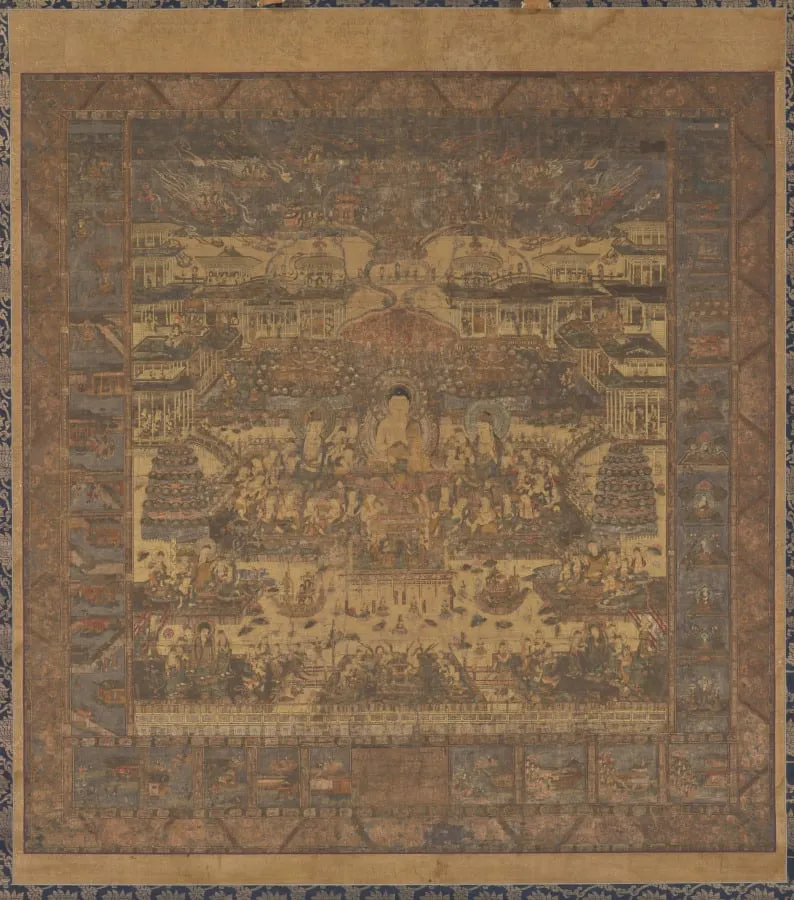
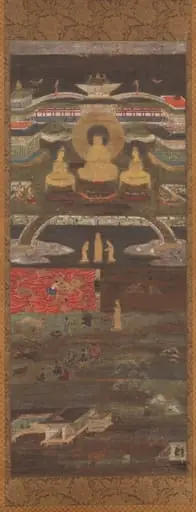
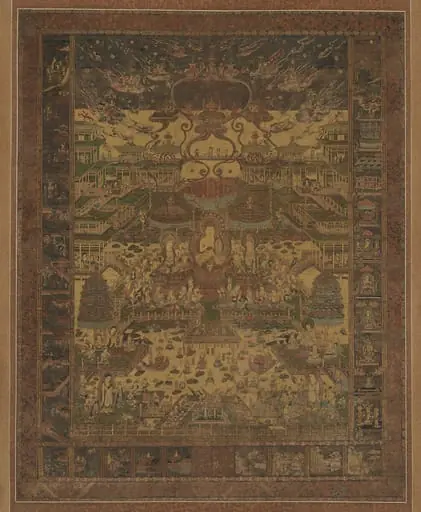
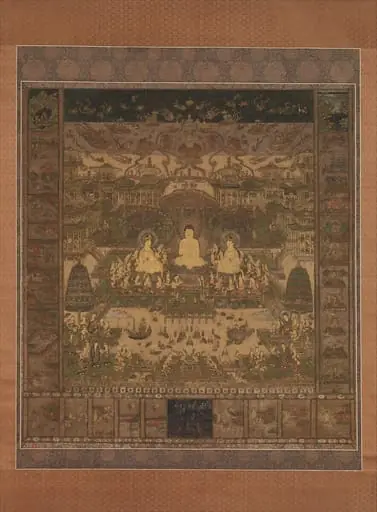
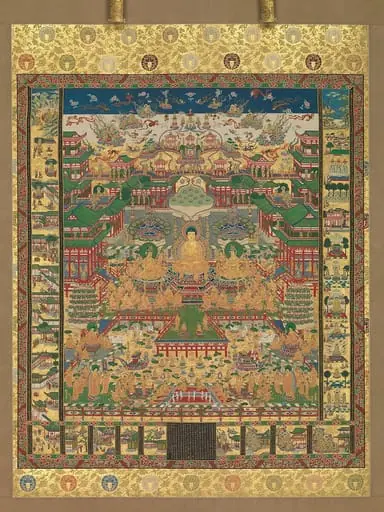
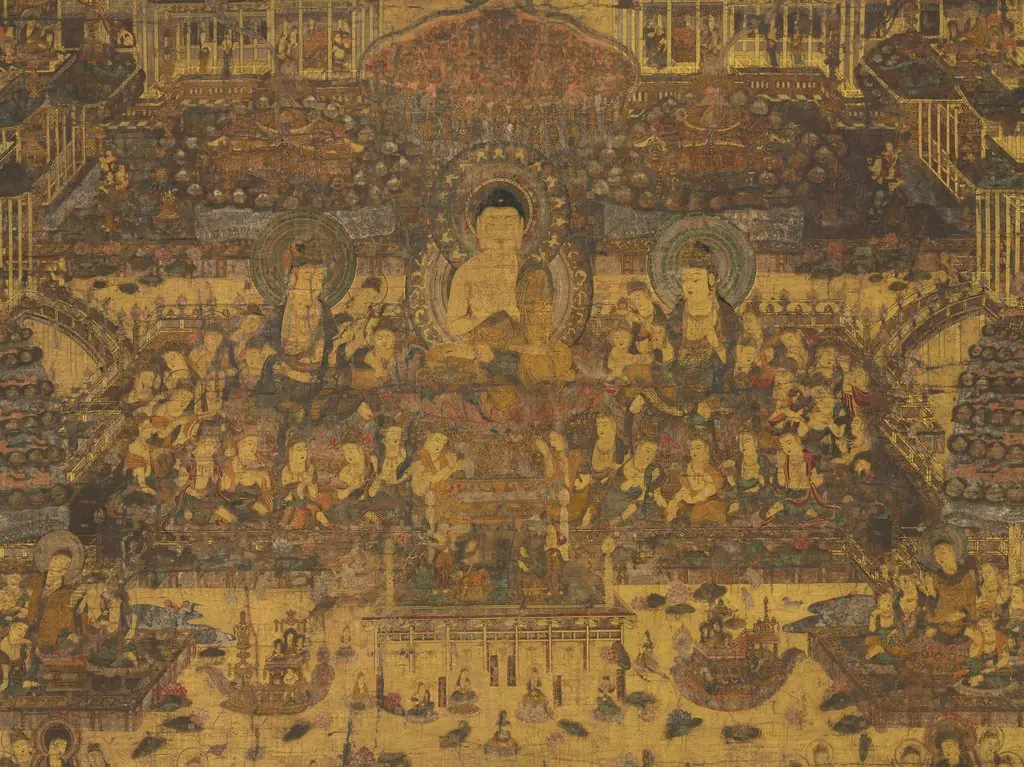
Taima Mandala is an unspecified painting by Unknown. It dates from 1304 and is held in the collection of the Cleveland Museum of Art. This painting is a Kamakura-period reproduction of an 8th-century textile mandala originally housed at Taimadera temple.
About this work
It was used to teach meditation—people would imagine themselves inside the palace to feel closer to the Buddha.
You see a large, colorful map of a heavenly palace floating on clouds. Tiny figures kneel before a golden Buddha at the center. Stories from a queen’s life unfold in side panels like a comic strip.
This painting is a copy of an 8th-century woven tapestry. It was used to teach meditation—people would imagine themselves inside the palace to feel closer to the Buddha.
Look up more works from the subject: japan, kamakura period (1185–1333).
Overview
This painting is a Kamakura-period reproduction of an 8th-century textile mandala originally housed at Taimadera temple. It serves as a visual guide for Pure Land Buddhist meditation, translating sacred scripture into a detailed, structured image. The composition organizes spiritual teachings into distinct zones, guiding viewers through narrative and symbolic elements to aid contemplative practice.
Subject & Meaning
The central image depicts Amida Buddha’s Pure Land, a celestial realm described in the Contemplation Sutra. To the left, Queen Vaidehi meets Shakyamuni Buddha, who instructs her in visualization techniques. To the right, scenes of the Pure Land’s splendors—palaces, trees, and celestial beings—illustrate what the meditator should envision. The lower register outlines nine tiers of rebirth, reflecting varying degrees of spiritual attainment within the Pure Land.
Technique & Style
Executed in mineral pigments and gold leaf on silk, the painting employs rich color and fine line work to distinguish sacred space from earthly narrative. Figures are rendered with delicate precision, while architectural elements and natural forms are stylized to evoke transcendence. The layout follows a hierarchical, compartmentalized structure, typical of medieval Japanese devotional art designed for focused meditation.
History & Provenance
The original textile mandala, dating to the Nara period, was preserved at Taimadera temple. This painted version, created during the Kamakura period, reflects the growing popularity of Pure Land Buddhism among lay practitioners. As a devotional aid, it was likely used in temple rituals or private practice, preserving the iconography of the earlier textile while adapting it for broader accessibility.
Context
During the Kamakura period, Pure Land Buddhism gained widespread appeal due to its emphasis on accessible salvation through faith and visualization. This mandala emerged in a climate where textual study gave way to devotional imagery, allowing non-clerical followers to engage with complex doctrines through visual meditation. Similar works reflect a broader trend of simplifying esoteric teachings for lay audiences.
Legacy
The Taima Mandala became a canonical model for Pure Land visualization in Japan, influencing later painted and printed versions across centuries. Its structured composition set a precedent for how sacred narratives could be spatially organized to guide meditation. Though the original textile is lost, this painted copy ensured the survival of its iconographic language within Japanese Buddhist practice.
Artist & collection

 Domestic Scene
 Giacomo and Cardinal Marco, investing Andrea, Abbot of San Zeno, with his Benefice
 The Nymph of Fontainebleau
 Portrait of a Woman
 Madonna and Child with Saints in the Enclosed Garden
 Venus and Minerva
 Family Group of Four on Sofa
 Wall painting from Room H of the Villa of P. Fannius Synistor at Boscoreale