Artwork
Tiger Hunt of Raja Ram Singh II
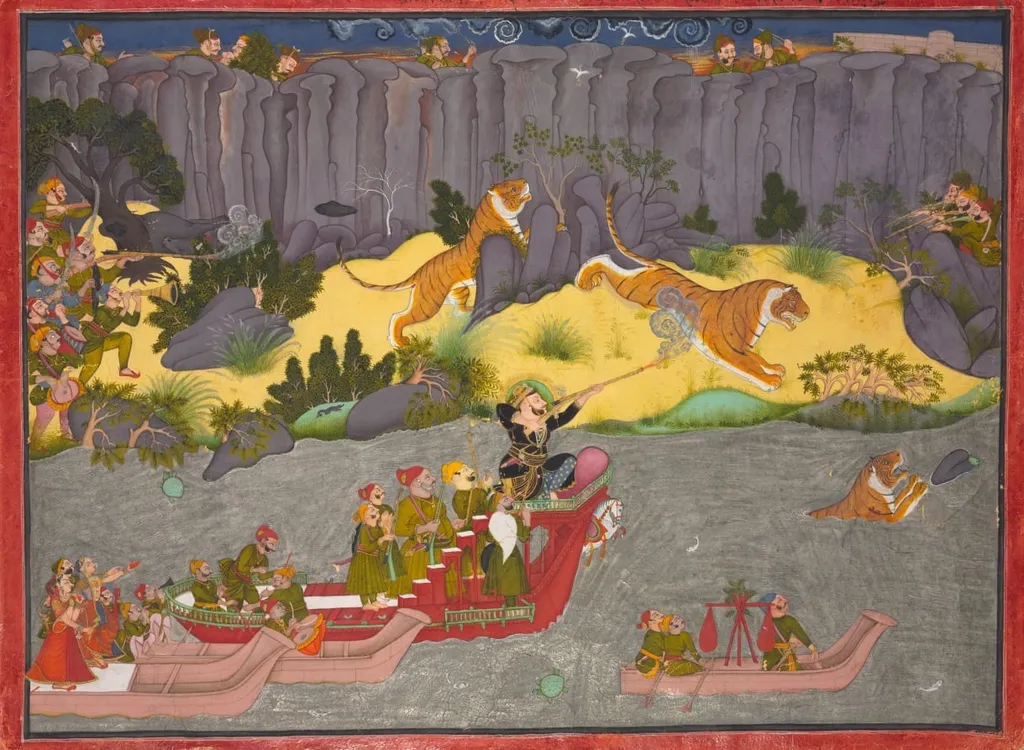
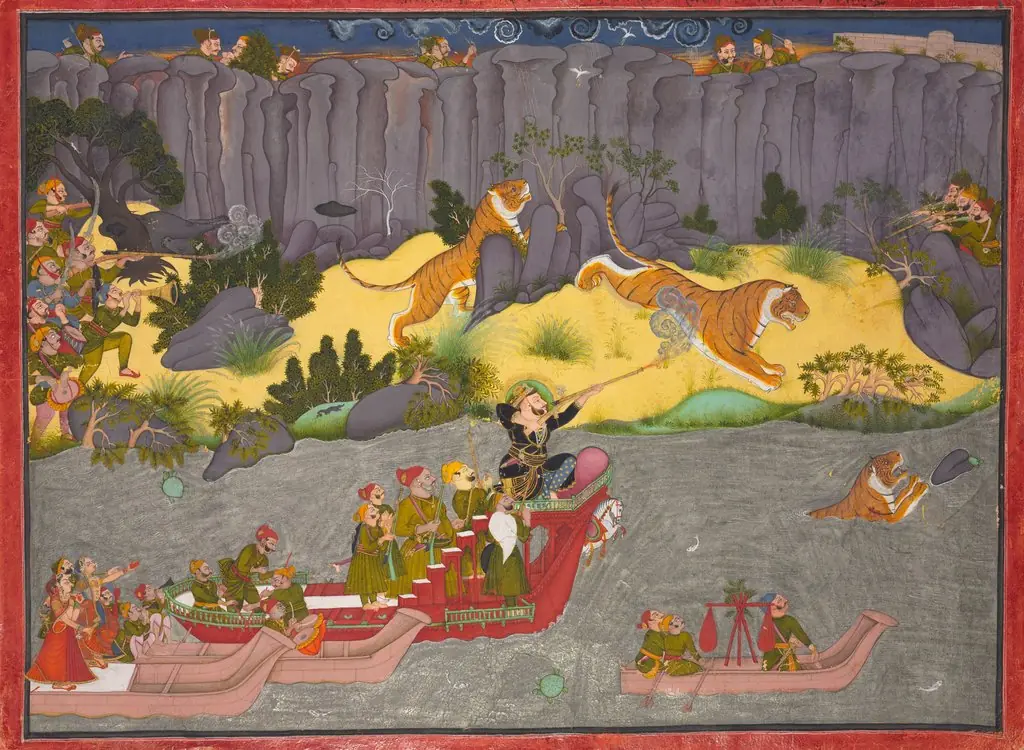
Tiger Hunt of Raja Ram Singh II is an unspecified painting by the Patna School of Painting artist Unknown. It dates from 1835 and is held in the collection of the Cleveland Museum of Art. This 19th-century Rajput painting depicts a dynamic tiger hunt in a single scene, showcasing multiple moments in sequence.
About this work
Overview
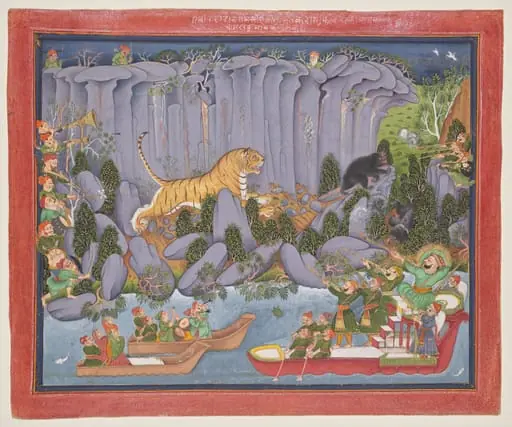
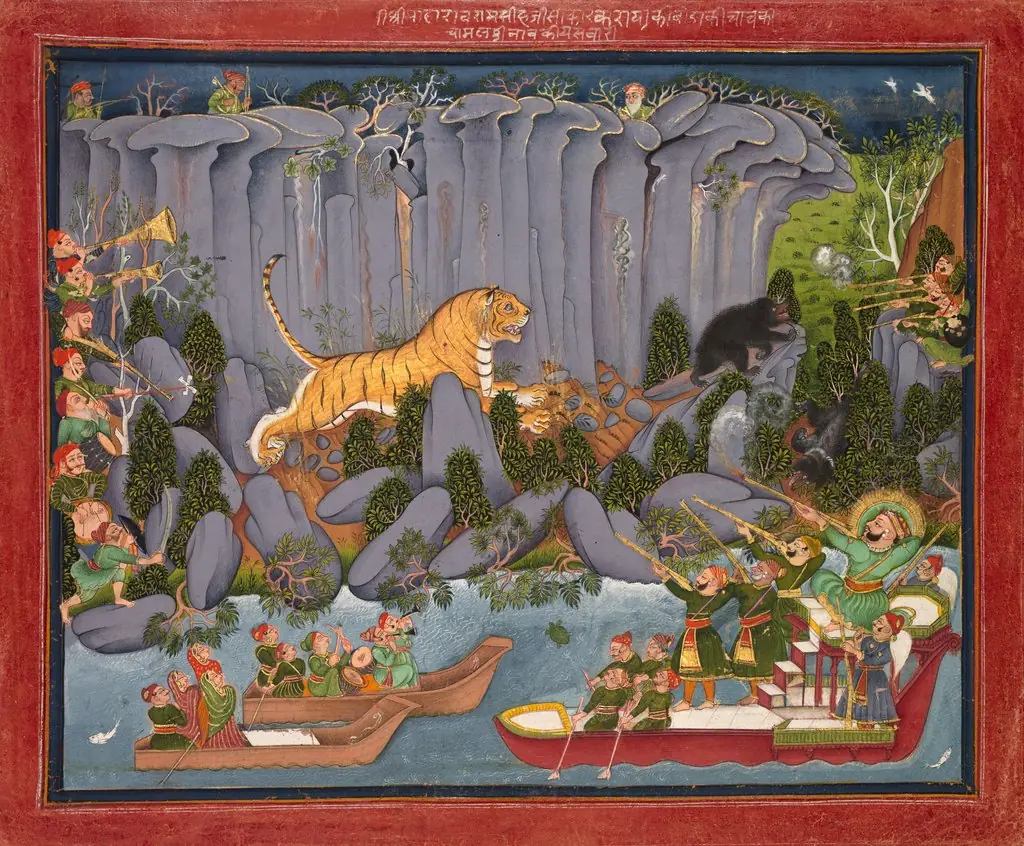
This 19th-century Rajput painting depicts a dynamic tiger hunt in a single scene, showcasing multiple moments in sequence. Set against the dramatic cliffs of Kotah, the artwork narrates the hunt's progression, from the tiger's lure to its fatal confrontation with Raja Ram Singh II.
Subject & Meaning
The painting commemorates Raja Ram Singh II's successful hunt, where he delivers the fatal shot from a boat. The event's depiction emphasizes the ruler's prowess and the ritualistic aspect of the hunt, as the tiger's 'shakti' (divine energy) is meant to bring blessings and prosperity to the kingdom.
Technique & Style
Employing a distinctive Rajput style, influenced by but distinct from Mughal imperial art, the painting uses bright colors and a flat, two-dimensional composition to convey energetic action. The simultaneous depiction of the tiger in multiple states (leaping, snarling, falling) creates a sense of dynamic storytelling.
History & Provenance
Created in the 1830s for Raja Ram Singh II, who ruled Kotah from 1827 to 1866, this work originates from the court painting workshops of the Rajput kingdom of Kotah, which operated under Mughal influence.
Context
Part of the Rajput painting genre, this work reflects the tradition of court-sponsored art in Rajasthan's kingdoms under Mughal aegis. Each kingdom, including Kotah, developed a unique artistic voice while drawing from imperial Mughal styles.
Artist & collection

 Domestic Scene
 Giacomo and Cardinal Marco, investing Andrea, Abbot of San Zeno, with his Benefice
 The Nymph of Fontainebleau
 Portrait of a Woman
 Madonna and Child with Saints in the Enclosed Garden
 Venus and Minerva
 Family Group of Four on Sofa
 Wall painting from Room H of the Villa of P. Fannius Synistor at Boscoreale