Artwork
Tobacco Sign
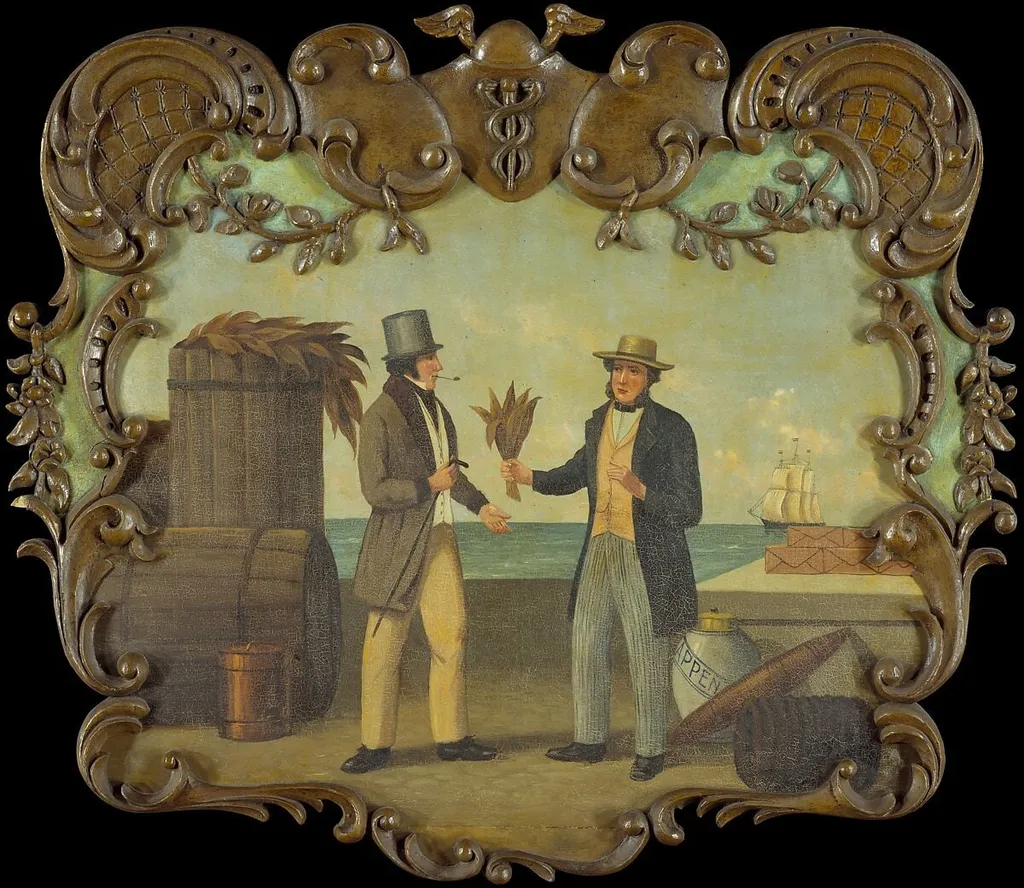
Tobacco Sign is an oil painting. It dates from 1850 and is held in the collection of the Metropolitan Museum of Art.
About this work
Overview
This object, titled "Tobacco Sign," is an example of commercial art from the 19th century. Crafted from oil paint on wood and incorporating an iron element, it served as an outdoor advertisement for a tobacco merchant. Its design was intended to be easily recognizable and informative to potential customers, particularly those arriving from the docks, indicating the nature of the business within.
Subject & Meaning
Above this maritime scene, the words "Fine Cut Tobacco" are prominently displayed, resembling a speech or thought bubble.
The sign depicts a sailor in a blue coat, engaged in the act of lighting a pipe, positioned beside a ship's wheel. Above this maritime scene, the words "Fine Cut Tobacco" are prominently displayed, resembling a speech or thought bubble. This imagery directly communicated the store's offerings, leveraging the common association between sailors, the sea, and tobacco consumption to attract its target clientele.
Technique & Style
Executed in oil on a wooden board, the sign's construction is robust and functional, designed for outdoor exposure. The inclusion of an iron ring at its apex facilitated its suspension, allowing it to swing freely and catch the attention of passersby. The painting style is direct and illustrative, prioritizing clear communication over intricate detail, characteristic of commercial art intended for quick recognition.
Context
Unlike artworks created for gallery display, this "Tobacco Sign" was conceived as a utilitarian object, a piece of street furniture advertising a specific trade. Its original placement would have been outside a tobacco shop during the 1800s, likely in a port town where its maritime theme resonated. Such signs represent a significant category of American folk art, reflecting the visual culture of everyday commerce.
Artist & collection