Artwork
Todi Ragini
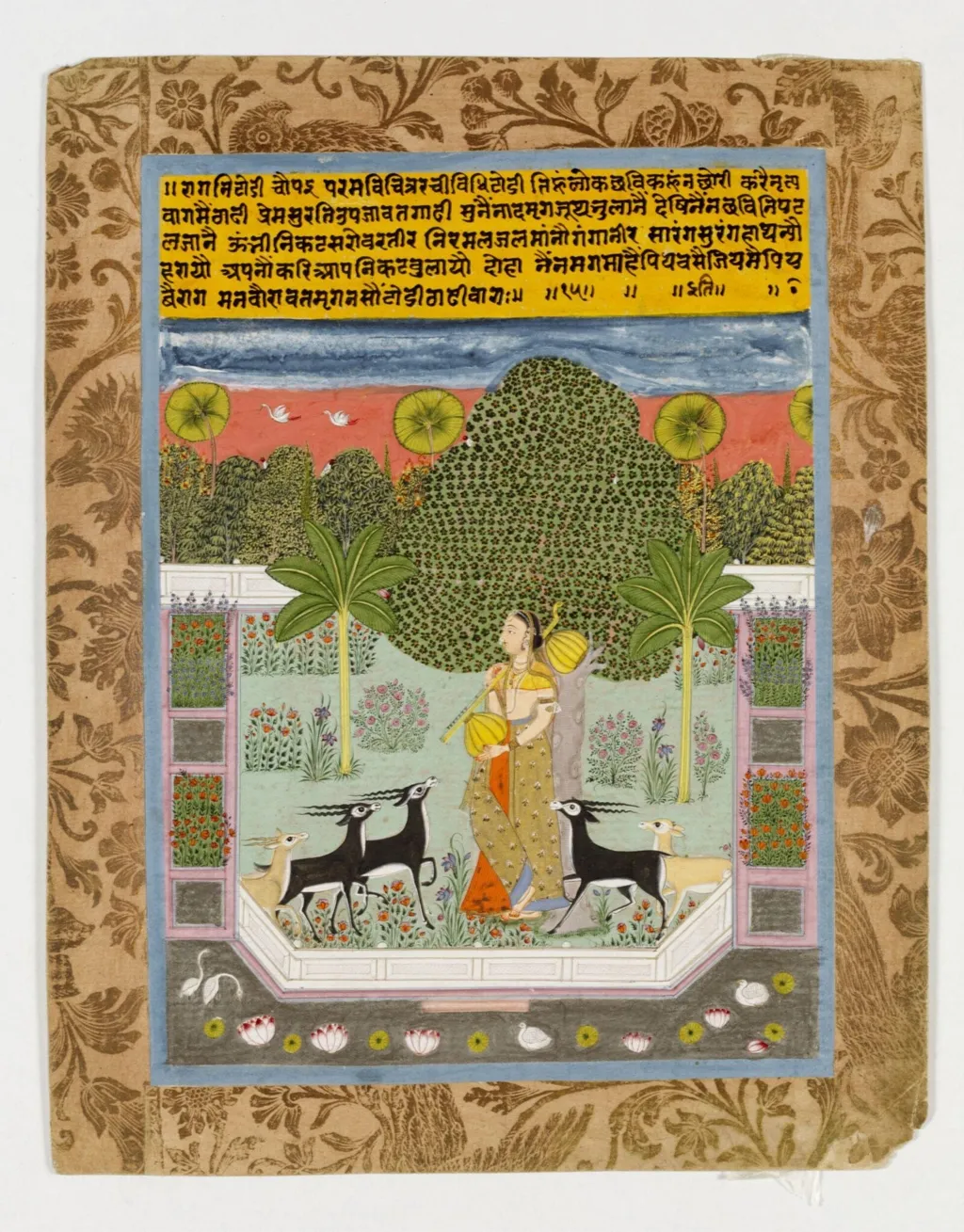
Todi Ragini is a paint painting by the Mughal Painting artist Unknown. It dates from 1750 and is held in the collection of the Victoria and Albert Museum.
About this work
Overview
Created around 1750, this opaque watercolor on paper portrays a scene linked to the Todi Ragini musical mode. A woman, attired in a bright ochre sari with floral motifs and a yellow choli edged in red, stands beside a small boat on a tranquil river, surrounded by lush foliage, palms, and vivid blossoms.
Subject & Meaning
The central figure holds a vina, a traditional stringed instrument, and a fan, suggesting a musical performance within a natural setting. Two deer accompany her, one appearing to stride within the boat as if on land, a motif that may symbolize harmony between art and nature in the context of the ragini.
Technique & Style
Executed in opaque watercolor, the work employs bold pigments—reds, greens, golds, and oranges—to achieve a lively, saturated surface. Ornamental gold script crowns the composition, while intricate border patterns frame the scene, reflecting the decorative aesthetics typical of mid‑18th‑century Indian manuscript art.
History & Provenance
The painting originates from the Indian subcontinent, dating to the mid‑18th century, a period when watercolor on paper was a common medium for courtly and devotional illustrations. Its precise ownership trail is undocumented, though it aligns with other contemporaneous works that depict musical ragas.
Context
Todi Ragini refers to a specific melodic mode in Indian classical music, often associated with solemn or contemplative moods. By visualizing this mode through a female musician amid wildlife, the artwork integrates musical theory with visual storytelling, a practice prevalent in South Asian artistic traditions of the era.
Artist & collection

 Domestic Scene
 Giacomo and Cardinal Marco, investing Andrea, Abbot of San Zeno, with his Benefice
 The Nymph of Fontainebleau
 Portrait of a Woman
 Madonna and Child with Saints in the Enclosed Garden
 Venus and Minerva
 Family Group of Four on Sofa
 Wall painting from Room H of the Villa of P. Fannius Synistor at Boscoreale
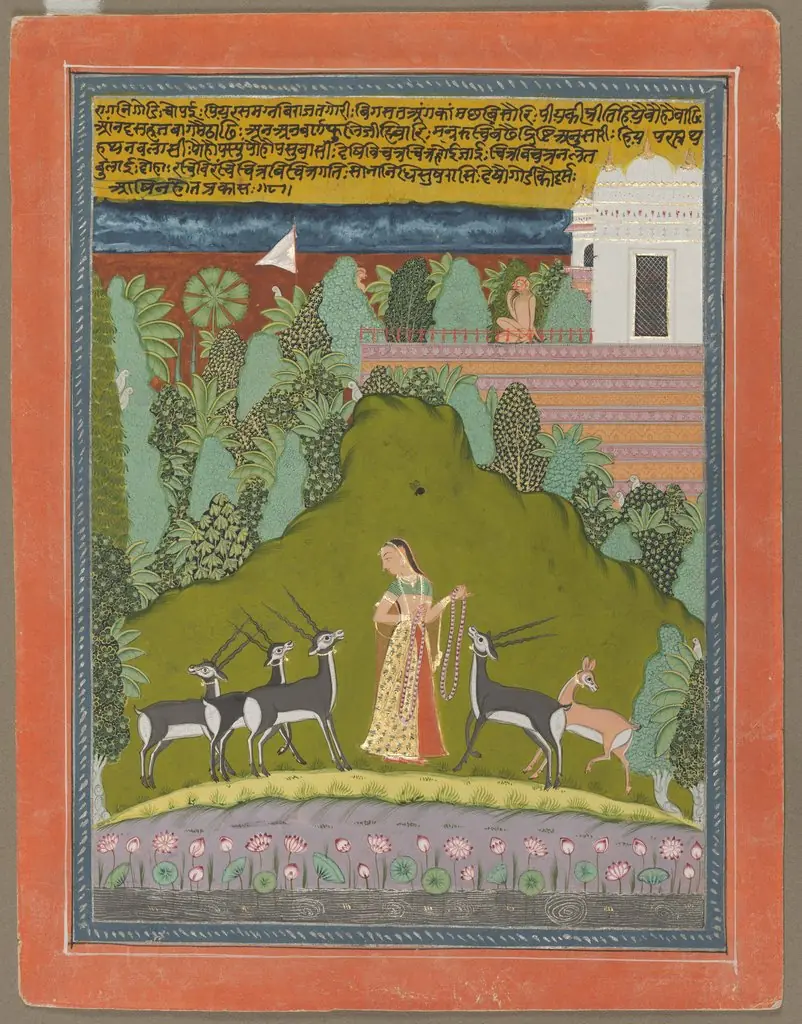 Gaudi Ragini
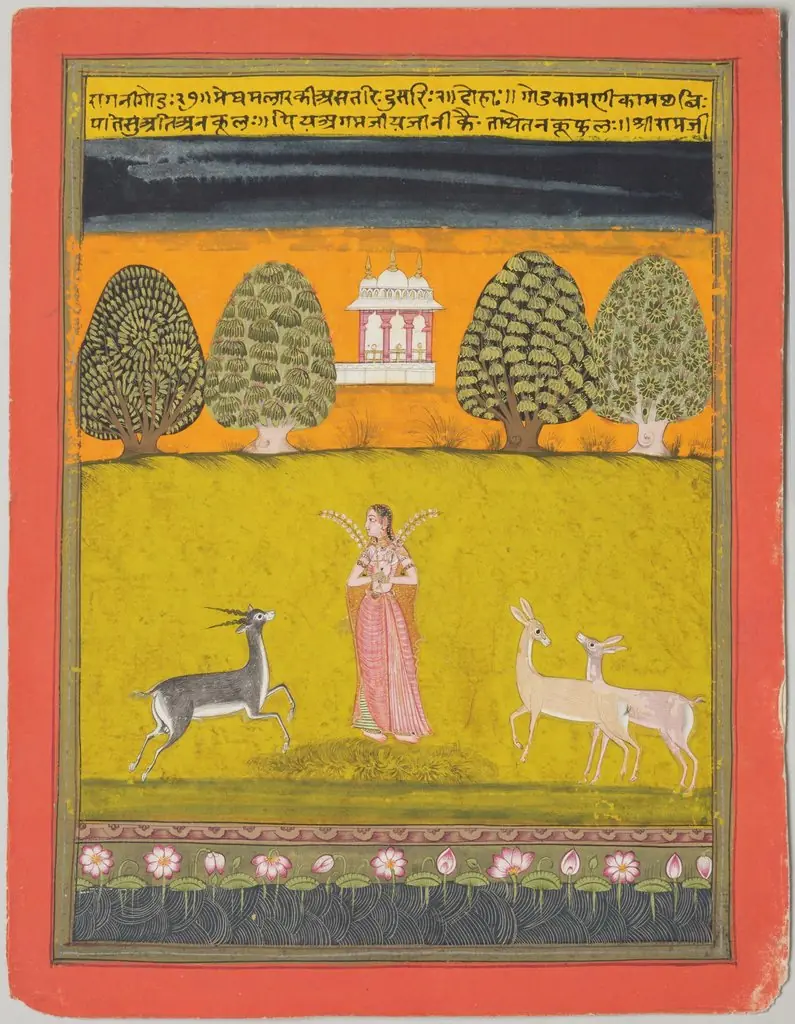 Girl with Three Deer: Todi Ragini
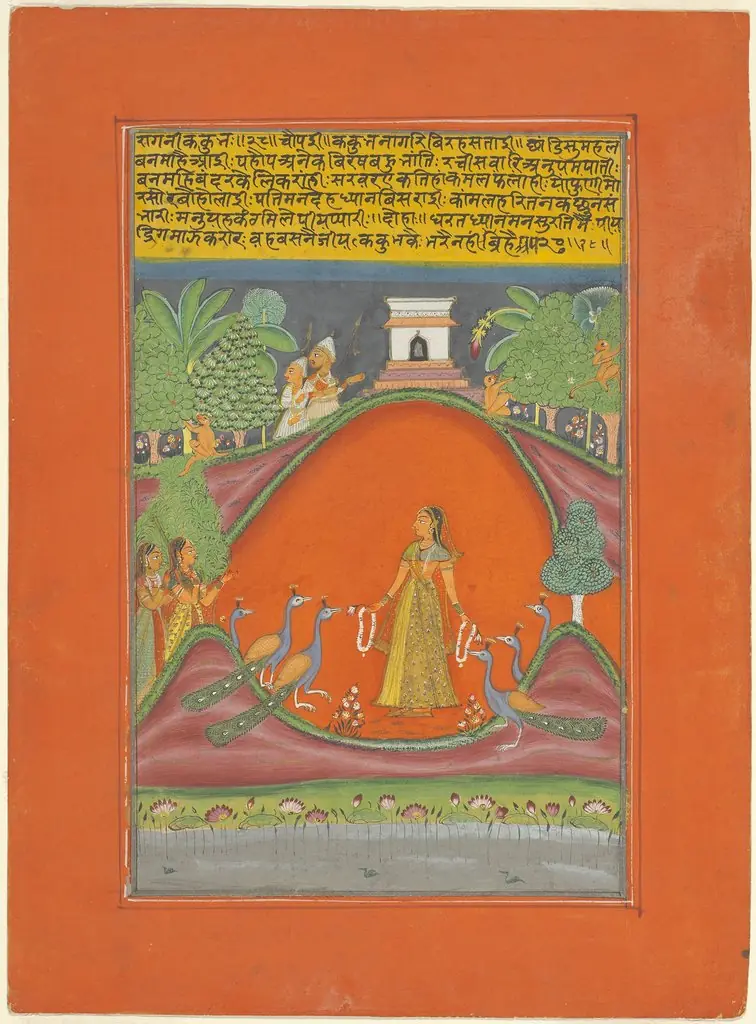 Ragini Kakubha, Page from a Jaipur Ragamala Set
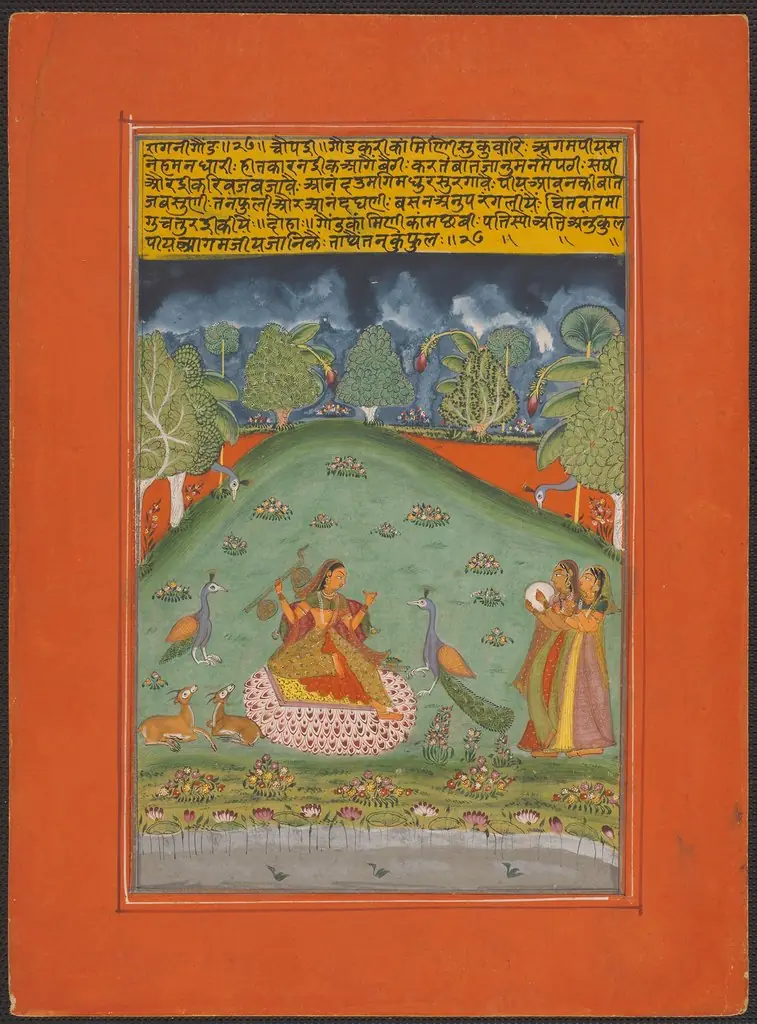 Ragini Gaund, Page from a Jaipur Ragamala Set
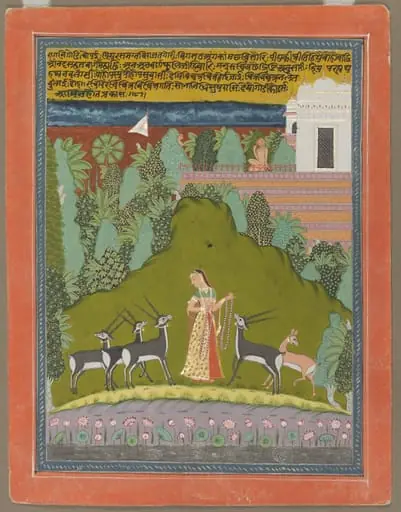 Gaudi Ragini
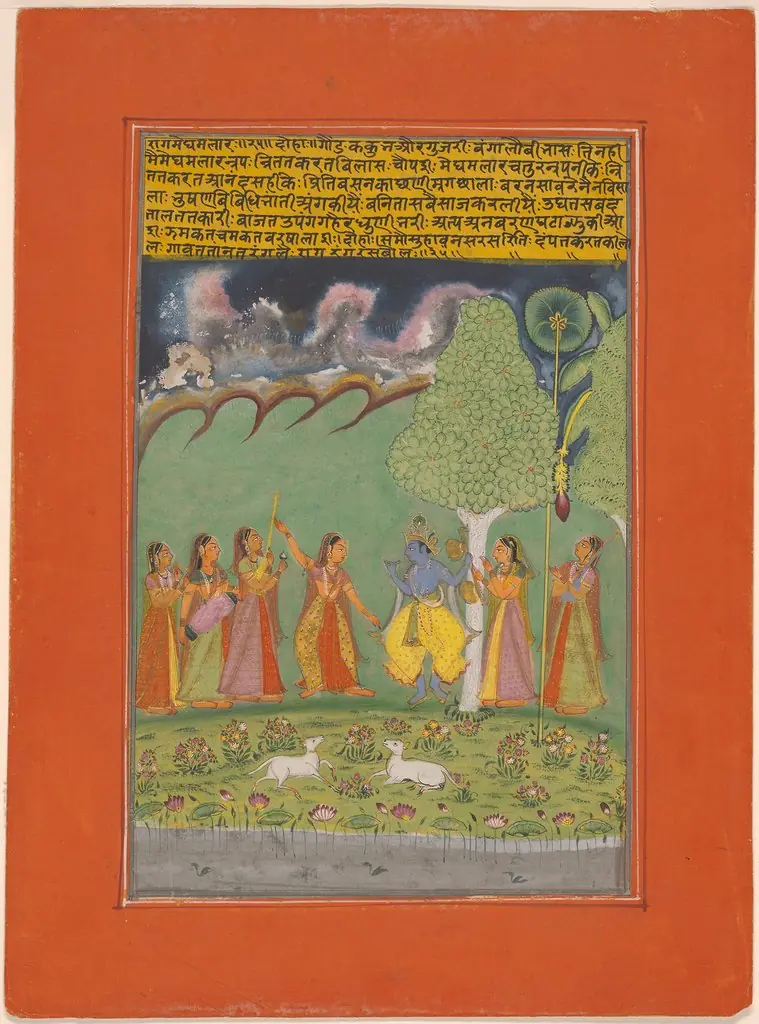 Rag Megh Malar, Page from a Jaipur Ragamala Set
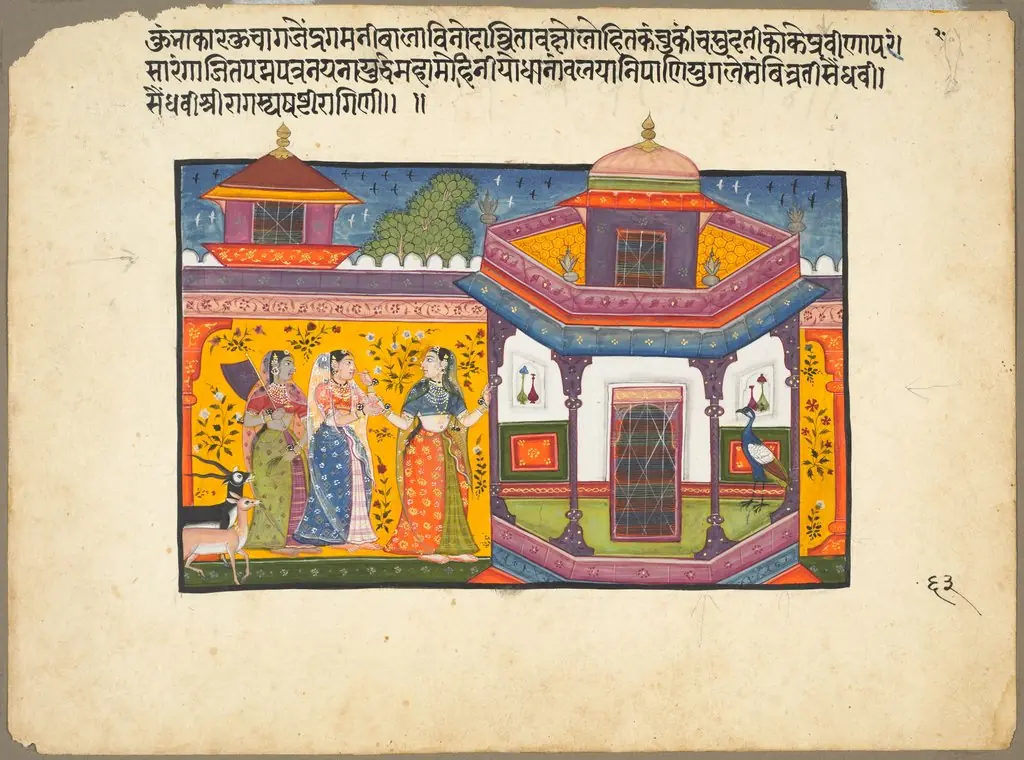 Saindhavi Ragini of the "Sri Raga" Family, page from a Ragamala Series
 Krishna with Guru in Palace Scene
 Kakubha Ragini
 Untitled