Artwork
Touring in Spring, Enjoying Summer
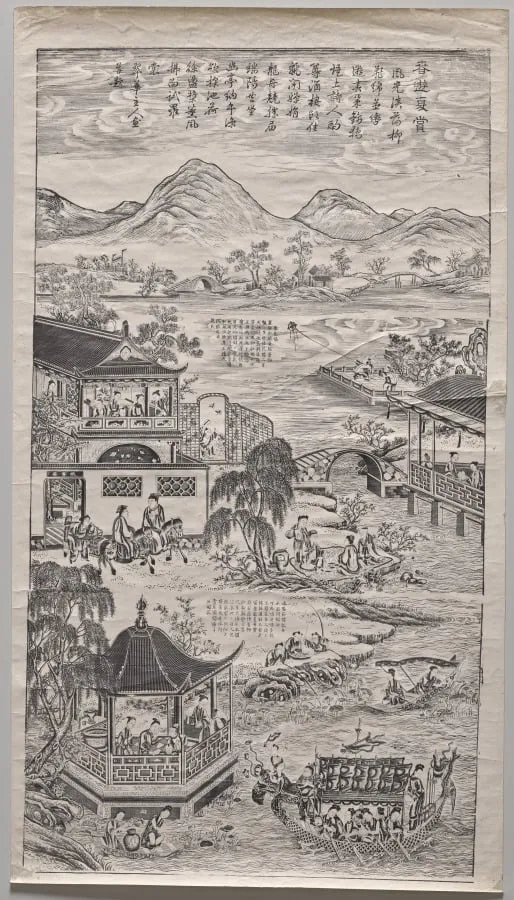
Touring in Spring, Enjoying Summer is a print by the Baroque artist Unknown. It dates from 1766 and is held in the collection of the Cleveland Museum of Art.
About this work
You see a busy street in spring: ladies in silk robes stroll under blossoming trees, servants carry parasols, and merchants sell tea from painted carts.
You see a busy street in spring: ladies in silk robes stroll under blossoming trees, servants carry parasols, and merchants sell tea from painted carts.
This painting was made as a cheap wall print in 1700s China. Most art from that time was for the rich—this one was for regular people. The colors were stamped from carved wood blocks, like a fancy rubber stamp.
Look up more about the subject: *qing dynasty (1644–1911)*.
Overview
The work titled “Touring in Spring, Enjoying Summer” is a single‑sheet color print produced in China during the eighteenth century, within the Qing dynasty. Unlike many contemporary artworks reserved for elite patrons, this piece was intended for ordinary households and would have been displayed as wall decoration in urban homes.
Subject & Meaning
The scene depicts a bustling spring street lined with flowering trees. Women in silk robes walk leisurely, shaded by parasols, while servants and street vendors—selling tea from painted carts—populate the thoroughfare. The composition celebrates everyday urban life and the seasonal pleasure of travel and leisure.
Technique & Style
Colors were applied using carved wooden blocks, each block inked and pressed onto paper much like a sophisticated rubber stamp. This woodblock printing method allowed for vivid, multicolored images to be reproduced relatively cheaply, facilitating the spread of decorative prints among the broader public.
History & Provenance
Printing in the Jiangnan region—cities such as Nanjing, Suzhou, Hangzhou and Huizhou—experienced rapid growth from the seventeenth to eighteenth centuries. Initially focused on privately commissioned illustrated books, the industry shifted toward mass‑produced single‑sheet prints that adorned walls, reflecting a thriving urban visual culture.
Context
The print emerges from a period when commercial publishing expanded beyond elite circles, catering to a growing middle class in Qing‑era cities. Its subject matter—urban leisure and commerce—mirrors the economic vitality and social mobility of the time, offering insight into the daily rhythms of eighteenth‑century Chinese city life.
Artist & collection

 Domestic Scene
 Giacomo and Cardinal Marco, investing Andrea, Abbot of San Zeno, with his Benefice
 The Nymph of Fontainebleau
 Portrait of a Woman
 Madonna and Child with Saints in the Enclosed Garden
 Venus and Minerva
 Family Group of Four on Sofa
 Wall painting from Room H of the Villa of P. Fannius Synistor at Boscoreale
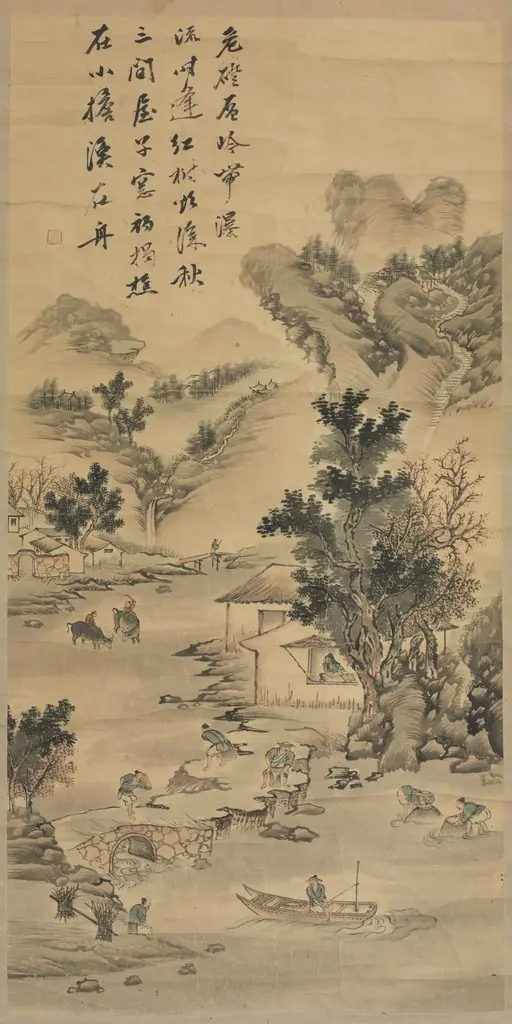 Landscape
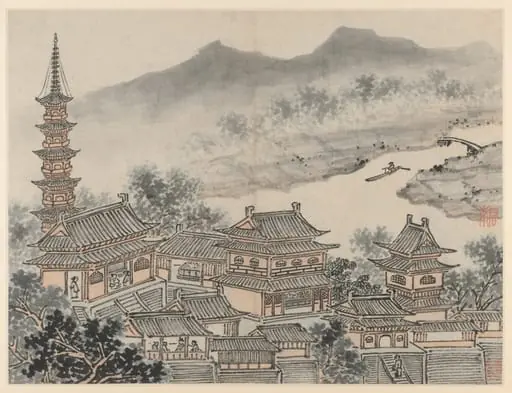 The Thousand Buddha Hall and the Pagoda of the "Cloudy Cliff" Monastery, from Twelve Views of Tiger Hill, Suzhou
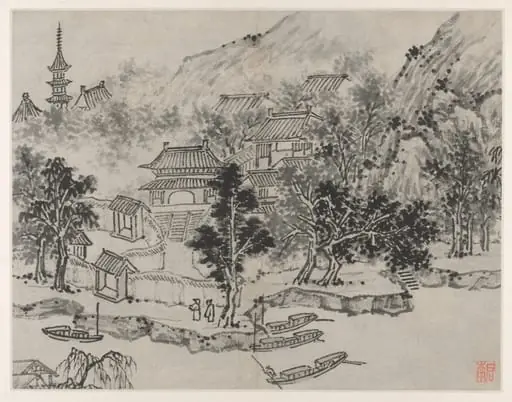 Distant View of Tiger Hill from the Canal Mooring, from Twelve Views of Tiger Hill, Suzhou
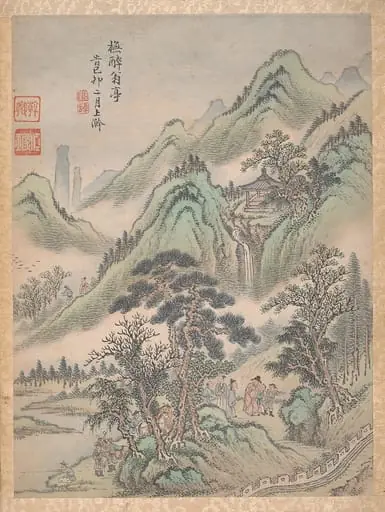 清 陸漢 山水八開 冊|Eight landscapes
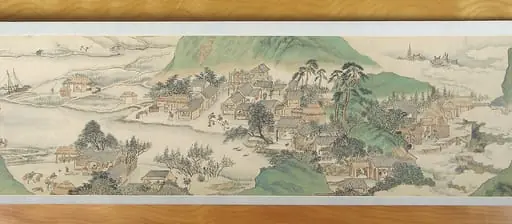 明/清 張宏 桃源勝概圖 卷|Peach Blossom Spring
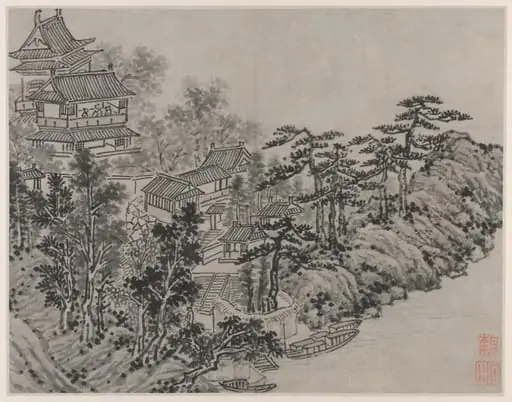 Cloud-Climbing Pavilion, from Twelve Views of Tiger Hill, Suzhou
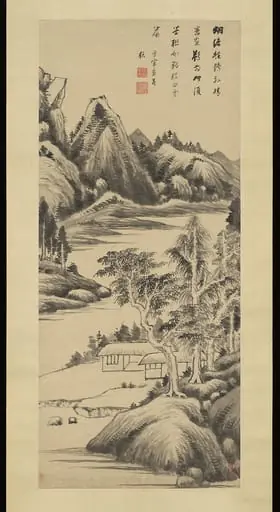 Untitled