Artwork
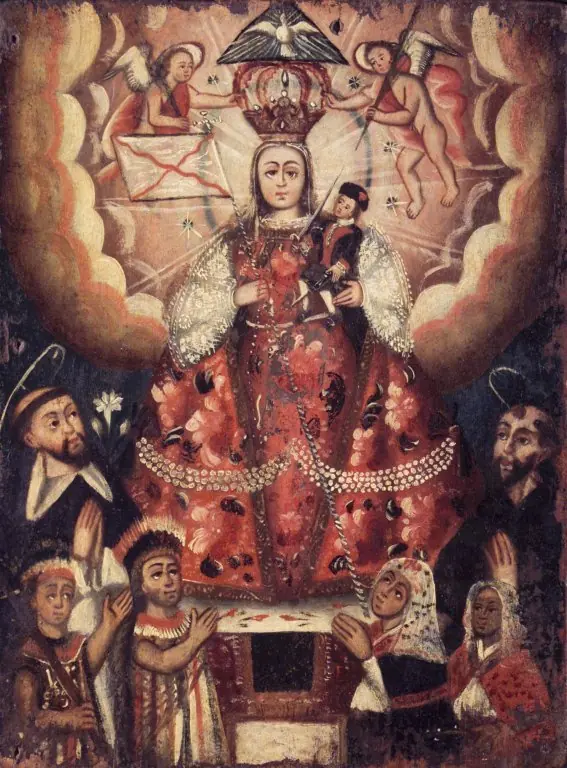
Travelling Scroll depicting the Virgin of Carmel with Saints Michael, Gabriel, Joseph, Anthony of Padua, Francis of Assisi, Nicholas Tolentino
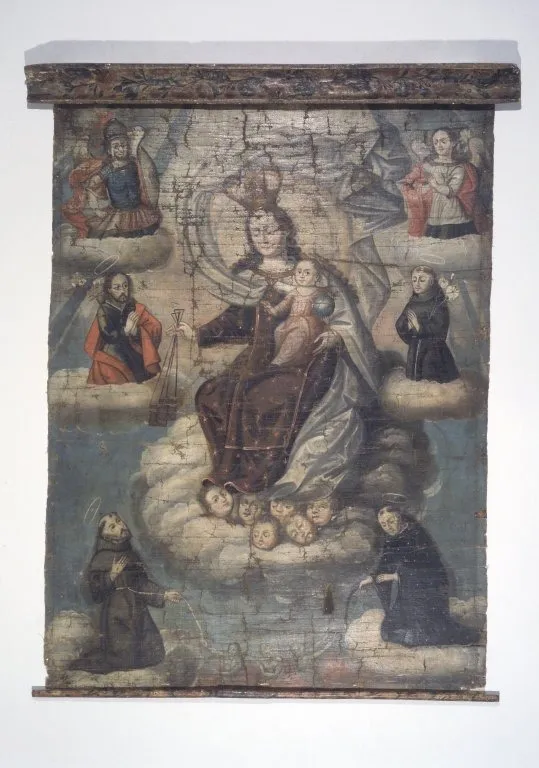
Travelling Scroll depicting the Virgin of Carmel with Saints Michael, Gabriel, Joseph, Anthony of Padua, Francis of Assisi, Nicholas Tolentino is an oil painting by the Rococo painting artist Unknown. It dates from 1790 and is held in the collection of the Brooklyn Museum.
About this work
Overview
This oil painting on a scroll format presents the Virgin of Carmel seated among six saints and two angels, arranged in a hierarchical composition. The figures are rendered with formal solemnity against a muted, dark background that enhances their luminous presence. The work follows traditional devotional iconography, emphasizing spiritual authority through posture, attire, and halos.
Subject & Meaning
The Virgin of Carmel, cradling the Christ Child, occupies the central position, symbolizing her role as intercessor.
The Virgin of Carmel, cradling the Christ Child, occupies the central position, symbolizing her role as intercessor. Surrounding her are saints associated with protection, devotion, and healing: Michael and Gabriel as archangels, Joseph as guardian, Anthony and Francis as mendicant preachers, and Nicholas Tolentino as a patron of souls in purgatory. Together, they form a celestial court invoking divine mercy.
Technique & Style
Oil paint is applied with smooth, even brushwork to define the figures’ richly detailed vestments and soft halos. The background’s cool, gray-blue tone creates depth without distraction, focusing attention on the illuminated saints. Drapery folds are rendered with classical precision, and facial expressions remain serene, adhering to late medieval and early Renaissance devotional conventions.
History & Provenance
The painting was likely produced in the 17th or 18th century for private or monastic devotion, possibly in a Spanish or Italian colony where Carmelite spirituality was widespread. It entered the Brooklyn Museum’s collection through documented acquisition, though its earlier provenance remains unrecorded beyond its religious context and stylistic origins.
Context
As a travelling scroll, the work may have been used in processions or portable altars, allowing clergy to carry sacred imagery to communities without permanent churches. Its compact format and clear iconography reflect the Counter-Reformation emphasis on accessible, emotionally resonant religious art to reinforce Catholic doctrine among the faithful.
Legacy
The painting exemplifies the enduring influence of Carmelite devotion in colonial religious art. While not widely known outside institutional collections, it preserves a visual language once vital to daily piety. Its preservation allows study of how regional traditions adapted European iconography to local spiritual needs.
Artist & collection

 Domestic Scene
 Giacomo and Cardinal Marco, investing Andrea, Abbot of San Zeno, with his Benefice
 The Nymph of Fontainebleau
 Portrait of a Woman
 Madonna and Child with Saints in the Enclosed Garden
 Venus and Minerva
 Family Group of Four on Sofa
 Wall painting from Room H of the Villa of P. Fannius Synistor at Boscoreale
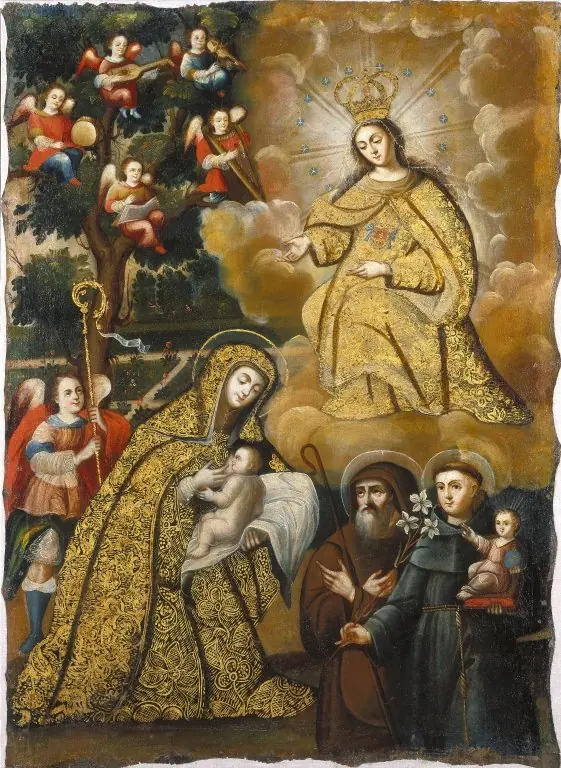 The Virgin of Mercy with Three Saints
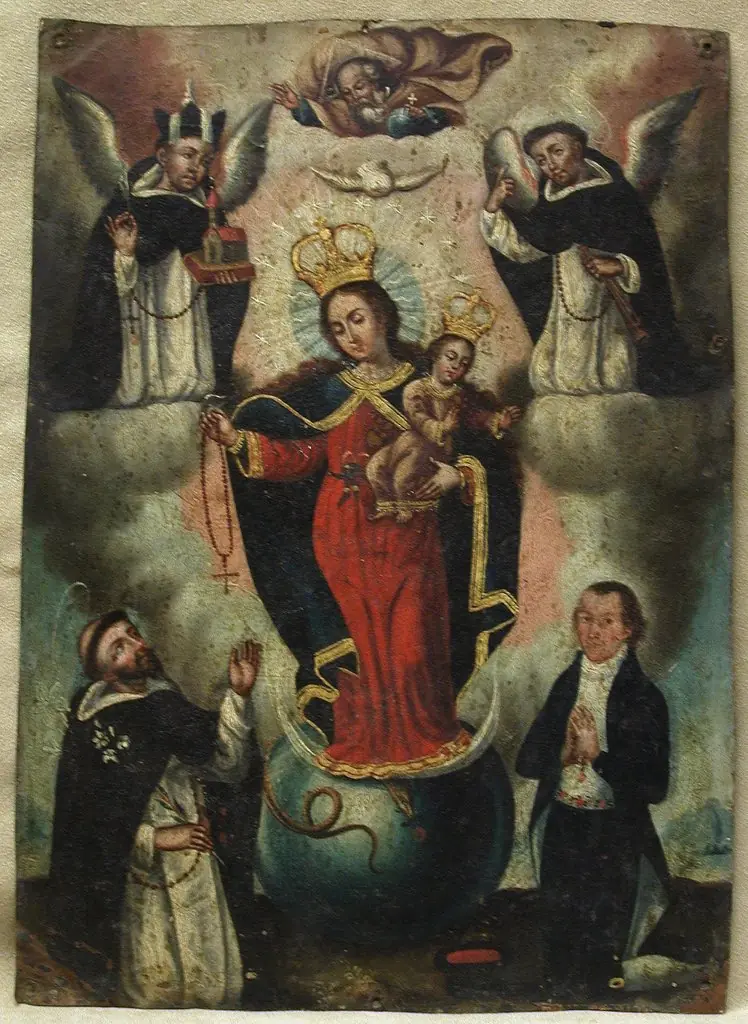 Virgin of the Rosary with Dominican Saints and Donor
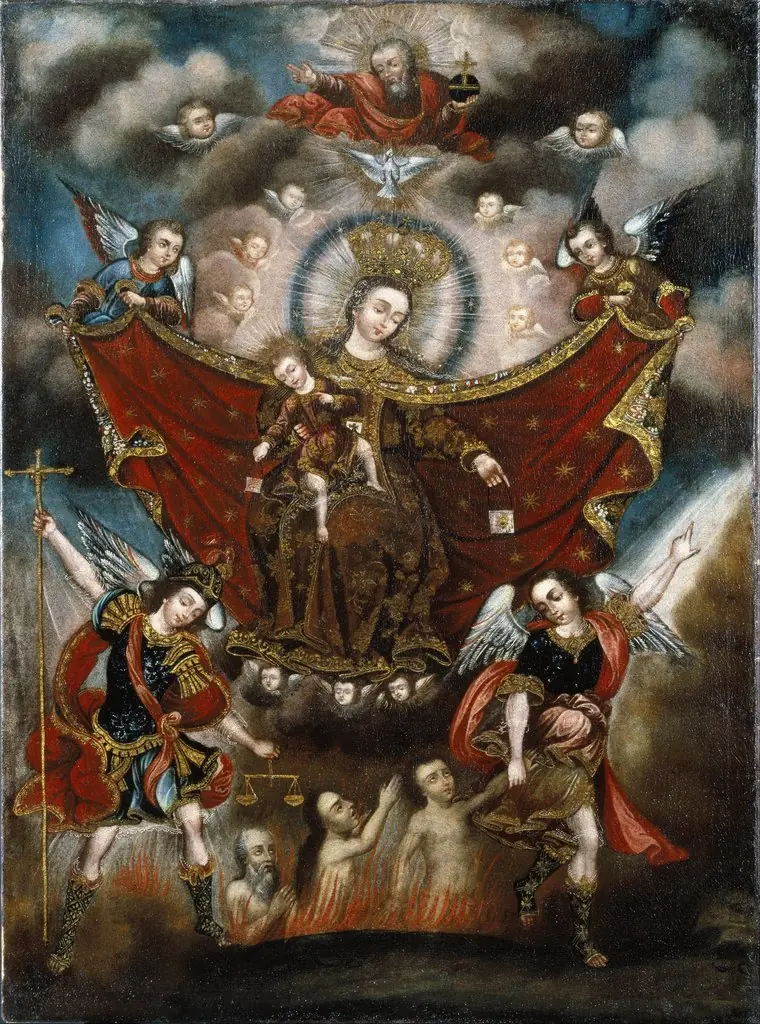 Virgin of Carmel Saving Souls in Purgatory
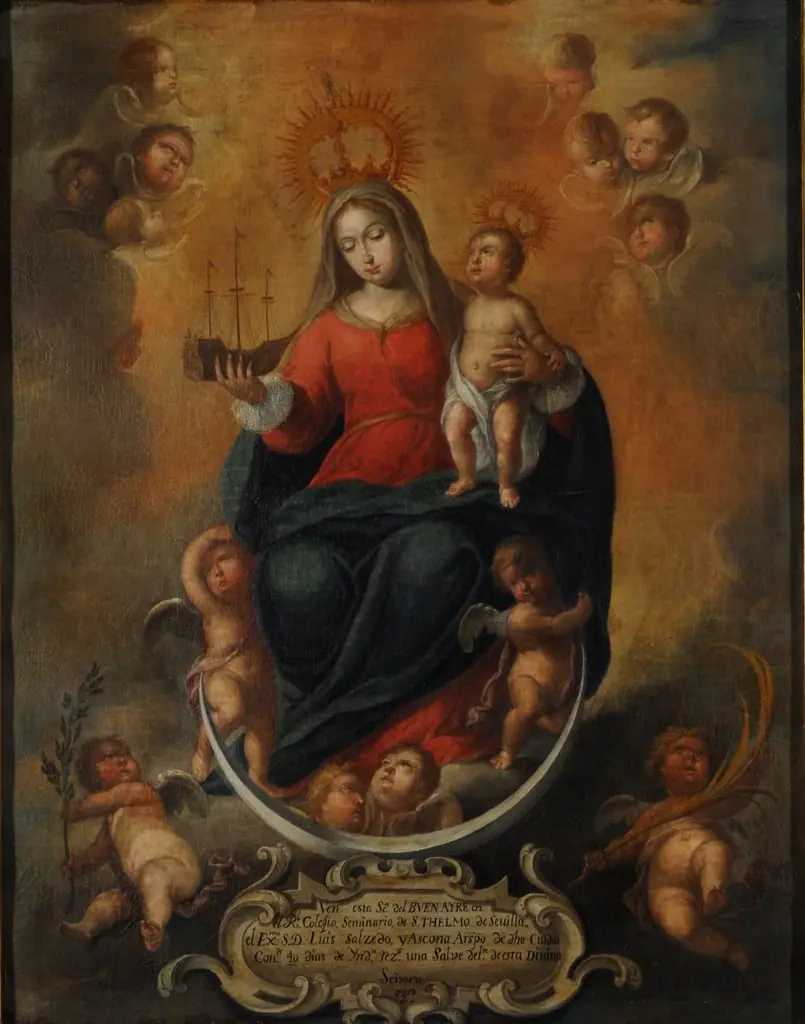 The Virgin of Buen Ayre
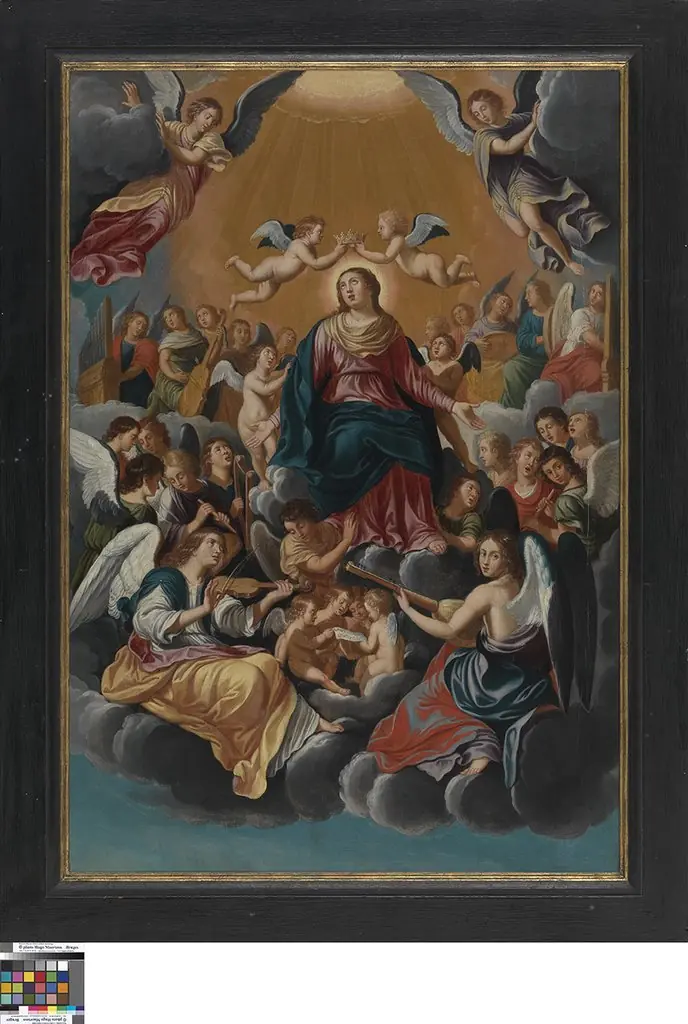 Kroning van Maria
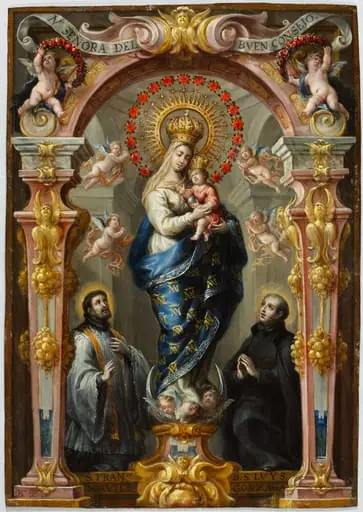 Our Lady of Good Counsel
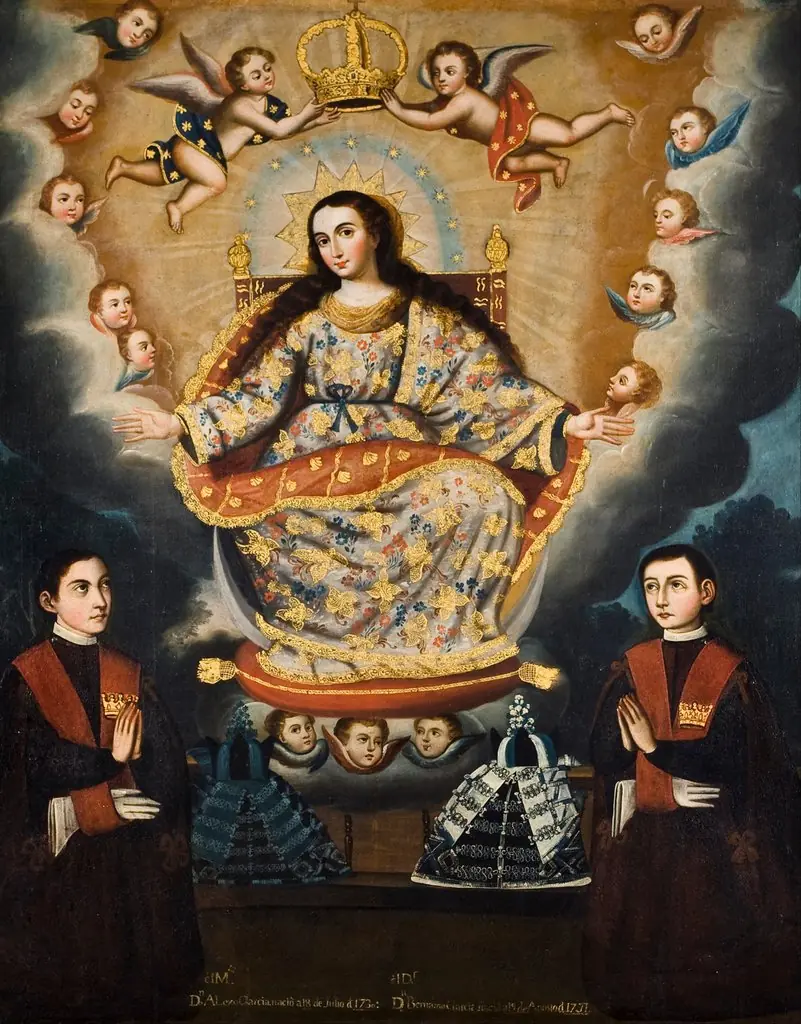 Seated Madonna with Graduation of the García Brothers
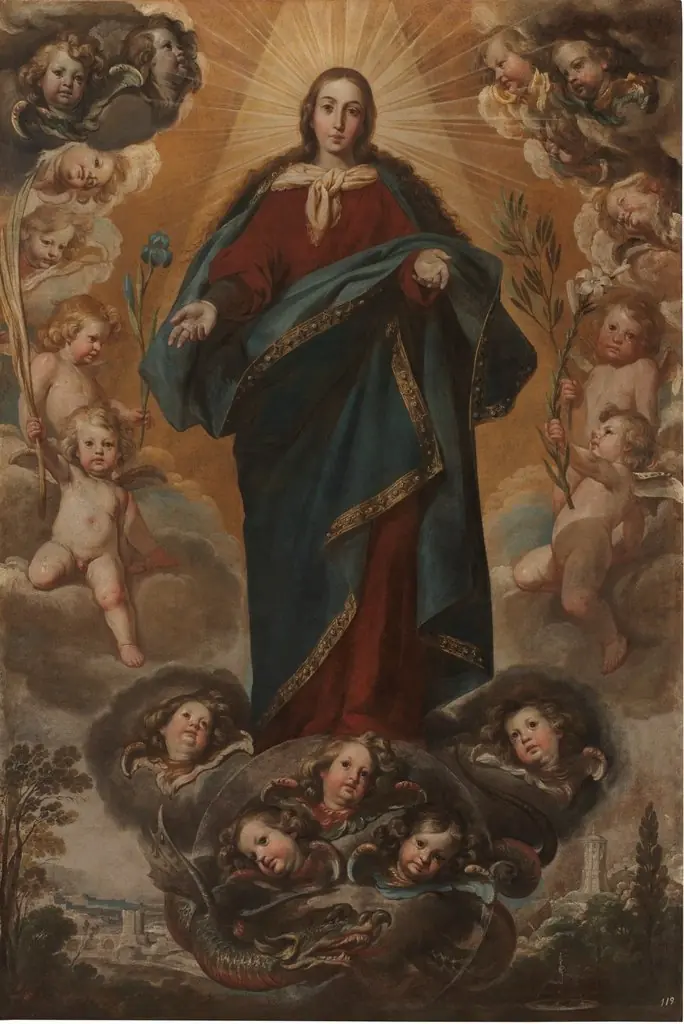 The Immaculate Conception
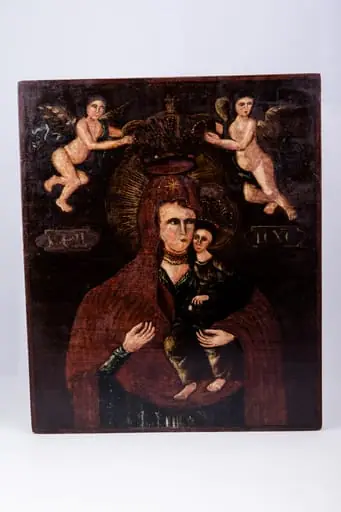 Maica Domnului ține în brațe Pruncul Iisus Hristos, care arată cu mâna dreaptă înspre Maica Domnului, prezentându-ne-o. Maica Domnului este înveșmântată în mantie cu maforion roșu-stacojiu, cu interiorul negru. Maica Domnului are aureola în raze luminoase de soare. Pruncul Iisus Hristos este înveșmântat cu sacos și omofor brun spre negru, cu coroană și aureolă pe cap. Fondul icoanei este negru întunecat, în contrast fiind cu lumina chipurilor și cromatica veșmintelor. În registrul superior sunt doi îngeri îndreptați spre coroana stilizată a Maicii Domnului, făcând gestul Încoronării. Îngerii sunt pictați asemenea unor putti, din pictura barocă. Cromatică este armonioasă: roșu stacojiu, brun, acajou, brun-ocru, brun, bej, alb, verde-olive, negru. Inscripția din româno-chirilică se traduce MP IC XC Maica Domnului Iisus Hristos. Icoana este pictată în manieră barocă și are atmosfera catolică.
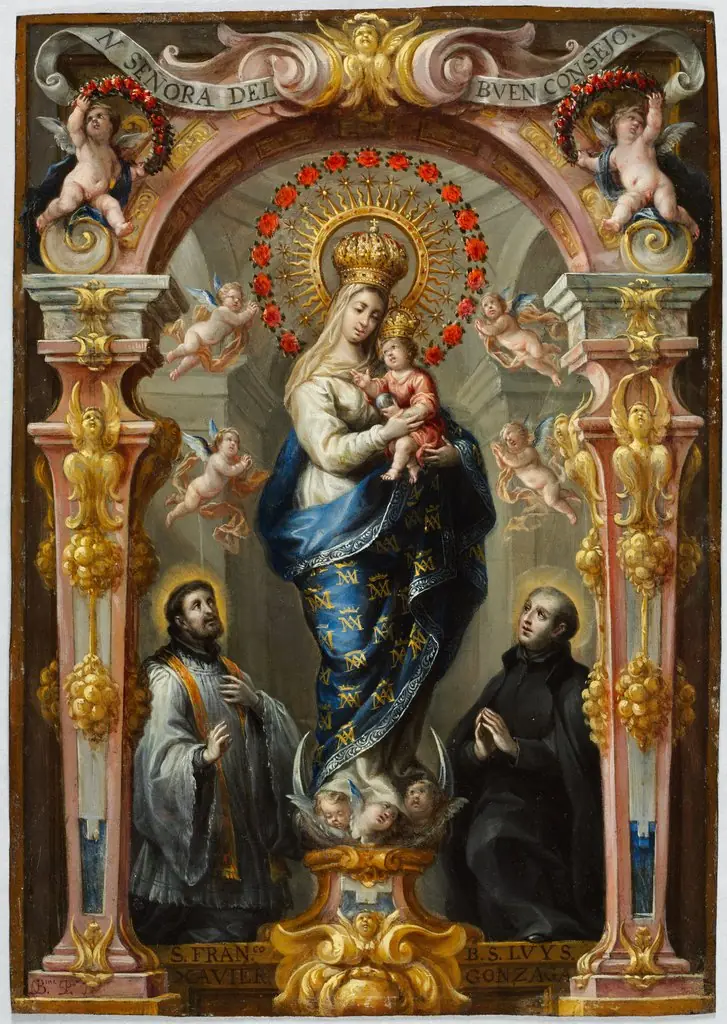 Our Lady of Good Counsel
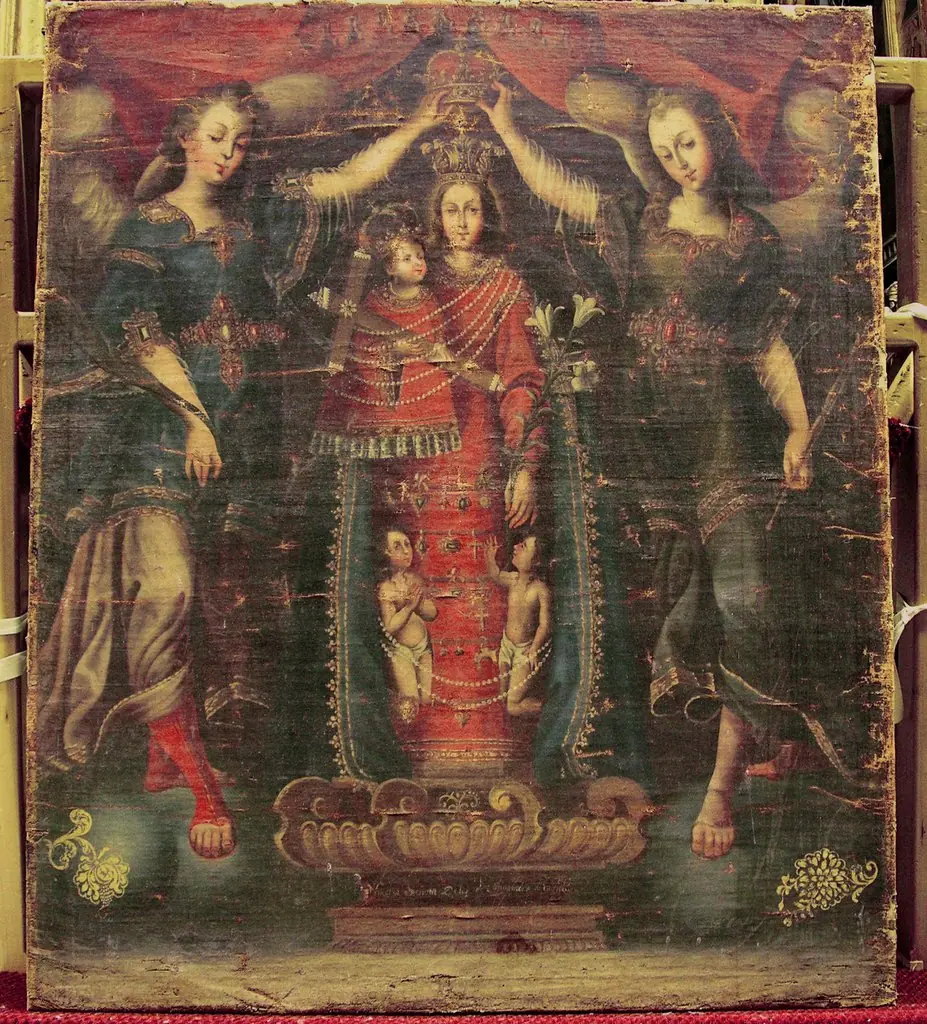 Nuestra Señora de los Desamparados (Our Lady of the Forsaken)
 Madonna with Christ Child, St. Dominic, St. Francis, and Indian Worshippers