Artwork
Tsong Khapa, Founder of the Geluk Order
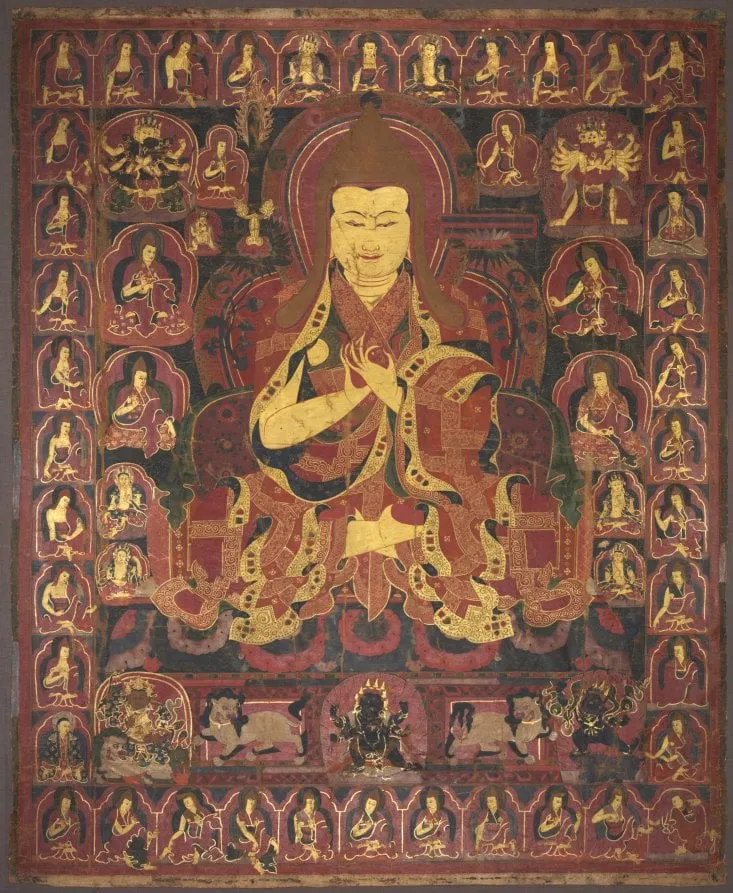
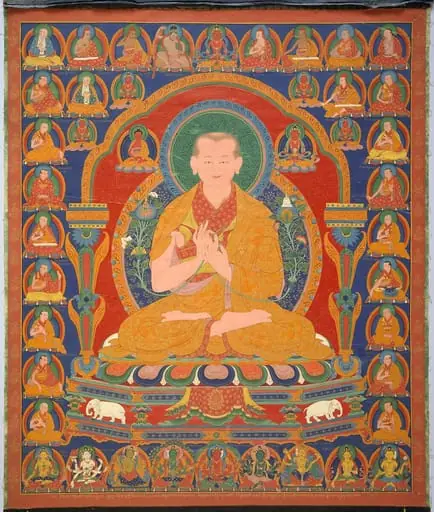
Tsong Khapa, Founder of the Geluk Order is an unspecified painting by the Renaissance artist Unknown. It dates from 1455 and is held in the collection of the Cleveland Museum of Art. This painting depicts Tsong Khapa, the 14th-century Tibetan Buddhist reformer who established the Geluk school.
About this work
Overview
This painting depicts Tsong Khapa, the 14th-century Tibetan Buddhist reformer who established the Geluk school. Created shortly after his death, it presents him as the central figure in a devotional composition, surrounded by lineage teachers. The work combines portraiture with symbolic iconography, reflecting both historical memory and religious veneration within early Geluk tradition.
Subject & Meaning
The golden hat identifies him as a Geluk monk, while the sword and book at ear level symbolize Manjushri, the bodhisattva of wisdom.
Tsong Khapa is shown with hands in the teaching mudra, signifying his role as a doctrinal authority. The golden hat identifies him as a Geluk monk, while the sword and book at ear level symbolize Manjushri, the bodhisattva of wisdom. These attributes affirm the belief that Tsong Khapa was an earthly manifestation of Manjushri, reinforcing his spiritual authority and intellectual legacy within Tibetan Buddhism.
Technique & Style
The painting employs fine brushwork and rich pigments to render intricate details in clothing, halos, and surrounding figures. Facial features retain a degree of naturalism uncommon in later Geluk portraiture, suggesting an early effort to capture Tsong Khapa’s likeness. The composition is hierarchical, with lineage masters arranged in orderly rows, their dynamic gestures suggesting scholarly debate.
History & Provenance
Produced within decades of Tsong Khapa’s death, this work belongs to a rare group of early Geluk devotional images. It predates the institutional dominance of the Geluk school in Tibetan politics and reflects a period when his teachings were still being systematized. Its survival indicates early patronage by monastic communities committed to preserving his legacy.
Context
Tsong Khapa’s reforms emphasized monastic discipline and scholarly study, culminating in the Lam Rim texts that became central to Geluk practice. The surrounding figures represent key teachers in his lineage, whose interpretations shaped his synthesis of Buddhist philosophy. This painting visually anchors the Geluk tradition’s intellectual lineage, linking Tsong Khapa to earlier Indian and Tibetan masters.
Legacy
Later Geluk portraiture standardized Tsong Khapa’s image into rigid iconographic forms, losing the individualized features seen here. This early depiction remains significant as a transitional work, bridging personal memory and institutional mythmaking. It documents the formative years of a tradition that would later influence Tibetan governance and religious life for centuries.
Artist & collection

 Domestic Scene
 Giacomo and Cardinal Marco, investing Andrea, Abbot of San Zeno, with his Benefice
 The Nymph of Fontainebleau
 Portrait of a Woman
 Madonna and Child with Saints in the Enclosed Garden
 Venus and Minerva
 Family Group of Four on Sofa
 Wall painting from Room H of the Villa of P. Fannius Synistor at Boscoreale
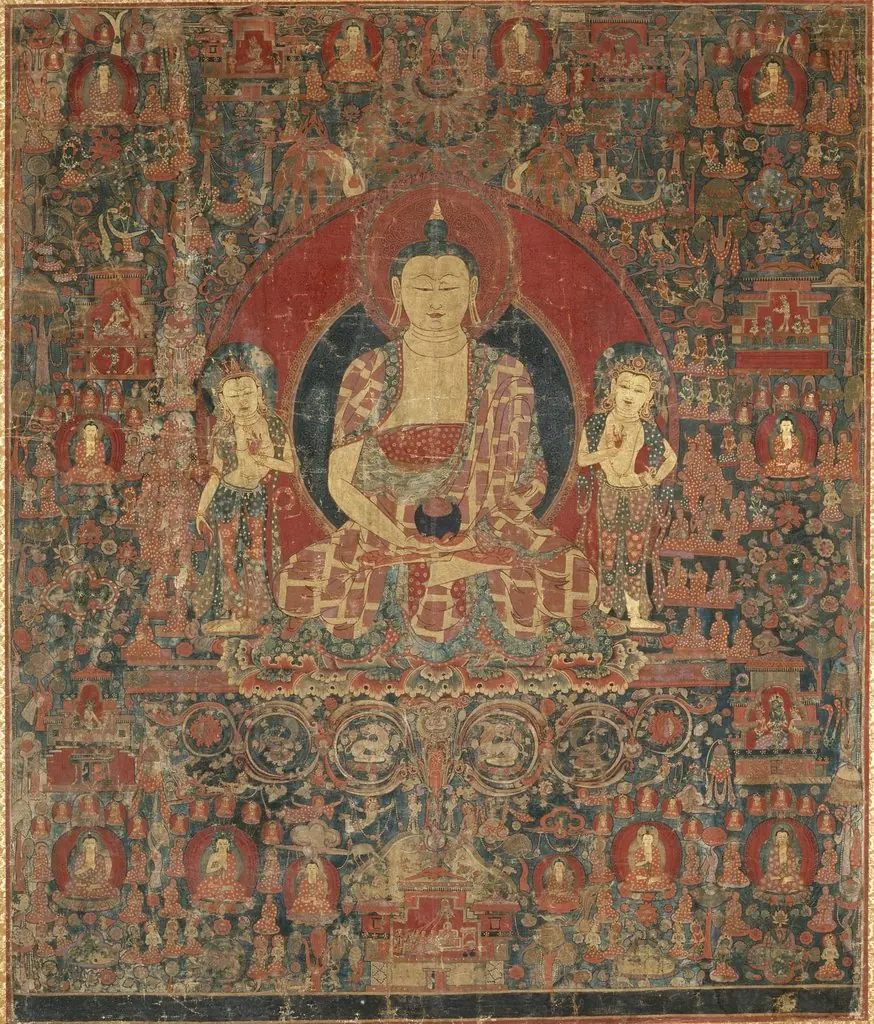 The Jina Buddha of Infinite Light (Amitabha) in His Pure Land Paradise (Sukhavati)
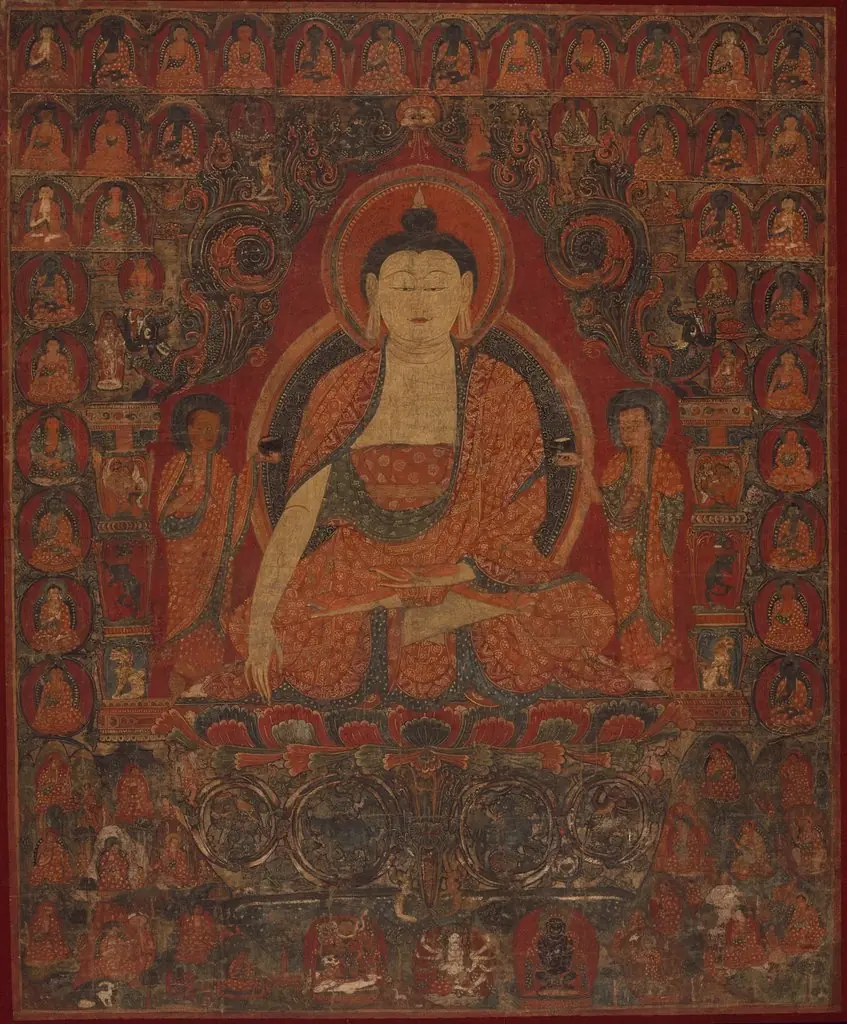 Shakyamuni with the Thirty-Five Buddhas of the Confession of Sins and the Eighteen Arhats
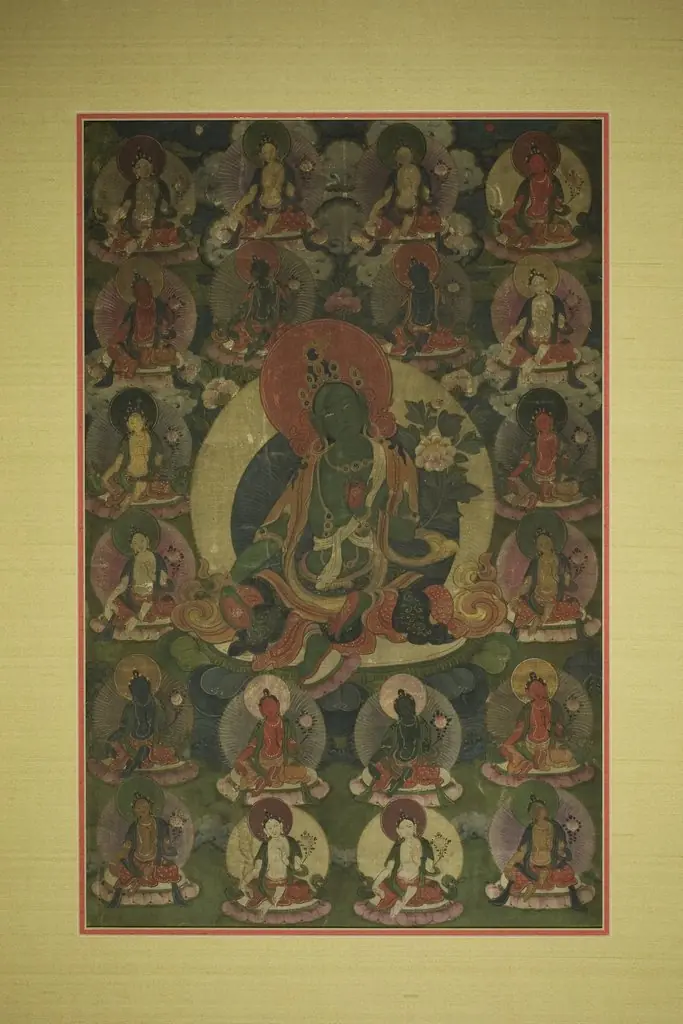 Painted Banner (Thangka) of Green Tara Surrounded by Twenty Manifestations
 Untitled
 The Life of Milarepa (1040-1123)
 Manjushri
 Untitled