Artwork
Two Manipuri dancing-girls standing together holding hands.
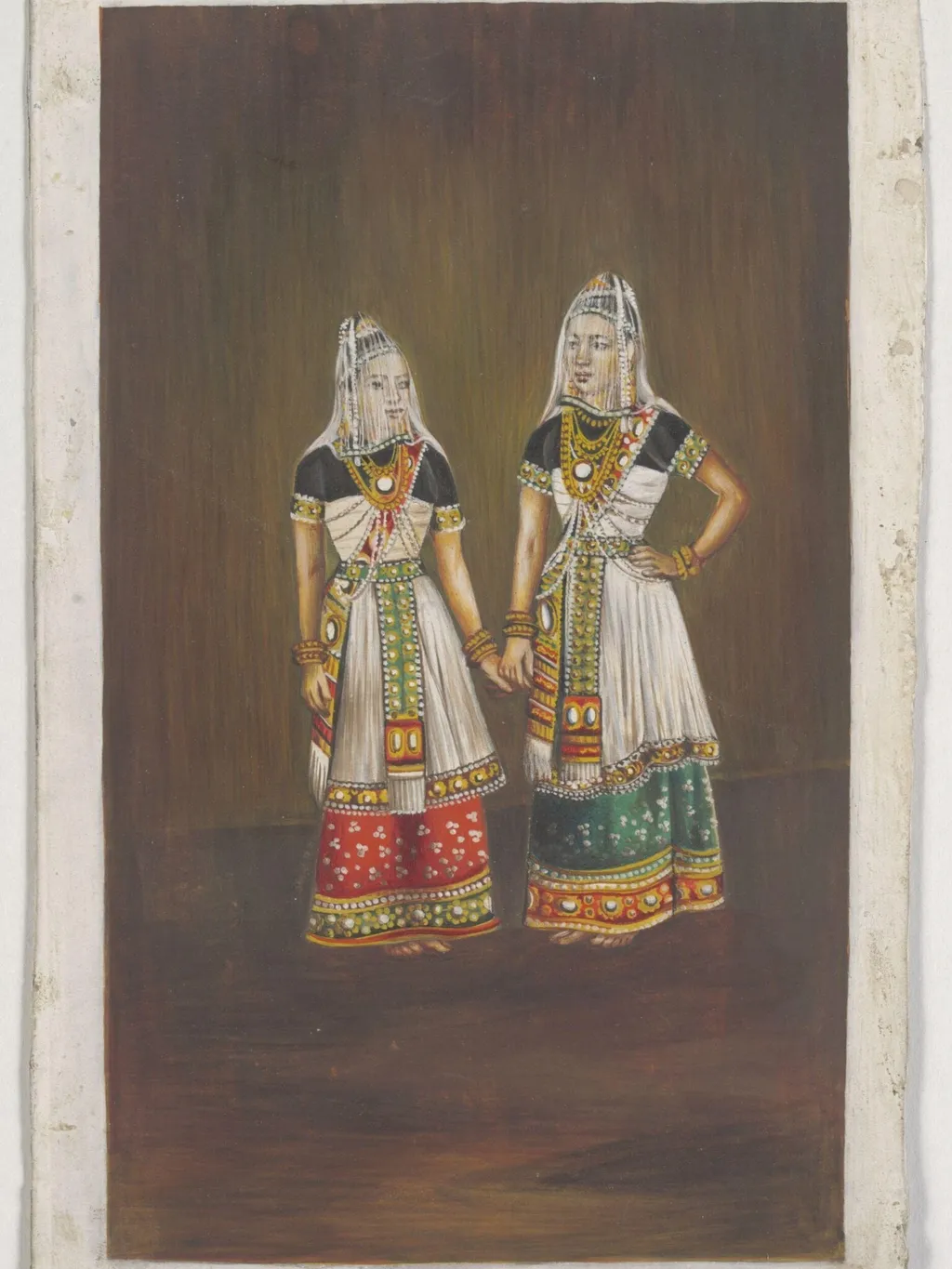
Two Manipuri dancing-girls standing together holding hands. is a paint painting by Unknown. It dates from 1900 and is held in the collection of the Victoria and Albert Museum.
About this work
Overview
This painting portrays two women from Manipur, standing side by side with hands clasped, their figures centered against a dark, unadorned background.
This painting portrays two women from Manipur, standing side by side with hands clasped, their figures centered against a dark, unadorned background. The composition emphasizes their stillness and connection, drawing attention to the elaborate detail of their attire. The absence of a setting focuses the viewer on the figures and their clothing, suggesting a moment of quiet ritual or preparation rather than active performance.
Subject & Meaning
The figures represent Manipuri dancers, likely engaged in a traditional form of devotional dance. Their joined hands may signify unity, shared spiritual purpose, or the intergenerational transmission of cultural practice. The veils and synchronized posture suggest solemnity and discipline, aligning with the religious and ceremonial roots of Manipuri dance, where movement is often an offering rather than mere entertainment.
Technique & Style
The artists rendered the dancers’ garments with meticulous attention to texture, using fine brushwork to depict beads, embroidery, and layered fabric. Bright hues of red, green, and gold contrast sharply with the deep, neutral background, enhancing the visual impact of the textiles. The flatness of the space and lack of perspective reflect a regional aesthetic that prioritizes decorative detail over naturalistic depth.
History & Provenance
The painting originates from the cultural milieu of Manipur in northeastern India, likely created in the late 19th or early 20th century. It was collected by British colonial officials or travelers and later entered the Victoria and Albert Museum’s holdings, where it remains as part of a broader archive of South Asian textile and performance art. Its preservation reflects early Western interest in documenting regional traditions.
Context
Manipuri dance, rooted in Vaishnavite traditions, was historically performed in temple courtyards and royal courts. The elaborate costumes, including beaded skirts and veils, were integral to ritual expression. This painting captures a moment within that living tradition, preserving the visual language of a dance form that was both sacred and socially cohesive, even as colonial influence began reshaping its public reception.
Legacy
The work contributes to the visual record of Manipuri cultural identity at a time when indigenous art forms were being cataloged by external institutions. While removed from its original ceremonial context, the painting continues to serve as a reference for scholars and practitioners seeking to understand the historical aesthetics of Manipuri dance attire and its symbolic resonance.
Artist & collection

 Domestic Scene
 Giacomo and Cardinal Marco, investing Andrea, Abbot of San Zeno, with his Benefice
 The Nymph of Fontainebleau
 Portrait of a Woman
 Madonna and Child with Saints in the Enclosed Garden
 Venus and Minerva
 Family Group of Four on Sofa
 Wall painting from Room H of the Villa of P. Fannius Synistor at Boscoreale
 Tamil dancing girl
 A Barber holding a razor
 A Hindu tailor and his wife
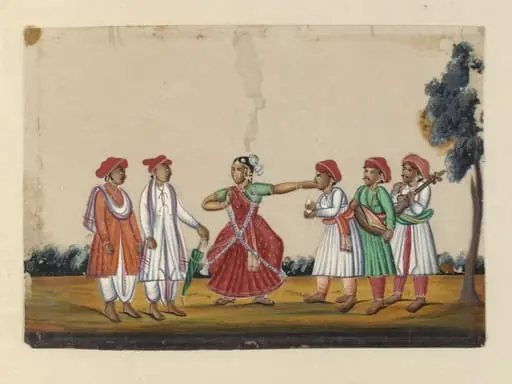 A dancing-girl with musicians
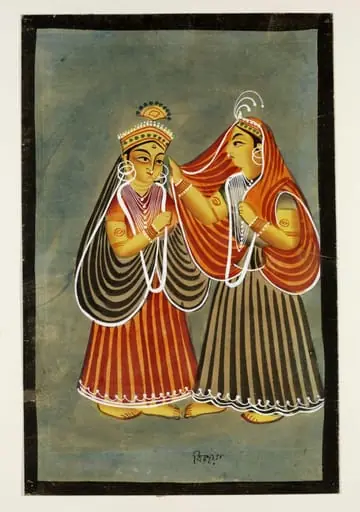 Uma
Uma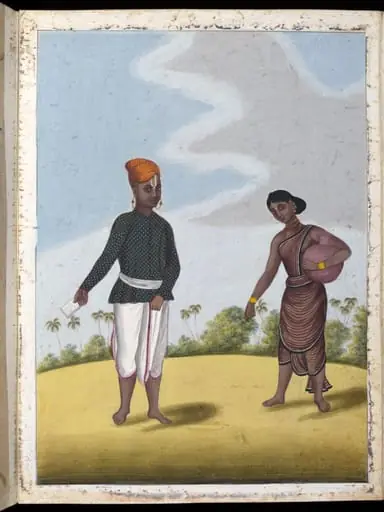 A Brahmin messenger and his wife
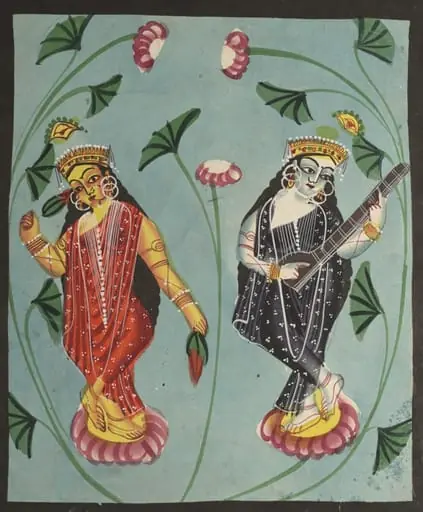 Lakshmi and Sarasvati
 Three entertainers
 Leaf from a Kalighat album: Maid bringing a hookah to a lady (recto); Krishna weighed against precious objects(?) (verso)
 Maid bringing a hookah to a lady (recto), from a Kalighat album
 A Brahmin story-teller and his wife
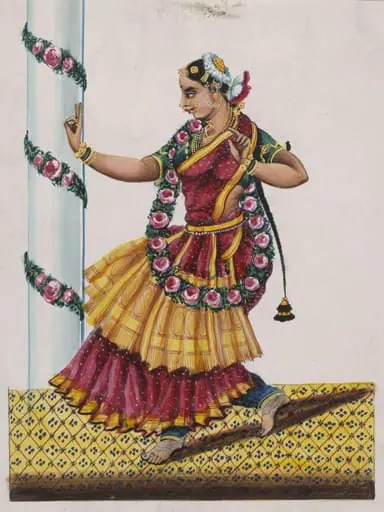 A Dancing-girl