Artwork
Two Wings of a Triptych with Portraits of Donors with Saints Adrian and John the Baptist
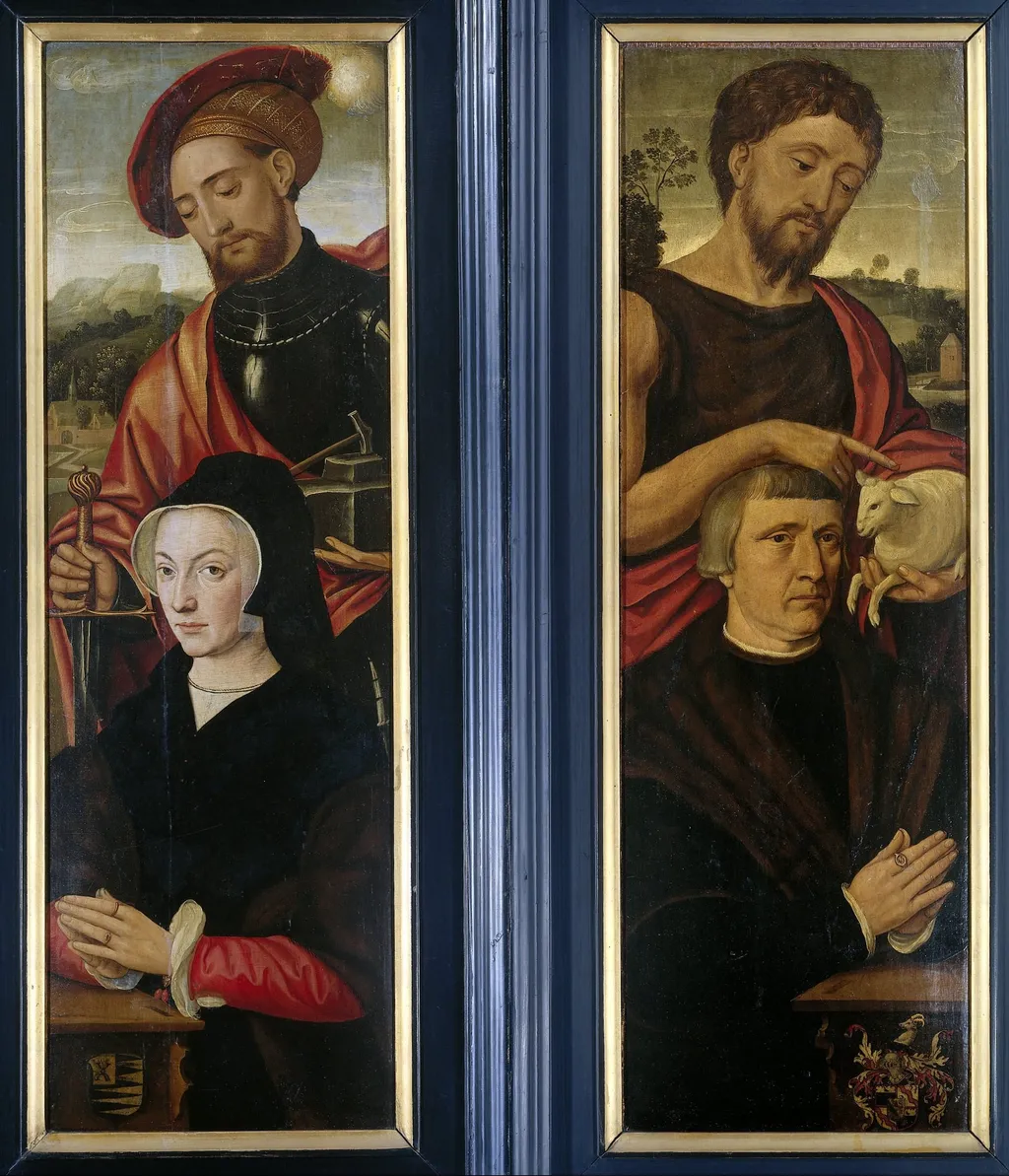
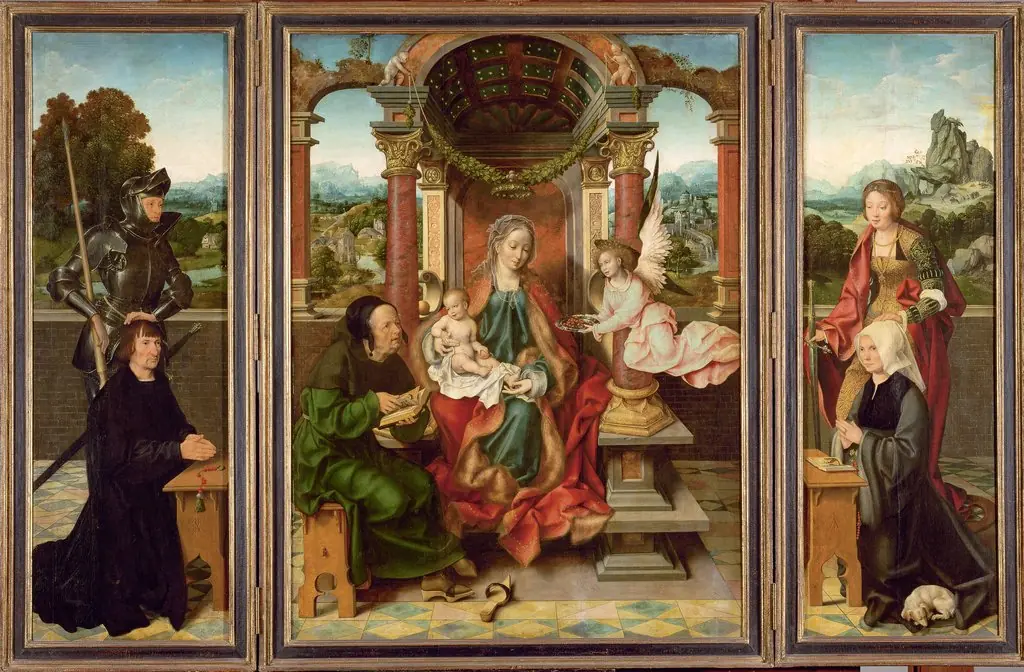
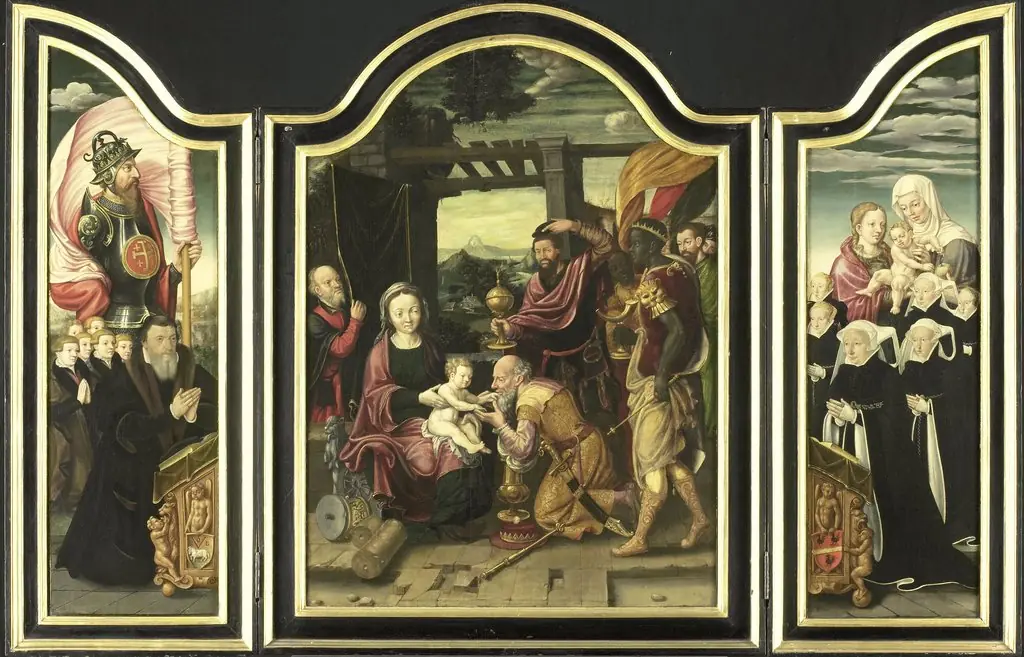
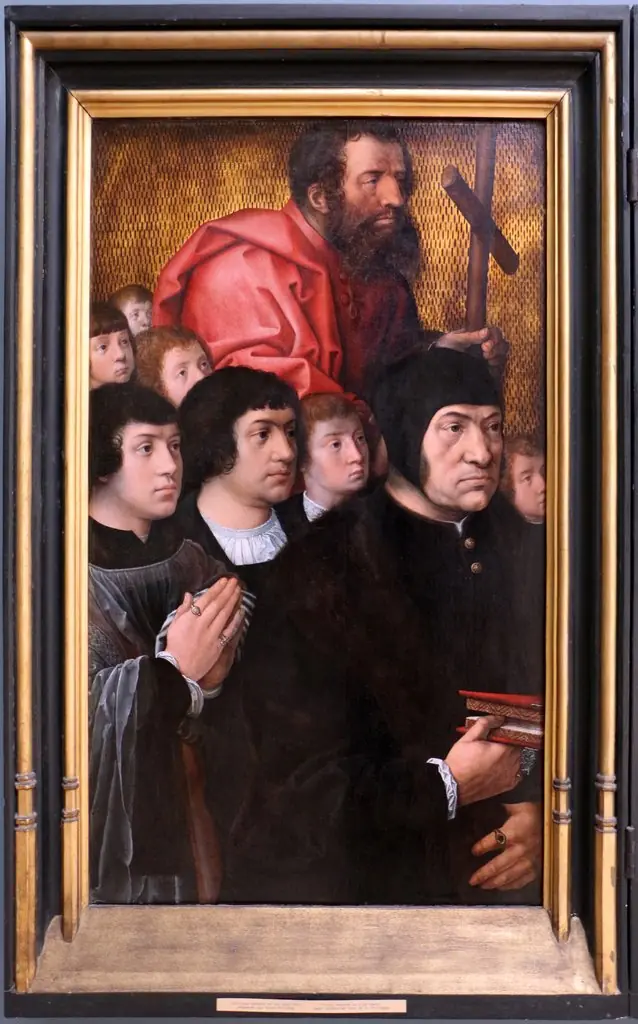
Two Wings of a Triptych with Portraits of Donors with Saints Adrian and John the Baptist is an unspecified painting by the Mannerist artist Unknown. It dates from 1540 and is held in the collection of the Rijksmuseum. The work consists of two wooden panels that originally formed the side wings of a triptych altarpiece.
About this work
Overview
The work consists of two wooden panels that originally formed the side wings of a triptych altarpiece. Each panel shows a kneeling donor beside a saint: on the left a female patron in a red gown with Saint Adrian, and on the right a male patron in black attire with John the Baptist. The central panel, now missing, would have displayed the principal religious scene of the composition.
Subject & Meaning
The pairing underscores the patrons' personal piety and their desire for spiritual affiliation with these holy figures.
The donors are presented in a devotional posture, directly engaging the saints who intercede on their behalf. Saint Adrian, identified by his sword, symbolizes martyrdom and protection, while John the Baptist, gesturing toward a lamb, evokes the theme of Christ as the sacrificial Lamb. The pairing underscores the patrons' personal piety and their desire for spiritual affiliation with these holy figures.
Technique & Style
Painted on oak panels, the figures are rendered with a calm, naturalistic demeanor. Fine details such as the donor's lace collar and the texture of the saints' garments are achieved through delicate brushwork, creating a sense of immediacy. The composition balances the intimate donor portraiture with the iconic attributes of the saints, typical of Northern Renaissance devotional panels.
History & Provenance
These wings were once integral to a larger altarpiece, catalogued in the museum collection under references SK‑A‑962‑A and SK‑A‑962‑B. The central panel has not survived, leaving the two side pieces as the primary evidence of the original ensemble. Their preservation offers insight into the patronage practices and liturgical art of the period in which they were created.
Artist & collection

 Domestic Scene
 Giacomo and Cardinal Marco, investing Andrea, Abbot of San Zeno, with his Benefice
 The Nymph of Fontainebleau
 Portrait of a Woman
 Madonna and Child with Saints in the Enclosed Garden
 Venus and Minerva
 Family Group of Four on Sofa
 Wall painting from Room H of the Villa of P. Fannius Synistor at Boscoreale